

A powerful dog on a weak harness is a stressful walk waiting to happen. Shoulders pull, buckles strain, and a determined Shepherd or Mastiff can back out of flimsy gear in seconds. This guide focuses on vests built for muscle: adjustable fits, reinforced stitching, control handles, and hardware that survives daily use. Whether you’re training a young Malamute or managing an adult Rottweiler on city sidewalks, one of these seven will match your routine.
A Fast Comparison Of The Options

MOOGROU Tactical Harness and Leash Set with 10 Patches

ICEFANG Quick-Moving Tactical Dog Harness for Large Dogs

Yungaspy No Pull Tactical Dog Harness Service Vest (Green)
AUNZO Tactical Dog Harness X-Large with Handle and Reflective Trim

ICEFANG Dog Halter Harness with Metal Buckles
Tuff Pupper TrailBlaze Escape Proof Harness for Extra Large Dogs
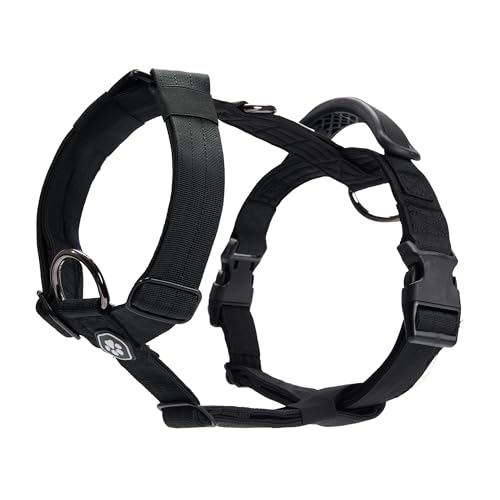
Spark Paws Comfort Control No Pull Dog Harness Front Clip
The Strengths Of Each Pick
Most harnesses arrive alone. This MOOGROU set bundles the vest with a matching leash that doubles as a car restraint, so you’re covered from driveway to trailhead in one purchase.
The MOLLE webbing across the vest is the real hook here. You get five pairs of removable patches, plus a clear window holding an anti-lost name card, which matters more than it sounds when a strong dog slips loose at a busy park.
What Earns Its Place
- Patches like “IN TRAINING” and “DO NOT PET” give strangers instant context before they reach for your dog’s head.
- The included leash pulls double duty as a car harness attachment, trimming gear clutter in the trunk.
- Vest-style body spreads pressure across the chest instead of the throat, a genuine relief for committed pullers.
- Name-card window keeps contact info visible without sewing anything on.
Things To Consider
- MOLLE panels add bulk that some dogs need a few walks to stop noticing.
- Hook-and-loop patch edges can collect fur and lint over time; a quick brush keeps them legible.
Built With In Mind
Owners of working-breed puppies in obedience programs who want their dog’s status visible from ten feet away.
Where A Sibling Pick Shines
Prefer a lighter, less decorated setup? The ICEFANG Quick-Moving harness below skips the patches and suits minimalist walkers better.
Sizing is where most harness purchases go wrong, and ICEFANG attacks that problem head-on with four sizes spanning neck girths from 14 to 28 inches. A gangly adolescent GSD and a broad-chested adult both have a slot here.
The brand leans heavily into heavy-duty framing across its line, and this quick-moving model follows suit with reinforced neck and chest zones built to absorb lunging force.
Good Reasons To Consider
- The published size chart (Small through X-Large) lets you measure once and order right, cutting return hassle dramatically.
- X-Large coverage up to a 39-inch chest accommodates deep-chested breeds other vests miss.
- No-pull vest geometry redistributes leash pressure toward the shoulders rather than the windpipe.
Honest Caveats
- Tactical padding runs warm in summer; owners commonly report panting dogs need shorter midday walks while wearing full vests like this.
- Measure carefully before ordering, since a too-loose tactical vest gives a clever dog room to rotate free.
Key Specs
Who Will Love This
Families raising a fast-growing Shepherd, Lab, or Husky who want one harness that still fits after the growth spurt.
Another Choice May Suit
For true giant breeds beyond a 39-inch chest, the AUNZO X-Large later in this list extends the fit envelope further.
Where the ICEFANG above wins on breadth of sizing, Yungaspy wins on depth within each size. The medium option stretches across a 27-to-40-inch chest range, which is unusually generous and means one vest can flex through weight changes or thick winter coats.
The brand positions this squarely at professional K9 handlers and serious hikers, naming Shepherds and Labs as target breeds. The green colorway also reads lower-key than black tactical gear, which some urban owners prefer.
Real-World Strengths
- A 13-inch chest adjustment window absorbs seasonal coat thickness without re-buying gear every year.
- Four sizes (S through XL) keep multi-dog households able to standardize on one system.
- Service-vest styling communicates “working dog” clearly on crowded trails.
Points To Note
- The wide chest span only works if you actually cinch it snugly; a lazy fit undermines the no-pull benefit.
- Strap ends are long at maximum adjustment, so tuck them or they’ll flap against your dog’s legs.
Right Fit For
K9-in-training owners and weekend hikers with muscular medium-large dogs who value adjustability over modularity.
Swap It Out When
You want swappable identification patches rather than a fixed vest look; the MOOGROU set at number one handles that job better.
Anyone who has wrestled a 120-pound Newfoundland into a pullover vest knows the struggle. AUNZO solves it with a third buckle at the neck, letting the whole vest open flat so you never drag anything over your dog’s head.
The recommended breed list reads like a giant-breed roll call: Anatolian Shepherds, Wolfhounds, Mastiffs, Great Danes. Two leash clips and reflective trim round out a spec aimed at early-morning walks with dogs strong enough to tow you.
The Helpful Details
- The extra neck buckle turns fitting from a wrestling match into a ten-second wrap-and-click.
- An integrated top handle gives you a physical grab point near traffic or other dogs.
- Reflective panels earn their keep on dark winter sidewalks.
- Two leash attachment points let you switch between front-clip steering and back-clip comfort.
Less Ideal Details
- Three buckles mean three failure points to inspect periodically; check them monthly for hairline cracks.
- Full-coverage XL vests hold heat, so plan shorter sessions during hot spells.
Details At A Glance
Whose Shelf It Belongs On
Owners of 100-plus-pound escape artists, especially seniors or anyone without the grip strength to fight a head-through-harness fit.
Consider Something Else When
Your dog sits under 90 pounds; the ICEFANG Quick-Moving harness offers similar security in lighter, cheaper packages.
This is the sibling pick for dogs who hate being wrapped in fabric. Instead of a full vest panel, ICEFANG uses a halter-style strap layout with metal buckles, trading coverage for airflow and freedom of movement.
It shares the same ICEFANG size chart as the Quick-Moving model earlier in this list, so measuring once covers either choice. Metal hardware is the quiet upgrade here; plastic side-release buckles are the part most likely to crack on a hard-pulling dog over years of use.
Where It Excels
- The open-back strap design dumps heat far faster than any padded vest, ideal for humid climates or thick-coated breeds.
- Metal buckles resist the cracking and jamming that plastic hardware develops under repeated strain.
- Less material means less to chafe against armpits on long hikes.
Worth Bearing In Mind
- Narrower straps concentrate pressure more than a vest, so fit matters even more; check for rub marks after the first few outings.
- No MOLLE surface or patch area, which rules out ID labeling.
Who Should Grab It
Owners of heavy-coated dogs in warm regions who still need serious holding power on daily walks.
Skip It When
You want visible service-dog or training messaging; go back to the MOOGROU patch system instead.
Tactical vests dominate this category, but they’re overkill for a trail run. The TrailBlaze takes a different angle: strip out the bulk, keep the security. Adjustable chest and belly straps create a snug fit that stays put whether your dog is trotting or sprinting uphill.
In our view, that lightweight philosophy is exactly right for active dogs. Less swinging mass means freer stride, and the durable build doesn’t ask you to sacrifice strength to get it.
Why It Works Well
- Independent chest and belly adjustments let you dial in a custom fit that defeats backing-out attempts.
- Low-profile construction suits running, hiking, and agility-style movement far better than rigid tactical plates.
- Breathable materials reduce overheating on sustained cardio sessions.
Small Caveats
- Without a rigid handle or MOLLE deck, there’s no grab point for lifting assistance on steep scrambles.
- Snug-fit designs need re-tightening as straps bed in during the first weeks of wear.
Quick Facts
Perfect Match For
Joggers and backpackers with athletic extra-large dogs who find tactical vests restrictive over long distances.
Reach For A Different Pick When
City walking with traffic nearby calls for the AUNZO’s handle and reflective trim instead.
Stitching is the unsung hero of any harness meant for a strong dog, and Spark Paws makes it the headline: triple-stitched seams on heavy-duty nylon, engineered specifically for powerful breeds. That’s the detail separating this from budget vests whose seams creep apart after months of hard pulling.
The front clip deserves explanation for newcomers: a leash ring at the chest steers your dog sideways when he surges ahead, which discourages pulling more gently than yanking his neck ever could.
Where It Delivers
- Triple stitching on load-bearing seams holds up to years of daily walks with committed pullers.
- The front-clip D-ring converts brute strength into gentle redirection, easing arm and shoulder strain on your end.
- Quick-release buckles make end-of-walk removal painless even with an impatient dog spinning at the door.
- An integrated control handle provides close-quarters guidance past crowds and other dogs.
Trade Offs To Consider
- Reinforced nylon softens slightly after washing; air-dry it rather than machine heat to preserve stitch integrity.
- Front clips work best with steady leash tension, so pair it with a standard 4-to-6-foot lead rather than a retractable.
The Numbers That Matter
Who It Suits Best
City dwellers doing twice-daily leashed walks with strong breeds, especially anyone retraining a chronic puller.
Not Your Match When
Trail adventures call for the Tuff Pupper TrailBlaze’s featherweight build instead of this walk-focused design.
What Matters Most Before Choosing Harnesses For Strong Dogs
Measure Twice, Order Once
Chest girth beats weight charts every time. Two dogs can weigh identically while having completely different ribcage depths, so wrap a soft tape around the widest point behind the front legs and compare it directly against the manufacturer’s chart. A harness with two inches of slack is an escape invitation.
Match Hardware To Your Dog’s Force
Plastic buckles fail quietly over time, developing hairline cracks you won’t spot until they snap. Metal D-rings and buckles cost a little more upfront but hold up under years of lunging, which is why several picks above make them central.
Think About Your Hands
A top handle looks tactical until the day a cyclist cuts you off and you actually need it. Owners of giant breeds, seniors, or anyone with grip limitations should treat the handle as essential rather than optional.
Climate Counts
Padded tactical vests trap heat against thick coats. In warm climates, halter-style or ventilated designs keep summer walks comfortable without giving up control.
Key Considerations Across These Picks
Traps First Timers Fall Into
The classic error is buying by breed name instead of measurement. A “large” label means nothing across brands, and guessing leads straight to returns. The second mistake is ignoring strap length at maximum adjustment; excess webbing flapping at the legs annoys dogs and frays faster.
Where The Extra Money Goes
Higher-tier harnesses spend it on triple stitching, metal hardware, and thoughtful extras like neck buckles and control handles. For a dog under 60 pounds with polite manners, basics suffice. For a 100-pound puller walked daily, those reinforcements pay for themselves in avoided replacements.
Closing Remarks
Strong dogs deserve gear built for their strength, not scaled-up versions of small-dog designs. Measure your dog’s chest, weigh the climate you walk in, and pick the harness that matches your actual routine. Any of these seven will hold the line; the right one simply depends on whether your priority is labeling, comfort, or raw holding power.
