

Goats are notorious hay wasters. Toss a flake on the ground and a good chunk of it ends up trampled, soiled, or used as bedding instead of dinner. The right feeder fixes that: it holds hay off the floor, slows down eating, and cuts your refill trips noticeably. Below you’ll find seven options that cover everything from single hanging bags to welded steel racks built for a whole herd, matched to different pen sizes and budgets.
The Shortlist At A Glance

INKNOTE Hay Bag Hanging Goat Feeder Tote
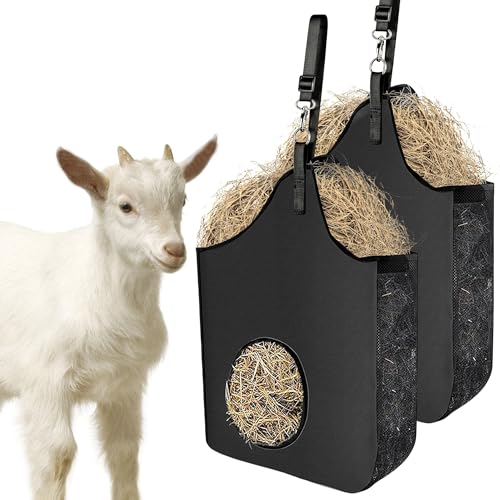
2 Pcs INKNOTE Hay Bag Hanging Goat Feeder Tote
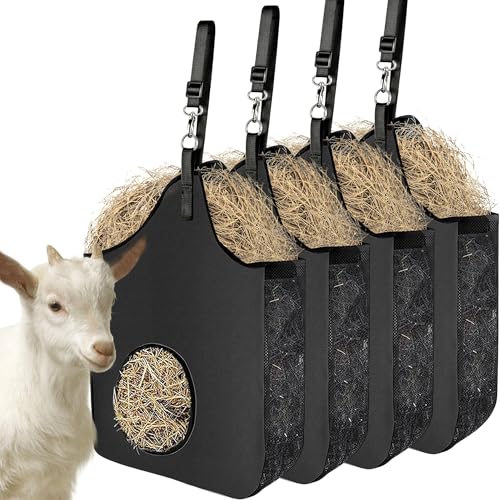
4 Pcs INKNOTE Hay Bag Hanging Goat Feeder Tote

BUYYAH 2 in 1 Hay Feeder Goat 22 Gallon

BUYYAH Hay Feeder Goat 20 Gallon
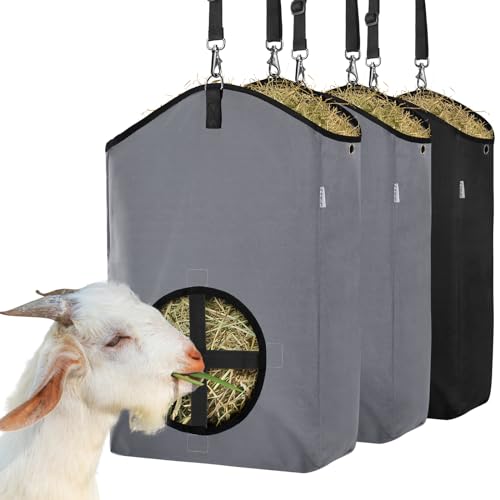
MIYABALA Goat Hay Feeder Hay Bags, 3 Pack

VEVOR Livestock Feeder 18.5 Gallon Steel Rack
A Breakdown Of The Leading Choices
This hanging tote is the easiest way to test whether slow feeding suits your setup before committing to bigger hardware. It’s an oxford fabric bag with an adjustable strap, sized around 19.7 by 17.7 inches, so it hangs from fence rails, stall walls, or gate posts without any drilling.
The wide outlet opening keeps hay accessible while still slowing nibbling, which matters most for ponies and smaller goats that bolt their food. Compared with the steel racks later in this list, it’s a fraction of the commitment in cost and effort.
Bright Spots
- Oxford fabric body resists everyday tearing better than thin canvas alternatives
- Roughly 20-inch-wide grass outlets let hay flow without constant shaking
- Adjustable strap means one bag works on fences, stalls, and gates alike
- Hanging design keeps hay off bedding, cutting waste dramatically
Small Caveats
- Determined chewers may eventually work at the stitching, so inspect seams monthly
Key Specs
Who Should Grab It
First-time goat keepers with one or two animals who want a low-commitment way to cut hay waste.
A Better Fit Elsewhere
Larger herds will get more mileage from the BUYYAH 22 Gallon rack, whose capacity covers a full day for several animals at once.
Same bag as the single-pack INKNOTE above, sold as a pair, and that pairing changes how useful it becomes. Two feeding points mean two goats eat side by side without shouldering each other out, a small detail that prevents a lot of pen drama.
You get the same roughly 19.7-by-17.7-inch fabric body, adjustable strap, and generous outlet holes. In our view, this is the sweet spot of the three pack sizes for anyone running a bonded pair or keeping goats alongside a pony.
What It Does Well
- Two separate stations reduce competition at mealtime
- One spare bag stays clean while the other is in use or drying
- Identical sizing makes placement and refills predictable
Points To Note
- Fabric bags need occasional shake-outs and air-drying after wet weather
- Still a soft-sided option, so persistent chewers remain a factor
Made For
Keepers of two or three small ruminants who want separate eating spots without buying rigid equipment.
Where A Sibling Pick Shines
Anyone feeding four or more animals should step up to the 4-piece INKNOTE set, which spreads stations wider and calms bigger groups.
Four bags turn a shared paddock into four calm feeding corners. Anyone who has watched a dominant doe guard a single feeder knows why spreading stations matters: lower-ranking animals finally eat their share.
The bags match the earlier INKNOTE versions exactly, so you can mix pack sizes across a property and treat them interchangeably. Hang them along a fence line at slightly different heights and even horned goats find a comfortable angle.
What Makes Sense
- Multiple stations end guarding behavior in mixed hierarchies
- Coverage for sheep, ponies, and goats from one purchase
- Light enough to reposition seasonally as pastures rotate
- Slow-feed outlets encourage steadier eating throughout the day
Worth Bearing In Mind
- Four fabric surfaces means a bit more routine cleaning than one steel unit
Right Fit For
Homesteaders running a small mixed herd who prefer flexible, movable feeding over fixed installations.
Swap It Out When
Permanent outdoor setups in harsh weather favor the VEVOR steel rack, whose powder-coated frame shrugs off seasons the way fabric cannot.
This is where the list shifts from fabric to structure. The BUYYAH 22-gallon rack offers about 2.5 cubic feet of hay space, and its roomy top opening lets several animals feed from different angles simultaneously. The maker positions it for groups of up to five goats at a time.
In practice, that capacity translates into one morning fill lasting through the day, which busy owners will appreciate on workdays. Unlike the INKNOTE bags, this is fixed equipment: pick your spot carefully, because it’s built to stay put.
Standout Benefits
- Large 2.5-cubic-foot interior reduces daily refill chores
- Wide top access lets several animals eat at once from varied angles
- Suits goats, sheep, and similar livestock in one unit
Things That May Matter
- Its bulk demands a planned placement spot and secure anchoring
- Less portable than any hanging bag on this list
Feature Rundown
Who Will Love This
Owners of four to six goats who want a fill-and-forget routine rather than twice-daily bag refills.
Consider Something Else When
Tight barn interiors call for the slimmer BUYYAH 20 Gallon wall-mounted model, which trades some volume for a narrower depth profile.
The tapered shape is the story here: 12.6 inches deep at the top narrowing to just over 5 inches at the base, mounted flush against a wall. That wedge profile eats almost no aisle space, which narrow barn walkways reward.
It shares the BUYYAH family’s all-day capacity approach with the 22-gallon version reviewed earlier, holding 20 gallons per fill. Wall mounting also lifts hay clear of bedding and manure, and the elevated position discourages animals from climbing or standing in the feed.
Practical Advantages
- Wall-mounted design frees floor space in cramped stalls
- Tapered body keeps the footprint slim at animal height
- Slower grazing pace supports steadier digestion in horses too
- Elevated hay stays cleaner than ground-fed flakes
Softer Spots
- Installation requires solid wall fastening, so flimsy paneling won’t hold it
Details At A Glance
The Right Fit
Barn owners working with narrow aisles or compact stall fronts who still want serious hay volume.
Not Your Match When
Open pasture setups without suitable walls are better served by the freestanding BUYYAH 22 Gallon twin-pack configuration.
The MIYABALA trio leans on heavier cloth than most hanging bags: 600-denier oxford, a weave weight commonly used for tool bags and boat covers. Tight stitching along the seams gives it a fighting chance against goats that paw and tug at their feeders.
Each bag carries sturdy webbing straps with hardware for height adjustment, so matching the hang point to your animals’ head height takes seconds. Three units suit a modest herd nicely, splitting between a main pen and a quarantine or kidding area.
Features That Help
- 600D oxford construction stands up to rougher handling
- Reinforced stitching extends usable life in busy pens
- Adjustable webbing lets you fine-tune hang height per animal
- Versatile enough for horses and sheep sharing the same space
Some Limits To Know
- Heavier fabric takes longer to dry after rain or washing
- Three-bag count may leave larger herds short on stations
Quick Facts
Whose Shelf It Belongs On
Keepers of mixed herds with strong-jawed animals who have worn through lighter fabric bags already.
Reach For A Different Pick When
Maximum station count on a budget points back to the 4-piece INKNOTE set, which adds a fourth feeding point instead of heavier material.
Every other pick here can be damaged by livestock. This one can’t, not realistically. VEVOR builds the rack from cold-rolled steel with fully welded joints, then applies a powder coating, a baked-on finish far tougher than paint, for rust resistance outdoors.
The 18.5-gallon capacity handles a day’s worth of hay in one fill, and the 24.4-inch wall-mounted length serves sheep farms and goat operations equally well. Rounded edges and corners are the detail worth pausing on: no sharp metal near faces and horns, which cheaper fabricated racks often overlook.
What Pays Off
- Full-welded cold-rolled steel shrugs off years of pushing and leaning
- Powder coating holds up to rain and sun in outdoor runs
- Rounded edges reduce injury risk during eager feeding
- One-fill capacity trims daily chore time considerably
Trade-Offs To Weigh
- Steel weight makes initial mounting a two-person job
- Fixed installation offers none of the bags’ relocation flexibility
Technical Highlights
Built With In Mind
Working farms and outdoor pens where permanence, weather exposure, and rough treatment rule out fabric options entirely.
Look Elsewhere When
Renters or rotational grazers needing gear that moves weekly will be happier with the MIYABALA 3-pack hanging bags.
What Matters Most Before Choosing Hay Feeders For Goats
Capacity And Refill Routine
Match feeder volume to herd size honestly. A 20-gallon rack covers a full day for a small group, while individual bags need topping up more often but give you control over portions. Count your animals first, then buy stations second.
Fabric Versus Steel
Oxford fabric bags cost less, weigh little, and move anywhere a strap reaches. Steel costs more up front, needs wall anchoring, and outlasts years of weather. Determined chewers and horned goats generally push you toward metal faster than you’d expect.
Placement And Mounting
Wall-mounted units need solid backing and correct height: low enough for comfortable neck posture, high enough to discourage standing in the feed. Measure before ordering, especially with tapered designs like the BUYYAH models.
Cleaning And Upkeep
Fabric bags want periodic shake-outs and thorough drying to prevent mold in damp climates. Steel racks mostly need an occasional rinse and a check of fasteners. Whatever you choose, plan the maintenance into your week from day one.
Key Considerations Across These Picks
Traps First Timers Fall Into
The classic error is undersizing. One bag for four goats guarantees competition and waste. The second mistake is ignoring mounting surface: a heavy steel rack on thin paneling ends badly. Finally, skip ground feeding altogether, since soiled hay gets refused and money walks out the barn door.
Where The Extra Money Goes
Higher-tier feeders spend on materials and joinery: 600D fabric over lighter weaves, welded steel over spot welds, powder coating over paint. Those upgrades pay off in years of service rather than months. For permanent installations exposed to weather, spending up usually costs less over time than replacing bargain gear annually.
Closing Thoughts
Cutting hay waste is the fastest saving most goat keepers ever make, and any feeder on this list moves you toward it. Start with a hanging bag if you’re new to the setup, or commit straight to the VEVOR steel rack for a permanent pen. Match the choice to your herd size, your walls, and your climate, and the daily routine gets easier within the first week.
