

Anyone who has watched a planted tank stall out knows the frustration: leaves pale at the edges, stems thinning, algae creeping in while the fish look fine. The usual culprit is a nutrient gap, and that’s exactly what the right fertilizer fixes. This roundup covers liquid supplements, root tabs, complete substrate, and even live seed kits, so you can match a product to your tank’s actual deficiency instead of guessing. Whether you run a low-tech 10-gallon or a CO2-injected showpiece, there’s an option here built for your setup.
A Closer Look At The Lineup

Seachem Flourish Phosphorus 500 mL

API Root Tabs Freshwater Plant Fertilizer, 10 Tablets

Seachem Plant Pack Enhancers NPK

Brightwell FlorinMulti Multi Nutrient Supplement, 500ml
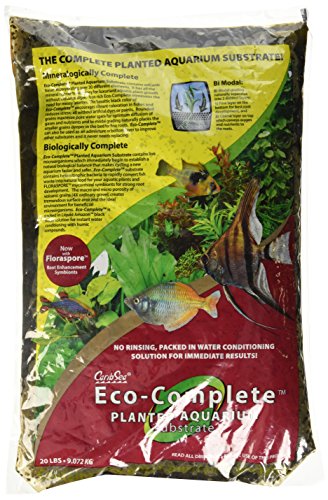
CaribSea Eco-Complete Planted Substrate, 20 lbs

Flourish Phosphorus Plant Supplement, 500ml

Seachem Flourite Black Gravel with Flourish Tabs

ZUQOVI Aquarium Plant Seed Set, 3 Bags
The Strengths Of Each Pick
Phosphate is one of the three macronutrients every aquatic plant burns through, and when it runs dry, growth stalls no matter how much light you throw at the tank. This bottle exists to close that one specific gap. A concentrated potassium phosphate solution lets you dose phosphorus alone, which matters because bundled products lock nitrate and phosphate into a fixed ratio your tank may not want.
The 500 mL volume is generous for a supplement this potent, lasting most hobbyists months of routine dosing. In a heavily planted display where stunting shows up first in slow-growing stem plants, having a standalone phosphate source on hand is the difference between diagnosing a problem and guessing at one.
Bright Spots
- Doses phosphorus independently, so you can correct a single deficiency without overshooting nitrogen.
- Potassium phosphate base feeds plants without clouding water in typical doses.
- Large bottle suits tanks dosing weekly over long stretches.
- Takes the trial-and-error out of phosphate management for newer hobbyists.
Things To Consider
- You’ll want a phosphate test kit to dose responsibly; overdosing invites algae, a commonly reported issue among newcomers.
- It addresses only one nutrient, so most tanks need companion products.
Who It Suits Best
Intermediate planted-tank keepers running test kits who have pinpointed phosphate as their limiting nutrient.
A Better Fit Elsewhere
Hobbyists wanting all three macros covered in one purchase will find the Seachem Plant Pack Enhancers NPK more economical than buying singles.
Root feeders like swords, crypts, and vallisneria pull most of their nutrition straight from the substrate, which is where liquid fertilizers can’t reach. These tablets get pushed directly into the gravel beside the root ball, feeding plants where they actually eat. Each box holds ten tablets, and this listing bundles three boxes, giving you thirty tabs total for a season or more of feeding.
The formula includes iron, potassium, and carbon sources aimed at strong root development and vigorous new growth. For someone setting up a first planted tank, the appeal is simplicity: press a tab in, move on, reapply every few weeks. No syringes, no daily schedule, no chemistry homework.
Positive Takeaways
- Three-box bundle stretches across multiple reapplications without repeat orders.
- Iron content supports deep coloration in red and green foliage alike.
- Push-in application takes seconds, even in a fully stocked tank.
Minor Gripes
- Tablets dissolve gradually, so owners sometimes report small nutrient plumes if pressed too shallowly near the surface.
- Better suited to heavy root feeders than to mosses or floating plants.
Made For
First-time planted tank owners growing sword plants and crypts in inert gravel or sand.
Where A Sibling Pick Shines
Aquascapers rebuilding their entire tank floor should weigh the Seachem Flourite Black Gravel with Flourish Tabs, which pairs a nutrient-bearing substrate with timed-release tablets from day one.
Nitrogen, phosphorus, potassium: those three letters drive nearly everything in a planted tank, and this boxed set delivers all three as separate 100 mL bottles. Nitrogen arrives in both nitrate and ammonium forms, with the ammonium complexed so no free ammonia releases into the water column, a detail that matters in tanks holding sensitive fish. Because each macro ships separately, you dose according to what your test kit actually shows rather than accepting a pre-mixed ratio.
Compared with the standalone Seachem Flourish Phosphorus earlier in this list, the trade-off is bottle size versus breadth. You give up volume but gain the whole toolkit, which suits anyone still learning where their tank’s deficiencies fall.
Everyday Advantages
- Independent macro bottles let you tailor each dose to measured needs.
- Complexed nitrogen avoids free ammonia spikes in stocked aquariums.
- Compact 100 mL sizes are easy to store under or beside the tank stand.
- One purchase covers the core NPK foundation most planted setups require.
Small Caveats
- Smaller bottles mean frequent repurchasing in large or densely planted displays.
- No micronutrient bottle included, so trace elements come separately.
Right Fit For
Intermediate hobbyists who test regularly and want granular control over nitrogen, phosphorus, and potassium levels.
Swap It Out When
Keepers preferring a single pour-and-done routine will find Brightwell Aquatics FlorinMulti less fiddly, since it consolidates fourteen elements into one supplement.
Some tanks don’t need surgical precision; they need steady, broad nutrition. FlorinMulti packs fourteen essential elements into one bottle, spanning potassium, calcium, magnesium, and iron alongside supporting minerals. Those four do real work: potassium drives photosynthesis, magnesium sits at the center of chlorophyll molecules, calcium fortifies new cell walls, and iron keeps greens vivid instead of washed-out yellow.
In practice, this is the bottle you reach for in a low-maintenance community tank where dosing three separate liquids weekly sounds like a chore. It also replenishes nutrients depleted between water changes, which helps shrimp and fish share the space comfortably. Where Seachem’s Plant Pack splits decisions across three bottles, this one makes the decision once.
Notable Gains
- Fourteen elements cover both macro and micro needs in a single pour.
- Magnesium and calcium support sturdy new growth, not just leaf count.
- 500 mL volume supports months of routine use in mid-size tanks.
- Replenishes what regular water changes strip away, easing maintenance rhythm.
Points To Note
- Fixed ratios mean less control than separate bottles offer in high-tech, CO2-injected systems.
- Cap measuring takes some practice to avoid splashing concentrate.
Who Will Love This
Busy keepers running low-tech community planted tanks who want one supplement and a simple weekly habit.
Reach For A Different Pick When
Dosing enthusiasts chasing exact NPK numbers should stay with the Seachem Plant Pack Enhancers NPK instead.
Substrate is the fertilizer you only buy once. Eco-Complete bakes nutrients into a porous black volcanic gravel, so root zones stay fed for years rather than weeks. The dark color flatters green foliage and makes red plants pop, a look many aquascapers chase deliberately. Twenty pounds covers roughly a two-foot tank at a modest depth, though deeper carpets of heavy root feeders call for a second bag.
Beyond nutrition, the porous structure gives beneficial bacteria housing, which steadies water quality in newly cycling tanks. Owners commonly report minimal rinsing needed before setup, since the gravel arrives pre-washed. Compared with the API root tabs approach, this is infrastructure rather than consumable: higher upfront effort during a build, far lower ongoing fuss afterward.
Standout Benefits
- Nutrient-rich composition feeds roots continuously without tablets or liquid dosing at the root zone.
- Porous grains host bacteria colonies that stabilize a new tank faster.
- Deep black finish creates strong contrast against green and red plants.
- Pre-washed gravel cuts setup mess dramatically.
- One-time investment that keeps working for the life of the aquascape.
Trade Offs
- Heavy bag means awkward handling and shipping weight you’ll feel in the total cost.
- Larger tanks may need multiple bags, adding up quickly.
Feature Snapshot
The Right Fit
Hobbyists starting a fresh planted build who want nutrition built into the floor from day one.
Consider Something Else When
Established tanks needing a top-up rather than a rebuild are better served by API Root Tabs, which slot into existing substrate.
This is the same phosphate concept as the Seachem Flourish Phosphorus at position one, offered through a different listing with a wider spread of bottle sizes, from small 100 mL starter volumes up to multi-liter jugs. That range is the whole story here. A 100 mL trial bottle lets you confirm your tank genuinely responds to phosphate dosing before committing to bulk volume, and larger formats reward established high-demand aquascapes.
The formula remains a straightforward potassium phosphate solution, safe for fish and invertebrates at recommended doses. For growers scaling up from a nano cube to a 75-gallon display, being able to step up container size without switching brands removes one variable from an already finicky balancing act.
What Pays Off
- Five size options let spending match your tank’s actual demand.
- Same trusted potassium phosphate chemistry across every volume.
- Bulk jugs cut cost-per-dose for large planted displays.
Worth Noting
- Listing placement varies by seller, so verify the exact size before checkout, a common mix-up reported by shoppers.
- Still a single-nutrient product requiring partners for full nutrition.
Whose Shelf It Belongs On
Owners of larger planted tanks who already know phosphate dosing works for them and want bigger-format refills.
Look Elsewhere When
First-timers unsure whether phosphate is their limiting factor should start with the smaller Seachem Flourish Phosphorus 500 mL listing instead.
Where CaribSea Eco-Complete leans on nutrients baked into the gravel itself, this bundle takes a two-pronged route: stable porous clay gravel carrying iron, calcium, and magnesium, plus time-released Flourish Tabs delivering trace elements, amino acids, and vitamins straight to root zones. The tabs go in at one per four-to-six-inch radius, spaced evenly across the bed, creating a slow-feed network beneath your plants.
The clay gravel never breaks down or compacts, which matters in tanks you plan to keep running for years. Water-column feeders still benefit from liquid dosing, but heavy root feeders get a foundation here that plain gravel simply can’t provide. It’s the closest thing in this list to a professional aquascape starting point.
Why It Works Well
- Dual system feeds both roots and surrounding water column.
- Porous clay structure stays stable indefinitely without degrading.
- Iron and magnesium content supports rich foliage color.
- Time-released tabs reduce dosing frequency for weeks at a stretch.
- Clear spacing guidance removes guesswork from installation.
Details To Watch
- Rinsing before setup is widely reported as necessary to limit initial cloudiness.
- Heavier and pricier per pound than basic gravel options.
Core Details
Built With In Mind
Dedicated aquascapers building long-term planted displays around demanding root-feeding species.
Another Choice May Suit
Keepers happy with their current substrate who only need targeted feeding should stick with API Root Tabs rather than replacing the whole bed.
Everything above feeds existing plants; this set starts them from scratch. Three bags arrive with tiny-leaf and long-hair grass seeds intended for freshwater carpeting, roughly 0.7 oz of the former and 0.36 oz of the latter. Germination is quick by aquatic standards, with sprouting expected in about three to four days given warm water, and the listed sprouting rates sit above eighty percent for both varieties.
The honest caveat: growing a carpet from seed demands patience and stable conditions, including keeping the tank warm near 80°F during establishment. Results depend heavily on lighting and consistency, so temper expectations accordingly. As a budget entry point into planted aquascaping, though, watching a bare foreground fill in over a few weeks is genuinely satisfying.
Noteworthy Benefits
- Two grass varieties create layered foreground texture.
- Fast germination timeline shows visible progress within days.
- Live growth benefits fish with natural shelter and grazing surfaces.
Where It May Fall Short
- Success hinges on maintaining warmth and light during the fragile sprouting window, a hurdle many first attempts stumble over.
- Seeds need a fine substrate bed to anchor properly.
Who Should Grab It
DIY-minded hobbyists with patience and decent lighting who want to grow a foreground carpet affordably.
Not Your Match When
Instant-structure scapers should choose the CaribSea Eco-Complete substrate plus potted plants route for immediate visual impact.
What Matters Most Before Choosing Planted Aquarium Fertilizers
Know Your Deficiency First
Guesswork wastes money in this category. Pale new leaves often signal iron shortage, yellowing older leaves point toward nitrogen, and stalled growth despite good lighting frequently traces back to phosphate. A basic test kit costing little tells you which bottle to buy, and it prevents the opposite mistake too: dumping nutrients a balanced tank doesn’t need and feeding algae instead.
Match The Product To Your Plants
Root feeders such as swords and crypts draw nutrition through their root systems, so tabs and enriched substrates serve them best. Stem plants and mosses feed largely from the water column, making liquid supplements the right tool. Most thriving tanks combine both approaches, which is why several picks here pair naturally.
Weigh Effort Against Control
All-in-one supplements simplify routines but lock you into fixed nutrient ratios. Separate macro bottles demand testing and math yet adapt precisely as your tank matures. Low-tech keepers usually prefer simplicity; CO2-injected aquascapes generally justify the extra control.
Think In Time Horizons
Consumables like liquids and tabs recur monthly, while substrates represent a one-time decision made at setup. Buying the right foundation early saves years of corrective work later.
Key Considerations Across These Picks
Traps First Timers Fall Into
The classic error is treating fertilizer as algae prevention in reverse, dosing heavily without ever testing water. Overdosed phosphate and nitrate fuel nuisance blooms faster than any deficiency ever would. Another slip: mixing products from different systems that double up the same nutrients, quietly stacking doses.
When Paying More Pays Off
Premium substrates and multi-element concentrates cost more upfront because they consolidate several purchases into one. A quality clay gravel or a fourteen-nutrient formula replaces repeated tablet buys and partial corrections. For tanks you plan to keep for years, consolidated products typically win on both results and hassle.
Frequently Asked Questions
How often should liquid fertilizers be dosed?
Most hobbyists dose liquid supplements once or twice weekly after water changes, following label guidance. Consistency matters more than volume.
Can root tabs and liquid fertilizer be used together?
Yes, and many planted tanks thrive on the combination. Roots feed from tabs while water-column feeders take up the liquid.
Do fertilizers harm fish or shrimp?
Products designed for aquariums are safe at recommended doses. Always measure carefully and avoid dumping concentrate directly onto livestock.
Why are my plants yellowing even with fertilizer?
Yellowing often indicates iron or nitrogen shortage, but it can also reflect insufficient light. Diagnose with a test kit before adding more product.
Is special substrate really necessary?
Plain gravel works with root tabs, though nutrient-rich substrates reduce long-term maintenance. New builds benefit most from enriched floors.
Bottom Line
Your tank will tell you what it needs, and the products above cover every answer. Start with a test kit, fix the specific gap, and add complexity only as your aquascape grows more ambitious. A simple routine applied consistently beats an elaborate one abandoned in week three. Whichever direction your planting goals lean, one of these eight will fit the bill.
