

Goats eat like it’s their last meal, and loose hay on the ground disappears into mud and manure faster than you can refill the pile. A good hay feeder changes that math. The right bag or rack slows grazing, keeps forage off dirty bedding, and stretches every bale further, which matters when winter feeding runs from November through March.
This roundup covers seven feeding options that suit different setups: hanging mesh nets for small herds, fabric totes with adjustable straps, and a rigid wall-mounted rack for barns that need something goats can’t drag around. Each entry below breaks down build quality, capacity, and the honest trade-offs, so you can match a feeder to your pen size, herd count, and how often you actually want to refill. No fluff, just what holds up in a working goat yard.
A Quick View Of The Lineup

T TEKE Classic Slow Hay Net 40″

INKNOTE Hanging Goat Feeder Tote
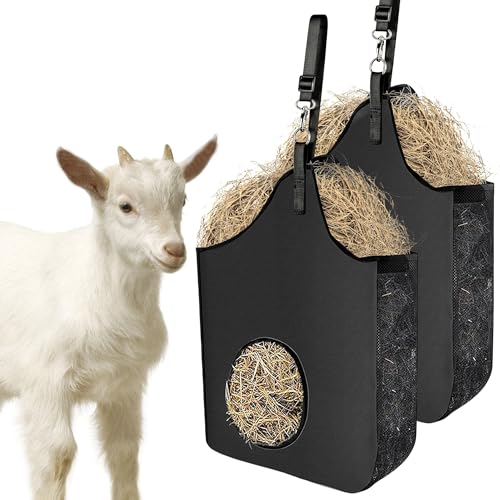
INKNOTE 2-Pc Hanging Feeder Tote
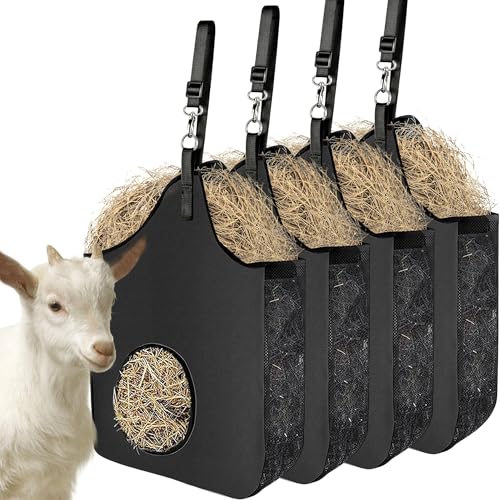
INKNOTE 4-Pc Hanging Feeder Tote

BUYYAH Wall-Mounted Hay Rack 20 Gal

ZELARMAN Large Capacity Hay Bag
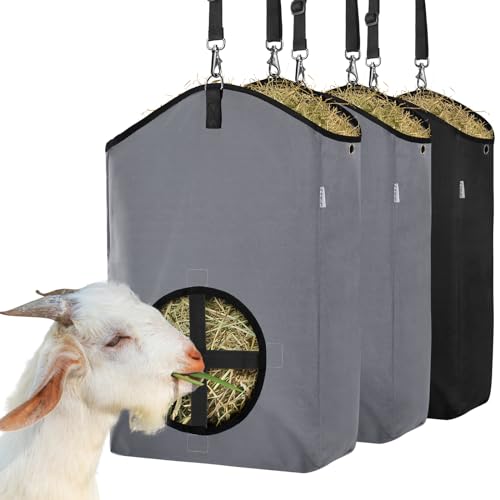
MIYABALA 3-Pack Goat Hay Feeders
A Deeper Look At The Lineup
This is the classic braided-cord hay net, and its whole job is slowing animals down. The 2-inch holes force smaller mouthfuls than an open trough, which stretches one filling across more hours of grazing. At 40 inches long with roughly 14 pounds of hay capacity, it suits horses and donkeys as comfortably as goats.
You hang it from a fence post or stall ring using the thick drawstring at the top, and the polyethylene cord construction means rain and mud rinse off without much fuss. Two come in the pack, so one can dry while the other hangs.
What Stands Out
- Two nets per pack lets you rotate between pens or wash days
- The 2-inch mesh genuinely slows eating, cutting wasted forage
- Soft braided cord is gentler on muzzles than stiff wire racks
- 14-lb fill means fewer trips back out in bad weather
Things To Consider
- Determined chewers may eventually fray cord ends; trim them rather than replace the net
- Mesh nets shed small leaf fragments, so expect some sweep-up underneath
Right Fit For
Backyard keepers running a few goats or a pony who want slow feeding without spending much.
A Better Match Elsewhere
For a rigid option that survives heavy chewing, the BUYYAH wall-mounted rack later in this list is the sturdier route.
Fabric totes like this one are the low-commitment entry point into slow feeding. You stuff it, clip or tie the adjustable strap to any rail, and you’re done in under a minute. The roughly 50 x 45 cm body holds a solid day’s ration for one or two goats.
The wide feed opening is the detail worth noting here. Compared with the T TEKE net’s tight 2-inch mesh, this tote’s generous outlet lets less patient animals get hay without frustration, while still keeping it off the ground. Oxford fabric wipes clean, though you’ll want to shake out dust before each refill.
What Earns Its Place
- Adjustable strap fits fence rails, stall bars, and tree branches alike
- Wide opening suits young kids still learning to pull hay
- Single-bag price makes it an easy trial run for slow feeding
Minor Gripes
- Oxford cloth wears faster than cord where goats rub against it daily
- One bag means no backup during washing
Made For
New goat owners testing whether hanging feeders work in their particular pen layout.
Where A Sibling Pick Shines
Adding a second animal? The INKNOTE two-pack next covers both without doubling your setup time.
Same tote, doubled. This pack carries two of INKNOTE’s oxford-fabric bags, each sized near 19.7 by 17.7 inches with the same roomy feed outlet as the single version. Goats are herd animals, and competition at a lone feeder causes pushing and stress, so spacing two bags along a fence line calms mealtimes noticeably.
In practice, most owners use one bag per animal or one per corner of a shared run. The strap adjustability means uneven ground or odd post heights stop being a problem. Cleaning is the usual routine: dump leftovers, hose it down, let it dry fully before restuffing to avoid mildew inside the seams.
Standout Benefits
- Two bags reduce crowding and food guarding between animals
- Spare bag available while one dries after washing
- Identical sizing keeps rations consistent across animals
- Adjustable webbing handles sloped or irregular fencing
Potential Drawbacks
- Fabric corners collect damp hay; check seams weekly in humid climates
Who Should Grab It
Keepers with a pair of goats or a small sheep-and-goat mix sharing one enclosure.
Consider Something Else When
Four or more animals share a paddock? Jump ahead to the four-pack version instead.
Scale the same idea up and you land here: four identical oxford-fabric totes, each holding a full ration through that flexible wide-mouth opening. For anyone running five to eight head, this pack turns feeding from a bottleneck into a rotation. Hang two along the main fence, one in the kidding pen, one spare.
Compared with the MIYABALA three-pack coming up, these bags favor convenience over brute durability. They’re lighter to handle when full and easier to empty completely, which matters when you’re clearing spoiled hay after a wet week. The trade-off is thinner fabric at the rub points.
Good Reasons To Consider
- Four stations eliminate queueing at peak feeding times
- Lightweight bags are quick to carry, fill, and rehang
- Wide outlets accommodate horned goats without snagging
- Spares on hand extend usable life across seasons
A Few Limitations
- Lighter weave shows wear sooner around high-traffic straps
- More bags means more washing when everything needs a scrub
Who Will Love This
Homesteaders rotating multiple groups through separate runs who want uniform gear everywhere.
Another Choice May Suit
Aggressive chewers do better with the MIYABALA 600D three-pack, whose heavier cloth resists teeth.
Everything before this point hangs from fabric. The BUYYAH doesn’t. It bolts to a wall, standing about 20 inches tall and 24 inches wide, tapering from a 12.6-inch top depth down to just over 5 inches at the base. That shape funnels hay downward so animals reach the bottom instead of pawing the top layer onto the floor.
The tapered design also slows eating, since forage compresses as the level drops. Owners commonly report less trampled waste compared with open troughs, and the rigid frame gives goats nothing satisfying to drag around the pen. Installation takes a drill, four fasteners, and ten minutes.
Where It Excels
- Wall mounting removes tipping, dragging, and stepping-in hazards
- Tapered interior pushes remaining hay toward the feed zone
- Rigid build outlasts any fabric option in this list
- 20-gallon volume covers all-day feeding for several animals
Points To Note
- Permanent mounting means choosing placement carefully before drilling
- Clearing compacted hay from the narrow base takes longer than emptying a bag
Key Specs
The Right Fit
Barn-based keepers who want a permanent, tamper-proof station inside a stall or shelter.
Swap It Out When
Renters or rotational grazers who move fences often will prefer the portable INKNOTE totes reviewed earlier.
Mixed-species homesteads take note: this ZELARMAN bag was designed around horses but works well for goats that share their space. It measures 27.5 by 19 inches and swallows up to 16 pounds of hay, the largest single-fill capacity of any soft feeder here. One morning stuffing covers a full day even for big appetites.
Construction is where the extra money goes. Reinforced stitching runs through a heavy woven body, and leather trim caps the edges so there are no sharp or fraying spots at muzzle height. It cleans easily too, which sounds minor until you’ve scraped dried mash out of cheaper bags.
Positive Takeaways
- 16-lb capacity halves your refill frequency versus standard totes
- Leather edge trim protects faces from rough seams
- Reinforced stitching holds up to daily horse-scale pulling
- Smooth interior surface rinses clean quickly
Softer Spots
- Oversized body can overwhelm a single pygmy or dwarf goat
- Heavier when loaded, so hanging hardware needs to be solid
Best Suited To
Farms running horses alongside goats who want one feeder type serving everyone.
Reach For A Different Pick When
Small-breed-only households get better proportions from the INKNOTE tote earlier in this lineup.
Some goats treat fabric like a chew toy. The MIYABALA answers that with 600D oxford cloth, a denser weave than the lighter INKNOTE bags, tightened stitching throughout, and webbing straps that adjust with sturdy buckles rather than simple ties. Three bags arrive per order, covering a modest herd with one to spare.
The honest read is that this sits between the INKNOTE packs and the ZELARMAN bag: tougher than the former, smaller capacity than the latter. For rough mouths and bored wethers, that middle position is exactly where you want to be. Shake out debris weekly and air-dry after wet weather to keep the fabric honest.
Real-World Strengths
- 600D weave resists tearing and persistent nibbling
- Three units cover multi-animal pens with redundancy built in
- Buckled webbing stays put where tied straps loosen over time
- Tight seam work limits hay dust escaping into bedding
Worth Noting
- Dense fabric holds moisture longer; full drying after rain prevents mustiness
- No stated fill weight, so portioning takes a little guesswork at first
Feature Snapshot
Whose Shelf It Belongs On
Owners of strong-jawed breeds or escape-artist wethers who’ve already destroyed lighter bags.
Where Another Pick Suits Better
Gentle eaters and young kids cost less to equip with the basic INKNOTE single tote from earlier.
What Matters Most Before Choosing Hays To Feed Goats
Match The Feeder To Your Herd Size
A single bag serves one or two animals fine, but every additional mouth adds competition at the feed station. Count heads first, then buy enough stations that nobody has to fight for access. Crowding leads to stress, and stressed goats waste more hay than calm ones ever will.
Mesh Size Controls Eating Speed
The hole size determines how much hay comes out per pull. Tight 2-inch mesh, like the T TEKE net uses, forces slow nibbling and stretches a filling across hours. Wide openings suit impatient animals and young kids but sacrifice some of the slow-feed benefit.
Fabric Denier Predicts Lifespan
Denier measures thread thickness in woven fabric, and higher numbers mean tougher material. Lighter oxford cloth keeps weight and cost down, while 600D weaves shrug off teeth and rubbing. Persistent chewers justify paying for the heavier grade almost immediately.
Mounting Style Shapes Daily Routine
Hanging bags move with you and suit rotational setups. Wall-mounted racks stay put, survive abuse, and never blow across the pen in wind. Fixed infrastructure rewards barns; portable gear rewards flexible grazing plans.
Key Considerations Across These Picks
Wrong Turns To Avoid
The classic error is buying one feeder for a whole herd and watching the dominant doe hog it. Undersized capacity creates the same problem, forcing twice-daily refills you’ll abandon by February. Measure your animals too: a full-size horse bag dwarfs a Nigerian Dwarf and frustrates smaller mouths.
Why Top Tier Costs More
Heavier fabric, reinforced seams, and metal buckle hardware all add production cost, and they add years of service in return. Spending up pays off fastest with destructive animals, harsh winters, or herds you plan to grow. Casual keepers with gentle goats rarely feel the difference.
Bottom Line
Slow feeding saves hay, and saved hay is money staying in your pocket through the expensive months. Start by counting your animals, then pick between portable fabric totes and fixed racks based on how your pen actually operates. Any option on this list beats a pile on the ground, and most keepers end up mixing two styles anyway. Choose the one matching your herd today, adjust next season once you know your goats’ habits better.
