

A litter box in the middle of the living room is nobody’s idea of good décor. The right enclosure hides it, traps odor, and gives your cat a quiet corner that actually looks like furniture. That matters most in apartments, open-plan homes, and any household where a curious dog treats the litter box like a snack bar. This shortlist covers seven enclosures built around real floor plans: low-profile cabinets for tight hallways, tall storage towers for small footprints, and wide double-door designs for multi-cat homes. Each pick below balances privacy, cleaning access, and style so you can match one to your space instead of settling.
How The Shortlist Stacks Up

Hzuaneri Cat Litter Box Enclosure with Storage

Hzuaneri Cat Litter Box Enclosure with Storage

Hzuaneri Cat Litter Box Enclosure Cabinet Furniture

Homhedy 28.3″ Cat Litter Box Enclosure, Black and Gold

Furinno Peli Litter Box Enclosure, Columbia Walnut

Dwanton Cat Litter Box Enclosure, 2 Shelves and Drawers, 50″ H
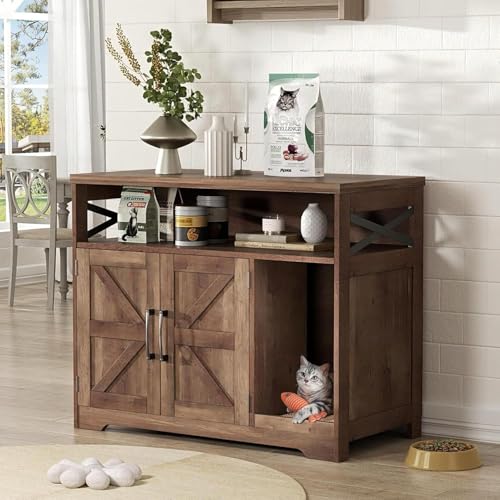
Halitaa Cat Litter Box Enclosure with Scratch Pad
Why These Options Stand Out
This wooden cabinet does two jobs at once: it conceals the box and adds closed storage you can fill with litter bags, scoops, or anything else cluttering a closet. In a hallway or beside the sofa, most guests would read it as ordinary furniture rather than cat equipment.
The enclosed interior keeps the business end out of sight and muffled, which helps in open-plan homes where sound carries. Owners commonly report assembly takes patience, so block out an afternoon.
Where It Helps
- Hides the litter box completely while doubling as usable storage furniture
- Enclosed design contains odor better than an open tray sitting in a corner
- Modern minimalist finish blends into living rooms and entryways
- Wooden construction feels sturdier than plastic hooded boxes
Things To Consider
- Flat-pack assembly means dozens of panels and hardware pieces; set aside real time
- Larger cats may find some enclosed interiors snug depending on your box size
Made For
Apartment and house dwellers who want one piece of furniture solving both litter concealment and general storage.
A Sibling Pick May Suit Better
The Furinno Peli suits shoppers prioritizing a lower cost over built-in storage drawers.
This sibling to the first Hzuaneri cabinet shares the same core formula: wood construction, a hidden interior, and storage on top. Where it earns its own spot is the bundled sisal mat, a woven surface cats can dig claws into while it also traps granules tracked out of the box.
In practice that mat does quiet double duty. Less sweeping around the cabinet, fewer stray pellets underfoot, and one less accessory to buy separately. For a first enclosure, that bundle simplifies setup considerably.
Good Reasons To Consider
- Included sisal mat doubles as a scratching surface and litter catcher
- Dog-proof enclosed entry keeps larger pets from raiding the box
- Quiet, concealed space suits shy cats who avoid exposed trays
- Cabinet exterior wipes clean with a damp cloth during weekly tidying
Worth Noting
- Sisal mats collect debris over time and need occasional vacuuming or shaking out
- Interior capacity depends on the litter box dimensions you pair with it
Who Should Grab It
First-time enclosure owners in multi-pet homes who want the mat problem solved on day one.
Another Choice Worth A Look
The Halitaa with its integrated scratch pad serves heavy scratchers even better.
The standout detail here is the separate corridor design: instead of a straight doorway, cats turn through a curved entry path before reaching the tray. That bend blocks a dog’s line of sight and reach, which matters enormously in homes where a beagle treats litter as cuisine.
Two size options give this cabinet unusual flexibility. The smaller 31.5-inch footprint fits narrow hallways, while the 39.4-inch version accommodates bigger boxes or roomier interiors for large breeds like Maine Coons.
What Helps Most
- Curved entry corridor improves cat privacy and physically blocks dog intrusion
- Two footprint sizes (31.5″ and 39.4″ long) fit different rooms and cat sizes
- Rustic styling reads as genuine furniture in farmhouse or casual interiors
- Enclosed walls contain scattered litter better than open trays
Small Caveats
- The corridor layout eats interior depth, so measure your litter box before committing
- Rustic paneling shows dust more than smooth black finishes
- Assembly of the angled entry sections takes longer than a straight-front cabinet
Feature Snapshot
Built With In Mind
Households running both dogs and cats, especially those tired of guarding the litter box from a determined snacker.
Reach For Something Else When
The Homhedy metal-frame model handles the same multi-pet job with a more modern look.
Most enclosures look like cabinets trying hard to disappear. This one goes the other direction: a black and gold palette with a visible metal frame that reads as deliberate décor, closer to an accent table than pet gear. At 28.3 inches long, the footprint stays modest enough for bedrooms or entry nooks.
The fully enclosed structure still does the practical work, keeping dogs out and odor contained. Style-first households get both without compromise.
Positive Points
- Black and gold finish with metal frame elevates the room instead of hiding in it
- Compact 28.3-inch length slots into tighter spaces than wider cabinets
- Fully enclosed body blocks dogs from accessing the litter area
- Contained design cuts down visual clutter and stray litter around the unit
Less Ideal Details
- Statement styling limits placement; it clashes with rustic or cottage interiors
- Metal-frame builds typically carry a higher price than basic particleboard options
Quick Facts
The Right Fit
Decorators furnishing modern, glam, or industrial spaces who refuse to sacrifice aesthetics for function.
Swap It Out When
The Dwanton tower offers far more storage volume for the same floor space.
Furinno built its reputation on affordable flat-pack furniture, and the Peli applies that playbook to litter concealment. There’s nothing elaborate here: a simple walnut-finish cabinet with a private interior, priced well below most rivals on this list. For a spare bedroom, laundry corner, or rental where you don’t want to invest heavily, that simplicity is the point.
The trade-off shows up in materials. Expect lighter engineered wood rather than solid timber, so treat it gently when moving or tightening hardware.
The Practical Payoff
- Priced noticeably lower than most dedicated enclosures on this list
- Simple, neutral design blends into almost any room without fuss
- Gives anxious cats a private spot, which can improve litter habits
- Lightweight panels make repositioning the cabinet realistic for one person
Points To Keep In Mind
- Engineered-wood panels are more prone to wear than solid or metal-frame builds
- No added extras such as mats, shelves, or drawers at this tier
Who Will Love This
Renters, students, and anyone testing whether an enclosure works for their cat before spending more.
Look Elsewhere If
The first Hzuaneri cabinet rewards owners wanting storage drawers alongside the hidden tray.
Where every other pick here spreads horizontally, the Dwanton climbs. Its footprint runs just 23.6 by 19.7 inches, yet the 50-inch height stacks two open shelves and two fabric drawers above the hidden tray. In a studio apartment or narrow bathroom, that vertical thinking frees floor space other cabinets would swallow.
The steel frame paired with a styled cabinet face keeps it looking intentional rather than makeshift. Two height variants exist, including a taller 61.8-inch version for maximum shelving.
Real Benefits
- Tiny 23.6″ x 19.7″ footprint preserves precious floor area in small homes
- Two shelves plus two drawers absorb supplies that would otherwise clutter closets
- Steel-frame construction adds stability uncommon in tall lightweight furniture
- Hidden lower compartment keeps the tray out of sight in shared bathrooms
Potential Sticking Points
- Tall, narrow builds benefit from wall anchoring in homes with active climbers
- Fabric drawers hold soft goods best, not heavy litter jugs
- Narrow interior may cramp jumbo-sized litter boxes
Details At A Glance
Right Fit For
Apartment dwellers and anyone squeezing a litter station into a bathroom or hallway under three feet wide.
Consider Something Else When
Owners of extra-large cats should compare the wider 39.4-inch Hzuaneri cabinet instead.
The Halitaa closes this list with a detail cat owners will recognize instantly: a built-in scratch pad. Pairing the litter station with an approved scratching surface channels claw maintenance toward the furniture you chose, not the sofa you didn’t.
Visually it splits the difference between the rustic Hzuaneri and the glam Homhedy, combining black metal crossbars with warm rustic paneling. That mix sits comfortably in transitional homes, and the double-entry layout keeps the interior private and contained.
Advantages To Know
- Integrated scratch pad redirects scratching away from sofas and rugs
- Black metal crossbar design pairs with both modern and rustic décors
- Double-entry structure gives cats a genuinely private retreat
- Enclosed body helps keep odor and tracked litter inside the unit
- Serves as functional furniture rather than obvious pet equipment
Trade Offs
- Scratch pads wear with use and eventually need replacing to stay effective
- Mixed-material styling won’t suit strictly minimalist rooms
Whose Shelf It Belongs On
Owners of enthusiastic scratchers who want one purchase covering litter privacy and claw care together.
Where A Sibling Pick Shines
Budget-conscious shoppers will find the Furinno Peli covers basic concealment for less.
What Matters Most Before Choosing Hidden Litter Boxes
Measure Twice, Buy Once
The single most common regret involves size. Check your current litter box dimensions against the enclosure’s interior, then add an inch or two of clearance. Cats dislike cramped quarters, and a box pressed against cabinet walls gets messy fast. Entry height matters too: senior cats and kittens struggle with high step-ins.
Match The Entry To Your Pets
Straight doorways work fine for cat-only homes. Households with dogs need either a curved corridor or an elevated entrance that paws too big to fit simply can’t navigate. Multi-cat homes should also confirm the interior fits the largest animal comfortably.
Think About Cleaning Access
Hinged doors and removable panels make scooping dramatically easier than fishing through a single side opening. Weekly maintenance is the reality of ownership, so favor designs you can service without disassembling half the cabinet.
Weigh Materials Against Placement
Engineered wood keeps costs down but dislikes damp bathrooms. Steel frames handle humidity better and resist wobble in tall units. Place particleboard-heavy picks in dry rooms and reserve metal-framed models for moisture-prone spots.
Key Considerations Across These Picks
Traps First Timers Fall Into
Shoppers frequently order an enclosure sized for the box they plan to buy later, then discover standard jumbo trays don’t fit. Others skip the anchor question entirely; tall units like the Dwanton deserve wall straps in homes with climbing cats. Measure everything first, including doorway widths for delivery day.
The Case For Spending Up
Higher-priced enclosures typically buy thicker panels, steel reinforcement, and smarter entries like curved corridors that deter dogs. Budget picks hide a box adequately, but premium builds survive years of daily use, humid bathrooms, and repeated scrubbing. Pay up once you know your cat accepts an enclosed setup.
Closing Remarks
The right enclosure disappears into your home while quietly solving odor, mess, and multi-pet friction. Start with your room’s dimensions and your pets’ habits, then let those constraints narrow this list fast. Small apartments lean vertical with the Dwanton, dog households gain from the curved-entry Hzuaneri, and cautious starters can’t go wrong with the affordable Furinno Peli. Whichever direction you take, your floors and your nose will both notice the difference within a week.
