

A mouse in the engine bay sounds harmless until it chews through a wiring harness and hands you a four-figure repair bill. Rodents love warm, sheltered engine compartments, especially in parked cars, RVs, and seasonal equipment that sits still for weeks. The right deterrent keeps them from nesting in the first place, whether that means ultrasonic sound, strobe light, or a scent they can’t stand. Below are eight options covering both approaches, matched to different vehicles and budgets.
An Overview Of The Picks

MouseBlocker 12V Ultrasonic Under Hood Rodent Deterrent
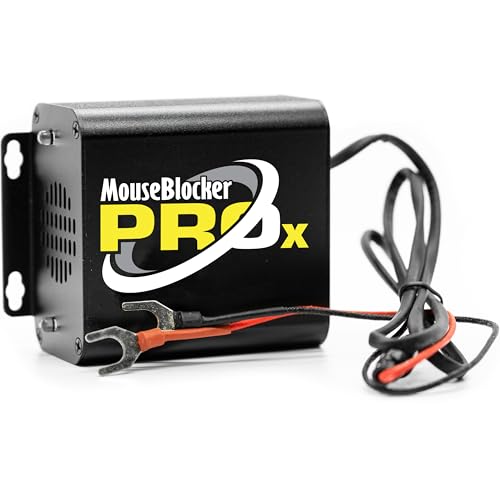
MouseBlocker Prox 12V Under Hood Deterrent

hersohis Peppermint Rodent Repellent Balls 48 Pack

Wanqueen Peppermint Rodent Repellent for Car Engines 4 Pack

Vekibee Ultrasonic Rodent Repellent with Remote Control

BugMD Peppermint Oil Rodent Repellent Spray

Dark Master Peppermint Oil Mouse Repellent 6 Pack

Peepst Ultrasonic Mouse and Rat Repellent 4-Pack
Why These Options Stand Out
The appeal here starts with power delivery. Instead of relying on batteries that die quietly in a hot engine bay, this unit wires straight into your vehicle’s 12V battery with a simple two-wire connection, so it runs whenever the vehicle does. At roughly the size of a deck of cards, it tucks into crowded engine compartments without much fuss.
Ultrasonic sound, for those new to the category, is high-frequency audio above human hearing that rodents find deeply unpleasant. This unit pushes about 85 decibels of it at a frequency described as jackhammer-like to a mouse’s ears, which discourages nesting near wiring harnesses and fuel lines.
Where It Helps
- Hardwired to the battery means no dead-battery surprises after months of parking.
- Rated to handle under-hood heat, sub-zero winters, and moisture without complaint.
- One unit covers cars, trucks, motorcycles, snowmobiles, ATVs, boats, and tractors.
- Compact footprint fits tight engine bays where bulkier boxes won’t.
Things To Consider
- Installation requires basic wiring comfort; some owners prefer a shop or handy friend for the battery connection.
- Ultrasonic coverage works best in enclosed engine compartments rather than open frames.
Key Specs
Who It Suits Best
Daily drivers and anyone tired of checking disposable repellents will get the most from this wired setup.
A Better Fit Elsewhere
Shoppers wanting extra deterrence layers may prefer the MouseBlocker Prox, which adds strobing LEDs and an aluminum case.
Think of this as the original MouseBlocker with reinforcements. The housing switches to aluminum, which shields the internal microcomputer and helps shed heat in a hot engine bay, a meaningful durability step over plastic enclosures. Like its sibling, it draws power directly from the vehicle’s 12V battery through a two-wire install.
The headline addition is Eviction Mode paired with dual white strobing LEDs and the brand’s strongest ultrasonic output to date. Sound plus flashing light gives rodents two reasons to move along instead of one, which matters most for vehicles parked in garages or barns where mice are already established nearby.
Where It Excels
- Aluminum case improves heat dissipation and long-term reliability under the hood.
- Dual strobe lights add a visual layer the standard model lacks.
- Hardwired 12V design keeps protection active without battery swaps.
- Suits cars, trucks, motorcycles, RVs, and tractors alike.
Small Caveats
- You’ll pay more than the base unit, so casual or short-term needs may not justify the step up.
- Strobes run whenever powered, which some owners notice through hood gaps at night.
The Right Fit
Owners of stored or high-value vehicles who want maximum layered deterrence will find the upgrade worthwhile.
Swap It Out When
Budget-conscious shoppers with a single daily driver can stick with the standard MouseBlocker and lose little in practice.
Not every problem lives under a hood. These botanical-oil balls work anywhere rodents wander: the garage floor beside your car, the attic above it, storage bins, basements, even inside an RV during winter storage. One purchase handles the whole property, not just the engine bay.
The formula leans on concentrated plant oils, peppermint among them, that emit a scent rodents naturally avoid. There’s nothing to plug in and no wiring to run; you place the balls and walk away. For households with kids or pets, a passive scent-based approach avoids the electrical questions entirely.
Points In Its Favor
- 48 balls cover multiple rooms, vehicles, and outbuildings from a single pack.
- Plant-based scent approach suits homes with children or animals.
- No power needed, so it works in sheds, attics, and off-grid storage.
- Placement takes seconds; drop one wherever activity shows up.
Worth Noting
- Scent fades over weeks, so plan on refreshing balls periodically to keep coverage strong.
- In wide-open engine bays, airflow can dilute the scent faster than in enclosed spaces.
At A Glance
Made For
Homeowners juggling a car, a garage, and indoor rodent pressure get the broadest value from this pack.
Another Choice May Suit
Drivers focused purely on engine protection will find the Wanqueen engine-specific pack a tighter match.
This one targets the engine bay specifically. Each of the four packs carries a blend of essential oils built around peppermint, releasing a scent that reads as pleasant to people and hostile to rodents looking for a nesting spot. Placement is as simple as setting a pack near the wiring harness and closing the hood.
The manufacturer rates the odor at roughly 12 weeks per application, which translates to about one refresh per season for a daily driver. Compared with the hersohis ball pack reviewed earlier, this option trades versatility for a longer-lasting, engine-focused format, and the four-pack pricing keeps it accessible.
Notable Upsides
- Roughly 12-week scent life means fewer replacements through a season.
- Plant-derived oils avoid harsh chemical smells in the cabin or garage.
- Four packs let you cover a second vehicle or stash spares for later.
- Zero installation effort; place and forget until the next swap.
Potential Drawbacks
- Scent strength fades gradually, so heavily infested areas may need more frequent rotation.
- Heat soak in summer engine bays can shorten effective life depending on your climate.
Who Should Grab It
Owners of seasonal cars, motorcycles, or campers parked for months at a stretch benefit most from the long scent window.
Reach For A Different Pick When
Anyone needing whole-home coverage alongside the car should look back at the hersohis 48-ball pack instead.
Vekibee stacks two deterrent signals into one box: ultrasonic waves plus flashing LED strobes. The combination targets mice, rats, and squirrels, and the added remote control lets you toggle settings without reaching deep into the engine bay, a small convenience you’ll appreciate once the unit is mounted behind a shroud.
Wiring flexibility is another selling point. It connects to either a 12V or 24V battery, which opens the door to diesel trucks, motorhomes, and fleet equipment that standard 12V-only units can’t serve. A complete wiring kit comes included for cars, SUVs, pickups, vans, and RVs.
What Helps Most
- Dual sonic-plus-strobe action covers rodents that ignore a single signal type.
- Remote control makes adjustments easy once the unit is tucked away.
- 24V compatibility extends use to heavy trucks and motorhomes.
- Full wiring kit arrives in the box, so no separate parts run.
Honest Caveats
- More features mean a slightly larger unit; very cramped bays take some planning.
- Wired installation again assumes basic comfort with battery terminals.
Feature Snapshot
Right Fit For
RV owners and truck fleets running 24V systems get capabilities the smaller units simply don’t offer.
Consider Something Else When
Standard sedan owners who want the simplest possible install will find the basic MouseBlocker easier to live with.
Spray formats suit a particular kind of owner: the commuter who pops the hood every couple of weekends anyway. A few passes around the firewall, wiring looms, and battery tray create what the brand describes as a sensory barrier, and the whole job takes less time than checking tire pressure.
The formula is plant-based peppermint oil, so the residue left behind smells fresh rather than chemical. Unlike the Wanqueen packs, there’s no physical object to retrieve and replace; you just reapply. The trade-off is discipline, since spray protection depends on you actually keeping up the routine.
The Value In It
- Spray-on application reaches seams and corners packs can’t sit in.
- Fresh peppermint scent doubles as a pleasant garage note.
- Helps discourage nesting and wire-chewing before damage starts.
- No wiring, no batteries, no hardware of any kind.
Points To Note
- Effectiveness fades between applications, so skipping reapplications weakens the barrier.
- Avoid spraying directly onto electrical connectors; mist surrounding surfaces instead.
Who Will Love This
Commuters who already do light monthly maintenance will fold this into their routine without friction.
Not Your Match When
Set-and-forget types should choose the wired MouseBlocker, which never depends on your memory.
This entry uses a cream format rather than balls or sprays, made from natural peppermint oil. To humans it reads as a light, clean scent; to a rat investigating your engine bay, it registers as an irritation strong enough to send it elsewhere. Six containers come in the pack, which stretches across several vehicles or a full season of rotations.
Placement flexibility is the quiet advantage here. Cream can be dabbed onto a cloth or pad positioned near harnesses, and unlike a spray it won’t drift onto components you’d rather keep dry. Against the Wanqueen four-pack, you gain two extra units at a friendlier entry point, though individual longevity claims are less specific.
Reasons It Performs
- Six units per pack cover multiple vehicles or extended rotations.
- Natural peppermint-oil cream avoids harsh chemical odors.
- Dab-and-place format keeps product exactly where you want it.
- Humane approach encourages rodents to relocate rather than harm them.
A Few Limitations
- Cream can dry out over time in hot engine bays, so periodic checks keep it working.
- No stated lifespan figure, meaning replacement timing is largely judgment-based.
Whose Shelf It Belongs On
Cost-conscious owners protecting one or two everyday vehicles will find this the easiest yes on the list.
Look Elsewhere When
Shoppers wanting documented scent duration should step up to the Wanqueen pack with its 12-week rating.
Power flexibility is what separates this four-pack from the wired crowd. Each unit accepts USB-C at 5V, a 5-12V vehicle battery tap, or four AA batteries, so the same device protects a daily driver, a boat on a trailer, and a shed with no power at all. Note that AAs aren’t included and the unit won’t recharge them.
On the deterrence side, each unit runs two speakers: one fixed at 25 kHz and one sweeping between 22 and 50 kHz, backed by four LED strobes. The variable frequency matters because rodents can habituate to a constant tone; a changing pattern gives them less to adapt to. Four units mean whole-garage coverage rather than a single point source.
Why It Works Well
- Three power paths fit nearly any storage situation.
- Dual fixed and variable ultrasonic outputs resist habituation.
- Four LED strobes add visual deterrence to the audio layer.
- Four-pack quantity covers multiple vehicles or zones at once.
Details To Watch
- Battery mode requires supplying your own AAs and swapping them when depleted.
- USB-C powering works best indoors or in covered storage rather than exposed driveways.
Core Details
Built With In Mind
Households with several vehicles, a boat, and a shed will put all four units to work immediately.
Where A Sibling Pick Shines
Single-vehicle owners wanting permanent under-hood power should stay with the hardwired MouseBlocker instead.
What Matters Most Before Choosing Rat Deterrents For Cars
Match The Method To The Vehicle
Wired ultrasonic units make sense for anything with a live 12V battery and regular use, since they never need attention once installed. Scent-based products suit stored vehicles, boats, and equipment without easy power access. Ask yourself how often you’ll realistically service the deterrent; honesty here prevents gaps in coverage.
Think About Where Rodents Enter From
An engine bay is rarely the only problem. Mice typically travel from a garage wall, woodpile, or attic first. Combining an under-hood unit with scent balls around the garage perimeter closes the loop far better than any single product can.
Weigh Installation Effort Honestly
Two-wire battery connections are simple but not effortless, and some modern engine bays hide the terminals well. Shoppers uncomfortable around automotive electrical systems should lean toward placement-based options or budget a small install fee.
Factor In Climate And Parking Habits
Hot climates accelerate scent fade, while open-air parking dilutes both sound and smell. Enclosed garages amplify every method on this list, so your parking situation shapes which pick delivers real value.
Key Considerations Across These Picks
Traps First Timers Fall Into
The most common mistake is buying one device and expecting it to guard an entire property. Sound and scent both fade with distance, so coverage area matters more than raw power. Another slip is ignoring maintenance cycles; a repellent past its effective window offers zero protection, and many owners discover this only after finding droppings.
What Separates Premium From Basic
Higher-tier units justify their cost through build quality and redundancy. Aluminum housings survive engine-bay heat better than plastic, dual output types cover rodents that adapt to a single signal, and 24V support unlocks trucks and motorhomes. Paying up pays off mainly for stored or high-value vehicles; a basic unit handles most daily drivers fine.
Frequently Asked Questions
Do ultrasonic rat deterrents really work in car engines?
They can help by making the engine bay uncomfortable for nesting, especially in enclosed compartments. Results vary with vehicle design, so pairing sound with a second method improves odds.
How long do peppermint oil repellents last?
Most scent-based products remain effective for several weeks to roughly three months per application. Heat and airflow shorten that window, so check them monthly.
Are these deterrents safe around pets?
Ultrasonic frequencies are generally above the hearing range that bothers dogs and cats at typical distances. Scent-based options use plant oils, though placement away from pet resting spots is still wise.
Can I install a wired unit myself?
A two-wire battery connection is within reach of most DIYers with basic tools. Consult a mechanic if your battery terminals are hard to reach or you’re unsure about routing.
Should I combine more than one deterrent?
Layering methods is the most reliable strategy reported by long-term owners. A wired ultrasonic unit plus scent packs near entry points covers both sound and smell.
Closing Thoughts
Rodent damage is cheaper to prevent than to repair, and every option here costs a fraction of a rewired harness. Match the method to your parking situation, keep up with whatever maintenance your pick demands, and consider layering sound with scent for stubborn areas. Start with the profile that matches your vehicle, and your engine bay stays yours alone.
