

Nobody wants to hear scratching behind the drywall at 2 a.m., and nobody wants to clean up after snap traps either. That’s where plug-in ultrasonic devices earn their keep: they fill a room with high-frequency sound that rodents find miserable while staying silent to human ears. This roundup covers eight options suited to apartments, garages, warehouses, and everything between, so you can match coverage to your actual square footage instead of guessing.
Your Options, Compared
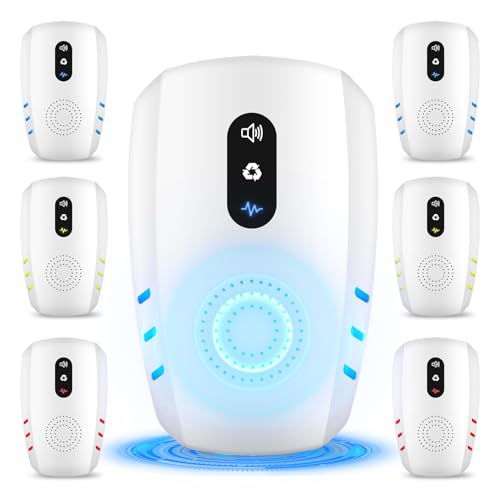
Jqely Ultrasonic Pest Repeller 6 Pack

Jqely Ultrasonic Pest Repeller 10 Pack

TERMX 4-Mode Ultrasonic Mice Repellent

PEST OFFENSE Electronic Pest Repeller
BORHOOD Ultrasonic Pest Repellent Plug-in 2 Pack
BORHOOD Ultrasonic Pest Rodent Repeller
PestXDrops Ultrasonic Pest Repeller 4 Pack
Lickoon Ultrasonic Pest Control Repeller 6 Pack
More Details On Our Top Picks
Six plug-in units in one box changes the math for anyone dealing with activity in more than one room. Each device sweeps ultrasonic frequencies between 10kHz and 65kHz, sound pitched well above what people or dogs typically register, so you can run them around the clock without noticing.
The three-mode setup lets you dial output to the space: gentler settings near sleeping areas, stronger cycles in basements or kitchens where droppings show up. In our view, that flexibility is what separates this from single-setting competitors.
The Case For It
- Six units cover a typical multi-room home without buying extras
- Three modes let you match intensity to each room’s needs
- 10kHz–65kHz sweep targets mice, roaches, ants, and spiders alike
- Plug-and-play design means zero cleanup compared with traps
Things To Consider
- Ultrasonic waves don’t pass through walls, so placement behind furniture limits reach
- Rodents may need a week or two of exposure before activity drops, based on widely reported user experience
Key Specs
Who It Suits Best
Homeowners facing rodent signs in multiple rooms who want one purchase to handle the whole floor plan.
Where A Sibling Pick Shines
Shoppers wanting maximum coverage per dollar should look at the Jqely Ultrasonic Pest Repeller 10 Pack instead.
This is the same Jqely hardware as the six-pack above, stretched to ten units, and that difference matters more than it sounds. Because ultrasound stops at walls, effective coverage comes from unit count, not raw power, so ten plugs let you hit every bedroom, the kitchen, garage, and basement in one order.
Landlords and property managers juggling turnover cleaning will appreciate having spares on hand too. The honest read is that most households won’t need ten, but larger homes rarely regret it.
The Practical Payoff
- Ten units eliminate the guesswork of room-by-room purchasing
- Same 10kHz–65kHz multi-frequency output as the smaller set
- Spares stay useful across rentals, sheds, and seasonal cabins
- Per-unit cost drops versus buying singles repeatedly
Small Caveats
- Overkill for studio apartments where two units would suffice
- Each unit occupies an outlet, so crowded power strips become an issue
Feature Snapshot
Made For
Owners of large homes, duplexes, or small rental portfolios who want consistent protection everywhere at once.
Swap It Out When
Apartment dwellers should step down to the BORHOOD Ultrasonic Pest Repellent Plug-in 2 Pack, which suits smaller footprints better.
Four operating modes give the TERMX more tuning range than the three-mode Jqely sets earlier in this list, which helps when one setting feels too aggressive for a nursery but not strong enough for a pantry. The no-touch design means there’s nothing to bait, empty, or reset, ever.
That hands-off quality is the whole appeal here. You plug it in, pick a mode, and stop thinking about it, which suits busy households that don’t want another chore on the list.
Advantages To Know
- Four modes offer finer control than most three-mode rivals
- No-touch operation means zero mess or maintenance
- Discreet plug-in body blends into any outlet
- Suited to continuous overnight use near bedrooms
Points To Note
- Manufacturer doesn’t publish a specific frequency range, so comparison shopping gets harder
- Single-unit packaging means ordering multiples for whole-home coverage
Right Fit For
Light sleepers and parents who want adjustable, silent operation in living spaces rather than utility areas.
Reach For A Different Pick When
Garage or warehouse duty calls for the PEST OFFENSE Electronic Pest Repeller, built explicitly for large commercial-style spaces.
Most plug-ins on this list aim at homes; the PEST OFFENSE unit aims at square footage. Its listing names offices, businesses, garages, and warehouses outright, and its random digital cycling technology varies the signal pattern constantly so rodents can’t settle into it the way they sometimes adapt to fixed tones.
Random cycling deserves a quick explanation: instead of emitting one steady pitch, the device shifts unpredictably, denying pests the chance to habituate. For a barn or storage facility, that approach makes sense.
What Helps Most
- Rated for home, office, business, garage, and warehouse environments
- Random digital cycling resists pest adaptation over time
- Targets both rodents and roaches in one device
- Chemical-free approach suits food-storage areas
Honest Caveats
- Very large spaces likely need multiple units despite the broad rating
- No published frequency specs make side-by-side comparisons tricky
- Utility-focused styling looks plain in finished living rooms
Who Will Love This
Facility managers and workshop owners protecting equipment and inventory from nesting damage.
Another Choice May Suit
Finished-home users will find the TERMX 4-Mode Ultrasonic Mice Repellent a quieter visual fit for interior outlets.
Two units, one kitchen outlet and one bedroom outlet, is genuinely enough for a one-bedroom apartment, and that’s the scenario this black-finish BORHOOD pair was made for. Its variable output runs between 25kHz and 65kHz, a band that stays inaudible to most adults while covering rodents plus squirrels, bats, spiders, and ants.
Compared with the Jqely sets, you give up unit count and gain simplicity. Nothing to configure, nothing to maintain, just plug in and let it run.
Strong Points
- 25kHz–65kHz variable range deters a wide pest mix
- Two-pack matches typical apartment layouts precisely
- Humane alternative to snap and glue traps
- Matte black housing disappears against dark outlets
Worth Noting
- Two units fall short once you add a garage or basement to the coverage map
- Users commonly report results take one to two weeks of continuous runtime
At A Glance
Best Suited To
Apartment renters and dorm residents needing discreet, low-effort protection in one or two rooms.
Consider Something Else When
Households battling mixed insect problems across many rooms should compare the BORHOOD Ultrasonic Pest Rodent Repeller below.
This sibling to the two-pack carries the same 25kHz–65kHz variable-frequency engine but positions itself as the everyday workhorse for mixed pest pressure. Squirrels in the attic, spiders in the bathroom, ants along the baseboard: one device type handles the rotation, which simplifies shopping considerably.
You may find it pairs well with the two-pack version, running one in living space and this one wherever activity concentrates. Same brand, same frequency behavior, predictable results.
Features That Help
- Handles rodents, squirrels, bats, roaches, spiders, and ants
- Variable 25kHz–65kHz output avoids fixed-tone adaptation
- Simple plug-in install takes seconds per unit
- No chemicals or refills to store or replace
Less Ideal Details
- Listing doesn’t state pack count clearly, so verify quantity before checkout
- Open floor plans dilute effectiveness since sound travels line-of-sight only
Who Should Grab It
Suburban households dealing with seasonal invaders of several species rather than a single rodent problem.
Not Your Match When
Buyers focused purely on rats in a warehouse should pick the PEST OFFENSE Electronic Pest Repeller for its commercial rating.
The standout spec here is automatic frequency adjustment within a 22kHz to 65kHz window. Rather than cycling through preset modes like the Jqely units, this PestXDrops set tunes itself, shifting output on its own so pests never lock onto a pattern. Four plugs land right in the middle ground between the two-pack and the ten-pack options.
For households that want set-and-forget behavior without manual mode selection, this is arguably the most modern approach on the list.
Notable Upsides
- Automatic frequency adjustment removes manual tuning entirely
- 22kHz–65kHz span covers mice through mosquitoes
- Four units suit mid-size homes and townhouses
- Quiet operation rated safe around indoor living spaces
Trade Offs To Consider
- Self-adjusting behavior means less direct control than mode-based rivals
- Four units still leave very large homes under-covered
Quick Facts
The Right Fit
Tech-comfortable homeowners who prefer automation over manual mode switching in a mid-size residence.
Look Elsewhere When
Maximum unit count matters more than smart features, and the Jqely Ultrasonic Pest Repeller 10 Pack serves that need directly.
Lickoon closes the list with a straightforward proposition: six plug-in units sweeping 10kHz to 65kHz, aimed at first-timers who want to try ultrasonic control without a big commitment. The frequency behavior mirrors the Jqely six-pack closely, so performance expectations should be similar.
What you trade away is refinement. There’s no multi-mode selection or adaptive tuning here, just constant output. For a starter kit, though, that simplicity reads as a feature rather than a flaw.
What Pays Off
- Six units at an accessible entry point
- Full 10kHz–65kHz sweep against mice, roaches, ants, and spiders
- Zero learning curve: plug in and walk away
- Lightweight units move easily between rooms seasonally
A Few Limitations
- No adjustable modes limit fine-tuning in sensitive rooms
- Build quality sits at the economy end, so gentle handling during plugging helps longevity
Core Details
Whose Shelf It Belongs On
Cautious first-time users testing whether ultrasonic control works in their home before investing further.
Skip It When
Room-by-room intensity control matters, because the Jqely Ultrasonic Pest Repeller 6 Pack adds three-mode flexibility for modestly more.
What Matters Before Choosing Rat Repellents For Home
Coverage Comes From Unit Count
Ultrasonic sound behaves like light: it travels in a straight line and stops at walls, furniture, and even stacked boxes. One powerful unit cannot protect a whole house, so manufacturers sell multipacks for good reason. Map your problem zones first, then buy enough plugs to place one in each zone plus any connecting hallway.
Frequency Range And Adaptation
Rodents can grow accustomed to a single steady tone, which is why variable or randomly cycling frequencies matter. Ranges spanning roughly 10kHz to 65kHz give the device more patterns to rotate through. Wider ranges generally hold up better over months of continuous use.
Placement Beats Power
Plug units low to the ground near known travel paths, behind appliances, or along baseboards where droppings appear. Keep them unobstructed; tucking one behind a sofa cuts its effective radius dramatically. Free outlets near the floor beat convenient ones at counter height every time.
Set Realistic Timelines
These devices encourage pests to leave rather than destroying them on contact, so expect one to two weeks of continuous runtime before activity visibly drops. Patience separates satisfied owners from disappointed ones.
Key Considerations Across These Picks
Traps First Timers Fall Into
The classic error is buying a single unit for an entire house, then concluding the technology failed when scratching continues upstairs. Another common slip: hiding the device behind furniture for aesthetics, which blocks the sound path entirely. Place units openly at rodent level and treat each room as its own coverage zone.
What The Higher Tier Buys
Spending up typically buys adaptive frequency technology, higher unit counts, and broader environmental ratings. Auto-adjusting models like the PestXDrops set reduce manual effort, while commercial-rated options such as PEST OFFENSE justify their position through durability in demanding spaces. Match the tier to your square footage, not to marketing language.
Frequently Asked Questions
Do ultrasonic rat repellents work through walls?
No, high-frequency sound reflects off solid surfaces and loses strength quickly through barriers. Plan on one unit per enclosed space for reliable coverage.
Are these devices safe around pets?
Most cats and dogs can’t hear the upper frequencies these units emit. Rodent pets like hamsters and gerbils share hearing ranges with pests, so keep such pets in separate rooms.
How long before I see fewer rodents?
Widely reported user experience points to one or two weeks of continuous operation. Running units intermittently resets that timeline.
Can I use them alongside traps?
Yes, and many households do. Repellers push rodents toward open areas where traps positioned along walls catch movement more effectively.
Do they replace professional pest control?
For light seasonal activity, often yes. Established infestations inside walls usually warrant a licensed exterminator alongside any deterrent device.
Bottom Line
Start by counting the rooms where you’ve actually seen evidence, then match pack size to that number rather than to ambition. Renters in small spaces get genuine value from the BORHOOD two-pack, while whole-house problems justify the Jqely ten-pack or the adaptive PestXDrops set. Whichever route you take, give the devices two uninterrupted weeks before judging results, and keep outlets clear of furniture. Consistency does most of the work here.
