

Dealing with rats in the garage, barn, or behind the kitchen cabinets is a problem nobody enjoys solving twice. The right snap trap ends the cycle quickly, without poison sitting where kids or pets can reach it. This roundup covers eight options that handle everything from a single stray mouse to an ongoing barn infestation. Each one earns its place through build quality, trigger sensitivity, or sheer pack value.
The Choices Worth Comparing

NAMEK Rat Trap 12-Pack Large Reusable
SUPREME PRO Rat Traps 6 Pack Indoor

Pirosim 3pc Bucket Mouse Trap

Guarden Rat Traps Indoor 2 Pack

JT Eaton JAWZ Plastic Rat Traps 12 Pack

JT Eaton Bigfoot Rat Snap Trap 12-Pack

LULUCATCH Mouse Traps 6 Pack Snap

LULUCATCH Mouse Traps 12 Pack Snap
Meet The Standout Selections
A dozen traps in one box changes the math when rodents are working your yard line or barn wall at night. The NAMEK set leans on an oversized clamp plate paired with a reinforced spring, which widens the strike zone so both small mice and heavier rats get caught cleanly.
Because these are reusable and chemical-free, you can rotate them along fence lines, under feed storage, or along baseboards without worrying about residue near animals. For most rural properties, twelve stations is enough to cover several pressure points at once.
What Helps Most
- Twelve-trap pack lets you blanket multiple entry points simultaneously instead of playing catch-up one corner at a time
- Oversized clamp plate plus reinforced spring catches rodents of varying sizes with a wider, more sensitive trigger area
- No poison involved, so placement near gardens, coops, or pet zones stays low-stress
- Reusable bodies mean one purchase covers repeated activity over a season
Things To Consider
- Plastic mechanisms benefit from a rinse and dry between deployments, especially after outdoor dust or rain exposure
- The large footprint can look conspicuous in finished living spaces compared with slimmer designs
Key Specs
Who It Suits Best
Rural homeowners and barn keepers who need broad outdoor coverage across sheds, fences, and feed areas will get the most from this twelve-pack.
Where A Sibling Pick Shines
Apartment dwellers dealing with a single indoor mouse trail may prefer the SUPREME PRO six-pack, whose lighter trigger suits tight interior placements better.
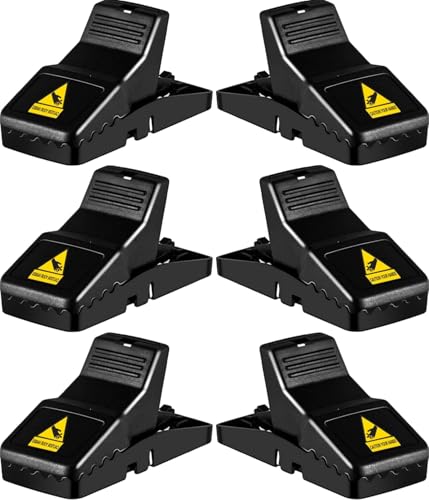
First-timers often fumble traditional wooden traps because the arm bar fights back. The SUPREME PRO set sidesteps that with a bait cup you fill, click back into place, and leave open, no wrestling required. Each package ships with plain-language setup instructions too.
The headline number here is trigger weight: roughly 0.025 pounds sets this off, which matters because light-footed mice frequently steal bait from stiffer traps without consequence. A stainless steel spring delivers the closing force once triggered.
Features That Help
- Extremely light 0.025 lb trigger threshold means even small mice cannot graze and escape
- Stainless steel spring holds tension reliably through repeated resets
- Included instructions remove guesswork for anyone setting a trap for the first time
- Poison-free operation keeps kitchens and pet areas safer to work around
Small Caveats
- That hair-trigger sensitivity cuts both ways; owners commonly report accidental trips when sweeping or bumping placed traps
- Six units cover fewer stations than the NAMEK twelve-pack for larger properties
Made For
Anyone new to rodent control, especially apartment or single-room situations where clear instructions and a forgiving setup process matter most.
Another Choice May Suit
Households juggling curious pets should look at the LULUCATCH six-pack instead, since its washable body handles messes more gracefully.
This one plays by different rules. Instead of one strike per set, the Pirosim lids clip onto any standard five-gallon bucket and reset automatically, holding up to ten mice or five-plus medium rats per station before anyone needs to intervene. Note the bucket itself is not included.
For a shed overrun overnight, that self-resetting behavior is the difference between checking traps daily and checking weekly. There’s no glue and no chemical involved either, and disposal happens at arm’s length, which plenty of people will appreciate.
Points In Its Favor
- Automatic reset catches up to 10 mice or 5+ medium rats per bucket without re-baiting every visit
- Clips onto any standard 5-gallon bucket you already own, keeping total cost down
- Glue-free, chemical-free function suits garages and workshops where residue is unwelcome
- Hands-off disposal means never leaning over the catch
Worth Noting
- You must supply your own bucket, an extra errand some shoppers won’t expect
- The visible lid-and-bucket setup looks utilitarian indoors, so it fits utility spaces better than living rooms
At A Glance
Right Fit For
Shed, barn, and workshop owners facing steady multi-animal traffic who want a station that keeps working between checks.
Swap It Out When
Discreet indoor placement calls for something slimmer, and the JT Eaton JAWZ plastic traps tuck under equipment far more easily.
Two traps sounds modest next to the bulk packs here, but the Guarden pair targets a specific annoyance: the gross factor of emptying a catch. A removable bait cup and a simple setting mechanism let you clear and reload without touching anything unpleasant.
Setup takes seconds according to the included guidance, and the design targets rats, mice, voles, and chipmunks alike. For a quiet kitchen or pantry problem, two well-placed stations often resolve things faster than scattering a dozen half-heartedly.
Benefits That Matter
- Removable bait cup enables no-touch emptying and reloading, the feature people mention most after a first catch
- Simple setting mechanism works correctly in seconds even for cautious first-time users
- Handles rats, mice, voles, and chipmunks, adding flexibility beyond typical mouse-only traps
- Non-electric design means nothing to charge, plug in, or fail
Points To Keep In Mind
- A two-pack limits coverage, so widespread activity across a large home may call for a second order
- Fewer published spec details make side-by-side comparisons harder than with the JT Eaton lines
Who Will Love This
Small households and renters with a contained indoor problem who value clean handling over bulk quantity.
Reach For A Different Pick When
Barn-scale pressure points need volume, and the NAMEK twelve-pack covers far more ground per box.
Pest management professionals have carried JT Eaton products since 1932, and the JAWZ line shows why. A high-tension spring does the closing work, while a red indicator label confirms at a glance whether each unit is properly armed, a small detail that prevents the classic “set but not really” failure.
These accept liquid or solid bait, and the compact body slides beneath equipment where rats actually travel. Twelve per box suits commercial kitchens, warehouses, and serious residential jobs alike.
Good Reasons To Consider
- High-tension spring delivers decisive closure on rats and similar-sized pests
- Red set-indicator label removes doubt about whether the trap is armed
- Works with liquid or solid bait, widening your baiting options
- Low profile hides neatly under shelving, appliances, and machinery
- Nearly a century of pest-industry history backs the brand’s design choices
Less Ideal Details
- The strong spring demands deliberate hand or foot setting, which takes a beat of practice
- Plastic bodies should be cleaned between uses to stay odor-neutral for future catches
Feature Snapshot
Best Suited To
Property managers, restaurant operators, and experienced DIYers running ongoing control programs across multiple sites.
Consider Something Else When
Traditionalists who prefer wood will find the JT Eaton Bigfoot more familiar in feel and operation.
Where the JAWZ goes modern-plastic, the Bigfoot stays old school: a sturdy wooden frame built for years of barn duty. Its expanded trigger carries adjustable sensitivity, letting you tune responsiveness for wary adult rats versus smaller intruders.
After a catch, you choose, wash and reuse the trap, or dispose of the whole thing and move on. That flexibility suits seasonal farm use, where a dozen units rotate through different buildings as activity shifts.
Everyday Perks
- Wooden frame construction stands up to rough handling in barns and outbuildings season after season
- Expanded trigger with adjustable sensitivity adapts to different rodent sizes and caution levels
- Reuse-or-dispose flexibility matches whatever cleanup mood the day brings
- Twelve-pack pricing supports whole-property rotation
Things To Weigh Up
- Wood absorbs moisture and odors over time, so dry storage between uses extends its life considerably
- Wooden bases are harder to sanitize thoroughly than the washable ABS bodies on the LULUCATCH models
Who Should Grab It
Farm and homestead owners who trust proven wooden-trap mechanics and want tunable sensitivity for persistent rat pressure.
Not Your Match When
Indoor hygiene comes first, and the LULUCATCH twelve-pack’s washable plastic construction handles cleaning far more easily.
Homes with dogs or cats need traps that survive a knock and clean up afterward. LULUCATCH answers with thick ABS plastic bodies, twin sets of teeth on the strike bar, and a stainless steel spring that fires at just 0.03 pounds of pressure.
The no-touch release is the quiet hero here: press a lever and the catch drops out without your hands going anywhere near it. Wash the body, and it looks ready for another round, unlike wooden traps that hold stains and smells.
What Works In Its Favor
- Washable ABS plastic rinses clean of odors and stains, so reuse never advertises past catches
- 0.03 lb trigger sensitivity leaves little room for bait-stealing escapes
- Twin teeth and a large mouth close decisively on contact
- No-touch release lever keeps disposal sanitary and quick
- Poison-free and glue-free design fits households with curious pets
Honest Caveats
- High sensitivity means careful placement away from foot traffic and vacuum paths
- Six units cover less ground than the twelve-count version of the same design
Quick Facts
The Right Fit
Pet owners and families who want repeat-use traps they can scrub clean and redeploy around kitchens and garages.
Look Elsewhere When
Whole-house saturation is the goal, and the twelve-count LULUCATCH pack doubles coverage for the same design.
Same trap, double the count. This twelve-pack mirrors the six-pack reviewed above: 0.03-pound trigger, stainless steel spring, twin-tooth strike bar, and washable ABS bodies that come back looking new after a rinse.
The extra six units matter more than they sound. Rodent activity rarely confines itself to one room, and having enough stations to cover the garage, pantry, and utility closet simultaneously shortens the whole campaign. Baiting is straightforward too: fill the cup, set the trap, walk away.
Useful Highlights
- Twelve stations let you address multiple rooms at once rather than chasing activity week to week
- Identical quick-set mechanism and 0.03 lb sensitivity as the smaller pack
- Washable construction keeps long-term costs down across many reuse cycles
- No-touch release keeps every cleanup brief and sanitary
A Few Limitations
- Storing a dozen armed-capable traps safely away from children takes a little planning
- Trigger sensitivity still demands thoughtful placement in busy hallways
Core Details
Whose Shelf It Belongs On
Owners of larger homes, duplexes, or garages with recurring seasonal activity who want maximum station count per dollar.
Skip It When
A single known entry point is the issue, and the Guarden two-pack handles that focused job with less hardware to manage.
What Matters Most Before Choosing Rat Snap Traps
Trigger Sensitivity And Spring Force
A trap only works if it fires. Trigger weight, measured in fractions of a pound, decides whether a light mouse trips the mechanism or walks away fed. Pair that with spring strength, which determines whether the strike holds. Light triggers suit mouse problems; heavier springs matter for adult rats.
Placement And Discretion
Rats travel along walls and under cover, so a low-profile body beats a bulky one indoors. Outdoors, visibility matters less than weather resistance. Match the trap’s shape to where the evidence actually is: droppings, gnaw marks, grease trails.
Reusability And Hygiene
Washable plastic bodies cost more upfront but pay off across seasons, especially in kitchens where odor retention ruins a trap’s effectiveness. Wooden frames remain durable in barns yet absorb moisture and smell over time.
Household Safety Context
Poison-free snap designs remove the risk of secondary poisoning around pets and children, though every trap still deserves placement behind appliances or inside stations where small hands and paws can’t wander.
Key Considerations Across These Picks
Mistakes Worth Dodging
The most common error is buying too few traps. One trap in one corner rarely solves anything, since rodents follow established routes. Another slip is ignoring trigger weight and pairing a stiff wooden trap against small mice. Place along walls, perpendicular to travel paths, and check daily.
When Paying More Pays Off
Higher-tier picks earn their price through materials and engineering: high-tension springs, adjustable triggers, washable bodies, and set indicators that prevent false arming. For a one-mouse problem, budget packs suffice. For recurring seasonal pressure, the durable builds repay themselves within a couple of reuse cycles.
Frequently Asked Questions
Where should rat snap traps be placed?
Set them perpendicular to walls where you’ve spotted droppings or gnaw marks, since rodents hug edges while traveling. Behind appliances and along garage baseboards are reliable starting points.
Are snap traps safe around pets?
Snap traps carry no poison, which removes secondary toxicity risk, but the spring mechanism can injure a curious paw. Place them behind furniture, inside bait stations, or in rooms pets don’t access.
Can snap traps be reused?
Most modern plastic traps rinse clean and reset for many uses. Wooden traps can also be reused, though they absorb odors and moisture, which reduces their appeal in kitchens.
What bait works best?
Peanut butter is the widely recommended default because it sticks and carries a strong scent. Solid baits like seeds or nuts also work, and some traps accept liquid bait as well.
How many traps do I need?
Plan for more than you think necessary, typically one trap per suspected travel route rather than one per room. Bulk packs of six to twelve let you cover multiple routes simultaneously.
Closing Thoughts
Every option here solves the same problem with a slightly different philosophy: volume, sensitivity, hygiene, or raw durability. Match the tool to your space, place more traps than feel necessary, and check them daily. Whichever route you take, acting early beats waiting out the scratching in the walls.
