

Tap water is convenient until you look at what’s actually dissolved in it. Chlorine, heavy metals, and a long list of total dissolved solids (TDS, the measure of everything dissolved in your water) stress fish, corals, and plants in ways that show up as algae blooms, faded colors, and livestock that never quite thrives. A dedicated reverse osmosis system strips those contaminants out before they ever reach your tank, which is why serious hobbyists treat one as core equipment rather than an accessory.
This roundup covers eight options spanning complete RO units, RO/DI setups with deionization stages, replacement cartridges, and the float valve that automates refills. Some are compact enough to hang on a bucket in a spare room; others install under a kitchen sink and double as drinking-water systems. Match the unit to your tank size, how often you do water changes, and whether you keep sensitive species like reef corals that demand zero-TDS water.
The Shortlist At A Glance

Aquatic Life RO Buddie 3-Stage Aquarium Water Filter System, 50 GPD

NU Aqua 5-Stage Under Sink Reverse Osmosis Water Filter System, 100 GPD

AquaticLife Mixed Bed Color Changing DI Resin Refill, 5 Liter
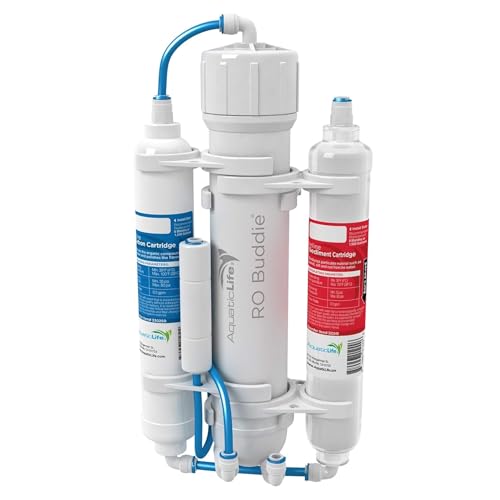
Aquatic Life RO Buddie 3-Stage Aquarium Water Filter System, 100 GPD

AquaticLife Auto Shut-Off Float Valve Kit for RO/RO-DI Units

AquaticLife Twist-In RO/DI Replacement Kit, 75 GPD, 4-Piece

Express Water RODI10D Reverse Osmosis Deionization Water Filter System
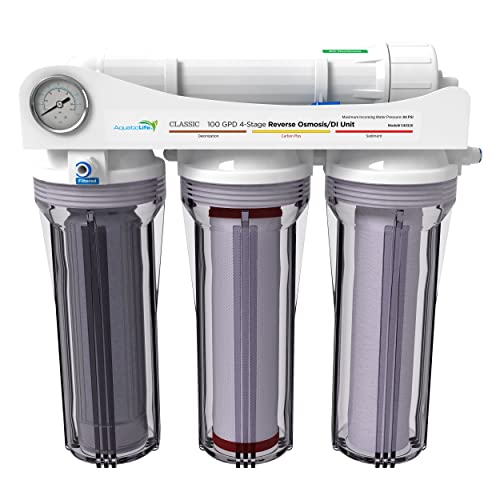
AquaticLife 4-Stage RO/DI Filter with Carbon Plus, 100 GPD
More Details On Our Top Picks
The RO Buddie is the unit most hobbyists recommend to someone setting up their first system, and the reason is straightforward: it hangs on a bucket or reservoir, connects to a standard faucet adapter, and starts producing filtered water without plumbing work. At 50 gallons per day (GPD), output is modest but plenty for weekly water changes on tanks up to roughly 75 gallons.
The three-stage design pairs sediment and carbon pre-filtration with the RO membrane itself, which removes up to about 98% of dissolved solids from tap water. That’s clean enough for most community fish and planted tanks, though not zero TDS.
Everyday Advantages
- Compact wall-mount body tucks into closets, under sinks, or beside a sump without eating floor space.
- 98% TDS reduction means noticeably clearer water and less nuisance algae in typical freshwater setups.
- Works beyond the fish room, feeding humidifiers, fountains, and top-off containers from the same unit.
- Simple cartridge layout makes routine filter changes approachable even on a first system.
Things To Consider
- No DI stage included, so reef keepers will want to add a deionization canister downstream.
- 50 GPD fills large volumes slowly; a 100-gallon change could take most of a day.
Key Specs
Who It Suits Best
First-time RO owners running freshwater community or planted tanks who want dependable filtered water without plumbing or complexity.
Where A Sibling Pick Shines
Hobbyists topping off bigger systems daily will get more mileage from the Aquatic Life RO Buddie 100 GPD version, which doubles throughput for only a modest step up.
Where the RO Buddie lives in the fish room, this NU Aqua unit lives under the kitchen sink and serves two masters. The five-stage layout includes a storage tank and dedicated faucet, so the same water filling your coffee pot also fills your mixing buckets. A 100 GPD membrane keeps pace with both demands, and the bundled PPM meter lets you verify output quality at the tap instead of guessing.
Installation is the real commitment here. You’ll drill a faucet hole and tie into the cold-water line, which is a weekend-afternoon job for most households rather than a ten-minute hookup. In return you get a permanent, high-capacity source of RO water steps from the tank room.
The Practical Payoff
- Five stages of filtration handle sediment, chlorine, and dissolved solids in one pass.
- 100 GPD fast-flow membrane refills the storage tank quickly between water changes.
- Included PPM meter takes the mystery out of knowing when membranes need attention.
- Storage tank means RO water is on tap instantly, no waiting for slow production.
Worth Noting
- Under-sink installation requires drilling and plumbing connections some renters can’t make.
- Tank-based systems occupy cabinet space that smaller kitchens may not spare.
Made For
Homeowners keeping mid-size to large aquariums who also want better drinking and cooking water from a single installed system.
Another Choice May Suit
Renters and anyone avoiding permanent plumbing should look at the Express Water RODI10D-style portable approach or the hang-on RO Buddie instead.
This isn’t a filter system, it’s the consumable that keeps one honest. Deionization resin is the final polishing stage in an RO/DI setup, stripping the last traces of dissolved solids the membrane misses so output hits zero TDS. Reef corals and sensitive shrimp are unforgiving about anything less, which is why DI capacity matters more than raw GPD for marine keepers.
The color-changing formulation is the practical draw here. As the mixed bed resin exhausts, it shifts from dark brown or blue toward tan, giving you a visual cue long before a TDS meter would flag a problem. A 5-liter bulk bag refills standard 10-inch canisters several times over, which works out cheaper per gallon than sealed disposable cartridges.
A Few Highlights
- Color shift from dark brown/blue to tan signals exhaustion without constant meter checks.
- Bulk 5-liter quantity lowers the per-refill cost for high-volume water producers.
- Drives final-stage TDS down to zero when fed by a healthy RO membrane.
Small Caveats
- Resin life depends heavily on feed-water quality; hard municipal supply exhausts it faster.
- You’ll need refillable canisters and basic handling care, since loose resin is messy to transfer.
Quick Facts
Right Fit For
Reef and shrimp keepers already running an RO unit who want economical, easy-to-monitor DI refills.
Swap It Out When
If you’d rather replace whole cartridges than handle bulk resin, the AquaticLife Twist-In RO/DI Replacement Kit bundles a sealed DI stage with its other filters.
Same compact body as the 50 GPD Buddie reviewed earlier, same three-stage simplicity, but with a membrane that produces twice the water per day. That difference matters more than it sounds. Anyone running multiple tanks, doing 50-gallon changes, or mixing saltwater weekly knows the frustration of waiting on a slow trickle, and doubling output cuts that wait roughly in half.
Filtration performance matches its smaller sibling, removing up to around 98% of dissolved solids. The trade-off is efficiency: higher-GPD membranes typically send more water to drain per gallon produced, so households paying close attention to wastewater may prefer the smaller unit. For busy fish rooms, though, time saved beats water saved.
Useful Touches
- 100 GPD output halves fill times compared with the 50 GPD version for large changes.
- Identical hang-on mounting keeps the footprint tiny even with the bigger membrane.
- Handles humidifiers, fountains, and multiple tanks from one dedicated line.
- Up to 98% TDS removal suits most freshwater and fish-only marine setups.
Points To Note
- Higher-capacity membranes generally waste more rinse water per gallon made.
- Still lacks a DI stage, so coral keepers must add deionization separately.
Who Will Love This
Multi-tank keepers and saltwater mixers who run frequent, larger water changes and want them done before dinner.
Reach For A Different Pick When
Smaller tanks with light weekly top-offs are better served by the 50 GPD RO Buddie, which runs more conservatively on water use.
Every RO owner eventually forgets a running system overnight and floods something. This float valve kit exists to prevent exactly that. Mounted inside a reservoir or sump, the valve rises with the water level and shuts the system off once it reaches your set point, then reopens as level drops. Your RO unit effectively becomes an automatic top-off station.
The kit uses quarter-inch fittings matching standard RO tubing, and installation is a cut-and-connect job most hobbyists finish in minutes. Beyond flood prevention, it saves water, since a system left running unattended wastes gallons down the drain for hours. One caution worth heeding: float valves are mechanical, so checking the shutoff occasionally is cheap insurance.
The Upside
- Automatically stops production at your chosen water level, enabling unattended fills.
- Quarter-inch fittings match common RO and RO/DI tubing without adapters.
- Cuts wasted rinse water from systems accidentally left running.
- Simple mechanism with few parts to fail or maintain.
Less Ideal Details
- Mechanical floats can stick over time, so periodic manual checks are wise.
- Only useful alongside a reservoir or sump with room to mount it.
Whose Shelf It Belongs On
Anyone with an RO or RO/DI unit feeding a storage container, sump, or auto top-off reservoir who wants hands-free operation.
Consider Something Else When
You’re still choosing a base system; pair this with the Aquatic Life RO Buddie 100 GPD for a complete automated setup rather than buying it standalone.
Filters are consumables, and this four-piece kit refreshes an entire compatible RO/DI system in one order. You get a sediment cartridge, carbon block, 75 GPD membrane, and DI cartridge, all in twist-in form. That last detail is the selling point: instead of unscrewing housings and dealing with dripping canisters, you twist the old cartridge out and the new one in, dry-handed, in seconds.
The sediment stage catches sand, silt, and rust that would otherwise clog downstream stages, while the carbon block protects the membrane from chlorine damage. Matching the 75 GPD rating matters, since a mismatched membrane changes your system’s output. Owners of AquaticLife twist-in systems commonly report this as the least painful maintenance ritual in the hobby.
What Earns Its Place
- Complete four-stage refresh in a single purchase, no piecing together individual filters.
- Twist-in design eliminates housing wrenches, o-ring leaks, and wet cartridge swaps.
- Carbon block shields the membrane from chlorine, extending its service life.
Details To Watch
- Only fits twist-in style housings, so older threaded-canister systems can’t use it.
- Cartridges have shelf lives once installed, so buy replacements on schedule rather than stockpiling opened spares.
Core Details
Best Suited To
Existing owners of AquaticLife twist-in RO/DI systems who want fast, predictable annual maintenance.
Not Your Match When
Standard 10-inch canister owners should stick with bulk media like the AquaticLife color-changing DI resin refill instead.
This is the deep-cleaning option in the lineup. Express Water builds the RODI10D as a true reverse osmosis plus deionization system, meaning water passes through RO stages and then a DI polish that targets the residual dissolved solids RO alone leaves behind. The manufacturer cites removal of up to 99.99% of contaminants, including lead, chlorine, fluoride, heavy metals, bacteria, viruses, and pharmaceuticals, figures that matter as much to reef keepers as they do to anyone drinking the output.
For aquarium purposes, that translates to genuinely zero-TDS-ready water for SPS corals, delicate shrimp, and sensitive planted setups. The honest caveat is upkeep: DI resin exhausts faster than any other stage, especially on hard tap water, so budget for regular resin changes and keep a TDS meter handy.
Positive Points
- RO plus DI architecture delivers near-total dissolved solid removal for demanding livestock.
- Broad contaminant coverage spans metals, chlorine, microbes, and trace pharmaceuticals.
- Doubles as a premium drinking-water source straight from the same unit.
- Suits both under-sink and utility-room installations thanks to standard sizing.
Potential Sticking Points
- DI stage consumes quickly on mineral-heavy municipal supplies, adding ongoing cost.
- More stages mean more cartridges to track and replace on schedule.
The Numbers That Matter
Who Should Grab It
Advanced reef keepers and breeders who need laboratory-grade water and don’t mind disciplined cartridge maintenance.
Look Elsewhere When
Casual freshwater keepers will find the simpler Aquatic Life RO Buddie easier to live with day to day.
AquaticLife rounds out the list with its most complete dedicated aquarium unit: four stages delivering up to 100 gallons per day of RO/DI water. The chain runs sediment, a Carbon Plus cartridge, the 100 GPD membrane, and a refillable 10-inch color-changing DI canister. That last word, refillable, is what separates this from sealed-cartridge rivals, since you can reload it with bulk resin like the 5-liter AquaticLife refill covered earlier instead of discarding the whole housing.
Compared with the Express Water RODI10D, this unit trades some contaminant-list breadth for aquarium-specific design and lower running costs. Compared with the bare-bones RO Buddie, it adds the DI polish reef tanks demand. For a dedicated fish room producing saltwater mix and top-off water daily, it hits a strong balance.
Real Benefits
- 100 GPD output supports daily mixing and top-offs in busy multi-tank rooms.
- Refillable DI canister slashes long-term consumable costs versus sealed cartridges.
- Carbon Plus pre-treatment gives the membrane extra protection from chloramine-heavy supplies.
- Color-changing resin shows exhaustion at a glance, no constant meter dips required.
Trade Offs To Consider
- Four stages mean slightly more setup and monitoring than a basic three-stage unit.
- DI resin still needs replacing regularly on hard water, so keep spare media stocked.
Feature Snapshot
The Right Fit
Dedicated marine and planted-tank hobbyists running a fish room who want high volume and low lifetime consumable cost together.
Skip It When
Your needs stop at occasional freshwater top-offs, where the 50 GPD RO Buddie does the job with less hardware.
What Matters Most Before Choosing Reverse Osmosis Systems For Aquarium
Output Rate Versus Tank Size
GPD tells you how many gallons a system produces in a day of continuous running, and it should scale with your water-change habit. A 30-gallon tank with weekly 20% changes is comfortable on 50 GPD, while a 180-gallon reef with daily top-offs wants 100 GPD or more. Undershooting just means longer waits, not worse water.
RO Alone Versus RO/DI
Reverse osmosis removes the vast majority of dissolved solids, but a deionization stage polishes the remainder to zero TDS. Freshwater community tanks usually thrive on plain RO, sometimes remineralized. Corals, crystal shrimp, and sensitive plants are another story entirely, and for those a DI stage is non-negotiable.
Feed Water Quality
Your tap dictates consumable costs. Hard, heavily chlorinated municipal supply exhausts carbon and DI resin faster, so factor local water hardness into long-term ownership expenses before committing to any unit.
Mounting And Space Reality
Hang-on units suit buckets, closets, and rentals. Under-sink systems need drilling, a drain connection, and cabinet space. Measure first, because the best spec sheet can’t fix a filter that doesn’t fit where you’ll actually run it.
Key Considerations Across These Picks
Traps First Timers Fall Into
The most common mistake is buying on GPD alone and ignoring the DI question entirely, then discovering a reef tank needs zero TDS after livestock suffers. Another frequent slip is skipping the TDS meter, leaving you guessing when membranes and resin have exhausted. Match the system to your livestock’s actual requirements before checkout.
What Separates Premium From Basic
Higher-tier units add DI polishing, refillable canisters, and higher-output membranes. Those features cost more upfront but pay off through cheaper consumables and faster production. Casual keepers rarely need them; anyone running saltwater or multiple tanks usually recovers the difference within a year of resin savings.
Frequently Asked Questions
Do I need a DI stage for a freshwater aquarium?
Most community freshwater tanks do fine on RO alone, often with minerals added back. Sensitive species like crystal shrimp benefit from the zero-TDS polish a DI stage provides.
How often should I replace RO filters?
Sediment and carbon cartridges typically need changing every six months, membranes every one to two years depending on feed water. DI resin lasts anywhere from weeks to months based on your tap’s mineral load.
What does GPD actually mean?
Gallons per day, the volume a system produces running continuously for 24 hours. Real-world output drops with cold water or low pressure, so treat it as a ceiling.
Can I drink water from an aquarium RO system?
Yes, RO and RO/DI output is exceptionally pure drinking water. Many keepers remineralize it for taste either way.
Why is my RO system wasting so much water?
RO membranes flush concentrated contaminants to the drain by design, and higher-GPD membranes typically waste more. A float valve or shut-off kit prevents waste from unattended running.
Bottom Line
Pick the system that matches your livestock first and your plumbing second. Freshwater starters get everything they need from the RO Buddie line, while reef keepers should prioritize a DI stage, whether built in like the AquaticLife 4-Stage or added via bulk resin. Add a float valve once automation sounds appealing, and keep a TDS meter nearby. Clean water is the quiet foundation every good tank rests on, and any of these eight will get you there.
