

Planted tanks live or die at the substrate level. Swords, crypts, and vallisneria pull most of their nutrition through their roots, and inert gravel gives them nothing to work with. That’s where root tabs come in: pressed nutrient tablets you push into the gravel near heavy root feeders, so plants get fed where their roots actually are. This roundup covers eight options for 2026, from classic tabs to liquid complements that round out a full feeding routine, so you can match the product to your tank instead of guessing.
A Fast Comparison Of The Options

CrystalClear Thrive Pond Plant Food 30 Tablets
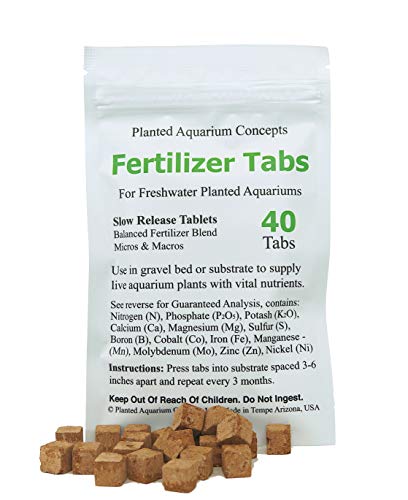
Aquarium Plant Root Fertilizer Tabs 40 Count

Thrive+ All in One Liquid Aquarium Fertilizer 500ml

ThriveS Shrimp All-in-One Aquarium Fertilizer 500ml

Seachem Flourish Trace Elements 500ml

Seachem Stability 50 ml

Seachem Flourish 100 mL

Crystalpro Flora Multi Minerals 125ml
More Details On Our Top Picks
This one steps outside the glass box entirely. CrystalClear built Thrive for outdoor ponds and container water gardens, where lilies and lotus demand serious nutrition to flower well. The tablet format means you press nutrients straight into the planting media rather than dusting powder across the surface.
For anyone maintaining a backyard pond, that targeted delivery matters. Water lilies are notorious bloom-strikers when they run hungry, and a tab buried at the crown feeds the plant without clouding the whole pond.
What Makes Sense
- Nutrient blend aimed at vigorous leaves and fuller flowering, which is what pond growers actually want
- Tablet form keeps fertilizer localized at the roots instead of dispersing through open water
- Thirty tablets per container stretch across a season of feeding for a modest pond
- Formulated with fish safety in mind for stocked ponds
Things To Consider
- Dosing intervals mean marking your calendar; skipping applications shows up as pale leaves within weeks
- Oversized for nano aquariums, so indoor planted-tank keepers should look elsewhere on this list
The Right Fit
Pond owners growing lilies, lotus, or other heavy-blooming marginals who want simple seasonal feeding.
A Better Fit Elsewhere
Indoor aquascapers will get more mileage from the Planted Aquarium Concepts tabs, which are sized for aquarium substrates.
If the keyword brought you here, this is the purest expression of it. These are dedicated aquarium root tabs: slow-release tablets designed to be pushed into the substrate beside rooted plants, releasing nutrition over roughly three months before replacement. No liquids, no measuring cups, no daily routine.
The forty-count jar suits a mid-sized planted tank comfortably. Placement guidance calls for spacing tabs three to six inches apart near plant bases, which works out neatly for a row of Amazon swords along the back glass.
Benefits That Matter
- Slow-release design feeds gradually, so you handle maintenance a few times a year instead of weekly
- Works in tanks with just an inch or two of substrate, no deep dirted bottom required
- Forty tabs cover a densely planted 40-gallon layout with room to spare
- Simple press-and-done installation takes minutes during a water change
Small Caveats
- Root feeding alone won’t carry stem plants that draw mainly from the water column
- Some owners report tabs crumbling if pushed in too forcefully, so insert gently with fingers or tweezers
Quick Facts
Who Should Grab It
First-time planted tank keepers running swords, crypts, or bulbs in plain gravel who want set-and-forget feeding.
Swap It Out When
Shrimp-focused hobbyists should reach for the NilocG ThriveS bottle instead, since its formula is tuned around invertebrate safety.
Where the Planted Aquarium Concepts tabs feed from below, NilocG’s Thrive+ works from above. It’s a concentrated liquid dosed into the water column, built primarily for high-tech tanks running injected CO2 and strong lighting, though it also functions in low-tech setups. The pH-under-7 orientation tells you its intended audience: soft-water aquascapers chasing fast growth.
The appeal is simplicity at scale. One bottle replaces the guesswork of mixing individual macro and micro solutions, which is exactly where most newcomers stall out.
What Works In Its Favor
- Highly concentrated formula stretches a 500ml bottle across months of regular dosing
- All-in-one nutrient profile removes the need to calculate separate macro and micro additions
- Suits both CO2-injected and low-tech tanks, giving you room to upgrade lighting later
- Liquid delivery reaches stem plants and floaters that root tabs can’t help
Points To Note
- Weekly dosing discipline is required; missing doses stalls growth faster than with tabs
- Tanks with hard, alkaline water may see less benefit than the soft-water setups it targets
Feature Snapshot
Who Will Love This
Intermediate aquascapers running CO2 and high light who want dense growth without mixing their own solutions.
Where A Sibling Pick Shines
Invertebrate-heavy tanks are better served by the ThriveS variant below, which shares this brand’s approach with a gentler formula.
Shrimp keepers know the dilemma: plants want fertilizer, but copper-sensitive inverts make standard formulas risky. ThriveS exists specifically to resolve that tension. NilocG balanced the nutrient ratios so planted shrimp tanks get complete feeding without pushing water-change demands upward, and the company states plainly that it won’t harm shrimp or other invertebrates.
In practice, that makes it the low-anxiety option for a cherry shrimp colony grazing over a carpet of monte carlo. You dose, plants grow, shrimp molt on schedule.
Positive Takeaways
- Formulated around invertebrate tolerance, removing the copper worry that shadows generic fertilizers
- Nutrient levels calibrated to avoid increasing water-change frequency, a real time saver in small tanks
- Same convenient all-in-one liquid format as the flagship Thrive+, so dosing stays simple
- Supports lush plant growth that gives shrimp more grazing surface and cover
Honest Caveats
- Consistent dosing schedule still matters; erratic application is the most commonly reported cause of algae in fertilized shrimp tanks
- Overkill for fish-only tanks with sparse planting
Best Suited To
Nano and medium shrimp tanks with live plants, especially keeper-run colonies of neocaridina or caridina species.
Reach For A Different Pick When
Fish-only planted tanks without inverts can use the stronger Thrive+ formula for faster growth.
Trace elements are the micronutrients plants need in tiny amounts: iron, manganese, boron and their relatives. They deplete quickly through plant uptake, oxidation, and precipitation, which is why Seachem sells this as a standalone supplement rather than folding everything into one bottle. Serious planted-tank hobbyists often pair it with a macro solution for full coverage.
The 500ml size is the practical choice here. Smaller bottles run dry fast once you’re dosing two or three times weekly in a heavily planted display.
Well-Handled Touches
- Broad spectrum of trace elements addresses deficiency signs like yellowing new growth
- Separate micro dosing lets experienced keepers tune ratios precisely instead of accepting a fixed blend
- Large 500ml volume supports long-term use in bigger tanks
- Backed by one of the most established names in aquarium chemistry
Less Ideal Details
- Not a complete fertilizer on its own; pairing with a macro source like Thrive+ is essentially required
- Requires regular re-dosing because traces deplete faster than other nutrients
Core Details
Whose Shelf It Belongs On
Advanced hobbyists already dosing macros who want granular control over micronutrient levels.
Another Choice May Suit
Beginners wanting one bottle and done should start with the Crystalpro Flora Multi Minerals instead of building a two-part system.
Full transparency: this isn’t a plant fertilizer at all. Stability is a bacterial supplement that helps establish the biofilter, the colony of microbes that converts fish waste into less harmful compounds, in fresh and marine tanks. It earns its place here because new planted tanks fail at the cycling stage far more often than at the fertilizing stage, and dead plants usually follow dead-cycle water.
The 50ml bottle covers the startup window for a smaller tank. Think of it as insurance while your root tabs do their quiet work below the gravel line.
A Favorable Mix
- Speeds biological establishment in newly set-up freshwater and marine systems
- Addresses the leading cause of early livestock loss in young tanks
- Compact bottle sized appropriately for a single cycling period
- Compatible with planted setups, so fertilizing and cycling can proceed together
Points To Keep In Mind
- Single-use scope: once the tank is cycled, the bottle’s job is done
- Won’t feed plants directly, so it pairs with rather than replaces the tabs on this list
Made For
Anyone setting up their first planted aquarium who wants the nitrogen cycle established before adding sensitive fish.
Consider Something Else When
Established tanks past the cycling phase gain nothing here; the Seachem Flourish 100mL below is the better ongoing pick.
Flourish is the gentle middle ground between the specialized products above. It’s a broad micro and trace element supplement for natural freshwater tanks, light enough for low-tech setups with modest lighting yet useful alongside heavier fertilization in demanding scapes. Where Thrive+ pushes aggressive growth, Flourish maintains steady health without pushing algae-prone conditions.
The 100mL bottle is the entry size, which honestly suits its role. Low-tech keepers dose sparingly, and upgrading to larger volumes later costs nothing in flexibility.
Everyday Perks
- Rich assortment of micro and trace elements supports overall plant condition
- Mild enough for lightly lit community tanks where aggressive fertilizers trigger algae
- Layerable with root tabs, covering both substrate and water-column feeders
- Long track record across decades of freshwater hobby use
Trade Offs To Consider
- Lacks significant macronutrients, so fast-growing stems may still need supplemental feeding
- Small bottle requires repurchasing sooner in larger tanks
Right Fit For
Low-tech planted community tanks with anubias, java fern, and crypts under standard LED lighting.
Not Your Match When
High-light CO2 tanks needing full macro support will outgrow it quickly; Thrive+ handles that workload better.
Crystalpro packs a complete micro and macro nutrient program into a compact 125ml bottle, aiming squarely at hobbyists who want one product covering everything. The formula targets both root development and leaf growth, and the maker states it’s safe alongside fish, shrimp, and snails, which puts it in rare company among all-in-one liquids.
Compared to the Seachem Flourish 100mL, this delivers a fuller nutrient range per dose. Compared to Thrive+, it trades some concentration for invert-friendly peace of mind.
Notable Gains
- Single-bottle coverage of essential micro and macro nutrients simplifies any dosing shelf
- Rated safe for fish, shrimp, and snails, suiting mixed-community planted tanks
- Formulated to drive both root and leaf growth rather than foliage alone
- Compact bottle stores easily under a nano tank stand
Some Limits To Know
- 125ml runs out faster than the 500ml competitors in larger or heavily planted displays
- Less brand history behind it than the Seachem or NilocG options
Key Attributes
Who It Suits Best
Keepers of small to medium mixed tanks who want comprehensive feeding without managing multiple bottles.
Look Elsewhere When
Large display tanks burn through small bottles quickly, so the 500ml Thrive+ offers better staying power there.
What Matters Most Before Choosing Root Tabs For Aquarium Plants
Match The Feeding Route To Your Plants
Root feeders like Amazon swords, crypts, and onion bulbs draw nutrition primarily through their root systems, making tabs the efficient choice. Stem plants such as rotala and hornwort feed mostly from the water column, so they respond better to liquid fertilizers. Most thriving planted tanks end up using both routes together.
Substrate Depth And Tank Size
Tabs need enough substrate to sit buried without leaching into open water. A bed of one to two inches handles most tablet products fine. Nano tanks under ten gallons benefit from smaller-count jars, since half a jar going stale in a drawer serves nobody.
Livestock Sensitivity
Shrimp and snail keepers should verify invert compatibility before buying anything. Formulas like ThriveS and Crystalpro exist precisely because standard fertilizers can stress sensitive invertebrates. Fish-only tanks have wider latitude.
Key Considerations Across These Picks
Traps First Timers Fall Into
The most common error is buying tabs for a tank full of stem plants and wondering why nothing changed. Another frequent misstep is leaving tabs half-exposed at the substrate surface, which releases nutrients into the water column and invites algae. Push them fully under the gravel.
The Upgrade Payoff
Higher-tier liquid concentrates cost more upfront but deliver more doses per dollar in large tanks. Concentrated 500ml bottles also reduce how often you reorder, which matters once fertilizing becomes part of your weekly rhythm.
Frequently Asked Questions
How often do root tabs need replacing?
Most slow-release tabs last around three months before their nutrient load is spent. Mark the date on your calendar or phone so replacements happen on schedule.
Can root tabs harm fish or shrimp?
Tablets buried properly in the substrate release nutrients slowly and locally, posing minimal risk to livestock. Shrimp keepers should still favor formulas explicitly labeled invert-safe.
Do I need root tabs and liquid fertilizer together?
Heavy root feeders and stem plants have different uptake routes, so combining both covers the whole tank. Lightly planted low-tech setups can often manage with just one method.
Will root tabs cause algae blooms?
Algae typically follows tabs left exposed or overdosed, not properly buried ones. Full insertion beneath the substrate keeps nutrients where roots can reach them.
How many tabs does my tank need?
Spacing guidance generally runs three to six inches apart near rooted plants. A densely planted 40-gallon layout might use a dozen or more per cycle.
Bottom Line
Start by identifying what actually grows in your tank, then match the feeding route to it. Rooted showpieces justify the Planted Aquarium Concepts tabs, shrimp colonies point toward ThriveS, and high-tech scapes reward Thrive+. Whichever direction fits, consistent dosing beats expensive products applied erratically. Your plants will tell you within a few weeks whether the choice landed.
