

A good hands-free leash changes how you move with your dog. Instead of gripping a handle for three miles, the lead clips to your waist and the bungee section soaks up every lunge before it reaches your lower back. That matters most on early-morning runs, crowded trails, or any outing where you want one hand free for coffee, a phone, or a stroller.
The eight options below cover single-dog runners, two-dog households, and anyone who wants storage built into the belt. Each pick earns its place on specific attributes: bungee design, waist adjustability, reflective detailing, and carrying capacity. Match the leash to your dog’s size and your route, and the difference shows up immediately in how relaxed your runs feel.
The Choices Worth Comparing
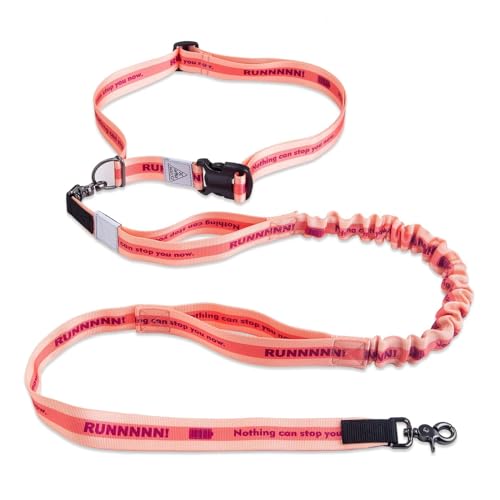
JC HOUSE Hands Free Dog Leash with Waist Belt & Bungee

Uppetly Hands Free Dog Running Leash with Zipper Pouch

Uppetly Hands Free Dog Running Leash with Waist Belt (Pink)

Philorn Hands Free Dog Leash with Pouch

Heelay Hands Free Running Dog Leash with Storage Waist Belt

Tuff Pupper Hands Free Adjustable Length Dog Leash
Yicostar Hands Free Dog Leash for Two Dogs

PetAmi Premium Hands Free Dog Leash for 2 Dogs
Why These Options Stand Out
This is the entry point of the list, and that’s not a knock. The JC HOUSE setup covers the essentials: an adjustable waist belt, an elastic bungee section, and dual handles for moments when you need direct control near traffic. Nothing extra, nothing missing.
For neighborhood jogs where your dog mostly stays at heel, this arrangement keeps things light around your hips. The bungee stretch is what separates it from a standard lead; it absorbs the first jolt when a squirrel appears, so your spine doesn’t.
Features That Help
- Adjustable waist belt lets the belt sit where it’s comfortable rather than forcing one fixed position
- Elastic bungee softens sudden lunging, which spares both your back and your dog’s neck
- Dual handles give you a grab point for crossings and crowded sidewalks
- Works across walking, jogging, running, and hiking without reconfiguration
Things To Consider
- No storage pouch, so keys and treats still live in your pockets
- The listing doesn’t specify a weight rating, which makes it harder to match to very strong pullers
Who Will Love This
Owners of calm-to-moderate dogs who want a clean, uncomplicated hands-free setup for daily neighborhood miles.
A Better Fit Elsewhere
Runners who carry a phone will get more from the Uppetly Hands Free Dog Running Leash with Zipper Pouch, which adds dedicated storage.
Where the JC HOUSE keeps things bare-bones, the Uppetly adds the two features runners actually ask for: a zippered pouch on the belt and dual bungees rated for dogs up to 150 pounds. The belt adjusts from 27 to 55 inches, which covers nearly every adult frame without pinching.
In practice, that pouch changes the run. Phone, keys, and a waste bag ride at your hip instead of bouncing in a jacket pocket, and the heavy-duty dual bungee design spreads pulling force across two elastic sections rather than one.
Why It Works Well
- 27-to-55-inch adjustable belt fits a wide range of body sizes over winter layers or summer shorts
- Dual bungees absorb shock from dogs up to 150 lb, easing strain during hard pulls
- Zipper pouch secures a phone so you can run, bike, or hike unencumbered
- Suits medium and large breeds specifically, not just generic sizing
Worth Noting
- Extra hardware means slightly more bulk around the waist than minimalist belts
- Owners commonly report the pouch holds a phone snugly but larger models can press against the hip while running
At A Glance
Made For
Runners and cyclists with medium-to-large dogs who want their phone and keys handled without a separate bag.
Swap It Out When
Small-dog owners should look at the PetAmi Premium Hands Free Dog Leash for 2 Dogs instead, since its guidance tops out around 75 lb per dog.
This is the same Uppetly platform as the pouch version above, minus the zipper pocket and plus reflective stitching woven into the leash itself. That trade makes sense for a specific runner: the one logging miles before sunrise or after work in fading light.
You keep the 27-to-55-inch belt, the dual heavy-duty bungees, and the 25-to-120-pound dog range. What changes is visibility. Reflective thread catches headlights and streetlamps along the full length of the lead, which matters more than most people expect once they’ve been passed by a car on an unlit path.
Notable Upsides
- Reflective stitches make you and your dog easier to spot in low light
- Same wide 27-to-55-inch belt adjustment as the pouch model
- Dual bungees handle strong pullers up to 150 lb of force
- Lighter overall load without the pouch hardware
Small Caveats
- No onboard storage, so phone and keys need another home
- Elastic sections benefit from occasional inspection for fraying, a routine worth building into any bungee leash
Right Fit For
Dawn and dusk runners with medium or large dogs who prioritize being seen over carrying gear.
Where A Sibling Pick Shines
Daytime-only walkers who want storage should step up to the Uppetly Hands Free Dog Running Leash with Zipper Pouch reviewed earlier.
The Philorn competes directly with the Uppetly pouch model but positions its strength differently: thicker stretch material and a denser weaving process in the bungee itself. The manufacturer rates the absorbed pulling strength at up to 110 lbs, comfortably covering most medium and many large breeds.
Two shock absorbers sit in the line rather than one, splitting the work of damping a lunge. For a first hands-free leash, that’s a reassuring spec at a friendlier commitment level.
Positive Takeaways
- Upgraded thicker bungee weave aims at longer service life than thinner elastic cords
- Dual shock absorbers distribute pulling force across two points
- Rated to absorb pulls up to 110 lbs, suiting energetic medium dogs
- Includes a pouch, keeping small essentials reachable
Points To Note
- The 110-lb absorption ceiling leaves less headroom for very large, powerful breeds compared with the Uppetly’s 150-lb rating
- Thicker webbing can feel stiffer during the first few walks before it breaks in
Quick Facts
Who Should Grab It
First-time hands-free buyers with medium-sized, moderately strong dogs who want proven shock management without overspending.
Another Choice May Suit
Owners of dogs approaching 120 lb or more will find more headroom in the Uppetly Hands Free Dog Running Leash with Zipper Pouch.
Long outings change the requirements. On a two-hour hike, hydration stops matter more than pouch zippers, and that’s exactly the gap the Heelay fills with a dedicated water bottle holder built into the storage belt.
The rest follows the familiar formula: adjustable waist belt, shock-absorbing bungee lead, dual handles. The difference is orientation toward duration rather than speed, which suits trail days better than track intervals.
Notable Gains
- Integrated water bottle holder removes the need for a separate hydration vest on shorter hikes
- Storage belt carries phone and small gear alongside the bottle
- Elastic bungee eases pressure on your back, waist, and shoulders during sustained pulling
- Dual handles provide close control at road crossings and trailheads
Details To Watch
- A loaded bottle adds swinging weight at the hip, which some runners notice at faster paces
- More fabric surfaces mean more to wipe down after muddy trail days
Core Details
Who It Suits Best
Hikers and slow-paced trail walkers with medium or large dogs who stay out long enough to need water on board.
Reach For A Different Pick When
Speed-focused runners will prefer the lighter Tuff Pupper Hands Free Adjustable Length Dog Leash, which skips the storage bulk entirely.
Every other pick here leans on elastic. The Tuff Pupper goes a different direction: ballistic nylon, the same tightly woven fabric used in rugged luggage, built to shrug off years of daily use. The leash length adjusts from 3 to 6 feet, and the padded belt spans 24 to 50 inches.
Versatility is the real story. It converts from waist-worn to hand-held in seconds, and it can also tether across your body for casual walks. Runners who split time between training runs and relaxed strolls get three setups in one product.
Bright Spots
- Ballistic nylon construction resists chewing damage and abrasion far better than standard webbing
- Converts between waist leash, hand-held leash, and cross-body tether quickly
- Adjustable 3-to-6-foot length adapts to trail width and sidewalk crowding
- Waterproof padding on belt and handles stays comfortable in rain and sweat
- Lightweight sport material avoids tangling at pace
Room For Improvement
- No bungee stretch, so sharp lunges transfer more force than with the Uppetly or Philorn designs
- Reflective strips help but the belt range tops out at 50 inches, tighter than some rivals
Feature Snapshot
Whose Shelf It Belongs On
Daily trail runners with strong-jawed or leash-grabbing dogs who value toughness over shock absorption.
Not Your Match When
Owners of chronic lungers will feel the missing give and may prefer the Philorn Hands Free Dog Leash with Pouch and its dual absorbers.
Walking two dogs on separate leashes is a rope-tangling exercise in frustration. The Yicostar solves it with a divided design: two separate bungee sections branch from one waist-worn point, each absorbing its own dog’s pull independently.
That separation is the detail worth understanding. When one dog surges left after a cat, the other line stays stable instead of getting yanked sideways. Reinforced clasps anchor the connection at both ends, which matters when two animals are loading the system at once.
The Practical Payoff
- Split bungee sections isolate each dog’s pulling so one lunge doesn’t drag the other
- Reinforced clasps strengthen the connection points under double load
- One waist attachment frees both hands despite managing two animals
- Suits lively pairs that would tangle traditional twin leads
Factors To Consider
- The listing provides limited published specs, so matching very large breeds requires judgment
- Two diverging dogs can still wrap lines around each other at rest stops; untangling takes patience
The Right Fit
Households with two small-to-medium, moderately energetic dogs who walk or jog together regularly.
Consider Something Else When
Two-dog homes wanting integrated storage should compare the PetAmi Premium Hands Free Dog Leash for 2 Dogs with its fanny-pack belt.
The Yicostar handles two dogs; the PetAmi handles two dogs and everything you’d otherwise stuff in a daypack. Its waist unit is a full fanny pack with multiple pockets and a water bottle holder, feeding two extendable bungee leashes from the same belt.
Each leash stretches between 60 and 70 inches and carries a dual handle, so you keep a grip option even in waist mode. Reflective stitching runs through both lines. The manufacturer recommends dogs below 75 lbs each, which frames this clearly as a small-and-medium pair solution.
Useful Strengths
- Multiple pockets plus a bottle slot replace a separate bag on hikes and camping trips
- Leashes stretch 60 to 70 inches, giving dogs room to roam without leaving your control zone
- Dual handles on each line allow instant manual correction
- Reflective stitching improves visibility on evening routes
- Bungee construction absorbs jerks and lunges from either dog independently
Some Limits To Know
- The sub-75-lb-per-dog recommendation rules out large breeds, unlike the single-dog Uppetly options
- A fully loaded fanny pack adds noticeable weight at the waist on longer climbs
Key Attributes
Perfect Match For
Owners of two smaller dogs who hike, camp, or bike together and want gear, water, and leashes merged into one kit.
Look Elsewhere When
Single-dog owners will find a simpler, lighter answer in the JC HOUSE Hands Free Dog Leash with Waist Belt & Bungee from the top of this list.
What Matters Most Before Choosing Running Leashes For Dogs
Match The Bungee To Your Dog’s Strength
The bungee section is the working heart of any hands-free leash. Manufacturers publish absorption ratings, like the Philorn’s 110 lbs or the Uppetly’s 150 lbs, and those numbers define whether the leash damps a lunge or merely survives it. A rating too close to your dog’s peak pull means the elastic bottoms out and the force lands on your hips anyway.
Weigh your dog honestly, then leave headroom. An 80-pound dog with a sprinting habit needs more ceiling than an 80-pound plodder.
Belt Fit Decides Long-Term Comfort
Waist ranges vary meaningfully across these picks, from the Tuff Pupper’s 24-to-50-inch span to the Uppetly’s 27-to-55-inch reach. Measure over the clothing you actually run in, including winter layers. A belt that rides up or pinches gets abandoned within a week, no matter how good the leash is.
Decide Whether You Need Storage
Three picks here carry gear, two don’t, and that split should follow your routine. Short neighborhood loops rarely justify pouch bulk. Trail days over an hour almost demand a bottle holder, which is why the Heelay and PetAmi exist.
One Dog Or Two Changes Everything
Two-dog systems divide the bungee work per animal, preventing cross-pull chaos. Single-dog designs put all their engineering into one line, usually yielding higher weight ceilings and lighter hardware. Buy for your actual household, not a future one.
Key Considerations Across These Picks
Where Shoppers Go Wrong
The most common mistake is buying for current fitness instead of current dog behavior. A calm walker today can become a squirrel-chaser tomorrow, and a leash rated right at your dog’s weight leaves nothing in reserve. Skipping the waist measurement is the second trap; guessing usually produces a belt that rides or binds.
The Case For Spending Up
Higher-tier models pay for materials and redundancy. Dual bungees, ballistic nylon, reinforced clasps, and waterproof padding all cost more to build and all extend usable life. Daily runners recoup that difference quickly; once-a-week strollers genuinely don’t need it.
Frequently Asked Questions
Are hands-free leashes safe for strong pullers?
They are, provided the bungee rating exceeds your dog’s pulling force with room to spare. Always confirm the manufacturer’s stated weight ceiling before committing.
Can I use a hands-free leash for biking?
Several picks here, including both Uppetly models, are marketed for biking alongside walking and running. Start slowly and choose wide, low-traffic paths while your dog learns the pace.
Do bungee leashes encourage pulling?
The elastic absorbs jolts but doesn’t train behavior either way. Pair the leash with consistent loose-leash habits for the best results.
How do I clean a waist-belt dog leash?
Spot-clean webbing and pouches with mild soap and air dry away from direct heat. Check elastic sections periodically for fraying or loss of rebound.
What leash length works best for running?
Adjustable designs shine here because trail width varies. Around 4 to 6 feet suits most running, tightening near roads and extending on open paths.
Bottom Line
Your dog’s size, your route, and your storage needs narrow this list fast. Big pullers belong with the Uppetly or Philorn bungee systems, tough-trail dogs suit the Tuff Pupper’s ballistic nylon, and two-dog homes should start with the Yicostar or PetAmi. Measure your waist, check the weight ratings, and pick the one that matches the miles you actually run. The right choice disappears onto your hips, which is exactly the point.
