

Saltwater tanks punish sloppy temperature control faster than almost any other setup. A heater that drifts a few degrees overnight can stress corals, stall a fish’s immune system, or cloud your water within days. That’s why this list leans on wattage matched to tank size, safety shutoffs, and controls you can actually read at a glance. Whether you’re running a five-gallon nano reef or a 200-gallon display, one of these seven will hold the line without babysitting.
An Overview Of The Picks
Fluval M 100-Watt Submersible Aquarium Heater
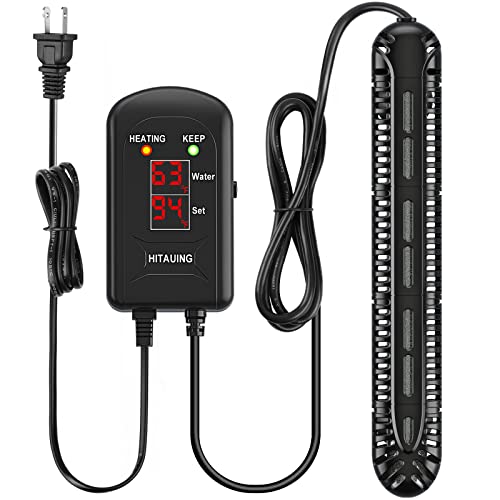
HiTauing 300W Aquarium Heater with LED Display
Aqueon Preset Aquarium Heater Black, 50 Watts

hygger Small Aquarium Betta Heater with LED Display

hygger 500W Submersible Fish Tank Heater

hygger Aquarium Heater with Digital LED Controller

hygger 800W Submersible Fish Tank Heater
The Strengths Of Each Pick
The Fluval M series has been a fixture in hobbyist sumps and display tanks for years, and the 100-watt version suits aquariums up to around 30 gallons. Its slim glass body disappears against black backgrounds, which matters in a rimless reef where equipment clutter ruins the view.
Owners commonly report it holding setpoints through seasonal room swings, the kind of consistency that keeps LPS corals from sulking. The dial sits near the top of the tube, so adjustments take seconds during water changes.
The Value In It
- Compact profile tucks behind rockwork or into a sump without crowding the display
- European manufacturing with quality components tends to translate into years of steady service
- Rated for both fresh and saltwater, so it moves between quarantine and display tanks easily
- Simple external dial means no menus or buttons to fumble with wet hands
Things To Consider
- No digital readout, so most keepers pair it with a separate thermometer to verify accuracy
- Glass construction warrants careful handling during cleaning and storage between uses
Who It Suits Best
Aquarists running mid-size saltwater tanks who want a trusted name and don’t mind adding their own thermometer.
Where A Sibling Pick Shines
Keepers who want an onboard temperature readout should look at the HiTauing 300W Aquarium Heater instead.
Compared to the Fluval’s analog dial, this HiTauing unit puts everything on a screen: current temperature, setpoint, and heating status at a glance across the room. The 300-watt element covers 40 to 75 gallons, which lands squarely in the mixed-reef territory where stability gets expensive to get wrong.
The 8.2-foot cord is the quiet hero here. Stand cabinets and outlet placement rarely cooperate, and that extra reach saves most people from buying an extension cord rated for wet environments.
Everyday Perks
- LED display shows live readings so you can verify conditions without opening the stand
- Five built-in safety protections guard against overheating scenarios common in busy households
- Long 8.2-foot cable reaches distant outlets behind cabinetry
- Suction cups mount vertically or horizontally depending on your sump layout
Small Caveats
- At 10.6 inches long, it needs vertical clearance some shallow sumps can’t spare
- Suction cups tend to lose grip over time, so reseat them during routine maintenance
At A Glance
Made For
Intermediate reefers upgrading from small kits to a 40-plus gallon system who want visible feedback.
Consider Something Else When
Freshwater-only keepers with modest 20-gallon setups will find the Aqueon Preset simpler and cheaper to run.
There are no dials to calibrate here, and that’s the whole point. The factory-set 78°F target suits most tropical livestock, so a first-time fishkeeper plugs it in, mounts it, and walks away. For a 10-to-20-gallon starter tank, fewer controls mean fewer mistakes.
The shatter-resistant quartz glass adds a margin of safety around curious kids or cats, and the automatic shutoff cuts power before overheating becomes a problem. Placement flexibility helps too: suction cups allow horizontal mounting in low tanks where a vertical tube won’t fit.
Advantages To Know
- Preset calibration removes guesswork entirely, ideal when you’re still learning the hobby
- Auto shut-off protects livestock if water level drops or flow stalls
- Quartz glass body resists cracking better than standard glass tubes
- Mounts horizontally, a genuine advantage in shallow breeder-style tanks
Points To Note
- Fixed 78°F setting can’t be lowered for species preferring cooler water
- 50 watts tops out quickly; pushing past 20 gallons leaves no cold-weather buffer
Right Fit For
Newcomers setting up their first small saltwater or tropical tank who value simplicity over adjustability.
Another Choice May Suit
Anyone needing precise control for coral-specific temperatures should step up to the hygger Small Aquarium Betta Heater’s adjustable range.
Nano tanks are the hardest to heat well because a slightly oversized element swings the whole volume in minutes. This hygger line solves that with four wattage options spanning 10 to 100 watts, matched to tanks from 1 gallon up to 26. The 59-93°F range covers everything from cool-water species to warm reef pico setups.
The thickened quartz shell matters more than it sounds. In tight desktop tanks where aquascaping tools bump everything, a 2mm-thick wall shrugs off knocks that would crack thinner tubes.
The Practical Payoff
- Four wattage sizes let you match output precisely to tiny volumes, avoiding dangerous overshoot
- Wide 59-93°F adjustment window suits both freshwater bettas and marine nano reefs
- Thickened quartz glass stands up to bumps in crowded desktop aquascapes
- Digital readout replaces squinting at a tiny analog dial in low light
Honest Caveats
- Picking the wrong wattage for your volume is easy; consult the size chart before ordering
- Smallest sizes heat slowly in drafty rooms, so expect longer recovery after water changes
Quick Facts
Who Will Love This
Desktop aquarists and dorm-room fishkeepers running pico reefs or planted nanos under 10 gallons.
Skip It When
Tanks beyond 30 gallons need more muscle; the Fluval M 100-Watt handles that bracket with less fuss.
Once your tank crosses 60 gallons, single small heaters become a liability rather than a plan. This 500-watt hygger covers 66 to 135 gallons, enough muscle to recover quickly after large water changes in a big mixed reef. The 10.1-foot cord reaches outlets well outside the stand, a detail larger installations genuinely appreciate.
Safety logic is built in: heating stops automatically above 94°F or below the minimum water line. That second condition protects the element during drain-downs, a scenario every large-tank owner eventually faces mid-cleaning.
Well-Handled Touches
- High wattage shortens recovery time after 25% water changes on big systems
- Overheat cutoff above 94°F guards against thermostat failure cooking the tank
- Out-of-water protection prevents dry-firing damage during maintenance drains
- Generous 10.1-foot cord simplifies cabinet wiring in larger rooms
Trade Offs To Consider
- Many experienced keepers split load across two units on tanks this size for redundancy
- 10.8-inch body demands deep sump clearance some furniture-style stands lack
Core Details
Whose Shelf It Belongs On
Serious hobbyists running 75-to-125-gallon reef displays who want fast recovery and layered safety cutoffs.
Swap It Out When
Displays approaching 200 gallons call for the extra headroom of the hygger 800W model later in this list.
This sibling of the 500-watt hygger adds the feature that separates careful keepers from anxious ones: an external controller with its own LED readout. The 300-watt configuration serves 40 to 80 gallons, and because the sensing electronics sit outside the water, reading and adjusting temperature never means reaching into the tank.
The intelligent stop-heating system watches for two failure modes at once. Water running hotter than 94°F triggers a shutdown, and so does the water level dropping below the safe minimum. During a sump pump failure or an aggressive drain, that second safeguard quietly saves the element.
Everyday Wins
- External controller lets you check and change settings without wet hands or lifted lids
- Dual protection handles both overheating and low-water dry-fire scenarios
- Same long 10.1-foot cord as its siblings for flexible stand placement
- 40-80 gallon rating bridges mid-size and large systems comfortably
Less Ideal Details
- Extra controller hardware takes a bit of cabinet space some compact stands lack
- More electronics mean more potential failure points than a basic analog tube
Who Should Grab It
Busy keepers of 40-to-80-gallon tanks who travel often and want remote-readable status before leaving home.
Reach For A Different Pick When
Budget-focused setups under 30 gallons get everything they need from the simpler Fluval M 100-Watt.
Large displays live or die by recovery speed, and 800 watts delivers it. Rated for 80 to 220 gallons, this unit pulls a 180-gallon tank back to setpoint after a big water change far faster than a pair of smaller heaters working separately. The familiar hygger safeguards carry over: heating halts above 94°F and whenever water falls below the minimum line.
Physically it matches its siblings at 10.8 inches with a 10.1-foot cord, so planning your sump depth and outlet location follows the same checklist. One honest note: at this wattage, pairing it with a reliable external thermometer is cheap insurance worth taking.
Practical Advantages
- 800 watts recovers huge volumes quickly after maintenance or winter drafts
- Covers up to 220 gallons, reaching tank sizes most single heaters can’t touch
- Overheat and out-of-water cutoffs protect expensive livestock investments
- Long cord and standard voltage keep installation straightforward
Factors To Weigh
- Single-point failure risk on very large systems; many pros run two smaller units instead
- Requires adequate circulation so heat distributes evenly across a big footprint
Technical Reference
Built With In Mind
Advanced hobbyists maintaining 120-gallon-plus reef or predator tanks who prioritize rapid thermal recovery.
Not Your Match When
Mid-size 75-gallon keepers save money and gain redundancy with the hygger 500W model reviewed earlier.
What Matters Most Before Choosing Saltwater Aquarium Heaters
Match Wattage To Your Real Volume
The old rule of thumb runs three to five watts per gallon, adjusted for room temperature. A 75-gallon tank in a warm apartment needs far less than the same tank in a basement. Undersized heaters run flat-out and wear early; oversized ones swing small volumes dangerously. Check each manufacturer’s size chart, then lean slightly upward for cold climates.
Safety Cutoffs Are Not Optional
Two failures account for most heater disasters: a stuck-on thermostat cooking the tank, and an exposed element cracking during a drain. Overheat shutoff and out-of-water protection address both directly. Saltwater adds corrosion to the mix, so quartz or thickened glass bodies hold up better than thin tubes over years of service.
Readouts Change How You Manage
Analog dials hide their work. Digital displays and external controllers show actual water temperature at a glance, which makes daily checks a two-second habit instead of a thermometer ritual. Frequent travelers and anyone running expensive coral colonies benefit most from that visibility.
Key Considerations Across These Picks
Traps First Timers Fall Into
The most common mistake is buying one heater sized exactly to the tank with zero margin. Cold snaps then overwhelm it. Another frequent slip: skipping a separate thermometer entirely. Even accurate heaters drift, and verification costs almost nothing. Finally, mounting a heater against strong direct flow cracks glass over time; give it breathing room.
What Separates Premium From Basic
Higher-tier models spend the difference on sensing electronics, thicker glass, and layered protection circuits. External controllers, dual failure detection, and longer cords all add cost but remove real risks. Basic preset tubes remain fine for hardy fish in stable rooms; premium features earn their keep once corals, invertebrates, or large water volumes enter the picture.
Frequently Asked Questions
How many watts does a saltwater tank need?
Plan on three to five watts per gallon as a starting point. Adjust upward for cold rooms and downward for warm ones.
Can I use a freshwater heater in a saltwater tank?
Yes, provided the manufacturer rates it for marine use. All seven picks here cover both water types.
Where should the heater be mounted?
Place it in an area with strong indirect flow, typically near filter output. Good circulation spreads heat evenly and prevents hot spots.
Do I still need a separate thermometer?
Yes. Independent verification catches drift before it harms livestock, and it costs very little.
How often should a heater be replaced?
Most keepers swap units every two to four years as preventive maintenance. Aging thermostats fail gradually, so watch for slow recovery times.
Closing Thoughts
Every tank on this list has a matching solution, from the plug-and-play Aqueon Preset to the 800-watt hygger covering massive displays. Start by measuring your true water volume and your coldest room temperature, then pick the wattage bracket that fits with margin to spare. Add a standalone thermometer regardless of which unit you choose, and check it weekly. Your livestock will reward the consistency, and your maintenance routine stays calm and predictable.
