

Anyone setting up a marine tank knows the substrate decision comes early and sticks around. The right sand buffers your water chemistry, houses the bacteria that keep ammonia in check, and sets the visual tone for everything above it. The wrong one clouds your tank for weeks or fights your pH goals. This roundup covers eight options spanning aragonite workhorses, dramatic black sands, and budget-friendly starter bags, so you can match grain size and chemistry to your specific setup instead of guessing.
The Leading Options At A Glance

Aqua Natural Galaxy Sand Substrate, 10lb

CaribSea Super Natural Moonlight Sand, 5 lb (Pack of 2)

Aqua Natural Oolitic Aragonite Sand, 10lb
GloFish Aquarium Sand, Black with Highlights, 5 Pounds

Aqua Natural African Cichlid Aragonite Sand, 10LB

YISZM Aquarium Sand, Beige, 2lbs

imagitarium White Aquarium Sand, 20 lbs
Aqua Natural Coarse Aragonite Sand, 10lb
Taking A Closer Look At The Options
Fine black sand with a natural sparkle, this substrate catches aquarium light in a way plain gravel never will. Green plants and bright fish stand out sharply against the dark floor, which is why it shows up constantly in aquascaped show tanks.
The 10-pound bag suits a modest footprint or a top-dressing layer over existing substrate. One thing worth considering: because the grains are fine, you’ll want a gentle hand with the gravel vacuum during water changes.
Good Reasons To Consider
- Fine black grains create a shimmering effect under standard tank lighting
- Dark background makes plants, corals, and colorful livestock visually pop
- Suitable for terrariums and reptile enclosures too, not just aquariums
- 10-pound sizing keeps smaller projects affordable without leftover waste
Things To Consider
- Fine particles can cloud water initially, so rinse thoroughly before adding
- Vacuuming requires care since light grains lift easily into the siphon
Who Will Love This
Hobbyists building a dramatic, plant-forward aquascape where contrast does the heavy lifting.
Where A Sibling Pick Shines
Marine keepers chasing pH stability should reach for the Aqua Natural Oolitic Aragonite Sand instead, since aragonite actively buffers alkalinity while this one stays chemically neutral.
Where the Galaxy Sand goes bold, CaribSea’s Moonlight blend leans soft and natural, mimicking a moonlit riverbed in pale neutral tones. The two-bag pack gives you roughly ten pounds total, enough for a mid-size freshwater layout at the commonly recommended pound-per-gallon ratio.
Discus, tetras, and angelfish all do well over smooth sand like this, and bottom dwellers appreciate a surface that won’t scrape their barbels. In our view, it’s the most forgiving aesthetic choice for someone unsure about committing to black or white extremes.
Useful Touches
- Two 5-pound bags cover a 10-gallon tank at standard stocking depth
- Neutral pale tone flatters both live plants and driftwood hardscapes
- Smooth grains suit sensitive bottom feeders like corydoras and loaches
Minor Gripes
- Marketed primarily for freshwater, so saltwater keepers need an aragonite option instead
- Light color shows detritus quickly, meaning more frequent spot cleaning
Made For
Freshwater community tank owners who want a calm, natural-looking bed without chemistry changes.
Swap It Out When
African cichlid keepers need buffering power, which makes the Aqua Natural African Cichlid Aragonite Sand the smarter call for hard, alkaline water.
This is the substrate most reef and marine hobbyists end up recommending first, and the reason is chemistry. Aragonite is a calcium carbonate mineral that slowly dissolves as acidity rises, nudging your pH back toward a natural seawater reading around 8.2 without dosing chemicals by hand.
The oolitic grains are tiny egg-shaped spheres collected from Bahamian waters, free of tar and organic impurities according to the maker. That purity matters in a saltwater system, where stray contaminants can fuel nuisance algae. For a standard reef build, this is the dependable baseline.
Strengths Worth Knowing
- Naturally buffers water toward pH 8.2, reducing manual chemical adjustments
- Pure oolitic aragonite sourced from clear Bahamian ocean environments
- Fine, uniform grains suit sand-sifting fish and natural burrowing behavior
- Supports beneficial bacteria colonies that process tank waste
Points To Note
- Raising pH makes it a poor fit for soft-water planted or South American setups
- Expect a cloudy fill day unless you rinse and add water slowly
Key Specs
Right Fit For
Reef and fish-only marine keepers who want passive pH stability from day one.
Not Your Match When
Planted freshwater aquarists should skip it and consider the CaribSea Super Natural Moonlight Sand, which stays inert and won’t push hardness up.
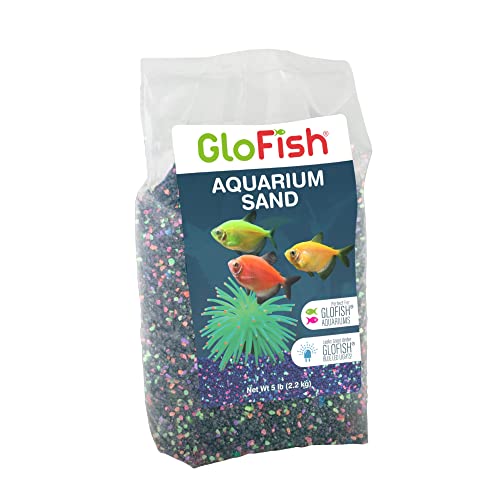
Built specifically for GloFish tanks, this black sand carries subtle colored highlights that come alive under blue LED lighting. The effect is genuinely striking in a kid’s bedroom tank, and the five-pound bag matches the brand’s suggested 1.5 to 2 pounds per gallon for small setups.
It anchors GloFish ornaments and plants just as well as any generic sand would. The honest caveat is scope: outside a lit-up novelty tank, the highlights add little, and darker rooms suit it better than bright sunlit spaces.
Standout Benefits
- Colored flecks glow noticeably under blue LED aquarium lighting
- Black base hides fish waste between cleanings better than white sand
- Clear per-gallon dosing guidance simplifies first-tank planning
Small Caveats
- Gravel vacuuming needs a light touch so fine sand isn’t siphoned away
- Five pounds covers only small tanks, larger builds mean multiple bags
Who Should Grab It
First-time fishkeepers setting up a GloFish kit for kids or a desktop display.
Look Elsewhere When
Serious aquascapers after a pure matte black stage will prefer the Aqua Natural Galaxy Sand, which offers more bag volume and no novelty coloring.
Lake Malawi cichlids evolved over hard, alkaline sand, and this substrate recreates those conditions deliberately. The grains are raw, renewable oolitic aragonite running up to 98 percent calcium carbonate, smooth and egg-shaped rather than sharp, which matters for fish that sift sand through their gills all day.
It’s tasteless and odorless per the manufacturer, and the consistent small grain structure gives digging cichlids exactly what they want to rearrange. Compared with the finer Oolitic Aragonite pick earlier, this one targets the cichlid niche specifically rather than general marine use.
Real Benefits
- Up to 98% pure calcium carbonate supports hard, alkaline water parameters
- Smooth rounded grains are gentle on sand-sifting cichlids’ mouths and gills
- Naturally renewable source material with no added dyes or coatings
- Handles constant digging and rearranging without breaking down quickly
Trade Offs To Consider
- Buffers water hard, so tetras and soft-water species won’t tolerate it
- Cichlids will constantly reshape your carefully raked aquascape
Feature Snapshot
Whose Shelf It Belongs On
African cichlid and brackish enthusiasts who need their substrate working alongside their tap water, not against it.
Another Choice May Suit
General reef builders get broader versatility from the Aqua Natural Oolitic Aragonite Sand, which serves the same chemistry goal across mixed marine stocking.
Not every project needs a ten-pound sack. This two-pound beige bag exists for nano tanks, shrimp bowls, terrarium accents, and topping off thin foreground layers, and it costs about as much as a coffee. YISZM also offers black and white variants plus sizes up to 20 pounds if the beige works out.
You may find the coverage limiting fast in anything over five gallons, but for a small betta tank or a paludarium streambed, buying big means storing leftovers you’ll never use. As a low-commitment entry point, it does its job.
What Helps Most
- Two-pound bag sized for nano tanks and accent layering
- Available in three colors and four weight options for flexible planning
- Neutral beige tone blends naturally with rocks and wood
Softer Spots
- Insufficient volume for anything beyond very small aquariums
- Less established track record than legacy brands like CaribSea
The Right Fit
Nano tank hobbyists and crafters decorating small terrariums or desk-sized water features.
Reach For A Different Pick When
Anyone filling a 20-gallon or larger tank gets far better value per pound from the imagitarium White Aquarium Sand bulk bag.
Twenty pounds in one bag changes the math for bigger builds. Petco’s house brand is rated safe for both saltwater and freshwater tanks, uses non-toxic materials and colors, and its bright white finish reads cleanly under actinic lighting in a marine display.
The manufacturer also points to bacterial colonization and reduced debris in the water column, both functions any seasoned keeper wants from a deep sand bed. Against the YISZM bag, this is the option you graduate to once the tank outgrows the desktop.
Notable Gains
- Large 20-pound bag fills substantial tanks without multiple orders
- Rated safe for saltwater and freshwater applications alike
- Non-toxic materials and colors protect sensitive livestock
- Promotes beneficial bacteria that break down organic waste
Practical Considerations
- White sand shows every speck of algae and detritus, demanding upkeep
- Heavy single bag can be awkward to carry and rinse in stages
Product At A Glance
Best Suited To
Keepers stocking 30 gallons or more who want volume, versatility, and a clean bright floor.
Consider Something Else When
Chemistry-focused reef builders will favor the Aqua Natural Coarse Aragonite Sand, whose mineral content actively manages pH where this one stays passive.
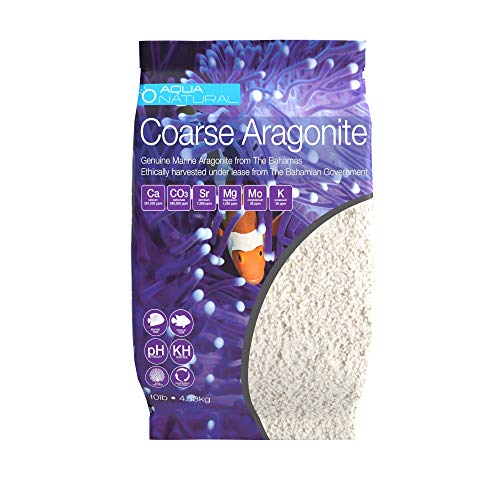
Same Bahamian aragonite chemistry as the finer Aqua Natural picks, but with a coarser grain profile that solves a specific problem: compaction. Fine sand packs tight over time and traps hydrogen sulfide pockets, while chunkier grains let water move through the bed and keep anaerobic zones from forming.
High-flow reef tanks and systems with strong powerheads benefit most here. The trade-off shows up with sand-sifting fish, which find coarse grains harder to work through than the oolitic texture of the Editor’s Choice pick.
What Earns Its Place
- Coarser grains resist compaction and dead-spot formation in deep beds
- Retains the same pH-buffering aragonite chemistry as finer versions
- Withstands strong flow without blowing around or clouding the tank
- Clean Bahamian sourcing with no tar or organic impurities
Factors To Weigh
- Too rough for dedicated sand-sifting species like jawfish
- Debris settles visibly between grains, so expect regular stirring
Quick Facts
Who It Suits Best
Experienced reef keepers running high-flow systems or deeper sand beds that need gas exchange.
Skip It When
Jawfish and goby keepers should choose the finer Aqua Natural Oolitic Aragonite Sand, whose soft grains suit constant sifting behavior far better.
What Matters Most Before Choosing Sands For Saltwater Aquarium
Match Grain Size To Your Livestock
Grain size drives everything downstream. Fine oolitic sand suits burrowing gobies and creates that smooth tropical shoreline look, while coarse grades resist compaction in high-flow tanks. Bottom-dwelling fish with sensitive barbels need smooth, rounded grains regardless of size.
Think about maintenance too. Finer beds demand gentler vacuuming, and coarse beds trap visible debris between grains. Neither is wrong, they just reward different cleaning habits.
Decide Whether You Need Buffering
Aragonite substrates dissolve slowly and hold pH near natural seawater levels, which reduces how often you dose alkalinity supplements. Inert sands leave chemistry entirely to your salt mix and equipment. Marine and African cichlid systems generally benefit from aragonite; soft-water planted tanks do not.
Calculate Coverage Before Ordering
Most manufacturers suggest one to two pounds per gallon depending on desired bed depth. A shallow display bed runs lighter, while a deep refugium-style bed doubles that figure. Buying short means a second order and a mismatched batch color.
Plan The Rinse And Fill
Every bag here benefits from thorough rinsing before it enters the tank. Adding water over a plate or slow pour minimizes the dust cloud that otherwise takes days to settle. Patience during setup saves a week of murky water later.
Key Considerations Across These Picks
Traps First Timers Fall Into
The classic mistake is skipping the rinse, then fighting a cloudy tank for days. Another common slip is pairing aragonite with soft-water fish, then wondering why pH climbs. Measure your tank’s gallonage honestly before ordering, since undersized bags force awkward second purchases.
Why Top Tier Costs More
Pricier aragonite products justify themselves through purity and consistency: cleaner sourcing, uniform grain shapes, and predictable buffering behavior. Budget sands work fine for decorative freshwater use, but in a reef system where chemistry compounds over months, the refined material earns its premium.
Frequently Asked Questions
How much sand do I need for my tank?
Most brands recommend one to two pounds per gallon of water, depending on how deep you want the bed. A shallow decorative layer sits at the lower end, while deep biological beds need closer to two.
Do I really have to rinse aquarium sand first?
Yes, rinsing removes fine dust that would otherwise cloud your water for days. A bucket and garden hose routine until the runoff runs mostly clear works well.
Can I mix different sand types in one tank?
You can, and many aquascapers layer coarse aragonite beneath a fine top dressing. Just confirm both grades share compatible chemistry so buffering stays predictable.
How often should I clean a sand bed?
Light vacuuming during weekly water changes keeps the surface tidy. Stir deeper sections occasionally to prevent compacted, oxygen-starved pockets from developing.
Is aragonite sand safe for freshwater tanks?
It’s safe physically, but it raises pH and hardness over time. Soft-water species like tetras suffer, while livebearers and African cichlids thrive in it.
Bottom Line
Your water chemistry and livestock should drive this choice more than looks alone. Marine and cichlid keepers get real value from the Aqua Natural aragonite line, while freshwater aquascapers have stronger reasons to lean toward the CaribSea or Galaxy options. Match the grain to your fish, buy enough to cover the bed properly, and rinse well before filling. Get those three things right and the substrate fades into the background, exactly where it belongs.
