

Nobody enjoys scooping. If you share your home with one cat or five, an automatic box can take the daily chore off your plate and keep odors down between cleanings. The catch is that these products vary wildly in design, safety features, and how much attention they still demand from you. This roundup sorts eight solid options by real household needs, from budget manual rollers to camera-equipped smart units.
A Quick View Of The Lineup

Lohhuby Automatic Self-Cleaning Litter Box (White)

Omega Paw Roll ‘N Clean Self Cleaning Litter Box

PETLIBRO Luma Smart Litterbox with AI Camera

FEELNEEDY Self Cleaning Litter Box 65L
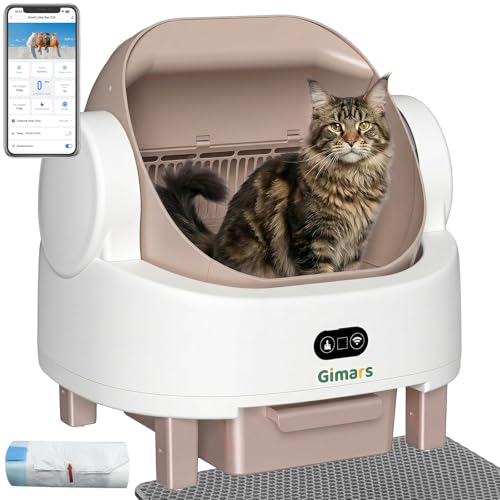
Gimars Open Top Self Cleaning Litter Box

PetSafe ScoopFree Crystal Classic Self-Cleaning Litter Box

PetSafe ScoopFree Crystal Pro Self-Cleaning Litter Box

Furrykiddy Robot Self Cleaning Litter Box
The Strengths Of Each Pick
The open-design layout here matters more than it sounds. Enclosed globe-style boxes can feel cramped to cautious cats, while this open format gives kittens and medium-sized cats easy entry and clear sightlines, which tends to speed up acceptance.
App control runs over 2.4GHz WiFi, so you can trigger a cleaning cycle from work and get usage updates remotely. An anti-pinch design and quiet operation round out a package aimed at first-time automatic-box owners who want monitoring without complexity.
Everyday Perks
- Remote app control lets you start cycles and check status without standing next to the unit
- Open access helps shy cats and kittens settle in faster than enclosed globes often do
- Anti-pinch safety engineering reduces risk during the rotating cycle
- Quiet operation suits bedrooms and small apartments where noise carries
Things To Consider
- WiFi limited to 2.4GHz networks, which can frustrate homes running only 5GHz routers
- Sized for medium cats and kittens, so large breeds may find the interior tight
Who It Suits Best
A first-time buyer of smart litter gear with a kitten or medium cat who wants app visibility without paying flagship prices.
Where A Sibling Pick Shines
Multi-cat homes should look at the FEELNEEDY 65L instead, since its larger drum and bigger waste bin handle heavier shared traffic.
No motor, no app, no sensors. You roll the whole box onto its top and back again, and an internal sifting grate separates clumps from clean litter while dropping waste into a pull-out drawer. It’s the simplest interpretation of self-cleaning on this list.
The updated version uses stronger materials than earlier runs, which addresses the cracking complaints some long-term owners reported. For small apartments or anyone wary of electronics around pets, this taupe-and-grey regular size covers kittens and cats up to 10 pounds.
What Helps Most
- Zero electricity means no motors to fail and nothing to plug in near the litter area
- Rolling action sifts clumps into a drawer, cutting daily scooping to a quick tip and return
- Reinforced build on the current version holds up better to repeated rolling
- Very affordable entry point into reduced-scoop living
Small Caveats
- You still do the work manually, just faster, so it’s semi-automatic rather than hands-off
- Regular size caps out around 10 lbs, excluding most adult cats over that mark
- Litter can stick to the grate in humid rooms unless you keep clumping litter fresh
At A Glance
Made For
Budget-conscious owners of one small cat or kitten who want less scooping without adding electronics to the routine.
Swap It Out When
Anyone wanting true automation should step up to the PetSafe ScoopFree Crystal Classic, which rakes on its own after each visit.
This is the most tech-forward option here. An onboard AI camera watches each visit, distinguishing urine from solids and loose from firm output, then flags changes from your cat’s normal pattern. In multi-cat homes it recognizes individual cats, so you know whose habits shifted.
Odor control gets equal attention through a fan system that continuously moves air past a carbon deodorizer rather than masking smells after the fact. Compared with the Lohhuby’s simpler monitoring, the Luma trades a higher price for genuinely useful health insight, especially valuable for senior cats whose conditions often show up in litter habits first.
Useful Highlights
- AI waste analysis tracks frequency and consistency, surfacing changes worth a vet conversation
- Multi-cat recognition attributes each visit to the right animal automatically
- Continuous carbon-filtered airflow keeps odor down between cleaning cycles
- Open-top design gives larger cats room to turn around comfortably
Points To Note
- A camera inside the litter area won’t suit everyone’s comfort level at home
- More sensors and software mean more potential points of failure over years of use
- Expect periodic filter replacement as part of ongoing ownership costs
Who Will Love This
Data-minded owners of two or more cats, particularly those managing an older animal and wanting early warning of habit changes.
Another Choice May Suit
Single-cat households that don’t need per-cat tracking will find the PetSafe ScoopFree Crystal Pro delivers core convenience at a lower commitment.
Capacity is the story with this one. The 65-liter drum gives multiple cats genuine elbow room, and the generous waste bin stretches refills toward two weeks in lighter-use homes. After a cat exits, cleaning starts within about two minutes, separating clumps into the bin automatically.
Litter flexibility sets it apart from crystal-based rivals like the PetSafe units: clumping clay, bentonite, mineral, and tofu litters all work. The cat-ear styling won’t be everyone’s taste, though plenty of owners report it reads as playful furniture rather than an appliance.
Well-Handled Touches
- Accepts four litter categories, so you’re not locked into proprietary refills
- Large waste bin supports roughly 10 to 14 days between emptying in typical use
- Real-time app monitoring shows activity even when you’re away for the weekend
- Safety sensors pause the cycle when a cat re-enters mid-clean
Trade Offs
- The footprint is substantial, so measure your spot before committing
- Drum interiors need occasional deep cleaning beyond the automated cycle
Key Specs
Right Fit For
Households with two or three cats that want one high-capacity unit instead of juggling multiple boxes.
Reach For A Different Pick When
Tight spaces call for the Omega Paw Roll ‘N Clean, whose compact manual design fits corners the FEELNEEDY cannot.
Senior cats change the calculus entirely. Stiff joints make high-sided entries painful, and the Gimars’ open-top, low-access layout removes that barrier while keeping the automated sifting cycle intact. Safety sensors stop the mechanism if a cat steps in during operation.
The app works over both iOS and Android on 2.4GHz WiFi, offering automatic cleaning after each use plus a manual override for on-demand cycles. Bundled trash bags and a litter mat mean the setup is usable on day one, a small courtesy several rivals skip.
Good Reasons To Consider
- Open-top entry suits senior and arthritic cats better than enclosed globes
- Dual auto and manual modes give you control over timing and frequency
- Ships with trash bags and a mat, so nothing extra is needed upfront
- Sensor-based pausing protects curious cats mid-cycle
Less Ideal Details
- An open top contains odor less effectively than fully enclosed designs
- 2.4GHz-only connectivity mirrors the limitation seen on the Lohhuby
Whose Shelf It Belongs On
Owners of aging cats or low-slung breeds who need gentle access paired with dependable automation.
Consider Something Else When
Odor-sensitive studio dwellers may prefer the PETLIBRO Luma, whose active carbon airflow handles smell more aggressively.
The Classic is the category’s steady hand. A motorized rake sweeps waste into a covered trap after each visit, and because it runs on crystal litter, there are no clumps to form or break apart. Crystal granules absorb urine on contact and dehydrate solids, which is why PetSafe claims odor control several times stronger than clumping clay.
For a single cat in an apartment, the low-tracking crystals also mean less sweeping around the box. The honest trade-off is consumable cost: disposable crystal trays are recurring purchases, unlike the refillable drums on the FEELNEEDY or Gimars.
Real Benefits
- Automated raking removes waste shortly after each use without any app setup
- Crystal litter absorbs liquid quickly, keeping ammonia smell noticeably lower
- Low-tracking granules cut down on litter scattered across floors
- Weeks can pass between full tray changes for one cat
Things That May Matter
- Ongoing crystal tray purchases add up compared with bulk clumping litter
- Some cats dislike the texture of crystals and refuse to switch
Quick Facts
Who Should Grab It
Apartment dwellers with one easygoing cat who value simplicity and strong odor control over smart features.
Not Your Match When
Cats committed to clumping clay fit the FEELNEEDY 65L far better, since it accepts standard litters directly.
Think of the Pro as the Classic stretched to its logical limit. Same raking principle, same crystal chemistry, but engineered to go roughly a month between full maintenance sessions for a single cat. That makes it the strongest match on this list for people who travel for work or simply resent weekly litter chores.
The rake sweeps solids into a sealed compartment automatically, and the crystal formula locks moisture away to hold odor down across those longer stretches. Against the Classic, you’re paying more for endurance rather than new features, which is exactly the right upgrade for some homes and unnecessary for others.
Bright Spots
- Up to a month without scooping suits unpredictable schedules and travel-heavy routines
- Sealed waste compartment keeps smell contained between rakes
- Crystal litter absorbs urine on contact, holding odor down over long intervals
- Set-and-forget operation requires no app, account, or WiFi
Details To Watch
- Monthly tray replacements represent a meaningful recurring expense
- Crystal-only design rules out clay, tofu, or walnut litters entirely
Feature Snapshot
Best Suited To
Frequent travelers and busy professionals with one cat who want the longest possible gap between litter-related tasks.
Look Elsewhere When
Budget-focused single-cat owners get nearly the same experience from the cheaper ScoopFree Crystal Classic without the extended-interval premium.
Safety is where this rotating sphere earns its place. Internal weight detection ignores anything under 2.2 pounds, and the rotation halts immediately when paws land on the front of the globe or a cat steps inside. A dedicated Kitten Mode disables automatic cleaning altogether until young cats are big enough to trip the sensors reliably.
That layered approach matters, because rotating-globe designs draw more safety questions from new owners than rake systems like the PetSafe units. Households raising a litter of kittens, or introducing a very small rescue, get guardrails the rest of this list doesn’t match.
A Few Strong Suits
- Weight sensing pauses rotation the moment a cat interacts with the globe
- Kitten Mode fully suspends automatic cycling for very young animals
- Rotating drum sifts waste into a sealed bin after each detected exit
- Entry threshold accommodates cats once they pass the minimum weight
Points To Keep In Mind
- Below the 2.2 lb threshold, automatic mode stays off limits by design
- Globe interiors benefit from periodic wipe-downs beyond the automated cycle
Core Details
The Right Fit
Foster homes and families with kittens approaching the weight threshold who want automation they can phase in gradually.
Where Another Pick Suits Better
Adult-cat-only homes prioritizing health analytics will get more from the PETLIBRO Luma’s camera-driven tracking.
What Matters Most Before Choosing Self-Cleaning Litter Boxes
Match The Mechanism To Your Cat
Rake systems, rotating globes, and manual rollers behave very differently. Rakes like the PetSafe pair stay quiet and predictable, while globes offer deeper sifting but demand more cat confidence. Older or anxious cats generally accept open-top designs fastest.
Count The Recurring Costs
Crystal-tray models trade convenience for ongoing refill purchases, whereas drum units accept bulk clumping litter at a fraction of the long-run cost. Tofu and bentonite compatibility widens your options further. Factor a year of consumables into any comparison before deciding.
Measure Your Space And Power Access
High-capacity drums such as the FEELNEEDY 65L need real floor area plus a nearby outlet. Manual options like the Omega Paw need neither, which keeps them viable in bathrooms, closets, and rentals where outlets are scarce.
Decide How Much Data You Want
App-connected units track visits and flag changes, which genuinely helps with senior cats. Single healthy adults rarely need that layer, and skipping it saves money and setup friction.
Key Considerations Across These Picks
Traps First Timers Fall Into
The most common mistake is buying for yourself instead of your cat. A feature-packed globe means nothing if a timid cat refuses to enter it, so introduce any new box alongside the old one for a week or two. Skipping the 2.4GHz router check is another frequent stumble with app-controlled models.
Where The Extra Money Goes
Higher-tier units spend their budget on sensors, larger drums, and active odor management rather than gimmicks. That spend pays off in multi-cat homes, with senior pets, or anywhere the box runs unattended for days. One cat on a predictable schedule rarely needs it.
Frequently Asked Questions
Do self-cleaning litter boxes work with any litter?
No, compatibility varies sharply by design. Rake systems typically require crystal litter, while drum models often accept clumping, bentonite, mineral, and tofu varieties.
Are automatic litter boxes safe for kittens?
Most manufacturers set a minimum weight, commonly around 2.2 pounds, before automatic cycling activates. Models with dedicated Kitten Mode let you disable automation entirely during early months.
How often do I still need to empty them?
It depends on capacity and cat count. Large-bin units can stretch 10 to 14 days, while single-cat crystal trays typically last a few weeks per change.
Will my cat actually use one?
Most cats adjust within days, especially with open designs placed where the old box sat. Keeping the previous box nearby during transition dramatically improves acceptance rates.
Do these eliminate odor completely?
They reduce it substantially through prompt waste removal and, on some models, carbon filtration. Regular deep cleaning of the unit itself remains necessary for best results.
Bottom Line
Your cat’s size, age, and temperament should drive this decision more than any feature list. Small cats and kittens fit the Lohhuby or Furrykiddy, multi-cat homes lean toward the FEELNEEDY or PETLIBRO, and travel-heavy schedules justify the PetSafe Pro. Start with the profile that matches your household, and the right box tends to pick itself.
