

Training a dog that ignores recall at the park or barks through every delivery is exhausting. The right electronic collar gives you a way to communicate clearly from a distance, using tone or vibration before anything stronger. This list covers remote trainers, bark-only collars, and even a GPS fence, matched to different dogs, yards, and budgets.
A Fast Comparison Of The Options

Asrcs Dog Shock Collar with Remote Control, IPX7 Waterproof

BLACKDOG Military Dog Shock Collar 4200ft (Dark Blue)
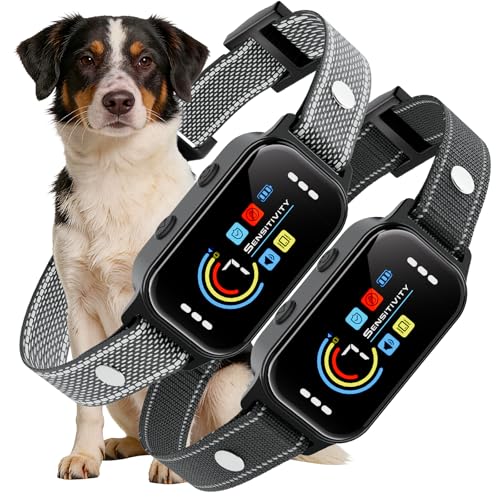
Koguzl Dog Bark Collar 2 Pack

Dogtra YS300 Rechargeable No Bark Collar
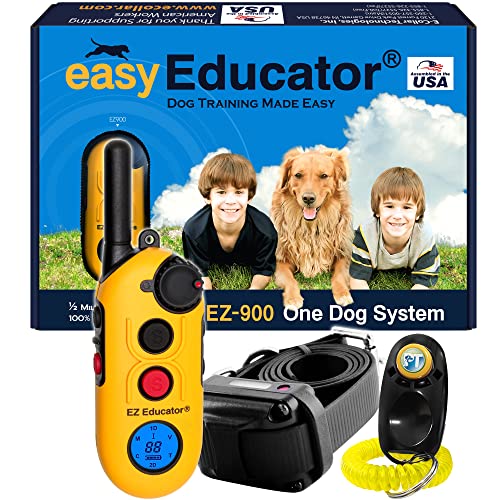
Educator EZ-900 E Collar with Remote
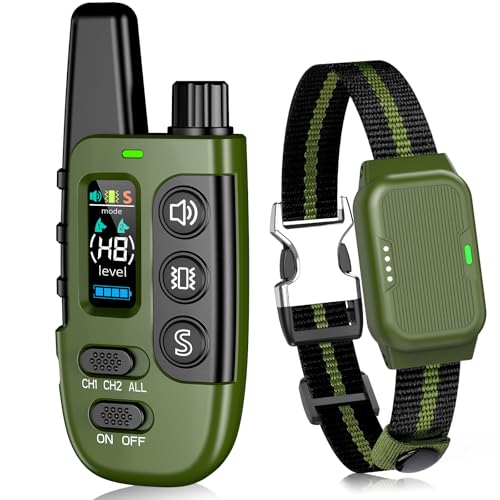
Snsng Dog Training Collar with Remote Control

Dogtra GPS Fence Wireless Dog Fence Collar

Jugbow Dog Shock Collar 4200FT with Remote
What Each Pick Brings To The Table
This one covers the middle ground well: a 2000-foot range handles most suburban yards and open park sessions without pushing into long-range territory you may never use. Four cue modes, flashlight, beep, vibration, and adjustable static, let you start gentle and escalate only when needed.
The dual-channel remote stands out for anyone juggling more than one dog, since you can run separate settings per dog instead of swapping collars mid-session. For daily walkers and weekend hikers, that flexibility earns its keep.
Strengths Worth Knowing
- 2000-foot reach covers typical parks and trails with room to spare
- Dual-channel setup trains two dogs from one handheld remote
- IPX7 waterproofing means rain, puddles, and swims won’t stop a session
- Rechargeable design cuts ongoing battery costs over years of use
- Fits a wide 8 to 150-pound weight span, so one kit can serve mixed-size dogs
Things To Consider
- Contact points need regular checking and cleaning to stay effective on thick-coated breeds
- You may find the static ceiling higher than necessary for timid or small dogs
Key Specs
Who It Suits Best
Owners of two dogs who want one dependable kit for yard work, park recalls, and wet-weather walks.
A Better Fit Elsewhere
Hikers who regularly push past half a mile should look at the BLACKDOG Military Dog Shock Collar, whose 4200-foot range and tougher casing suit rougher terrain.
Where the Asrcs above aims at balanced everyday use, this Blackdog unit is built like field gear. The reinforced housing is rated to shrug off serious crush force and repeated bite attempts, which matters if your dog chews equipment between sessions.
Range jumps to 4200 feet, and the signal is designed to punch through trees and rain rather than dropping out mid-recall. A dedicated ON/OFF switch prevents pocket activations, a small detail that saves plenty of frustration on trailheads.
A Few Strong Suits
- 4200-foot range suits beaches, big parks, and backcountry hikes
- Signal holds through obstacles like dense trees and storms
- Three-month battery life means fewer charging interruptions
- Flashlight and strobe modes help after dark
- ON/OFF safety button stops accidental corrections
Small Caveats
- IP67 waterproofing covers submersion to about one meter for 30 minutes, less headroom than some rivals claim
- The rugged build adds bulk that tiny dogs may find cumbersome
Right Fit For
Owners of energetic working breeds who train hard outdoors in mud, rain, and rough country.
Swap It Out When
Apartment dwellers doing short-leash obedience will get more value from the compact Jugbow collar later in this list.
This pick skips the remote entirely. It’s an automatic anti-bark collar that reacts only to barking, which makes it a set-and-forget solution for doorbell drama and lonely-afternoon howling while you’re at work.
Getting two units in one package changes the math for multi-dog homes, since a single purchase covers both offenders. Seven sensitivity levels and five training modes give you room to dial behavior in per dog, and a single M-button keeps operation simple.
Advantages To Know
- Two-pack pricing covers a pair of barkers at once
- Seven sensitivity levels adapt to quiet vs. vocal temperaments
- Anti-false-trigger chip reduces corrections caused by other noises
- Fits dogs from 11 to 120 pounds
Points To Note
- Automatic triggering means no owner control over timing, unlike the remote models here
- Sensitivity tuning takes a few days of observation to get right for each dog
Quick Facts
Whose Shelf It Belongs On
Busy owners of two barking dogs who want hands-off bark management without learning a remote system.
Reach For A Different Pick When
Anyone wanting active recall training alongside bark control should step up to the Dogtra YS300 reviewed next.
Dogtra has a long reputation in the e-collar world, and the YS300 shows why. Its sound recognition sensor uses a microprocessor to tell your dog’s actual bark apart from ambient noise, which addresses the biggest complaint about cheap auto collars: random false corrections.
Each correction sequence opens with a pager vibration before the static level kicks in, giving your dog a warning cue first. Six levels of correction make it easier to land on the minimum setting that actually works.
Points In Its Favor
- Microprocessor bark recognition filters out background noise
- Vibration-first sequence warns before any static
- Six correction levels allow fine matching to temperament
- IPX9K rating survives high-pressure hot water spray, tougher than most ratings here
- Compact receiver suits smaller dogs better than bulky remotes
Where It May Fall Short
- Bark-only function offers no remote recall training capability
- Charging port seals deserve routine inspection to preserve the waterproof rating
Feature Snapshot
Made For
Owners of persistent barkers in noisy neighborhoods who want precise, humane auto-correction from a trusted brand.
Another Choice May Suit
Households needing two collars at once will find the Koguzl 2 Pack more economical than buying two YS300 units.
This is the tool trainers reach for. Educator’s EZ-900 delivers 256 blunt stimulation levels, an unusually wide ladder that lets you find the exact lowest level your dog notices, often described as a tingling tap rather than a sharp jolt.
A half-mile range covers serious fieldwork, and the night tracking light keeps tabs on your dog after dusk. Tone and vibration modes round out the toolkit for dogs that respond to softer cues. In our view, this is where precision starts to justify a higher spend.
Benefits That Matter
- 256 stimulation levels enable genuinely fine-grained adjustment
- Blunt stimulation design prioritizes a gentler sensation profile
- Half-mile range supports hunting, hiking, and off-leash fieldwork
- Night tracking light aids visibility on evening walks
- Tone and vibration options suit sensitive dogs
What To Weigh
- The feature depth carries a learning curve that casual users may not need
- Higher-tier positioning puts it above what basic backyard training demands
Core Details
Who Will Love This
Dedicated owners and working-dog handlers running structured off-leash programs who want professional-grade control.
Consider Something Else When
First-time trainers on a tight budget will be better served by the Snsng collar coming up next, which keeps things simpler.
Not everyone needs half-mile range or 256 levels. The Snsng trims the category down to essentials and prices accordingly, making it a sensible entry point for teaching sit, come, and leash manners around the block.
You still get meaningful customization: eight beep tones, sixteen vibration levels, and ninety-nine static steps. Dual-channel support handles two dogs, and a 1+2 mode fires commands to both simultaneously, handy when both dogs bolt for the fence line together.
Good Reasons To Consider
- Ninety-nine static levels offer more granularity than most budget kits
- Eight beep tones let you assign distinct sounds per command
- Dual-channel remote manages two dogs separately
- 1+2 mode corrects both dogs at once in urgent moments
Less Ideal Details
- Source data lists no waterproof rating, so heavy rain and swimming are best avoided
- Entry-level build quality suggests gentler handling and careful storage
The Right Fit
New trainers working one or two dogs in a fenced yard who want adjustable intensity without a premium price tag.
Where A Sibling Pick Shines
Owners who swim their dogs or hike in wet weather should choose the IPX7-rated Asrcs collar instead.
This one solves a different problem entirely. Instead of correcting behavior on command, the Dogtra GPS Fence draws virtual boundaries around your property so your dog roams freely without wandering off. There’s no subscription fee, which separates it from most app-based containment systems.
Layered protection includes a warning zone, a primary fence line, and two backup fences, so a determined runner meets several reminders before crossing. You shape circular or custom boundaries in the free app during setup; afterward the collar runs independently, storing up to thirty fences.
The Good Stuff
- No monthly fees, a rare trait among GPS containment systems
- Custom-shaped boundaries match irregular property lines
- Four-layer boundary system adds redundancy against escapes
- Collar operates standalone once the fence is configured
- Return reminder uses tone, vibration, then correction progressively
Practical Considerations
- Designed for properties of three-quarters acre or larger, so small lots lose the benefit
- The collar must come off indoors, adding a daily removal habit
Details At A Glance
Who Should Grab It
Rural and large-lot owners of dogs 15 pounds and up who want off-leash freedom without burying wire or paying monthly fees.
Look Elsewhere When
Anyone focused on active obedience cues rather than containment will get more from the Educator EZ-900.
Jugbow attacks the bulk problem. The receiver runs roughly 30 percent smaller and lighter than standard units, which translates to less neck strain and more natural movement for smaller dogs during walks and play.
Despite the compact body, the claimed range matches the Blackdog earlier in this list at 4200 feet. The remote gets an ergonomic redesign too, with buttons placed for blind operation, useful when your eyes need to stay on the dog, not the handset.
Everyday Perks
- 30% smaller receiver sits comfortably on small and medium dogs
- 4200-foot range rivals much larger collars
- Ergonomic remote allows no-look button presses
- Lighter build encourages all-day wear comfort
Details To Watch
- Manufacturer documentation on waterproofing is thin, so confirm before water exposure
- Smaller receivers commonly mean smaller batteries, so charging frequency may rise on long outings
Best Suited To
Owners of small to medium breeds who want long-range capability without hanging a heavy box on a slim neck.
Not Your Match When
Handlers of powerful chewers and swimmers should favor the reinforced, IP67-rated BLACKDOG collar for durability.
Choosing Between These Shock Collars: What Actually Counts
Range That Matches Your Life
A 2000-foot collar covers most suburban yards and public parks comfortably. Long-range models earning 4000-plus feet earn their keep on farms, beaches, and trail systems where your dog travels far ahead. Buying more range than your environment needs rarely hurts, but paying for it without using it does.
Correction Style And Starting Point
The best collars lead with beep or vibration and treat static as a last step. Look for wide level ladders, like the Educator’s 256 steps, because finding your dog’s minimum noticeable level is the single biggest factor in humane results. Auto bark collars trade owner control for convenience, so decide which side of that trade fits your situation.
Weather And Durability Reality
Waterproof ratings matter more than most shoppers expect. IPX7 handles swimming and downpours, while IPX9K survives pressurized hot spray. Dogs that chew gear or train in mud need reinforced housings, not slim consumer builds.
Key Considerations Across These Picks
Traps First Timers Fall Into
The most common mistake is starting at maximum intensity, which teaches fear instead of obedience. Always begin with tone alone and climb gradually. Another frequent slip is skipping the fit check: contact points must touch skin through the coat, yet the collar should still allow two fingers underneath. Leaving the collar on around the clock also irritates skin, so rotate it off overnight.
What Separates Premium From Basic
Higher-priced kits buy precision and toughness. More stimulation levels mean finer adjustments, better waterproofing means fewer failures, and established brands like Dogtra and Educator back their hardware with proven track records. Casual backyard training rarely needs that tier, but daily fieldwork rewards it quickly.
Frequently Asked Questions
Are shock collars safe for puppies?
Most manufacturers recommend waiting until a dog understands basic commands, typically around six months old. Start with beep or vibration modes only and consult a trainer for guidance.
How long does training take with a remote collar?
Many owners see recall improvement within two to four weeks of consistent short sessions. Results depend heavily on pairing cues with praise and keeping sessions under fifteen minutes.
Can one remote control multiple collars?
Yes, dual-channel models like the Asrcs and Snsng manage two dogs independently from a single handheld unit. Check channel count before buying a second collar.
Do bark collars work on all breeds?
They work across sizes from 11 to 150 pounds depending on the model, though sensitivity must be tuned per dog. Extremely stubborn or anxiety-driven barkers may need professional behavioral support alongside the collar.
Is a GPS fence a replacement for a physical fence?
It provides reliable virtual containment on properties of three-quarters acre or larger. Physical barriers still add value for protecting the dog from outside hazards like traffic or wildlife.
Closing Thoughts
Every dog on this list has a different job to do, and the right choice follows from your yard, your breed, and your patience level. Match the range to your terrain, start corrections low, and give any collar a fair few weeks of consistent use. Your dog will tell you quickly whether the fit is right.
