

A barking dog two fences over can wear you down fast. These ultrasonic bark deterrents give you a humane way to dial back the noise, whether the culprit lives with you or next door.
Your Options, Compared
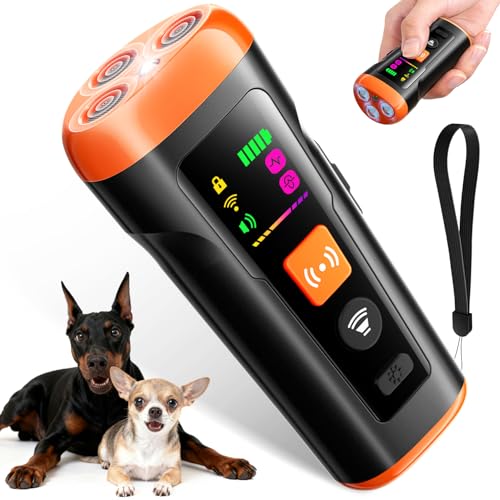
Mzorts 3X Ultrasonic Bark Training Device 50FT

Dog Silencer MAX Outdoor Ultrasonic Bark Control 300 ft
Queenmew 4-Transmitter Auto Bark Control 50FT
Queenmew Solar Charging Tri-Directional Bark Device 50FT
Holercoco AI Detection Bark Device IPX6

fihuxoz Smart Display Bark Deterrent with Flashlight
MALOK Type-C Auto Bark Deterrent
CdFXor Variable Frequency Bark Box
Inside Each Recommended Option
Most deterrents do exactly one thing. This Mzorts unit triples up as a bark stopper, whistle, and clicker, which matters when your dog’s problems go beyond noise into chewing, digging, or jumping on guests. The three sonic transmitters project ultrasonic sound, a high-frequency tone humans barely notice, up to a stated 50 feet.
In a living room or small yard, that coverage handles most situations without you standing right next to your pet. Trainers who already use marker-based methods will like having the clicker in the same housing.
Everyday Wins
- Three transmitters correct behavior faster than single-emitter units, useful during short training windows.
- No shock involved, so sensitive dogs stay relaxed while learning.
- Whistle and clicker functions replace separate purchases.
- Portable enough to move between indoors and the patio as needed.
Things To Consider
- Ultrasonic tools work best as part of consistent training; owners commonly report results fade without routine reinforcement.
- The 50-foot rating assumes open space, so walls will shrink effective range.
Key Specs
Who It Suits Best
You, if you’re an engaged owner tackling barking alongside chewing, digging, or jumping in one training plan.
A Better Fit Elsewhere
If the problem is purely a neighbor’s dog and distance, the Good Life Dog Silencer MAX below reaches far beyond this unit’s range.
This is the specialist of the group, built specifically for reaching dogs that aren’t yours. The MAX projects ultrasonic sound across open areas up to 300 feet, and the maker notes the signal usually passes through chain-link fencing, though wood fences, walls, glass, and dense hedges block it entirely.
Placement is everything here: aim it directly at the barking zone with clear line of sight, mount it under an eave out of heavy rain and direct sun, and let the automatic detection handle barks within about 75 feet. The included remote covers manual sessions beyond that range.
The Good Stuff
- 300-foot projection suits large properties where other units fall short.
- Automatic bark detection responds within 75 feet without supervision.
- Remote mode gives control during deliberate training sessions.
- IPX4 water-resistant housing survives ordinary outdoor placement.
- Collar-free design means nothing touches the dog physically.
Honest Caveats
- Routine-trigger barking, like passersby, responds better than protective barking; expect a slower path there.
- Loud non-bark sounds can trip the sensor unless you adjust sensitivity or switch to remote-only.
- The brand itself notes results typically take two to three weeks of steady use, so patience is part of the deal.
Right Fit For
Homeowners dealing with a neighbor’s outdoor dog across an open fence line, especially on larger lots.
Swap It Out When
Indoor apartment situations call for something smaller; the MALOK Type-C unit later in this list handles close-quarters work more simply.
Where the Mzorts above carries three emitters, this Queenmew box steps up to four ultrasonic transmitters within the same stated 50-foot envelope. More emitters means a wider sound cone, which helps in rectangular rooms or along a shared fence where one narrow beam would miss the mark.
It runs automatically once positioned, detecting barking and answering with safe sonic waves, and offers three selectable modes so you can match intensity to how stubborn the behavior has become. Recharging rather than battery swaps keeps running costs near zero.
Practical Pluses
- Four transmitters widen coverage compared with the three-emitter Mzorts unit.
- Three modes let you scale the response as training progresses.
- Sonic output targets excessive barking and destructive chewing alike.
- Rechargeable design avoids recurring battery purchases.
A Few Limitations
- The manufacturer advises allowing roughly two weeks for a dog to adjust, since some pets startle at first exposure.
- Like every fixed-position box, it needs a power-friendly spot near the action.
Details At A Glance
Made For
You, if you want a hands-off indoor unit that runs itself while you get on with your day.
Reach For A Different Pick When
Yard placement without easy access to charging favors the solar-powered Queenmew model reviewed next.
The biggest headache with outdoor bark boxes is remembering to recharge them. This sibling to the previous Queenmew solves that with solar charging, letting a sunny mounting spot keep the unit topped up through weeks of unattended duty.
Its tri-directional emitter array spreads ultrasonic sound in three directions across a stated 50-foot range, a sensible layout for a central post or fence line where barking comes from multiple angles. Beyond barking, it’s intended to discourage digging and furniture tearing as part of a broader correction routine.
What It Does Well
- Solar charging supports genuinely set-and-forget outdoor placement.
- Tri-directional output covers approaches from several sides at once.
- Addresses barking plus digging and chewing behaviors.
- Humane sonic correction, no collar required on the dog.
Points To Note
- Solar input depends on sun exposure; shaded or overcast locations may mean periodic manual recharges.
- Weather exposure over seasons is worth monitoring, as with any permanently mounted electronics.
Quick Facts
Who Will Love This
Garden owners with a bright, exposed mounting spot who’d rather never think about the device once it’s up.
Consider Something Else When
Shaded yards or covered porches suit the rechargeable Holercoco AI unit coming up, which doesn’t depend on sunlight.
Cheap bark boxes fire at any loud noise, which means your television, your voice, or a slammed door can trigger them all evening. This Holercoco takes a different route: a dedicated AI sound-recognition chip continuously analyzes incoming audio patterns and activates only on genuine dog barking, cutting false triggers dramatically.
The tuning flexibility is unusually deep too, with six sensitivity levels across three intensity tiers, so you can shape responses to a specific dog and environment instead of accepting one fixed setting. An IPX6 water-resistance rating, meaning protection against strong water jets, makes porch and patio placement realistic year-round.
Good Reasons To Consider
- AI recognition ignores voices, TV audio, and household clatter.
- Six-by-three level matrix offers finer calibration than most rivals here.
- IPX6 rating tolerates driving rain better than basic housings.
- Rechargeable power keeps it portable between rooms and seasons.
- Automatic triggering needs no supervision once configured.
Potential Sticking Points
- More settings mean a slightly longer initial setup than single-mode boxes like the MALOK.
- AI filtering, however clever, isn’t flawless; very similar sounds may still occasionally register.
Core Details
The Right Fit
You’ll get the most from this in a busy home near traffic or with frequent visitors, where dumber sensors misfire constantly.
Another Choice May Suit
Quiet households wanting dead-simple operation will prefer the streamlined fihuxoz display model reviewed next.
Handheld deterrents share one annoying flaw: you’re never quite sure which mode they’re in until they fire. The fihuxoz fixes that with a built-in screen showing active mode, battery level, and safety-lock status in real time, so there’s no blind operation before each use.
Under the display sit triple ultrasonic emitters, matching the wider coverage of the Mzorts opener, plus a flashlight that earns its keep on dark evening walks. The rechargeable, portable format moves easily between indoor correction and outdoor strolls, which suits owners whose barking problems don’t stay in one place.
Where It Helps
- Display removes guesswork around mode and charge state.
- Triple emitters widen the sound field versus single-beam handhelds.
- Flashlight adds practical value after dusk.
- Safety lock prevents accidental activation in a bag.
Small Caveats
- Extra features add bulk compared with minimalist units like the MALOK.
- A screen is one more component exposed to drops and moisture over time.
Built With In Mind
Daily walkers and mixed indoor-outdoor trainers who want visible feedback before pressing anything.
Not Your Match When
Fixed-placement coverage of a whole yard points toward the Dog Silencer MAX earlier in this list instead.
After five feature-heavy picks, the MALOK is refreshingly plain. It listens for excessive barking, answers instantly with ultrasonic sound, and asks nothing else from you, indoors or out. No constant monitoring, no menu diving.
USB-C charging is the quiet luxury here: the same cable as your phone tops it up, and the portable size slips onto a shelf, windowsill, or car seat. First-time users often report this kind of simplicity is what actually gets used daily, whereas complicated gadgets end up in a drawer.
Standout Benefits
- True plug-in-and-forget automatic response to barking.
- USB-C recharging matches cables you already own.
- Compact enough to relocate room to room in seconds.
Less Ideal Details
- Single-function design skips the training extras found on the Mzorts or fihuxoz units.
- Basic sound detection means nearby loud noises may occasionally prompt it.
Who Should Grab It
Anyone starting out with bark deterrents who wants one button, one job, and zero learning curve.
Look Elsewhere When
Households full of ambient noise benefit from the Holercoco’s AI filtering instead of basic sound triggering.
Here’s a problem nobody mentions until month two: dogs habituate. A single fixed ultrasonic tone becomes background noise, and the barking resumes. The CdFXor attacks that directly with a variable-frequency design, cycling tones so the dog can’t settle into ignoring one pitch.
Dual emitters arranged like paired “owl eyes” widen the sound spread, and you can switch modes manually as training progresses. Against the fixed-tone MALOK, this is the smarter long-term bet for a persistent barker, though it trades away that unit’s bare-bones simplicity.
Why It Works Well
- Variable frequencies help prevent habituation over months of use.
- Switchable modes adapt to changing barking patterns.
- Dual emitters broaden coverage per activation.
- Aimed squarely at neighbor-dog scenarios from a fixed position.
Trade Offs
- Mode switching requires occasional attention rather than pure automation.
- Placement still matters enormously; solid barriers between unit and dog will mute results.
Feature Snapshot
Best Suited To
You, if a neighbor’s dog has already ignored a basic deterrent and you need something that stays effective long-term.
Skip It When
Short-range handheld training sessions are the goal; the fihuxoz smart display unit fits that brief better.
Choosing Between These Bark Deterrents With Confidence
Match Range To Your Actual Distance
Measure first, then buy. A 50-foot unit covers a living room or modest patio comfortably, but a dog barking forty yards away needs something in the Dog Silencer MAX class. Remember that stated ranges assume open air; a wooden fence or brick wall between device and dog can erase most of that reach.
Think About Power And Placement
Fixed boxes live or die by their mounting spot. Solar models reward sunny exposures, rechargeable units need a reachable outlet or a charging routine, and handhelds simply follow you around. Choose the power style you won’t resent maintaining after week three.
Detection Quality Decides Daily Sanity
Basic sound triggers respond to any loud noise, which gets old quickly in busy households. AI-filtered chips and adjustable sensitivity settings separate the picks that run quietly in the background from those that chirp at your television.
Habituation Is The Long Game
Dogs learn to ignore repetitive stimuli. Variable-frequency designs and multi-level intensity controls hold up better over months, so persistent barkers generally justify the extra capability.
Key Considerations Across These Picks
Wrong Turns To Avoid
The most common mistake is buying for range you don’t have line of sight to use. Ultrasonic sound won’t pass through solid fences or walls, so a 300-foot claim means little across a privacy fence. The second slip is expecting overnight change; makers themselves suggest two to three weeks of consistent use before judging results.
The Case For Spending Up
Higher-tier models pay for smarter detection, finer level control, and weather ratings that survive real seasons. In noisy environments or with a stubborn, habituated dog, those upgrades are the difference between a device that works and one that gathers dust.
Frequently Asked Questions
Do ultrasonic bark deterrents bother humans?
Most people hear nothing or only a faint tickle at high volumes. Household members with very sharp high-frequency hearing sometimes report mild awareness, so placement away from seating helps.
Will these work through my fence?
Sound passes through open fencing like chain-link but not wood, glass, or dense hedges. Clear line of sight between device and dog is the reliable rule.
How long before I see results?
Manufacturers commonly suggest two to three weeks of consistent exposure. Habit-driven barking responds faster than protective barking, which is instinctive and harder to reshape.
Are these devices safe for puppies or senior dogs?
The ultrasonic output is designed to be startling rather than harmful, with no shock involved. For very young, elderly, or anxious dogs, start on the lowest setting and watch closely.
Can one device handle both my dog and the neighbor’s?
A fixed outdoor unit aimed at a shared boundary can cover both sides. Just confirm the sound path is open and the range rating matches the actual distance.
Wrap Up
Picking the right deterrent comes down to honest geography: measure the distance, check what stands between you and the noise, then choose accordingly. Indoor multitaskers should look hard at the Mzorts, while property-line disputes belong to the Dog Silencer MAX. Whichever you choose, give it those first few patient weeks before deciding whether it’s earning its shelf space.
