

Large dogs eat more, roam farther, and pick up parasites faster than smaller breeds, so deworming them isn’t optional housekeeping. The challenge is finding a wormer that covers the right parasites at a dose your dog will actually accept. This shortlist pulls together powders, liquids, and chewables suited to big breeds, with honest notes on where each one falls short. Match the format to your dog’s temperament and your routine, and dosing stops being a wrestling match.
The Shortlist At A Glance
ThePetStop Canine Dewormer 3 Dose x 1 Gram
Giarcidia Tapeworm Oral Suspension for Dogs & Cats 60ml

Safe-Guard Canine Dewormer for Large Dogs 4-Gram (Pack of 2)

Panacur C Canine Dewormer 12 Grams
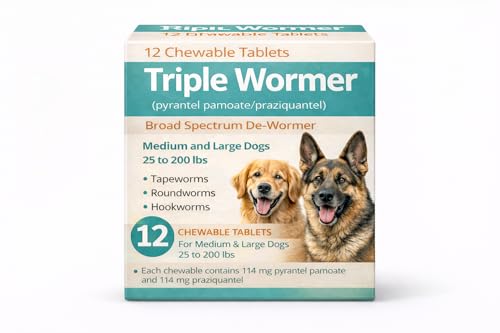
Luckyond Pyrantel Pamoate & Praziquantel Chewable Tablets

Euphea 7-Way Dewormer Chewables 30 Tablets

Alltripal Broad Spectrum Dog Dewormer Liquid 4 OZ
More Details On Our Top Picks
This one keeps things deliberately simple: three single-gram packets, nothing else to figure out. That format suits owners who want a straightforward course rather than a bottle they’ll store half-used in a cupboard.
The listing itself is thin on manufacturer detail, which is worth knowing before you commit. In practice, that means you’ll want to confirm the active ingredient and dosing schedule against your vet’s advice before starting a course on a large breed.
Strong Points
- Pre-measured gram packets remove guesswork at feeding time
- A three-dose course fits common repeat-treatment schedules
- Compact packaging slips into a travel kit or glovebox easily
Things To Consider
- Manufacturer specs are sparse, so verify suitability for your dog’s weight first
- One-gram packets may require multiple units for very large breeds
Who Should Grab It
Cost-aware owners treating a mid-size or large dog who value pre-portioned doses over bulk bottles.
A Better Fit Elsewhere
Owners of dogs over 100 pounds will find the Safe-Guard Canine Dewormer 4-Gram pack better matched to their dosing needs.
Where the ThePetStop packets go the powder route, this Giarcidia suspension takes the liquid path, and that changes everything about administration. Liquids can be dripped straight into the mouth or stirred into wet food, which matters enormously with a stubborn 80-pound hound who spits out tablets. The roasted chicken flavoring is designed to smooth acceptance further.
A weight-based dosage chart printed for reference keeps measuring simple, and the included dropper handles portioning. One bottle serves both dogs and cats, a genuine convenience in mixed-species homes.
Highlights
- Liquid format mixes into food for stress-free dosing
- Chicken flavor improves uptake in fussy eaters
- Weight-based chart supports accurate serving sizes
- One supply covers both canine and feline residents
Softer Spots
- Targets tapeworm management specifically, so broader coverage means pairing with another product
- Liquid bottles demand careful storage away from heat once opened
At A Glance
Made For
Homes with both a large dog and a cat, especially where pill refusal has derailed past treatments.
Where A Sibling Pick Shines
Owners wanting full four-parasite coverage should reach for Panacur C instead, since this suspension focuses on tapeworm support alone.
Big breeds are exactly who this product was built around. The 4-gram packet size lines up with the heavier body weights that make small-dose products impractical, and the two-pack gives you a complete course without hunting down refills mid-treatment.
Safe-Guard’s fenbendazole-based formula addresses roundworms, hookworms, whipworms, and Taenia tapeworms, which covers most of what a large outdoor dog picks up. The label also permits use in puppies from six weeks and pregnant females, a flexibility few competitors match. Owners commonly report mixing the granules straight into kibble with little fuss.
Upsides
- Four-gram packets suit giant breeds without doubling up units
- Broad coverage across four major intestinal parasite groups
- Approved for puppies six weeks and older, plus pregnant bitches
- Two-pack supports a standard multi-day course
Small Caveats
- Granule texture means thorough mixing so no dose gets left in the bowl
- Sick animals shouldn’t be treated until a vet confirms the diagnosis
Quick Facts
Right Fit For
Owners of Great Danes, Mastiffs, and other giant breeds who need serious gram counts per dose.
Swap It Out When
Smaller large-breed dogs under 60 pounds may be better served by the Luckyond chewable, which scales down more gracefully.
Panacur C is the name many vets reach for first, and the reason shows in its coverage: roundworms, hookworms, whipworms, and Taenia tapeworms, all four major intestinal groups in dogs. This box holds three 4-gram packets totaling 12 grams, enough to run the standard multi-day course on a sizable animal.
Dosing follows a clear daily rate tied to body weight, so you measure once and repeat for the labeled duration. Compared with the Safe-Guard two-pack above, you get an extra packet here, useful for larger dogs needing longer courses. A small percentage of dogs experience mild stomach upset, something worth watching on day one.
Reasons To Buy
- Treats all four major intestinal parasite types
- Three-packet supply accommodates longer courses
- Clear daily dosing rate simplifies scheduling
- Established fenbendazole formula with a long track record
Points To Note
- Some dogs vomit after dosing, so serve alongside food when possible
- Vet confirmation of the parasite type is still recommended before starting
Feature Snapshot
Who Will Love This
Owners running scheduled broad-spectrum treatment on large working or sporting dogs.
Not Your Match When
Households wanting a flavored chew their dog takes voluntarily will prefer the Euphea beef-flavored tablets below.
Two active ingredients do the work here: pyrantel pamoate, a long-standing agent against roundworms and hookworms, and praziquantel, the standard for tapeworms. Pairing them in one chewable means fewer products on your shelf and one administration event instead of two.
The 25-to-200-pound weight window is the headline. It stretches from medium breeds through the biggest giants, so a growing puppy can stay on the same product line as it matures. Food-motivated dogs generally take chewables like treats, which turns dosing from a chore into part of the routine.
Plus Points
- Dual active ingredients cover multiple worm types in one tablet
- Wide 25 to 200 pound range grows with your dog
- Chewable format skips the hiding-pills-in-cheese dance
Trade Offs
- Whipworm coverage isn’t specified, unlike the Panacur C formula
- Chew acceptance varies by individual dog despite the format
Whose Shelf It Belongs On
Busy owners of large family dogs who want quick, treat-like administration on a regular schedule.
Consider Something Else When
Confirmed whipworm problems call for the Panacur C Canine Dewormer, whose label explicitly lists that parasite.
Thirty tablets is a serious supply, and that’s the whole appeal for multi-dog homes. Each chew carries 114 mg of pyrantel pamoate alongside 114 mg of praziquantel, targeting tapeworms, hookworms, and roundworms in dogs over 25 pounds, puppies included.
Natural beef flavoring does the persuasion work, and the maker notes most owners report dogs taking these chews willingly. The suggested rhythm is sensible too: an initial dose, a follow-up two to three weeks later to catch newly hatched larvae, then maintenance every few months depending on local risk. Manufactured in the USA with batch testing cited, which adds a layer of consistency assurance.
Bright Spots
- 30-tablet supply covers several dogs or multiple rounds
- Beef flavor earns high acceptance from most dogs
- Clear repeat schedule built into the guidance
- USA manufacturing with per-batch testing
Worth Noting
- Weight floor of 25 pounds excludes smaller companions
- Tablets need a cool, dry cupboard to stay fresh across months of use
Core Details
Who It Suits Best
Households running two or more large dogs on a shared prevention calendar.
Reach For A Different Pick When
Single-dog owners who dislike storing open containers may find the Alltripal liquid’s measured servings easier to manage.
This 4-ounce liquid positions itself differently from everything above: a natural-support formula meant to assist the dog’s own defenses in clearing hookworms, tapeworms, whipworms, and ascarids, rather than a conventional drug approach. The routine is gentle by design, one serving to start, another a week later, then maintenance every two to three months.
That cadence suits owners building a long-term wellness plan rather than fighting an active infestation. Storage stays easy at room temperature below 86 degrees Fahrenheit, and the liquid pours cleanly over food. Worth weighing honestly: natural formulas typically act slower than pharmaceutical options, so an established heavy parasite load calls for a vet-directed product first.
Standout Traits
- Simple starter-plus-follow-up schedule anyone can follow
- Room-temperature storage removes refrigeration hassle
- Liquid blends into meals for multi-pet households
Honest Caveats
- Natural mechanism works gradually, so active infestations need faster intervention
- Package directions deserve a full read before first use
Details At A Glance
The Right Fit
Owners favoring gradual, supplement-style support between veterinary treatments.
Look Elsewhere When
An active, confirmed worm burden calls for the Panacur C Canine Dewormer’s pharmaceutical formula instead.
Choosing Between Dog Wormers For Large Dogs Without Guesswork
Match The Format To Your Dog
Administration decides success more than any spec sheet. Granules mix into kibble, liquids hide in wet food, and chewables get taken like treats. A dog with a history of spitting pills will undo even the best formula, so pick the delivery method your animal tolerates first.
Know Which Parasites You’re Targeting
Roundworms, hookworms, whipworms, and tapeworms each respond to different active ingredients. Fenbendazole covers the broadest range, while pyrantel paired with praziquantel handles the roundworm-hookworm-tapeworm trio. Confirm the culprit with a fecal test before spending money, because treating blind wastes both time and product.
Respect Weight-Based Dosing
Large breeds live at the top of every dosing chart, and underdosing is the most common failure point. Check the per-pound or per-kilogram rate, weigh your dog honestly, and buy a packet size that matches. Two small packets beat one stretched thin.
Plan The Follow-Up
Most schedules call for a second dose weeks after the first to catch newly hatched larvae. Choose a product whose pack size supports that repeat round, or budget for a second purchase before you start.
Key Considerations Across These Picks
Traps First Timers Fall Into
The biggest slip is dosing by eye instead of by scale. A 15-pound error on a large breed meaningfully changes the effective amount. Another frequent mistake is skipping the follow-up dose, which lets freshly hatched larvae restart the cycle within weeks.
The Case For Spending Up
Higher-tier products earn their cost through breadth and supply size. A 30-tablet bottle or a three-packet course costs more upfront but covers multiple dogs or repeat rounds, and dual-active formulas save you buying two separate treatments.
Closing Thoughts
For most large-dog owners, Panacur C offers the safest all-around bet thanks to its four-parasite coverage, while Safe-Guard serves giant breeds needing bigger gram counts. Chewable fans should look at Euphea or Luckyond, and gradual-wellness households will appreciate the Alltripal liquid. Whichever route you take, confirm the diagnosis with your vet and finish every dose in the schedule. Consistency, not brand loyalty, is what actually clears worms.
