

A dog that bolts after squirrels or barks through every walk needs more than a louder voice. Remote training collars give you a way to communicate at a distance, using beep, vibration, or low-level stimulation instead of shouting across a park. The right one depends on your dog’s size, your terrain, and how fine-grained you want your control to be. Below are seven options worth a close look, including one soft recovery cone for post-surgery days when “e collar” means something entirely different.
The Shortlist At A Glance

Asrcs Rechargeable Dog Training Collar IPX7 Waterproof

BLACKDOG Military Dog Shock Collar 4200ft IP67 (Dark Blue)

Educator ME-300 Micro E Collar with Remote
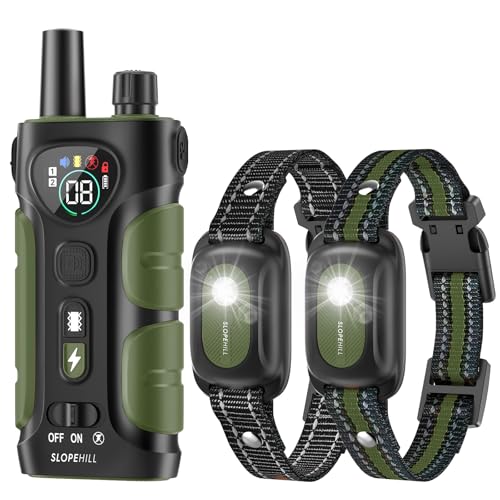
SLOPEHILL Dog Shock Collar 2 Dogs (8-140Lbs)

SUNFURA Soft Dog Cone Recovery Collar Blue Large
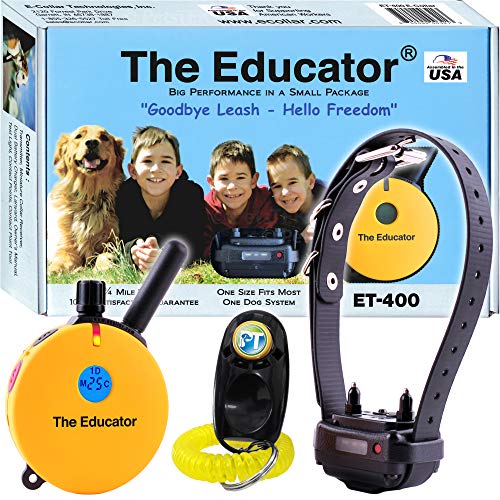
Educator ET-400 E Collar with Remote
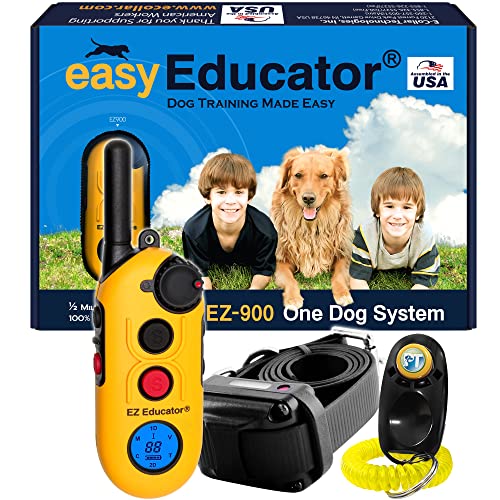
Educator EZ-900 E Collar with Remote
More Details On Our Top Picks
This Asrcs unit covers a lot of ground for a first remote trainer. Its 2000-foot signal handles most suburban yards and open park sessions, and the dual-channel remote lets you run up to four collars from one transmitter, which matters once a second dog joins the household.
The fit range runs from 8 to 150 pounds, so the same kit can serve a beagle and a shepherd. Four cue types give you room to start soft: a built-in flashlight, an audible beep, vibration, and adjustable static stimulation.
Strong Points
- Dual-channel support means one remote manages several dogs without juggling extra transmitters.
- The 2000-foot range keeps you connected across typical parks and trailheads.
- IPX7 waterproofing shrugs off rain, puddles, and lake swims.
- Four distinct cue modes let you match intensity to a sensitive or stubborn temperament.
- The 8-150lb span makes this a rare single-kit answer for mixed-size homes.
Things To Consider
- Owners commonly report recharging both remote and receiver regularly during heavy training weeks, so build charging into your routine.
- Static levels may feel coarse compared with the finer gradation on pricier Educator models below.
Key Specs
Who It Suits Best
First-time remote-trainer owners with one or more medium-to-large dogs who want a straightforward, weatherproof starter kit.
Where A Sibling Pick Shines
Handlers who need finer stimulation steps will get more precision from the Educator ME-300 further down this list.
Where the Asrcs above aims at everyday backyards, the BLACKDOG is built for people whose dogs work hard outdoors. The reinforced housing is rated to survive serious crush force and repeated bite attempts, which matters for chewers and brush-busting hunting breeds alike.
Range jumps to 4200 feet, and the manufacturer states the signal pushes through trees and rain rather than dropping out in dense cover. An ON/OFF safety switch on the transmitter prevents pocket activations, a small detail you’ll appreciate on long hikes.
Reasons To Buy
- Military-grade casing stands up to chewing, mud, and rough terrain handling.
- 4200-foot reach suits beaches, farms, and wide-open trails where shorter collars lose contact.
- IP67 sealing protects against full submersion up to one meter for 30 minutes.
- A dedicated safety button stops accidental corrections in a jacket pocket.
Minor Gripes
- The rugged shell adds bulk, and some owners find it heavier on small-necked dogs than slimmer micro collars.
- Long-term battery replacement on sealed waterproof units can be less convenient than on basic models.
At A Glance
Right Fit For
Active handlers running field work, farm dogs, or determined chewers in wet, rough country.
Consider Something Else When
Apartment owners training a toy breed will likely prefer the lighter Educator ME-300 instead.
The ME-300 is the pick for sensitive dogs. Instead of a handful of coarse settings, it offers 100 distinct stimulation levels, so you can dial in the lowest level your dog actually notices rather than overshooting into a startle response.
“Blunt” stimulation, as Educator describes it, spreads the sensation over a wider skin area for a gentler feel than narrow-pin designs. The receiver itself is compact enough for dogs from 5 pounds up, with an adjustable strap spanning 10 to 26 inches of neck.
Highlights
- 100 graduated levels make low-level conditioning genuinely practical.
- Tone and vibration-only modes cover dogs that never need static at all.
- The micro receiver stays comfortable on small breeds during all-day wear.
- A night tracking light helps you spot a dark-coated dog after sunset.
Small Caveats
- The 1/3-mile range trails the ET-400 and EZ-900 in this lineup, which limits very long-distance field use.
- Charging contacts on small receivers benefit from occasional wiping to maintain a solid connection, a commonly reported upkeep note.
Quick Facts
Made For
Owners of small or temperament-sensitive dogs who want precise, minimal-intensity communication.
Not Your Match When
Anyone working fields beyond a third of a mile should step up to the Educator ET-400 reviewed below.
Two dogs, one budget-friendly kit. This SLOPEHILL package ships as a pair, which immediately separates it from the single-collar Asrcs and Educator units earlier in the list. Each receiver covers dogs from 8 to 140 pounds, and the remote reaches out to 4200 feet.
You get five cue options including a no-shock mode, plus beep, vibration, safe static, and a flashlight for evening visibility. In our view, that mode spread is the real draw: households working on barking or chasing can lean on sound and buzz alone for weeks before ever considering static.
Upsides
- Two receivers in one purchase solve multi-dog training without buying a second kit.
- A dedicated no-shock mode suits owners committed to sound-and-vibration methods.
- 4200-foot range matches far pricier units in this roundup.
Points To Note
- Published detail on waterproof rating and battery life is thin, so verify those specifics on the product page before committing.
- With two receivers sharing one charger, owners commonly report planning charge cycles around alternating training days.
- Build materials read as lighter-duty than the BLACKDOG’s reinforced shell.
Whose Shelf It Belongs On
Multi-dog families wanting a complete two-collar setup at a modest spend.
Look Elsewhere When
Single-dog owners chasing documented waterproof specs will find clearer data on the Asrcs collar at position one.
Not every e collar trains. After surgery or a hot spot flare-up, the goal shifts to stopping licking and biting while keeping your dog as comfortable as possible, and that’s exactly what this SUNFURA cone does.
The breathable mesh fabric replaces rigid plastic, so it flexes when your dog bumps doorframes and doesn’t scrape skin at the neckline. An adjustable closure secures it around the collar, and the blue Large sizing targets bigger breeds recovering from spay or neuter procedures.
Bright Spots
- Mesh construction allows airflow, reducing sweat and irritation under the cone during long wear.
- Soft edges mean fewer scuffed walls and calmer nights than hard plastic cones.
- The adjustable fastening adapts as swelling goes down or fur grows back.
Softer Spots
- Determined lickers with long snouts sometimes reach around softer cones, a widely reported limitation versus rigid designs.
- Fabric picks up drool and food mess, so plan on regular hand washing between vet visits.
Best Suited To
Post-operative large-breed dogs needing wound protection without the misery of stiff plastic.
Swap It Out When
Dogs needing behavior correction rather than recovery belong in a training unit like the SLOPEHILL two-dog kit.
Three-quarters of a mile is serious reach, and the ET-400 exists for handlers who need it. Think large acreage, hunting setups, or a recall-proof margin for dogs that test boundaries far from the porch.
The stopwatch-shaped transmitter is designed for eyes-up handling: controls sit where your thumb lands, so you watch the dog instead of the remote. Corrections come as quick nicks or constant bursts, alongside vibration taps and audible tones, all backed by 100 blunt stimulation levels like its smaller ME-300 sibling.
Plus Points
- 3/4-mile range gives genuine security on big properties and open fields.
- The ergonomic remote supports fast, instinctive button presses under pressure.
- Nick and constant delivery modes suit both marker-style and sustained correction approaches.
- Waterproof construction holds up in wet field conditions.
Trade Offs
- Extra range costs more than compact models, and casual neighborhood users won’t need the distance.
- More capable remotes carry a short learning curve; expect a few sessions before the button layout feels automatic.
Feature Rundown
Perfect-Fit Profile
Rural owners, hunters, and trainers of high-drive dogs working beyond typical yard distances.
Another Choice May Suit
Suburban walkers get everything they need from the cheaper Educator ME-300 at number three.
The EZ-900 splits the difference inside Educator’s own lineup: half-mile range sits between the ME-300’s third of a mile and the ET-400’s three-quarters, while stimulation granularity actually exceeds both at 256 levels.
That step count is the headline. With increments that fine, you can move up one notch at a time until your dog shows the faintest acknowledgment, then train there. Tone and vibration modes round out the toolkit, and the night tracking light carries over from the rest of the family.
Standout Traits
- 256 stimulation levels offer the finest adjustment of anything in this article.
- Half-mile range balances distance with a lower spend than the ET-400.
- Waterproof build survives rain-soaked training sessions.
- Tone-first design supports positive-reinforcement-led programs.
- Two-dog configurations exist for growing households.
Honest Caveats
- Level dials this granular take patience; finding your dog’s working level can span several short sessions.
- Contact points need periodic checking for tightness and skin condition, standard upkeep for any long-wear receiver.
Details At A Glance
Who Should Grab It
Detail-oriented trainers running structured programs who want maximum level control at mid-range distance.
Skip It When
Hands-off simplicity seekers will be happier with the straightforward Asrcs collar at the top of this list.
What Matters Most Before Choosing E Collars For Dogs
Range And Signal Reliability
Match range to your actual terrain, not the biggest number on the box. A quarter mile covers most suburban lots and leash-free park visits, while farms, fields, and hunting ground justify 3000 feet or more. Dense tree cover and heavy rain degrade weaker signals, so wooded-property owners should favor models advertising obstacle penetration. Buying double the range you need rarely hurts, but buying half of what you need ends the usefulness of the whole kit.
Correction Levels And Humane Modes
The single biggest quality marker is graduation. Collars offering 100 or more stimulation levels let you find the lowest setting your dog notices, which keeps training fair and low-stress. Look for tone and vibration tiers ahead of static, since many dogs respond to sound alone within a few sessions. Coarse three-level systems force bigger jumps than most temperaments need.
Fit, Waterproofing, And Battery Life
Weight ratings matter more than marketing claims: a collar sized 8 to 150 pounds serves mixed households, while micro receivers under a few ounces suit toy breeds. IPX7 or IP67 ratings tell you whether lake swims and downpours are safe. Battery life shapes routine too, because weekly-charging units demand more discipline than monthly ones, and sealed waterproof housings trade convenience for durability.
Key Considerations Across These Picks
Traps First Timers Fall Into
The classic error is starting at too high a level, which teaches fear instead of commands. Begin with tone, confirm your dog notices it, then move upward gradually. Second mistake: skipping the fit check. Contact points must touch skin through fur without rubbing raw, so check the neck daily during the first week. Lastly, don’t buy range you’ll never use; paying for a mile of coverage in a townhouse wastes money better spent on finer stimulation steps.
The Case For Spending Up
Higher-tier Educator units cost more for measurable reasons: hundreds of stimulation levels, longer range, better remotes, and proven waterproofing. Casual backyard training rarely justifies that spend. Structured off-leash work, sensitive dogs, or large properties absolutely does, and the upgrade pays for itself in faster, gentler results.
Closing Thoughts
Every collar here solves a different problem, so let your dog and your terrain decide rather than the spec sheet alone. Small or sensitive breeds point toward the Educator ME-300, rough country favors the BLACKDOG, and multi-dog homes get the most from the SLOPEHILL pair. Start gentle, train short, and stay consistent. The right tool simply makes good habits easier for both of you.
