

A dog that bolts through an open gate or chases a squirrel past the property line is a problem every owner dreads. Buried-wire kits and GPS collars now handle containment without a physical fence, and the right choice depends on your yard size, your dog’s temperament, and how much installation work you’re willing to do. This roundup sorts seven solid options into clear profiles so you can match one to your property instead of guessing.
The Shortlist At A Glance
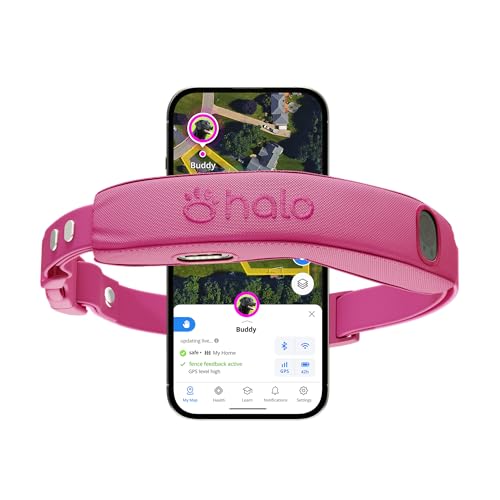
Halo Collar 5 GPS Wireless Dog Fence

Halo Collar 5 GPS Wireless Dog Fence
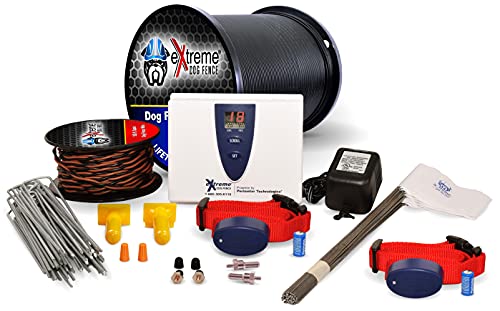
Extreme Dog Fence Pro Grade Kit, 2-Dog, 500 ft
Extreme Dog Fence Pro Grade Kit, 2-Dog, 1000 ft
DJNFGQ GPS Wireless Dog Fence Collar

Dogtra GPS Fence, IPX9K Waterproof Collar

PcEoTllar Underground Dog Fence System, 2 Collars
More Details On Our Top Picks
The Halo Collar 5 skips buried wire entirely and draws its boundary from satellites instead. Dual-frequency L1 and L5 GPS reception, backed by real-time corrections from a network of ground stations, keeps positioning tight enough that the collar knows where your dog stands within roughly two feet. For anyone who has watched cheaper GPS units drift fifty feet on a cloudy afternoon, that precision is the whole story.
In practice this suits irregular properties where trenching wire would be miserable, think wooded acreage or rocky terrain. The trade-off is reliance on satellite signal quality, which varies by tree cover and geography.
Strong Points
- Dual-frequency GPS resists the signal drift that plagues single-band collars near tree lines.
- No digging, no wire breaks to hunt down after frost heave or landscaping work.
- Ground-station corrections mean fewer false corrections at the boundary edge.
- One collar handles containment and training behavior aids in a single device.
Things To Consider
- Ongoing connectivity depends on cellular service at your location, worth confirming before committing.
- Battery charging becomes part of your weekly routine, unlike wired systems that run off wall power.
Key Specs
Who It Suits Best
Owners of large, oddly shaped, or heavily wooded properties who want app-driven control and can live with subscription-style connectivity.
Where A Sibling Pick Shines
Rural owners with open land and no interest in monthly services will find the Extreme Dog Fence Pro Grade 500 ft kit simpler and self-contained.
This listing carries the same Halo Collar 5 hardware as the first entry, sold under a separate ASIN that often serves different bundle configurations or stock channels. Everything said about the dual-frequency GPS platform applies here identically, so your decision between the two comes down to whichever listing matches the package you want at checkout time.
Households adding a second or third dog frequently buy additional collars against an existing account, and this variant tends to fill that role. Check the included accessories carefully before ordering, since bundle contents are the main difference between otherwise identical listings.
What We Like
- Identical Precision+ positioning to our first pick, accurate to roughly two feet.
- Handy as an add-on collar for multi-dog homes already running the Halo ecosystem.
- Combines wireless fencing with training modes so you carry one device, not two.
Worth Noting
- Bundle contents can differ between listings, so verify what ships in the box before comparing prices.
- Like any GPS collar, dense canopy or deep valleys may soften signal consistency depending on your region.
Made For
Existing Halo owners expanding to another dog, or shoppers who find this listing better stocked with the accessory set they need.
Consider Something Else When
First-time buyers wanting the lowest total cost of ownership should look at the DJNFGQ GPS collar, which avoids subscription commitments altogether.
Where the Halo leans on satellites, this kit puts a physical wire in the ground, and that changes the ownership math completely. The transmitter covers up to ten acres, the updated electronics run three antennas, and built-in checks monitor battery level, temperature, and wire integrity continuously. You get a warning before a wire break strands your dog unsupervised, which is the failure mode wired-fence owners fear most.
The receiver collar is fully waterproof and submersible to ten feet, so lake-loving retrievers can swim without knocking the system offline. Installation takes a weekend of trenching or above-ground stapling, and after that there’s no battery-dependent positioning to worry about.
Highlights
- Covers up to 10 acres, generous headroom for most rural parcels.
- Receiver submerges to 10 feet, genuine swim-proof construction rather than splash resistance.
- Continuous wire, battery, and temperature checks catch problems before your dog does.
- Two collars included, ready for a pair of dogs out of the box.
- No subscription or cellular dependency, it runs entirely on your own hardware.
Minor Gripes
- Buried wire needs periodic inspection; owners commonly report chasing breaks after construction or deep aeration work.
- Installation labor is real, budget a full weekend for proper burial depth.
At A Glance
Right Fit For
Rural and semi-rural owners comfortable with DIY trenching who want a self-contained system with zero ongoing fees.
Swap It Out When
Rocky soil or rented property makes burial impractical, the Dogtra GPS Fence delivers custom boundaries with no wire at all.
This is the same pro-grade platform as the 500-foot version, stretched with double the boundary wire. Electronics, three-antenna design, and the diagnostic suite carry over unchanged, so the only question is lot size. A thousand feet of wire comfortably loops a typical half-acre suburban lot with room left for interior no-go zones around gardens or pools.
For most suburban buyers, this length hits the sweet spot between coverage and cost. The waterproof, submersible-to-10-feet receiver still handles swimmers, and the two included collars suit a two-dog home without extras.
Upsides
- 1000 feet of wire encloses most suburban lots with margin to spare.
- Same 10-acre maximum coverage ceiling if you expand later.
- Submersible receiver survives lake days and muddy pond sessions.
- Self-monitoring electronics flag wire faults early.
Small Caveats
- Twice the wire doubles the trenching time, plan accordingly.
- Collar batteries are replaceable consumables, factor that into long-term upkeep.
Quick Facts
Who Will Love This
Suburban homeowners with a quarter to half acre and two dogs who want proven wired reliability without overspending on wire they’ll never bury.
Another Choice May Suit
Anyone with more than an acre to enclose should step up to the 500 ft kit’s sibling configuration or verify wire expansion options before settling here.
Not everyone wants a five-hundred-dollar collar or a weekend of trenching, and this single-collar GPS unit exists precisely for that shopper. It pulls positions from GPS satellites, lets you draw a boundary, and triggers correction as your dog approaches the line. Two operating modes give you some say in how firm the feedback gets, useful for sensitive or stubborn temperaments alike.
The headline attribute is the absence of any monthly fee, the total cost is whatever you pay once. Compared to the Halo Collar 5, expect looser positioning accuracy and a simpler feature set, but for a calm dog on a straightforward rectangular lot, that gap rarely matters day to day.
Plus Points
- No subscription, ever, the sticker price is the whole price.
- Two correction modes let you match intensity to your dog’s sensitivity.
- Wireless setup means containment is live within minutes of unboxing.
Points To Note
- Single-band GPS positioning is less precise than dual-frequency rivals, boundaries may feel soft near heavy tree cover.
- One collar per pack, multi-dog homes need additional purchases.
Who Should Grab It
Budget-minded owners of one easygoing dog on an open, uncomplicated property who want basic containment without recurring costs.
Look Elsewhere When
Precision matters, such as small lots close to roads, the Halo Collar 5’s two-foot accuracy earns its premium there.
Dogtra built its reputation on e-collars for hunting dogs, and that engineering shows here. The GPS Fence layers a warning zone, a primary fence, and two backup fences, so a determined dog meets escalating guidance rather than one abrupt correction. Boundaries can be circular or fully custom shapes drawn in the free app, and the collar stores up to thirty fences, handy for people splitting time between properties.
Once configured, the collar runs independently, no phone required. The IPX9K rating denotes protection against high-pressure, high-temperature water jets, tougher than typical splash ratings. One honest constraint: Dogtra specifies outdoor use on properties of three-quarters of an acre or larger, and the collar should come off indoors.
Bright Spots
- Four-layer boundary design gives hesitant dogs a warning before correction.
- Custom-shaped fences follow your actual property lines, not forced circles.
- No subscription fees, the app is needed only during setup.
- IPX9K waterproofing and rechargeable power suit all-weather, all-day wear.
- Fits dogs from 15 pounds up, covering most mid-size and large breeds.
Softer Spots
- Minimum property size of 3/4 acre rules out small urban yards.
- Collar removal indoors adds a small daily habit to manage.
Feature Snapshot
Whose Shelf It Belongs On
Owners of larger custom-shaped properties who want serious build quality and layered training logic without monthly payments.
Reach For A Different Pick When
Your yard is under three-quarters of an acre, the PcEoTllar underground system handles smaller suburban plots more gracefully.
This kit covers up to four-fifths of an acre with included wire and ships with two collars, which makes it one of the most complete entry-level packages in the category. Setup follows the classic wired formula: lay the loop, connect both ends to the transmitter, power everything on, and test with the supplied tools. An attached tag card helps you mark wire locations for future yard work.
Against the Extreme Dog Fence kits reviewed earlier, this one trades the submersible receiver and advanced diagnostics for a friendlier entry point. For a flat suburban lot with two small-to-medium dogs, that trade often works out fine.
Reasons To Buy
- Two collars included, true two-dog readiness from day one.
- Encloses up to 4/5 acre, ample for typical suburban backyards.
- All testing and installation tools ship in the box.
- Buried wire stays invisible and doesn’t consume yard space.
Honest Caveats
- Burial is strongly recommended to prevent trip hazards and accidental damage from mowers.
- Lacks the submersible receiver and self-diagnostics of pricier wired kits.
Core Details
The Right Fit
First-time wired-fence installers with a modest yard and a pair of dogs who want everything included at an accessible price.
Skip It When
Your dog swims regularly, the Extreme Dog Fence Pro Grade 500 ft kit’s submersible receiver is the safer match.
What Matters Most Before Choosing Electric Fences For Dogs
Wired Versus GPS Containment
Buried-wire systems deliver consistent, weatherproof boundaries because the loop itself defines the limit, not a satellite fix. They demand installation labor and occasional break-hunting, but they never drift. GPS collars install in minutes and reshape boundaries on a whim, yet their accuracy depends on sky view and, on some models, a service connection. Match the technology to your terrain first, everything else follows from that choice.
Property Size And Shape
Every kit states a coverage ceiling, and exceeding it degrades performance. Measure your actual perimeter before shopping, then add margin for future landscaping. Irregular lots favor custom-boundary systems like the Dogtra, while simple rectangles suit almost anything on this list.
Correction Style And Dog Temperament
Layered systems that offer tone and vibration before static correction suit nervous or young dogs. Stubborn, high-drive breeds generally need firmer escalation tiers. Honest self-assessment of your dog’s sensitivity prevents both under-correction and needless stress.
Ongoing Costs And Upkeep
Subscription-based collars carry monthly fees that outpace hardware cost within a couple of years. Wired systems trade fees for maintenance: inspect wire runs seasonally, replace collar batteries on schedule, and recheck boundary flags after major yard projects.
Key Considerations Across These Picks
Traps First Timers Fall Into
The most common error is buying on coverage claims alone, then discovering your wooded lot starves a GPS collar of signal. The second is skipping the training phase entirely; every manufacturer assumes a structured introduction period, and dogs released into an unfenced yard on day one learn to bolt through the warning zone. Read the minimum-property requirements too, several picks here simply won’t perform on small lots.
What Separates Premium From Basic
Higher-tier systems spend money on positioning accuracy, diagnostics, and waterproofing. Dual-frequency GPS, self-checking transmitters, and submersible receivers all cost more to build, and each one addresses a specific failure mode. Paying up makes sense for large, complex, or wet environments; on a small dry suburban lot, a value kit covers the same need for far less.
Closing Thoughts
The right electric fence is the one matched to your land and your dog, not the one with the longest feature list. Open acreage points toward the Halo Collar 5 or the Dogtra GPS Fence, while straightforward suburban lots get everything they need from the Extreme Dog Fence or PcEoTllar wired kits. Take a weekend to measure, plan the training period honestly, and any of these seven will hold the line for years.
