

Newborn calves lose fluids fast during heat waves, transport, scours episodes, and weaning, and a dehydrated calf can go downhill in hours. The right electrolyte supplement, mixed into water or milk replacer, replaces lost sodium, potassium, and chloride while keeping the animal drinking. This shortlist covers livestock-grade powders built for cattle operations, plus a few poultry- and equine-specific formulas that share the same chemistry, so you can match the product to your barn’s actual workload.
The Shortlist At A Glance

REVIVER Superior Absorption Electrolyte Pills, 120 Count

DURVET Vitamins & Electrolytes, 8 oz

Sav-A-Caf Poultry Electrolyte & Vitamin Supplement
Durvet Vitamins and Electrolytes for Poultry, 6 Pack

Durvet Vitamins & Electrolytes Conc, 4 oz

Equithrive Electrolyte Pellets Horse Supplement
Durvet Vitamins & Electrolytes, 8 oz (3 Pack)
More Details On Our Top Picks
This one is for you rather than your animals, and that matters more than it sounds. Calving season means long hours in the sun hauling water and checking cows, and dehydration hits handlers almost as hard as livestock. A bottle of capsules rides in a truck door pocket without melting or spilling.
The formula goes beyond plain sodium chloride, adding all six essential electrolytes plus sodium bicarbonate, vitamins, and BioPerine, an ingredient included to improve how well the body absorbs the minerals. It’s sugar-free and flavorless too, which suits low-carb eaters and anyone fasting through early morning chores.
Strong Points
- Covers all six essential electrolytes instead of sodium alone, so sweat losses get replaced more completely.
- Capsule format survives hot trucks and saddle bags where drink mixes would clump.
- Zero calories and no sugar, which keeps it usable alongside keto or intermittent-fasting routines.
- A 120-count bottle stretches across an entire calving or harvest season for most people.
Things To Consider
- Pills require water to swallow comfortably, so carry a jug on long paddock walks.
- Some users report needing two capsules during heavy-sweat days, which burns through the bottle faster than expected.
Quick Facts
Who It Suits Best
Ranchers, vets, and farmhands who spend full days sweating through livestock work and want a no-mess mineral top-up they can dose by capsule.
Where Another Pick Suits Better
Anyone dosing animals directly should reach for the DURVET Vitamins & Electrolytes powder instead, since it dissolves into drinking water for livestock use.
Durvet built this water-soluble premix for exactly the moments that worry livestock owners most: heat stress, transport, illness recovery, and any stretch where animals stop eating and drinking normally. Because it works as either a water additive or a feed top-dress, you can dose stubborn animals that refuse treated water. One formula covers both poultry and larger livestock, which simplifies the shelf in a mixed-species barn.
The 8-ounce tub is the sweet spot for hobby farms, enough treatments to cover a rough week without sitting around long enough to cake up. Compared with the Sav-A-Caf packets later in this list, it trades pre-measured convenience for flexibility in dosing amount.
What We Like
- Dual-use design lets you mix it into drinking water or sprinkle over feed depending on what the animal will accept.
- Vitamin content pairs with the electrolytes, supporting animals whose appetite drops during stressful periods.
- Single formula serves poultry and livestock alike, cutting down on products crowding the medicine cabinet.
Worth Noting
- You measure doses yourself, so keep a scoop handy and follow label directions closely.
- Powder can harden in humid barns once opened, so seal the lid tightly between uses.
Made For
Small-homestead owners running chickens alongside a few calves or goats who want one versatile tub instead of species-specific products.
Consider Something Else When
Chick-only brooders will find the Durvet 6 Pack of Vitamins and Electrolytes for Poultry easier, thanks to its tiny single-gallon packets sized for young birds.
Heat waves are hard on backyard flocks, and birds panting in the shade often stop drinking exactly when they need fluids most. Sav-A-Caf answers that with pre-measured quarter-ounce packets, each one mixing cleanly into a single gallon of drinking water. No scoops, no math, no guesswork at six in the morning.
You get 18 packets in this pack, formulated specifically for chickens, ducks, turkeys, and other domestic poultry. The brand notes the packaging carries a manufacture date rather than an expiration date, with a 24-month shelf life from that date, worth checking when the box arrives. Unlike the bulk Durvet tubs, this is portion control you can hand to a kid doing chores.
Bright Spots
- Each packet equals exactly one gallon, removing dosing errors entirely.
- Supports hydration during hot weather and other stress events common in backyard coops.
- Works across multiple poultry species, from ducklings to mature turkeys.
- Individual sachets stay fresh until opened, unlike a tub exposed to coop humidity.
Small Caveats
- Poultry-only formulation, so it won’t serve calves or other large livestock in a mixed barn.
- Per-gallon cost runs higher than bulk powder once your flock grows past a dozen birds.
Feature Snapshot
Right Fit For
Backyard chicken keepers managing small flocks through summer heat, molting, or post-shipping recovery who value foolproof portions over bulk economy.
Swap It Out When
Larger operations treating dozens of gallons weekly will save money and storage space with the Durvet Vitamins & Electrolytes Conc 4-oz concentrate instead.
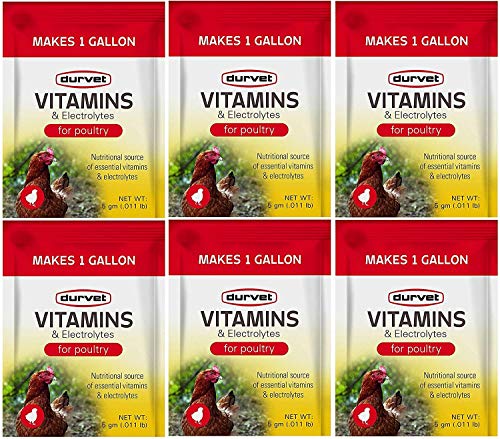
Newly hatched chicks are fragile, and their first 72 hours set the tone for the whole batch. This six-pack of 5-gram packets exists for that window: each packet makes one gallon of vitamin-and-electrolyte water, giving chicks a nutritional head start right out of the shipping box. Hatcheries have used this trick for decades because shipped chicks arrive stressed and thirsty.
The format is nearly identical in spirit to the Sav-A-Caf packets above, but these come from Durvet’s livestock line and lean toward brooder use. Six gallons covers a typical starter brooder cycle, and leftover packets store flat in a drawer until the next hatch.
Reasons To Buy
- Five-gram packets eliminate waste, since a whole packet matches a standard gallon waterer.
- Combines hydration support with essential vitamins for a faster start in young birds.
- Small sachets fit easily in a hatch-day kit or emergency go-bag.
Points To Note
- Sized for poultry only, so calf raisers need a different formula from the same brand.
- Six packets run out quickly in a multi-brooder setup, and reordering mid-hatch is a hassle.
Who Should Grab It
First-time chick raisers and small hatchers who want a simple, measured way to support fragile new arrivals through their first week.
Another Choice May Suit
Keepers running several brooders at once should step up to the Durvet Vitamins & Electrolytes 8-oz tub, which handles far more gallons per container.
Not every homestead needs a season-long supply. Sometimes you just want a compact jar on hand for the occasional rough patch, a heat spike, a trailer ride, a bout of scours in a young animal. This concentrated 4-ounce version of Durvet’s classic premix fills that role, made in the United States and sold here as a three-pack so you’re not caught short.
It shares the same water-or-feed additive approach as the 8-oz DURVET tub reviewed earlier, just in a smaller footprint. The honest trade-off is measuring: you’ll scoop doses yourself, and concentration means precision matters more than with pre-portioned packets.
Upsides
- Concentrated format delivers many treatments from a small jar that stores in a tack-room drawer.
- Three-pack arrangement keeps spare jars on hand across multiple seasons.
- US manufacturing gives consistent quality batch to batch, in most owners’ experience.
Softer Spots
- Requires careful measuring against label directions, since the concentrate is potent.
- Opened jars can absorb moisture and clump in humid climates, so store them sealed and dry.
At A Glance
Best Suited To
Occasional livestock keepers and 4-H families who treat animals a handful of times a year and prefer shelf-stable backups over big tubs.
Look Elsewhere When
Daily dosing across a large herd calls for the Durvet Vitamins & Electrolytes 8-oz three-pack, which offers better volume economics for heavy use.
Horses sweat out electrolytes and proteins at rates far higher than humans do, which is why a long haul or a summer show weekend leaves them dull and off their water. Equithrive addresses that with a pellet built around sodium, potassium, chloride, and magnesium, the core minerals lost through sweat. Pellets top-dress onto grain without the refusal problems powdered electrolytes sometimes cause.
The detail serious competitors care about is competition legality: the formula contains no added sugars or dyes, so it fits FEI and USEF competition rules. Each half-pound bag supplies roughly three days of feeding, making it a trial-size option before committing to a larger tub.
Highlights
- Four-mineral profile targets what horses actually lose through sweat during training and travel.
- No added sugar or dyes keeps it usable under FEI and USEF competition rules.
- Pellet form mixes into feed easily, and palatability reduces picky-eater refusals.
- Half-pound trial bag lets you test acceptance before buying bulk quantities.
Trade Offs
- A three-day supply disappears quickly for horses in consistent training, so ongoing costs add up.
- Equine-specific formula, unsuitable for dosing calves or poultry.
Core Details
Who Will Love This
Competitive riders and haulers whose horses travel frequently and need clean-label hydration support that passes show-ground scrutiny.
Reach For A Different Pick When
Cattle producers dealing with dehydrated calves should skip this entirely and use the DURVET Vitamins & Electrolytes powder designed for livestock water systems.
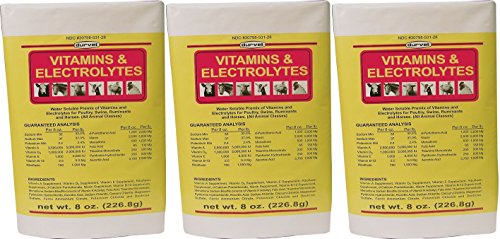
This is the same trusted Durvet premix as the single 8-oz tub earlier in the list, bundled as three jars totaling 24 ounces. For anyone running a mixed herd through a full summer, that volume difference is the whole point: you stop reordering mid-July and keep a sealed backup jar in the feed room. The formula remains a water-soluble blend usable in drinking water or sprinkled on feed whenever animals face stress.
Because it’s the identical product in greater quantity, everything said about dosing flexibility and cross-species use applies here too. The only real question is whether your operation consumes 24 ounces before the powder’s freshness window closes.
Standout Traits
- Triple-jar bundle covers an entire stress season for medium-sized operations.
- Sealed spare jars mean an unopened backup is always ready when heat or illness strikes.
- Same dual water/feed application that makes the single tub versatile across species.
- Buying in quantity usually lowers the per-ounce cost compared with single-jar purchases.
Honest Caveats
- Overkill for households with a handful of animals, where unused jars may sit too long.
- Storage demands a cool, dry spot, since opened powder degrades faster in humid barns.
Whose Shelf It Belongs On
Working farms and boarding facilities dosing multiple species regularly through hot months, where supply continuity matters more than shelf space.
Where A Sibling Pick Shines
Smaller setups should stick with the single DURVET 8-oz tub or the Sav-A-Caf packets, both of which avoid leftover-waste risk entirely.
What Matters Most Before Choosing Electrolytes For Calves
Match The Formula To The Species
Electrolyte needs differ sharply between a 90-pound calf and a 6-pound chicken, and products are blended accordingly. Livestock premixes like the Durvet line dose by gallon of water or pound of feed, while poultry sachets assume a five-pound flock’s intake. Always read the label’s target species before mixing anything into a calf’s milk or water.
Delivery Method Drives Compliance
A supplement only works if the animal actually consumes it. Water additives fail with animals that detect the taste and refuse to drink, which is why feed top-dressing exists as a fallback. Pre-measured packets remove human error, while concentrates offer economy at the cost of careful scooping.
Know Your Stress Calendar
Calving season, weaning, transport, and extreme heat create predictable dehydration windows. Stocking up ahead of those periods beats panic-ordering mid-crisis, and having a sealed backup jar on the shelf costs little peace of mind.
Storage And Freshness
Powdered electrolytes pull moisture from barn air and clump into unusable bricks. Keep containers sealed, stored cool and dry, and check manufacture dates on packet-based products before a season starts.
Key Considerations Across These Picks
Traps First Timers Fall Into
The most common mistake is buying a poultry-only formula for calves, or vice versa, because the packaging looks similar. The second is guessing at dose amounts with concentrates instead of following label directions, which wastes product or under-treats the animal. Measure first, mix second.
What Separates Premium From Basic
Higher-tier products add vitamins alongside electrolytes, include absorption aids like BioPerine, or drop added sugars to meet competition rules. Those extras matter for performance animals and frequent use. For a one-off heat event, a basic premix does the job fine.
Closing Thoughts
Dehydration sneaks up on young livestock, and the fix is cheap compared with losing an animal. Match the formula to your species, stock up before calving season or a forecast heat wave, and store everything sealed and dry. Start with the Durvet premixes for mixed barns, the Sav-A-Caf packets for small flocks, and keep a bottle of REVIVER capsules in the truck for yourself. Your animals will drink, and so will you.
