

A dog that bolts after squirrels or ignores recall at the park makes every walk feel like a negotiation. The right electronic collar gives you a way to communicate at a distance, using tone, vibration, or a mild static cue instead of shouting into the wind. This list covers seven options for different situations, from backyard basics to GPS containment on acreage, so you can match the tool to your dog’s size, temperament, and your training goals.
The Shortlist At A Glance

Asrcs Rechargeable Dog Training Collar IPX7 Waterproof

BLACKDOG Military Dog Shock Collar 4200ft (Dark Blue)

E-Collar ‘The Boss’ Educator ET-802 Dog Training Collar

BLACKDOG Military Dog Shock Collar 2 Dogs (Blue)
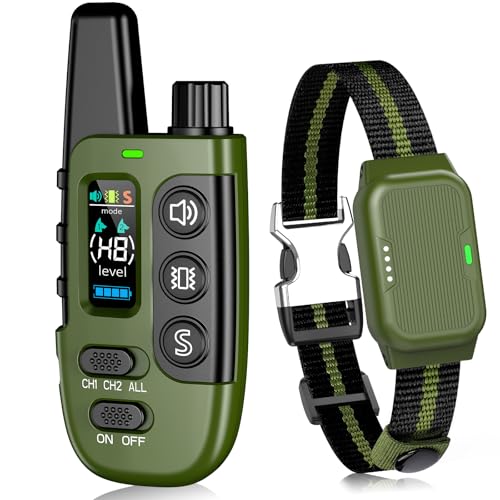
Snsng Dog Training Collar with Remote Control

Dogtra GPS Fence No Subscription Wireless Collar

Jugbow 4200FT Dog Training Collar with Remote
More Details On Our Top Picks
The Asrcs unit hits the sweet spot most first-time trainers want: enough range to matter, four correction styles, and a waterproof build you stop thinking about. Its 2000-foot reach covers a typical home, park loop, or trail segment without signal anxiety.
Dual-channel support means one remote can run sessions for up to four dogs, which is rare at this tier. Compared with the pricier Educator further down, this is the simpler, friendlier starting point.
Strong Points
- 2000-foot range gives your dog real freedom on trails and in open parks while commands still land instantly
- Flashlight, beep, vibration, and adjustable shock modes let you start gentle and escalate only when needed
- Dual-channel remote handles up to four dogs from a single handheld unit
- IPX7 waterproofing survives swimming, beach days, and rainy hikes without a second thought
- Rechargeable design cuts out disposable battery costs over the collar’s life
Things To Consider
- Contact points need regular checking and cleaning, especially on thick-coated breeds where fit drifts
- Owners of very small dogs may find the receiver bulkier than slim-profile alternatives like the Jugbow
Key Specs
Made For
Owners of dogs between 8 and 150 pounds who want a versatile all-weather trainer without paying premium prices.
Where A Sibling Pick Shines
Households needing longer range in dense woods will get more from the BLACKDOG Military collar’s 4200-foot signal.
Where the Asrcs above covers everyday parks, the BLACKDOG is built for the kind of outings that destroy lesser gear. The reinforced casing is rated to shrug off serious crush force and repeated bite attempts, which matters if your dog chews hardware or you train in rocky country.
Range jumps to 4200 feet, and the manufacturer states the signal pushes through trees and rain. An ON/OFF safety switch prevents pocket activations, a small detail you’ll appreciate once a stray command ruins a session.
Upsides
- 4200-foot range keeps commands reliable across beaches, fields, and heavily wooded parcels
- Reinforced housing tolerates rough handling, mud, and determined chewers far better than standard shells
- IP67 sealing handles submersion up to a meter for 30 minutes, so lake retrieves are fair game
- Three-month battery life per charge means fewer charging reminders during busy weeks
- Flashlight and strobe modes double as low-light visibility aids on evening walks
Minor Gripes
- The ruggedized receiver adds weight, which some owners of toy breeds report feels oversized on small necks
- IP67 seals should be rinsed after saltwater exposure to keep them doing their job long term
At A Glance
Who Should Grab It
Hunters, hikers, and rural owners running dogs from 5 to 150 pounds through genuinely harsh conditions.
Swap It Out When
Suburban walkers who mostly train in a fenced yard will find the Asrcs collar lighter and simpler to live with.
This is the step up for people who treat training as a craft rather than a chore. The Boss ET-802 ships as a complete two-dog system with a full mile of range, Biothane straps that wipe clean after swampy retrieves, and a stopwatch-style transmitter designed to be operated blind, by feel.
The receiver uses a tapping pulse closer to intense vibration than sharp static, plus an audible tone cue. That gentler correction philosophy is why professional trainers keep recommending this brand year after year.
Reasons To Buy
- One-mile range dwarfs every other pick here, giving real control on large properties and field work
- Tapping sensation offers a firmer-but-fairer correction than high-output static systems
- Pavlovian tone pairing helps dogs learn cues faster and respond to sound alone over time
- Ergonomic transmitter suits small hands and discreet handling during group classes
- Biothane collars resist odor and rinse clean, unlike fabric straps that hold wet-dog smell
Small Caveats
- Sized for dogs 20 pounds and up with 6-to-22-inch necks, so tiny breeds need a different system
- The larger RX-120 receivers carry noticeable heft compared with compact units like the Jugbow
Quick Facts
Right Fit For
Dedicated trainers working sporting breeds or strong-willed large dogs across big open ground.
Another Choice May Suit
Owners under about $100 budgets training one casual companion will get better value from the Snsng collar below.
Think of this as the single-dog BLACKDOG expanded for a pair. You get the same reinforced casing rated against heavy crush force and bite cycles, the same IP67 submersion tolerance, and the same 4200-foot reach, now driving two receivers from one remote.
For anyone running two adventurous dogs off-leash, carrying one transmitter beats juggling two systems. The 90-day battery claim also holds across both units, so charging stays a quarterly ritual rather than a weekly one.
Bright Spots
- Controls two dogs independently, ideal for walks where each dog needs different correction levels
- Same 4200-foot obstacle-penetrating range as the single-dog version reviewed earlier
- Crush-resistant, bite-tested housing stands up to rough play between dogs
- IP67 waterproofing lets both dogs swim without pulling gear
Points To Note
- Two receivers mean two sets of contact points to check, clean, and refit on a maintenance schedule
- Buyers wanting finer intensity granularity may prefer the Snsng’s 99-level static adjustment
Who Will Love This
Owners of two dogs between 5 and 150 pounds who hike, camp, or train together off-leash.
Not Your Match When
Single-dog homes save money and complexity with the original BLACKDOG single-collar kit covered above.
Fine-tuning is this collar’s whole personality. Eight beep tones, sixteen vibration levels, and ninety-nine static steps give you a precision dial that budget collars usually flatten into three blunt settings. Sensitive dogs respond to level-two taps; stubborn ones get room to escalate gradually.
The dual-channel remote trains two dogs separately, and a 1+2 mode fires commands to both at once, handy when both dogs bolt toward the same squirrel.
Plus Points
- Ninety-nine static levels let you find the exact minimum correction your dog actually notices
- Eight distinct beep tones support tone-based conditioning before any physical correction
- Dual channels plus simultaneous 1+2 mode cover both separate and joint training moments
- Entry-level pricing makes it a low-risk first e-collar for cautious owners
Softer Spots
- Range and waterproofing specs aren’t published in detail, so verify suitability for swimming before committing
- With 99 levels to sort through, expect a slightly steeper setup learning curve than simpler remotes
Feature Snapshot
Whose Shelf It Belongs On
First-time e-collar owners with one or two sensitive dogs who want maximum adjustability without premium cost.
Reach For A Different Pick When
Long-range field work calls for the Educator ET-802’s mile of range instead of this neighborhood-scale unit.
Everything else on this list corrects behavior; the Dogtra GPS Fence prevents it. Instead of burying wire, you draw circular or custom-shaped boundaries in the companion app, and the collar enforces them with a warning zone, primary fence line, and two backup layers. No monthly subscription, ever.
The app is only needed at setup, then the collar runs standalone. Properties of three-quarters of an acre or larger are the intended canvas, and up to thirty unique fences can be stored.
Standout Traits
- No recurring fees, unlike cellular GPS fences that quietly add up month after month
- Layered warning, primary, and backup boundaries give escape-prone dogs multiple chances to turn back
- Custom-shaped boundaries follow odd lot lines instead of forcing a plain circle
- Return reminder tones and vibrations guide a wandering dog back toward safe ground
- IPX9K-rated, rechargeable collar handles high-pressure water and heavy rain
Honest Caveats
- GPS accuracy depends on open sky, so heavily wooded lots may see boundary wobble
- The collar must come off indoors, adding a small daily routine most wired fences don’t require
Details At A Glance
Who It Suits Best
Rural and suburban owners with an acre-plus yard who want containment freedom without trenching wire or paying monthly fees.
Consider Something Else When
You mainly need obedience cues on walks rather than property containment, in which case the Asrcs trainer fits better.
Size is the Jugbow’s argument. The receiver runs roughly 30 percent smaller and lighter than typical units in this bracket, which translates directly into comfort for beagles, border collies, and other mid-size dogs that resent bulky hardware bouncing on their neck.
The remote gets equal attention, with an ergonomic grip and button placement you can operate without looking down, useful mid-recall when eyes need to stay on the dog. Range matches the BLACKDOG kits at 4200 feet.
What We Like
- Compact, lightweight receiver sits more naturally on smaller and medium necks during all-day wear
- Blind-operable remote buttons keep attention forward during fast-paced training moments
- 4200-foot range rivals the rugged BLACKDOG at a typically lower commitment level
Trade Offs
- Detailed waterproofing and battery specs aren’t listed, so confirm those figures on the product page before buying
- Lighter housing suggests less abuse tolerance than the military-grade BLACKDOG shell
The Right Fit
Owners of small-to-medium breeds who want long range without strapping a brick to their dog’s neck.
Look Elsewhere When
Maximum durability for chewers and backcountry abuse points squarely at the BLACKDOG Military collar.
What Matters Most Before Choosing Electronic Collars For Dogs
Match The Correction To The Temperament
A timid rescue and a headstrong Malinois should never wear the same settings. Look for wide intensity ranges, like the Snsng’s 99 static levels, so you can start at the lowest perceptible cue and climb slowly. Tone-first training builds understanding before any physical correction enters the picture.
Range Should Reflect Your Terrain
A quarter-acre suburb rarely needs more than 2000 feet, but wooded lots eat signal. Obstacle penetration matters more than raw distance numbers, which is why the BLACKDOG’s stated performance through trees earns its place here. Buy for your worst-case environment, not your average one.
Fit And Weight Decide Daily Comfort
Receiver size determines whether your dog forgets the collar exists or scratches at it constantly. Small breeds do best with compact units like the Jugbow, while large working dogs barely notice heavier receivers. Measure your dog’s neck and check the supported range before ordering anything.
Containment And Training Are Different Tools
An e-collar shapes behavior on command; a GPS fence enforces a boundary automatically. The Dogtra shows these categories can overlap in polish but not purpose. Decide which problem you’re actually solving before comparing feature lists.
Key Considerations Across These Picks
Where Shoppers Go Wrong
The classic error is buying on range alone, then discovering the receiver dwarfs a 12-pound terrier. Another common slip: skipping the lowest-intensity test and going straight to higher static, which teaches fear instead of recall. Always fit-check contact points and start at minimum output.
What Separates Premium From Basic
Higher-tier models buy consistency, not just features. The Educator’s mile of range and tapping correction reflect years of refinement that budget units approximate. Paying up makes sense for field work, large properties, or multi-dog setups; casual backyard training rarely demands it.
Closing Thoughts
Seven collars, seven different jobs. The Asrcs covers most households well, the BLACKDOG kits handle abuse and pairs, the Educator serves serious trainers, the Snsng stretches a budget, the Dogtra contains property, and the Jugbow keeps small dogs comfortable. Match the tool to your dog’s size, your terrain, and your patience level, and any of these can make walks noticeably calmer.
