

A dog that slips through fence gaps or wanders past the property line is a problem every owner dreads. The right containment collar solves it without burying wire or rebuilding your fence. This roundup covers seven options spanning a physical escape-blocker harness to app-driven GPS systems, so you can match the tool to your yard, your dog’s size, and your budget.
The Shortlist At A Glance
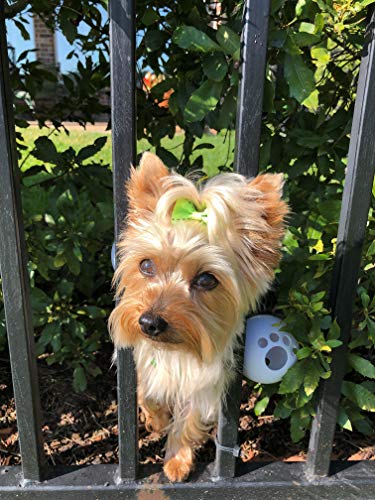
FenceMate Escape-Prevention Harness With Balls (Medium)

Halo Collar 5 GPS Wireless Dog Fence
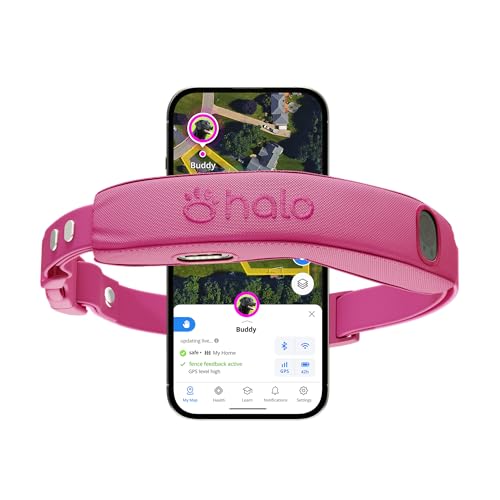
Halo Collar 5 GPS Wireless Dog Fence

Halo Collar 5 GPS Wireless Dog Fence, Graphite

DJNFGQ GPS Wireless Fence System Collar 2 Pack

Dogtra GPS Fence Custom Wireless System

Lilyeel GPS Wireless Collar Fence System
More Details On Our Top Picks
This is the only pick here that works without batteries, apps, or correction levels. The FenceMate is a 3/4-inch wide harness fitted with rigid balls at the sides, sized for girth measurements between 19 and 29 inches, and its whole job is making your dog physically too wide to slip through wrought iron, wood, or metal fence gaps.
For small dogs who treat every fence slat as an invitation, that mechanical approach beats electronics on reliability. The medium fit suits smaller breeds, and because nothing here needs charging, there’s no morning routine beyond clipping it on before backyard time.
Strong Points
- No charging, pairing, or subscription, ever
- Water and weather resistant ABS construction holds up through wet seasons
- The narrow 3/4-inch strap width leaves room for running, swimming, and napping without chafe points
- Works on any fence type with gaps, from ornamental iron to spaced pickets
Things To Consider
- Sizing matters more than with any electronic collar; measure chest girth carefully before ordering
- Owners commonly report checking strap adjustment weekly, since a loose fit defeats the blocker balls
Quick Facts
Made For
Owners of small escape-artist dogs with fenced yards that have gaps wider than their dog’s shoulders.
Where A Sibling Pick Shines
Homes with open acreage rather than a physical fence will get more value from the Dogtra GPS Fence, which creates boundaries where no structure exists.
The Halo Collar 5 sits at the premium end of this list, and the hardware justifies part of that positioning. Its dual-frequency GPS setup pulls signals from both L1 and L5 satellite bands, then layers real-time corrections from ground stations on top, which is how it claims location accuracy within about two feet of your dog’s actual position.
In practical terms, tighter GPS accuracy means fewer false corrections near the boundary line, something cheaper single-band units struggle with under tree cover. Proprietary AI obstacle filtering adds another layer against drift, the slow positional error that plagues basic GPS receivers. For most suburban lots, you may find the precision overkill, but heavily wooded or hilly properties benefit noticeably.
Bright Spots
- Dual-frequency L1/L5 GPS delivers roughly two-foot location accuracy
- Ground-station corrections counter signal drift in real time
- AI obstacle filtering reduces false triggers near dense cover
Worth Noting
- Premium pricing puts it well above budget GPS alternatives like the DJNFGQ two-pack
- Ongoing connectivity depends on cellular service quality in your area
Who Should Grab It
Tech-comfortable owners of large or irregularly shaped properties who want maximum boundary accuracy.
Swap It Out When
Budget-focused shoppers with simple rectangular yards will be better served by the Lilyeel system later in this list.
This listing carries the same Halo Collar 5 hardware as the previous entry, so the dual-frequency GPS, ground-station corrections, and AI obstacle filtering all apply identically. The difference lives in availability and seller fulfillment, which can shift between listings over time.
For multi-dog homes, the Halo ecosystem is worth understanding regardless of which listing you choose: additional collars pair into the same account, letting each dog carry its own boundary rules and training profile. Households running two or three dogs through one shared fence line tend to appreciate that unified management more than any single spec.
Reasons To Buy
- Identical Precision+ GPS platform as the flagship Halo listing
- Ecosystem supports multiple collars under one management account
- Per-dog boundary customization suits mixed temperaments
Points To Note
- Compare both Halo listings before checkout, since fulfillment and bundled extras vary
- Each additional collar is a separate purchase, so multi-dog setups add up quickly
Right Fit For
Owners planning a two-plus dog containment setup who want one app governing every collar.
Another Choice May Suit
Two-dog households watching spending should look at the DJNFGQ pack instead, which ships two collars together at a friendlier entry point.
Same collar, different wardrobe. The Graphite variant wraps the Halo Collar 5’s Precision+ platform in a darker finish that reads less like training gear and more like everyday equipment, which matters more than it sounds when your dog wears the unit on walks as well as in the yard.
Functionally nothing changes: dual-frequency GPS, ground-station correction, drift prevention, and AI obstacle filtering are all present. The honest read is that color is the entire decision here. Choose this listing for aesthetics or gift-giving polish, and either standard Halo listing above for pure price comparison.
Upsides
- Graphite finish looks understated on daily walks
- Full Precision+ GPS accuracy carried over unchanged
- Dark housing tends to show less scuffing than lighter shells
Softer Spots
- You’re paying a premium partly for appearance rather than added capability
- Stock across color variants fluctuates, so confirm availability before committing
Whose Shelf It Belongs On
Owners who keep the collar on beyond containment hours and care how it photographs next to their dog’s regular gear.
Look Elsewhere When
Pure function seekers should grab whichever standard Halo Collar 5 listing, item two or three here, shows the better current terms.
Where the Halo units chase precision, the DJNFGQ chases coverage per dollar. This package ships two collars sharing one GPS-based wireless fence system, each receiving satellite signals and triggering corrective feedback as a dog approaches the boundary you’ve set. Two operating modes give you some say in how firm that feedback feels.
There’s no monthly fee attached, which changes the long-term math considerably compared with subscription-based platforms. The trade-off shows up in refinement: expect simpler boundary controls and fewer smart features than the Dogtra or Halo options. For a pair of dogs on a straightforward lot, though, most owners find that’s a fair exchange.
Plus Points
- Two collars included, covering a two-dog home out of the box
- No recurring subscription costs after purchase
- Two correction modes let you match intensity to each dog’s temperament
Small Caveats
- Boundary setting is less flexible than polygon-mapping rivals like the Lilyeel
- GPS accuracy in heavy tree cover may lag behind dual-frequency units
- Charging two collars becomes part of your weekly routine
At A Glance
Who Will Love This
Budget-minded owners of two dogs on a simple, open yard without dense overhead cover.
Not Your Match When
Irregular property shapes call for the Lilyeel’s custom polygon mapping, covered next but one.
Dogtra built its reputation on e-collars for hunting and working dogs, and that training DNA shows here. The GPS Fence layers four zones of protection: a warning area, a primary fence line, and two backup fences behind it, so a determined runner meets escalating guidance rather than one thin tripwire.
Setup happens once through the free companion app, where you draw circular or fully custom-shaped boundaries matching your property; afterward the collar runs independently. The IPX9K rating, a waterproofing standard meaning the unit survives high-pressure, high-temperature water jets, suits lake dogs and muddy spring yards alike. One constraint worth respecting: Dogtra specifies outdoor use on properties of 3/4 acre or larger, and the collar comes off indoors.
Standout Traits
- Four-layer zone system gives escaping dogs multiple chances to turn back
- Custom-shaped boundaries follow odd property lines, not just circles
- IPX9K waterproofing handles swimming, downpours, and pressure washing off mud
- App needed only during setup, then the collar works standalone
- Supports up to 30 saved fences for seasonal or secondary properties
Trade Offs
- Minimum 3/4-acre property requirement excludes small urban yards
- Rated for dogs 15 lbs and up, ruling out toy breeds
Core Details
Best Suited To
Rural and semi-rural owners of acreage properties with one or more dogs over 15 pounds who take containment seriously.
Consider Something Else When
Suburban quarter-acre lots fall below the minimum footprint, pointing those owners toward the FenceMate harness or a compact GPS option instead.
The Lilyeel splits the difference between the budget DJNFGQ and the premium Dogtra. Its headline trick is custom polygon mapping: you draw your exact boundary shape in the free phone app, corner by corner, instead of settling for a circle. Alerts escalate through beep, vibration, or static correction as your dog nears the drawn edge.
Beyond containment, the system doubles as a phone-based tracker for up to five pets and includes remote training functions, which turns one purchase into three jobs. The app itself carries no subscription cost, keeping lifetime ownership predictable. Compared with the Dogtra’s four-layer zoning, you lose some graduated protection depth but gain multi-pet tracking the Dogtra doesn’t offer.
Highlights
- Polygon boundaries trace irregular lots, farms, and L-shaped yards accurately
- Tracks up to five pets from your phone at no ongoing charge
- Remote training features consolidate gear into one system
- Three-stage alerts let you soften or firm the response per dog
Areas To Watch
- Stable GPS signal outdoors is required, so wooded parcels may see boundary wobble
- Single-collar focus means extra pets need additional hardware despite five-slot tracking
Details At A Glance
The Right Fit
Farm and large-lot owners wanting mapped boundaries plus pet tracking in a single fee-free package.
Reach For A Different Pick When
Maximum containment redundancy matters more than tracking, in which case the Dogtra GPS Fence’s layered zones are the stronger call.
What Matters Most Before Choosing Fence Collars For Dogs
Match The System To Your Property
Physical-fence homes with gap problems need a blocker like the FenceMate, not electronics. Open acreage demands GPS. Measure honestly: a quarter-acre suburban lot disqualifies several systems outright, while a wooded parcel punishes weak GPS reception. Walk your boundary first and note tree cover, slopes, and existing structures.
Understand Correction Philosophy
Every electronic collar here uses some form of beep, vibration, or static stimulus near the boundary. Layered systems such as the Dogtra give a dog multiple warnings before firmer feedback, which suits sensitive or reactive temperaments. Simpler two-mode units ask you to pick one intensity. Pair any collar with consistent boundary training during the first weeks.
Count The True Cost
Sticker price is only the opening bid. Subscription-based platforms add monthly fees that dwarf the hardware cost within a couple of years, while the no-fee options here lock in total spend at purchase. Multi-dog homes should also price per-collar expansion before committing to any ecosystem.
Respect Fit And Weight Limits
Harness-style blockers live or die by accurate girth measurement. Electronic collars carry minimum weight ratings, typically around 15 pounds, and a poor fit causes rubbing, missed signals, or both. Recheck strap tension and skin condition weekly during heavy-use seasons.
Key Considerations Across These Picks
Traps First Timers Fall Into
The most common mistake is buying for yard size you wish you had rather than the one you do. A GPS system rated for 3/4-acre minimums will frustrate on a small lot, and a circle-only boundary rarely fits an L-shaped property. Second trap: skipping the training period. A collar delivered and clipped on cold, with no boundary walkthrough, sets both you and the dog up for confusion.
What Separates Premium From Basic
Higher-tier units pay for positioning accuracy, not gimmicks. Dual-frequency GPS, ground-station corrections, and layered warning zones all reduce false corrections, which is what keeps a dog confident near the line. Budget models work fine on simple, open properties; the upgrade earns its keep on wooded, sloped, or irregular land where cheap GPS drifts.
Closing Thoughts
Containment fails when the tool doesn’t match the terrain, so start there. Fenced yard with sneaky gaps points to the FenceMate harness; open acreage with a serious training mindset points to the Dogtra; tight budgets with two dogs point to the DJNFGQ pack. Measure first, train consistently, and whichever collar you bring home will do its job quietly for years.
