

Anyone who has stared at a cloudy tank knows the frustration: the filter runs all day, yet the water stays hazy. The culprit is usually not the filter itself but what sits inside it. Mechanical pads trap debris, biological media houses the bacteria that process waste, and polishing floss handles the fine particles everything else misses. This roundup covers seven options across all three jobs, from a bulk pond roll to ceramic rings sized for a nano tank, so you can match media to your setup instead of guessing.
The Shortlist At A Glance

Aquatic Experts Classic Koi Pond Filter Pad COARSE 12″ x 72″ Roll

ALEGI Aquarium Sponge Filter Pad
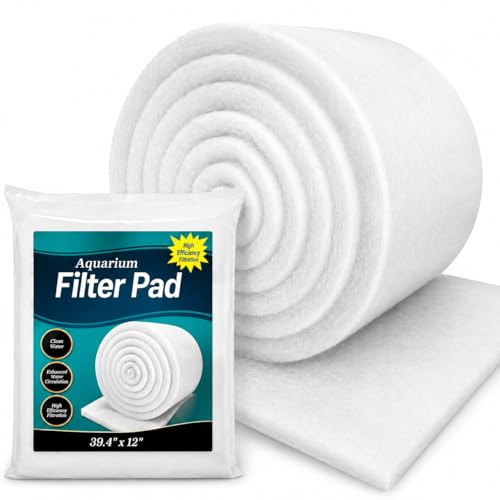
MAQIHAN Aquarium Filter Media Pad 39.4 x 11.8 Inch
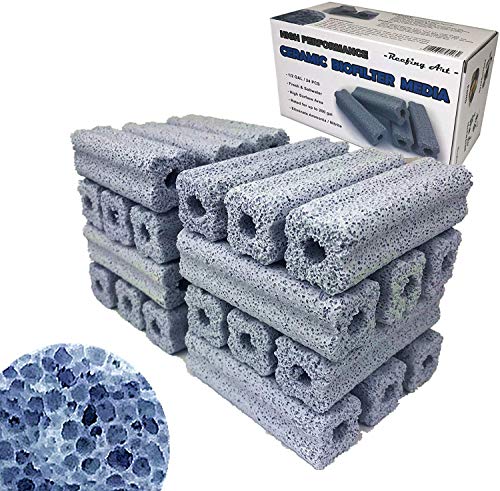
Reefing Art Ceramic Bio Filter Media for Sump Canister (24 pcs)

Ceramic Bio Filter Rings 180ct / 1lb
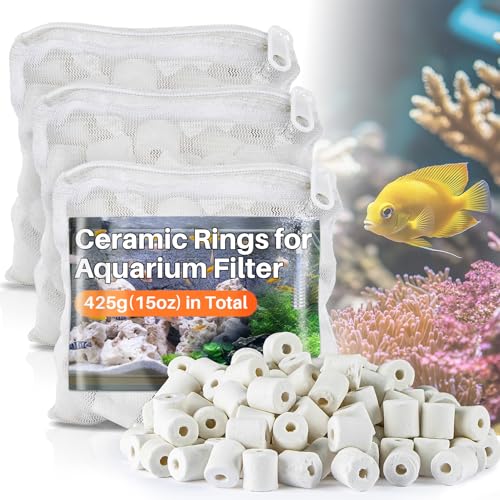
Sukh Ceramic Rings 15oz with 3 Bags

Demiwise Polishing Filter Pad 50 Micron 24″ x 36″
More Details On Our Top Picks
This is the workhorse of the group, built for outdoor ponds rather than glass tanks. The coarse black pad comes as a six-foot roll with a rigid, latex-coated body that holds its shape under constant flow, which matters when koi stir up serious debris. Cut it to fit a skimmer box or waterfall filter and let it catch leaves, uneaten food, and plant matter before they break down.
Compared with the softer sponge pads later in this list, this one trades finesse for durability. For most backyard ponds, that trade makes sense: coarse media clogs slower and rinses clean faster.
Strong Points
- Rigid latex-coated material resists collapsing under heavy pond flow
- Six-foot bulk roll means dozens of custom cuts from one purchase
- Coarse density traps large debris without choking water movement
- Holds up season after season in outdoor skimmer boxes
Things To Consider
- Coarse grade alone won’t polish water; pair it with finer floss downstream
- Rinse thoroughly before first use to remove any manufacturing residue
Key Specs
Who It Suits Best
Koi and goldfish pond keepers who need tough, cut-to-fit mechanical media for skimmers and waterfall filters.
Where A Sibling Pick Shines
Indoor aquarium owners will get more mileage from the ALEGI sponge pad, whose softer foam suits canister trays and small tanks better than this pond-grade roll.
Where the Aquatic Experts roll targets ponds, this dense foam sheet is made for the inside of your tank’s filter. The high-density sponge structure does double duty: it strains suspended particles mechanically while its porous surface gives beneficial bacteria somewhere to colonize. That dual role makes it a smart first layer in a canister or sump.
You trim it to whatever shape your tray demands, which is handy for odd-sized compartments where pre-cut pads never quite fit. In our view, that flexibility is the whole appeal here.
What We Like
- Cut-to-size foam fits unusual filter compartments precisely
- Dense structure captures particles while supporting bacterial growth
- Sponge media is reusable after a gentle rinse, stretching each sheet further
Minor Gripes
- High density means quicker clogging in heavily stocked tanks, so rinse often
- No thickness or dimension details are listed, so measure your tray first
The Right Fit
Freshwater hobbyists running canister or hang-on-back filters who want one affordable pad handling both mechanical and biological work.
Swap It Out When
Outdoor pond owners should reach for the Aquatic Experts coarse roll instead, since its rigid build tolerates leaf litter and heavy flow far better.
This white floss sheet covers a lot of ground: at roughly 39 by 12 inches, one piece outfits several standard filter trays, turtle habitats, or even a small pond box. Unlike the reusable ALEGI sponge, floss like this is typically treated as disposable, swapped out once it darkens rather than rinsed back to life.
Good water permeability keeps flow steady while the fibers pull out sediment and floating debris in both freshwater and saltwater systems. For multi-tank keepers, one sheet stretched across three setups is real value.
Highlights
- Oversized sheet serves multiple tanks or filter stages per purchase
- Works in freshwater, saltwater, ponds, and turtle enclosures
- Balanced permeability traps sediment without stalling flow
- White floss makes it obvious when a swap is due
Softer Spots
- Floss pads are single-use by nature, so ongoing cost adds up versus washable foam
- Trim edges can shed loose fibers until settled in the tray
Feature Snapshot
Made For
Hobbyists juggling two or more aquariums who want bulk mechanical floss that cuts down to any tray size.
Consider Something Else When
Anyone chasing ultra-fine polish on a display tank will prefer the Demiwise 50-micron pad, whose tighter weave catches particles this general-purpose floss lets pass.
Biological filtration is where water quality actually stabilizes, and this ceramic block set is built around that job. Each of the 24 pieces carries a porous internal structure, giving ammonia- and nitrite-processing bacteria an enormous area to inhabit inside a compact footprint. One box fills roughly half a gallon of tray space at about 1.75 pounds total.
The non-metallic ceramic composition is rated safe for freshwater, saltwater, and pond use, with no risk of leaching aluminum or heavy metals into the column. Compared with the ring-style options below, these larger blocks suit big sumps where fewer, chunkier pieces are easier to arrange.
Upsides
- Porous interior hosts dense colonies of beneficial bacteria
- Supports conversion of ammonia and nitrite into safer compounds
- Non-metallic ceramic won’t leach aluminum or heavy metals
- Suitable across freshwater, marine, and pond systems
Points To Note
- Rinse gently in removed tank water only; tap water chlorine harms established bacteria
- Larger blocks leave gaps in tight canister baskets compared with small rings
At A Glance
Right Fit For
Sump and large canister owners, especially reef keepers, who want maximum biological capacity per cubic inch of tray space.
Another Choice May Suit
Nano and mid-size tank owners will find the 180-count Reefing Art rings easier to portion into smaller baskets without wasted space.
Same brand as the block set above, different geometry. These hollow ceramic rings pour into any basket like gravel, filling awkward corners that rigid blocks can’t reach. The manufacturer rates the one-pound bag at roughly 180 rings, suited to tanks in the 20 to 40 gallon range, with a combined porous surface area cited around 5,400 square feet.
A rust-free mesh bag with a plastic zipper comes included, so you can lift the whole colony out during maintenance instead of fishing rings out one by one. That small detail saves real time on cleaning day.
Bright Spots
- Hollow rings pack tightly into irregular filter baskets
- Included zippered mesh bag simplifies rinsing and relocation
- Porous ceramic supports strong ammonia and nitrite processing
- Portion out exactly what a 20-40 gallon system needs
Small Caveats
- Loose rings can shift and channel water if not bagged evenly
- One pound may run short for heavily stocked tanks near the upper gallon range
Quick Facts
Who Should Grab It
Mid-size freshwater keepers upgrading from cartridge filters who want portionable biological media with tidy storage built in.
Look Elsewhere When
Large sump builders get better value per volume from the 24-piece Reefing Art block set, which fills deep trays with less fuss.
The Sukh kit takes the ring concept and bundles it smarter: 15 ounces of hollow, porous ceramic split across three separate media bags. Three bags means you can stage colonies across different chambers, or rotate one bag through cleaning while the other two keep biology intact. That rotation trick is something every seasoned keeper eventually learns the hard way.
The rings themselves promote smooth, even water passage thanks to their hollow centers, working in both freshwater and saltwater systems to capture stray particles and support clearer water over time. Against the single-bag Reefing Art rings, this set trades raw quantity for flexibility.
Plus Points
- Three included bags allow staged or rotating biological chambers
- Hollow ring design keeps water moving evenly through the media bed
- Rated for both freshwater and saltwater aquariums
- Pre-portioned bags cut setup time to minutes
Worth Noting
- 15 ounces is a modest volume for tanks beyond the mid-size range
- Bags need occasional rinsing in removed tank water to prevent detritus buildup
Who Will Love This
Beginners setting up their first canister filter who want pre-bagged media they can drop straight into the trays.
Not Your Match When
Keepers of larger 40-plus gallon systems should step up to the 24-piece Reefing Art blocks, which deliver more biological capacity per dollar of tray space.
Every other pick here handles the heavy lifting; this one handles the finish. At 50 microns, a unit measuring how fine a particle the weave can catch, this polyester floss grabs the algae flecks and micro-waste that coarser pads wave through. The result is that polished, almost glassy look show tanks are known for.
The generous 24 by 36 inch sheet cuts to any tray, and the material is rated safe for fish, reef, and turtle setups alike. Because ultra-fine media clogs fast, most keepers run it as a final stage behind coarser layers rather than alone.
Reasons To Buy
- 50-micron weave captures extra-fine particles other media misses
- Clears cloudiness from fish waste, uneaten food, and algae blooms
- Large sheet yields many custom-cut pieces per pack
- Safe across fish-only, reef, and turtle environments
Honest Caveats
- Fine weave loads up quickly, so expect frequent swaps in stocked tanks
- Running it first in line starves downstream biological media of flow
Details At A Glance
Whose Shelf It Belongs On
Display-tank keepers and aquascapers chasing visible water clarity ahead of photos or guests.
Reach For A Different Pick When
General-purpose weekly maintenance calls for the MAQIHAN floss instead, since its looser weave lasts longer between changes.
What Matters Most Before Choosing Filter Medias For Aquarium Filters
Match Media To The Job
Mechanical media catches particles, biological media houses bacteria, and polishing floss finishes the water. Most healthy systems stack all three in that order, coarse to fine. Buying one type and expecting it to do everything is the fastest route to disappointment.
Size And Flow Come First
A pad that chokes your filter’s flow rate does more harm than good, starving both the bacteria and the tank. Check your tray dimensions before ordering, and favor media you can cut or portion to fit snugly without compressing.
Reusable Versus Disposable
Foam sponges rinse and reuse for months, while floss pads perform brilliantly but retire after a cycle or two. Busy households often prefer washable foam; clarity obsessives accept the swap schedule of fine floss.
Stocking Level Changes Everything
A lightly stocked planted tank needs modest media. A tank full of large fish, or a pond with koi, generates waste faster than thin media can handle, so lean toward higher-capacity ceramics and coarser pre-filtration.
Key Considerations Across These Picks
Traps First Timers Fall Into
The classic error is replacing all your media at once, which discards the bacterial colony your tank depends on and can trigger an ammonia spike. Swap in stages, keep old media wet, and never rinse biological media under untreated tap water. Another slip: buying fine floss as your only media, then wondering why the filter clogs within days.
When Paying More Pays Off
Higher-tier ceramics justify their cost through internal porosity, meaning more bacterial surface per square inch of tray space. Bulk rolls and oversized sheets lower the long-term cost per change for anyone maintaining multiple tanks. Pay up when capacity or reuse matters; save where a basic floss sheet does the same job.
Closing Thoughts
Clear water rarely comes from one product; it comes from the right stack. Pair a coarse or medium mechanical layer with solid biological media, add polishing floss last, and maintain each stage on its own schedule. Any of the seven picks above can anchor that system. Match the format to your tank size and stocking level, and the water takes care of itself.
