

Anyone who keeps fish knows the routine: cloudy water, algae film on the glass, and another weekend spent hauling buckets. Good filtration does most of that work before you ever lift a siphon. This roundup covers seven options for 2026, from cut-to-size media pads to high-flow pumps for tanks past 100 gallons, so you can match the gear to your setup instead of guessing.
The Shortlist At A Glance
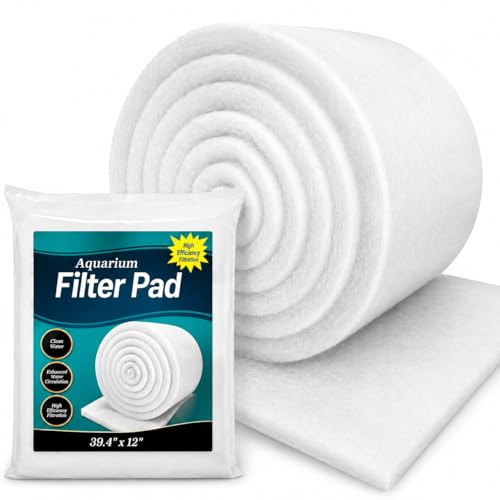
MAQIHAN Aquarium Filter Media Pad White Floss 39.4 x 11.8 Inch

TARARIUM Turtle Tank Filter Power Adjustable 20-75 Gal 290GPH
Aqueon SmartClean Power Filter with EcoRenew Cartridge
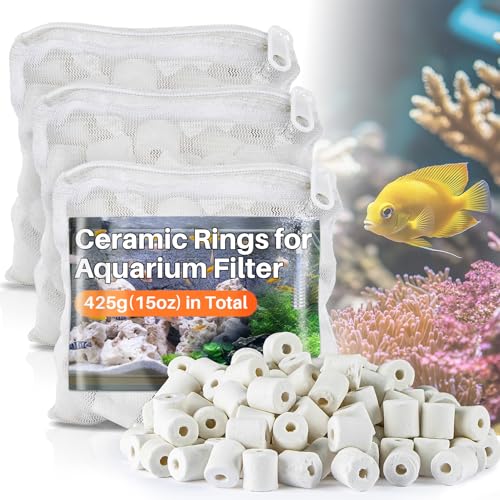
Sukh Ceramic Rings Aquarium Filter Media 15oz with 3 Bags

TARARIUM Fish Tank Filter Powerful 400GPH for 75-200 Gallon

TARARIUM 222GPH 10W Turtle Tank Filter Power Adjustable 10-40 Gal
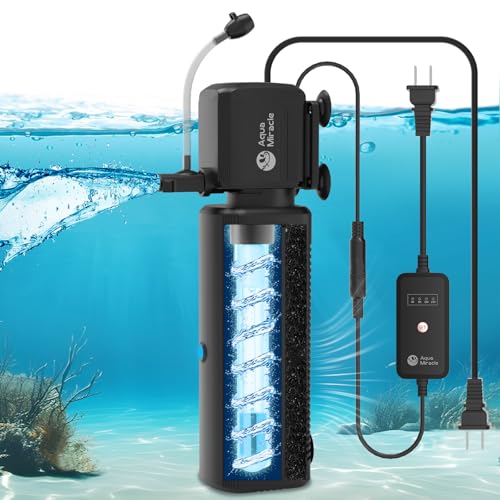
AquaMiracle Aquarium U-V Filter with Timer for Green Water Control
More Details On Our Top Picks
This is the simplest item here: a roll of white filter floss you cut to whatever shape your filter needs. Mechanical filtration is the first line of defense in any tank, trapping loose debris before it breaks down and fouls the water. A big sheet like this one means you can restock several filters from a single purchase.
In practice, floss pads shine in hang-on-back and canister filters where pre-cut cartridges get pricey fast. Owners commonly report rinsing a section under tap water a few times before swapping it out, which stretches each sheet further.
Strong Points
- Cuts cleanly to fit odd-shaped filter chambers without gaps
- One large sheet covers months of replacement cycles for small tanks
- Works in both freshwater and saltwater systems
- Traps fine particles that leave water looking hazy
Things To Consider
- Purely mechanical, so it pairs best with biological media rather than replacing it
- Rinse gently or the fibers compress and lose flow over time
Key Specs
Who It Suits Best
Cost-conscious hobbyists running standard hang-on-back or canister filters who want cheap, flexible mechanical media.
Where Another Pick Suits Better
The Sukh Ceramic Rings below make more sense when your goal is biological filtration instead of particle capture.
Turtles are messy in a way most fish never will be, and this internal unit is built around that reality. Its waterfall-style output sits at the surface, which adds oxygen as water returns to the tank, and the whole assembly works at low water levels where external filters struggle. That matters in reptile enclosures where basking areas eat into depth.
Three stages handle the load: dual-sided mesh sponges grab waste and leftover food first, then ceramic bio-balls give beneficial bacteria a home to break down ammonia. Compared with the smaller TARARIUM model later in this list, this one trades footprint for raw capacity at 290GPH.
What We Like
- Adjustable flow lets you dial output down for shy or small animals
- Waterfall return aerates the surface without a separate air pump
- Dual-color sponge layers show dirt clearly, so cleaning timing is obvious
- Ceramic bio-media supports the nitrogen cycle inside the same housing
Worth Noting
- Internal placement eats swimming space in narrower tanks
- Sponges need frequent rinsing in turtle setups, often weekly by owner accounts
Made For
Reptile keepers with 20 to 75 gallon turtle or frog habitats who need strong turnover at shallow depths.
Consider Something Else When
Aqueon’s SmartClean filter suits fish-only tanks better, since its cartridge system handles lighter waste far more neatly.
Water changes are the chore everyone skips, and Aqueon’s SmartClean design exists to shorten them. Instead of dismantling the filter, you redirect its outflow to flush trapped gunk straight out during a partial change. Less mess, fewer spilled buckets, and the filter never leaves the tank rim.
The included EcoRenew cartridge continues that low-hassle theme, and an adjustable flow dial helps you match current strength to calm species like bettas. Aqueon is a long-established name in the hobby, which counts for something when replacement parts matter years down the road. Against the MAQIHAN pad, this is a complete unit rather than a consumable, so expect plug-and-play convenience at a higher ongoing cost.
Highlights
- SmartClean flushing cuts water-change mess dramatically
- Quiet operation reported by most owners, suitable for bedrooms and offices
- Adjustable flow protects slow-swimming fish from strong currents
- EcoRenew cartridges simplify routine maintenance
Trade Offs
- Proprietary cartridges create recurring costs versus bulk media
- Sized for 10 to 20 gallons only, so growing tanks outgrow it quickly
At A Glance
Right Fit For
First-time fishkeepers with a 10 to 20 gallon community tank who value tidy maintenance over raw power.
Look Elsewhere When
Anything beyond 20 gallons calls for the TARARIUM 400GPH unit, which moves far more water per hour.
Biological filtration is where stable tanks are won or lost, and ceramic rings are the classic way to add it. Each hollow ring carries a porous interior that hosts colonies of nitrifying bacteria, the microorganisms that convert toxic ammonia into safer compounds. More surface area means more bacteria, and more bacteria means steadier water chemistry between changes.
The three included mesh bags make loading a canister tray straightforward: fill, rinse lightly, drop in. Unlike the MAQIHAN floss upstream of it in a filter, these rings rarely need touching once established, which is exactly what you want from bio-media. Fifteen ounces fills a decent tray, though larger canisters may want a second order.
Upsides
- Hollow, porous structure maximizes bacterial colonization area
- Pre-bagged portions simplify canister loading and future swaps
- Sets up in minutes with no modification to existing filters
- Serves freshwater and saltwater systems alike
Small Caveats
- Rings arrive dusty, so a thorough rinse before installation is widely recommended
- 15 ounces runs short for high-volume canisters above roughly 75 gallons
Quick Facts
Who Will Love This
Intermediate hobbyists upgrading a canister or sump who want affordable, no-fuss biological volume.
Skip It When
Your filter already includes ceramic bio-media, in which case the AquaMiracle UV unit addresses algae problems these rings cannot touch.
Big tanks punish weak filters, and this submersible pump answers with 400GPH of turnover aimed at systems from 75 up to 200 gallons. That rating also opens doors beyond glass boxes: small ponds and fountains fall within its stated range, making it a genuinely versatile piece of kit. A built-in wave-maker function adds surface agitation, which helps gas exchange in deep tanks where still zones develop.
The transparent housing is a quietly clever touch. You can see the black sponge darkening as it loads up with waste, so maintenance timing stops being guesswork. Three-stage deep filtration handles the volume, and owners commonly note fewer water changes once it’s running. Next to the 290GPH TARARIUM earlier in this list, this is the step-up choice for serious water volume.
Bright Spots
- 400GPH flow keeps large volumes circulated and clear
- See-through body makes sponge condition visible at a glance
- Wave-maker mode improves oxygenation in tall tanks
- Rated for ponds and fountains, not just aquariums
- Three-stage design reduces how often you change water
Points To Note
- Submersible placement means reaching into the tank for servicing
- Overkill flow for anything under 75 gallons unless throttled
Feature Snapshot
The Right Fit
Keepers of 75 to 200 gallon displays, outdoor tub ponds, or mixed fish-and-turtle systems needing serious turnover.
Another Choice May Suit
Smaller planted tanks under 40 gallons are better served by the compact TARARIUM 222GPH model reviewed next.
Think of this as the little sibling of the 290GPH TARARIUM covered earlier: same three-stage architecture, same waterfall return, scaled down to a 222GPH motor drawing just 10 watts. For tanks in the 10 to 40 gallon bracket, that’s a sensible balance of turnover and electricity draw, especially in setups running lights and heaters on the same circuit.
Low water level tolerance remains the headline feature. Shallow turtle tubs, paludariums, and half-filled quarantine tanks all benefit from a filter that doesn’t demand deep water to prime. Cleaning gets a nod in the name itself, and the clip-on double-sided sponge design supports quick rinses. In our view, it’s the most apartment-friendly option on this list thanks to its modest footprint and quiet running.
Reasons To Buy
- Runs at low water levels where hang-on-back units fail
- 10W draw keeps energy costs negligible around the clock
- Waterfall output doubles as gentle aeration
- Adjustable power suits fry, shrimp, and skittish fish
Softer Spots
- 222GPH tops out well before heavy-stocked 40 gallon tanks need it
- Internal sponges require regular attention in messy reptile habitats
Built With In Mind
Aquarists and reptile keepers working with 10 to 40 gallon tanks, shallow water, or limited space.
Reach For A Different Pick When
Green water is your actual problem, and the AquaMiracle UV filter targets that directly where mechanical stages alone won’t.
Green water is suspended algae, and no amount of sponge media removes it. That’s the gap this AquaMiracle unit fills: a built-in UV stage exposes passing water to ultraviolet light, which clumps free-floating algae so mechanical filtration can catch it. A timer on the unit lets you run the UV portion on a schedule rather than continuously, sparing bulb life and giving you control most clarifiers lack.
Beyond clarification, selectable aeration and rainfall modes add oxygenation, and the included sponge traps food, waste, and plant debris ahead of the UV chamber. Sized for 40 to 150 gallon aquariums, it covers the mid-to-large range where green water tends to linger. One honest caveat: UV bulbs age, and owners should plan on periodic replacement to keep performance consistent.
Plus Points
- UV stage clears suspended algae that filters alone miss
- Integrated timer automates treatment windows
- Aeration and rainfall modes boost dissolved oxygen
- Wide 40-150 gallon coverage suits growing collections
Room For Improvement
- UV bulbs dim with age and need scheduled replacement
- More moving parts mean a slightly longer learning curve than basic filters
Core Details
Whose Shelf It Belongs On
Owners of sunlit rooms or heavily lit planted tanks fighting recurring green water despite good mechanical filtration.
Swap It Out When
Water clarity isn’t your issue; the Aqueon SmartClean delivers simpler, cheaper everyday filtration for small tanks.
What Matters Most Before Choosing Filtrations For Freshwater Aquarium
Match Flow To Your Bioload
Turnover rate, measured in gallons per hour, decides whether waste gets removed or recirculated. Heavily stocked tanks and turtle habitats generally want higher GPH relative to volume, while planted tanks with delicate fish prefer gentler, adjustable output. Size the filter for the stock you have, not the tank’s printed capacity alone.
Count Your Filtration Stages
Mechanical media catches particles, biological media houses the bacteria that process ammonia, and specialty stages such as UV handle algae. A single-stage filter forces one material to do every job poorly. The strongest setups layer all three, which is why multi-stage internal units dominate this list.
Think About Maintenance Reality
A filter you dread opening is a filter you’ll neglect. Transparent housings, clip-in sponges, and external cartridge systems all exist to shorten cleaning sessions. Choose the access style that fits your patience, because consistency beats raw specification every time in this hobby.
Plan For Consumables
Some designs run on proprietary cartridges while others accept bulk floss and ceramic rings. Over a year, that difference shapes your true cost of ownership more than the sticker figure does. Bulk-friendly systems reward hands-on keepers; cartridge systems reward those who value speed.
Key Considerations Across These Picks
Where Shoppers Go Wrong
Oversizing for price instead of purpose trips up newcomers constantly: a 400GPH pump in a 20 gallon tank blasts fish against the glass. The reverse mistake is just as common, buying a small cartridge filter for a turtle tub and wondering why water stays cloudy. Read the rated gallon range first, then adjust for how messy your animals actually are.
The Upgrade Payoff
Higher-tier units earn their cost through features that save labor: timers, transparent inspection windows, adjustable flow, and integrated aeration. Those conveniences compound over months of ownership. Paying more makes sense once your tank holds significant investment in livestock, since stability protects everything else you’ve bought.
Bottom Line
Every tank tells you what it needs if you pay attention: cloudy water points to mechanical gaps, instability points to biology, and green tint points to UV. Start with the right size class, layer your stages, and pick the maintenance style you’ll actually stick with. Any of these seven can anchor a healthy freshwater setup for 2026, so choose the one that matches your tank today rather than the one you might own someday.
