

Goldfinches, house finches, and pine siskins all share one quirk: they’d rather cling and pluck tiny seeds than perch at a big tray. A feeder built around nyjer (thistle) seed, the small black seed finches favor, solves that problem. The seven options below cover every setup, from a no-fuss aluminum tube to seed-filled socks you can hang today. Whether your yard gets a steady finch traffic or you’re just starting out, there’s a fit here.
The Shortlist At A Glance

Woodlink NAWLNT Audubon Finch Screen Tube Feeder (13-Inch)

Mr. Canary Yellow Finch Sock Feeders, 2pk

Happy Wings 3Pc Refillable Nyjer Sock Feeder

MIXXIDEA Hanging Metal Thistle Seed Feeder
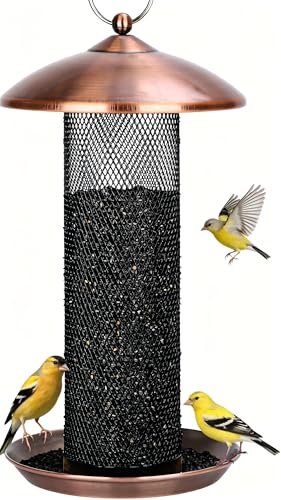
Gtongoko All Metal Mesh Tube Bird Feeder Copper

Gtongoko All Metal Mesh Tube Bird Feeder Green
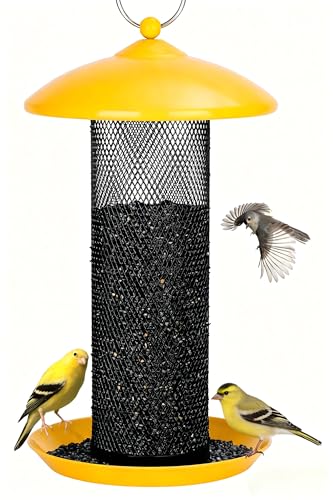
Gtongoko All Metal Mesh Tube Bird Feeder Yellow
More Details On Our Top Picks
The Woodlink NAWLNT is the kind of feeder that removes every excuse between you and a yard full of finches. There’s nothing to assemble: fill the screen tube with thistle or a finch blend, hang it from a branch or porch bracket, and you’re done. The die-cast aluminum construction gives it a sturdier feel than plastic tubes at this size.
The screen surface itself matters more than people expect. Finches can cling anywhere on the mesh, so several birds feed at once instead of queuing at ports. At roughly a pound of capacity, refills come often during peak season, which is the honest trade-off of a compact 13-inch body.
Strong Points
- Hangs straight out of the box with zero assembly steps
- Die-cast aluminum body resists cracking and sun damage better than plastic
- Full-screen feeding lets multiple clinging finches eat simultaneously
- Compact 13-inch profile fits small porches and tight branches
Things To Consider
- The one-pound capacity means frequent topping up once a flock finds it
- Mesh surfaces need an occasional brush-out to keep old seed hulls moving
Key Specs
Who It Suits Best
Anyone setting up their first finch station who wants a durable, hang-it-and-forget-it option without fussing over parts.
A Better Fit Elsewhere
Shoppers wanting bigger capacity and tool-free deep cleaning will get more mileage from the Gtongoko All Metal Mesh Tube Bird Feeder Copper later in this list.
Where the Woodlink asks you to buy seed separately, this two-pack arrives already filled with sterilized nyjer, so birds can find it the day it goes up. Each nylon-mesh sack holds 12 ounces, giving you 24 ounces total across the pair. Finches cling right onto the bag and pull seed from any angle, which makes for genuinely entertaining watching.
The sterilized seed is the detail worth pausing on. Untreated birdseed can introduce unwanted seed growth under your feeder, and pre-sterilized fill sidesteps that headache entirely. For most backyards, these work best as a trial run before committing to a permanent tube setup.
What We Like
- Comes pre-filled, so there’s no separate seed purchase on day one
- Sterilized nyjer avoids unwanted sprouting beneath the hanging spot
- Two sacks let you test two locations at once
- Birds feed from every side of the mesh surface
Worth Noting
- Nylon mesh wears out faster than metal, so treat these as seasonal rather than multi-year gear
- Once emptied, they’re designed as disposable rather than refillable long-term
Right Fit For
Renters, gift-givers, and anyone curious whether finches will visit their yard before investing in hardware.
Swap It Out When
If you already know finches flock to your yard, the Happy Wings refillable sock set below delivers the same feeding style with reusable mesh.
This set fixes the biggest complaint about sock feeders: throwaway design. You get three empty 12-inch mesh socks built for repeated filling, each swallowing up to 20 ounces of nyjer. Spread them across three trees and you’ve effectively built a finch circuit around your property for very little money.
The wide mesh surface is the functional win here. Compared with the Mr. Canary pair above, these hold more than half again as much seed per sock and are meant to last through repeated cycles. The manufacturer describes the mesh as engineered for year-round use, though like any fabric feeder, expect to replace them eventually after seasons of sun and squirrels.
Highlights
- Three reusable socks spread feeding across multiple yard zones
- Each 12-inch sock holds up to 20 oz of nyjer
- Large surface area lets bigger groups feed at once
- Refill cycle costs far less than replacing disposable socks
Small Caveats
- Ships empty, so budget for a bag of thistle seed upfront
- Fabric mesh still has a shorter lifespan than any metal option here
Quick Facts
Made For
Cost-conscious birders running two or three feeding stations who don’t mind buying seed separately.
Another Choice May Suit
Anyone wanting rigid, weatherproof construction should step up to the MIXXIDEA metal tube reviewed next.
The MIXXIDEA takes the classic tube format and adds the two features owners ask about most: eight feeding ports and a transparent body. Eight ports mean a goldfinch, chickadee, sparrow, or woodpecker can each claim a spot without shoving matches, and the clear tube shows seed level at a glance from your kitchen window.
Refilling is a pop-the-lid job with no tools involved, and the open top makes periodic cleaning straightforward too. Unlike the sock options earlier in this list, the metal fittings give it a longer service life, though the tube itself still benefits from regular washing to stay tidy.
Upsides
- Eight ports support simultaneous multi-species feeding
- Transparent tube makes seed levels visible without a ladder check
- Tool-free lid opening simplifies both filling and cleaning
- Draws goldfinches plus chickadees, sparrows, and woodpeckers
Points To Note
- Port-based feeding serves fewer birds at once than a full mesh wall
- Regular cleaning is needed to keep the tube clear and hygienic
Feature Snapshot
Who Will Love This
Suburban yards with varied bird traffic where one feeder needs to serve finches and other small songbirds alike.
Look Elsewhere When
Squirrel pressure is your main battle; the all-metal Gtongoko mesh designs coming up handle gnawing far better.
This is the tank of the group. Every contact surface is metal, including the 0.24-inch mesh walls sized specifically for finch beaks, so squirrels find little to chew through. The copper finish adds warmth that plastic tubes can’t match, and it ages gracefully outdoors.
Capacity jumps to 2.5 pounds, roughly five times the Woodlink’s load, which translates to fewer cold-morning refills in January. Maintenance is unusually painless too: the lid lifts off, the seed tray detaches, and the wide mouth gives your hand room to scrub. In our view, this is the strongest all-around build on the list for anyone tired of replacing feeders every couple of seasons.
Bright Spots
- All-metal construction stands up to squirrels and weather year after year
- 2.5 lb capacity cuts refill frequency dramatically
- Removable tray and wide opening make cleaning genuinely quick
- 0.24-inch mesh openings suit finch-sized beaks precisely
- Copper finish looks intentional in a landscaped yard
Softer Spots
- Heavier when fully loaded, so choose a sturdy hanging point
- Metal mesh can warm in direct afternoon sun, worth considering in hot climates
Whose Shelf It Belongs On
Homeowners in squirrel-active neighborhoods who want a buy-once feeder and don’t mind the extra weight.
Reach For A Different Pick When
A discreet look matters more than metallic shine; the green Gtongoko variant below hides among leaves far better.
Same skeleton as the copper model, different personality. The green powder-style finish disappears into hedges and tree lines, which suits gardeners who’d rather notice the birds than the hardware. Everything else carries over: 2.5-pound capacity, removable lid, detachable tray, and those finch-friendly 0.24-inch mesh openings.
Functionally there’s no wrong answer between the two colors, so this comes down to placement. Hung against dark foliage, the green version practically vanishes; hung on a light porch post, the copper reads better. Owners commonly report the metal mesh shakes clean easily, and the wide top means no funnel needed for refills.
Plus Points
- Green finish blends into natural plantings instead of standing out
- Identical 2.5 lb capacity means fewer trips out in bad weather
- Detachable seed tray empties debris in seconds
- All-metal body shrugs off chewing and rust-prone seams
Minor Gripes
- Low visibility works against you if you want the feeder easy to spot for refills
- Same weight consideration as its copper sibling once loaded
Details At A Glance
Who Should Grab It
Garden-first homeowners whose feeders hang within view of patios but should stay visually quiet.
Not Your Match When
You’re trying to draw finches into a new yard; the bright yellow version below acts as a visual beacon.
The yellow finish isn’t just decoration. Goldfinches respond strongly to yellow tones, and many backyard birders report faster discovery times with yellow feeders hung in open sightlines. For a brand-new feeding station waiting on its first visitors, that visibility edge is real.
Underneath the color, it’s the identical heavy-duty platform as the previous two Gtongoko picks: 2.5 pounds of nyjer capacity, tool-free removable lid and tray, and 0.24-inch metal mesh sized for finch beaks. The trade-off is the opposite of the green model’s: this one announces itself, which some yards welcome and others don’t.
Reasons To Buy
- Yellow coloring may help goldfinches locate a new feeder sooner
- Full 2.5 lb seed capacity reduces winter refill runs
- Wide opening and removable tray simplify upkeep without tools
- Durable all-metal mesh handles seasons of outdoor exposure
Honest Caveats
- Bright color stands out sharply against muted landscaping
- Loaded weight calls for a solid hook or branch
Core Details
Best Suited To
New feeding stations and open lawn placements where drawing attention is the whole point.
Consider Something Else When
Your yard already draws steady finch traffic and you prefer understated gear; the green Gtongoko fits that brief better.
What Matters Most Before Choosing Finch Feeders
Seed Access Style
Mesh surfaces let finches cling and feed from any angle, mimicking how they pull from seed heads in the wild. Port-based tubes serve fewer birds at once but keep seed drier in rain. Match the style to how many birds you expect and how exposed your hanging spot is.
Capacity Versus Refills
A one-pound feeder needs attention every few days during peak season; a 2.5-pound model can stretch past a week. Bigger isn’t automatically better, though, since seed sitting for weeks can go stale. Frequent refills also give you a natural reason to inspect and clean.
Material And Lifespan
Nylon mesh socks cost little and perform well but live one or two seasons. Die-cast aluminum and all-metal mesh bodies cost more upfront and routinely outlast several generations of fabric feeders. Squirrel activity in your yard should weigh heavily toward metal.
Cleaning Commitment
Whatever you choose, plan on a rinse every couple of weeks and a deeper scrub monthly. Wide openings and removable trays turn a chore into a two-minute task, which is why they’re worth prioritizing over minor cosmetic differences.
Key Considerations Across These Picks
Traps First Timers Fall Into
The classic mistake is buying a generic mixed-seed feeder and wondering why finches ignore it. Finches want nyjer, and the port or mesh sizing has to match their small beaks. Another common slip is hanging a feeder in bare open ground with no nearby cover; finches retreat to shrubs when spooked, so place yours within a short flight of shelter.
The Case For Spending Up
Higher-tier metal feeders earn their price through longevity and capacity. An all-metal mesh body resists squirrels, holds two and a half pounds instead of one, and cleans in minutes thanks to removable parts. Over three or four seasons, one sturdy unit typically costs less than repeatedly replacing cheaper plastic and fabric feeders.
Closing Thoughts
Every feeder here solves the same core problem, just at different budgets and commitment levels. Start with a filled sock pair to test your yard, or go straight to an all-metal mesh tube if you already know the finches are coming. Whichever route you take, fresh nyjer and a consistent hanging spot will do more for your finch count than any single product choice. Happy birding.
