

A flea problem in your home rarely announces itself politely. One day your dog scratches a little more than usual, and two weeks later you’re spotting tiny dark flecks hopping along baseboards and pet bedding. The seven products below cover both sides of that fight: contact sprays and professional-grade aerosols that knock down adults, plus light traps that monitor activity without spraying anything near kids or pets.
The Shortlist At A Glance

Nature-Cide All Natural Flea & Tick Spray 8 oz

Jiermadun Flea Traps with 8 Sticky Pads (2 Pack)

Frogoom 2-Pack Hanging Light Flea Trap with 6 Pads

Uniwons Premium Indoor Flea Trap with LED Lightbulb (2 Pack)
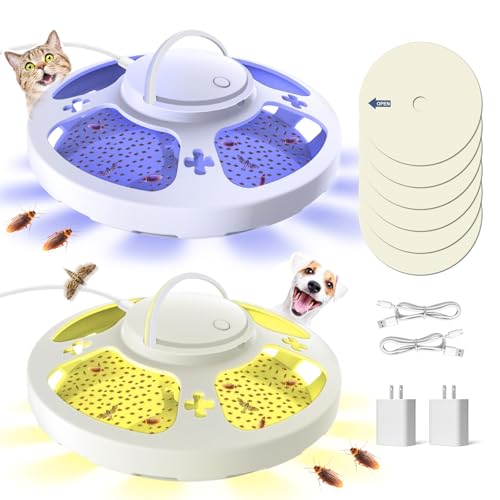
Lickoon 2-Pack Flea Trap with 6 Sticky Pads

MGK NyGuard Plus Flea & Tick Aerosol 17 oz

BASF PT Ultracide Flea Insecticide 14oz Aerosol
More Details On Our Top Picks
A small bottle with a narrow job: killing fleas and ticks on contact using plant-derived essential oils instead of synthetic pesticides. That matters in homes where a toddler crawls across the same rug your cat naps on. The 8 oz size suits spot treatment around pet beds, entryways, and couch seams rather than whole-room fogging.
Because there’s no strong odor, you can treat a room in the morning and use it again by afternoon, which owners of sensitive-nosed dogs tend to appreciate. The honest read is that an oil-based spray works best alongside vacuuming, not instead of it.
Strong Points
- Kills fleas and ticks on contact, so visible pests stop moving quickly after application.
- Essential-oil formula means no lingering chemical smell in bedrooms or nurseries.
- Small bottle stores easily under a sink between treatments.
- Suits direct use around pets’ resting areas where harsher sprays feel risky.
Things To Consider
- An 8 oz volume runs out fast in multi-room infestations; heavy users may want refills on hand.
- Contact-only action leaves eggs and larvae untouched, so repeat applications are part of ownership.
Quick Facts
Who It Suits Best
Renters and families with young children who need a low-odor, low-toxicity option for routine spot control.
Where A Sibling Pick Shines
For a full-room knockdown with residual power, the BASF PT Ultracide later in this list handles severe infestations far better than any natural spray can.
Think of this one as a surveillance tool rather than a weapon. Two trap housings come with eight adhesive pads, giving you enough refills to run a monitoring station for a couple of months in the rooms where your pets sleep. Nothing gets sprayed, plugged into strong chemicals, or misted over furniture.
The setup is genuinely simple: snap the housing together, peel a pad onto the base, and set it near baseboards or under furniture. Once insects touch the sticky surface they stay put, so counting what you catch tells you whether your main treatment is actually working. Compared with the light-based traps from Uniwons and Lickoon below, this one skips the bulb entirely and relies purely on foot traffic.
Highlights
- No electricity needed, so placement anywhere in the house is unrestricted.
- Eight included pads stretch out replacement costs across weeks of monitoring.
- Catching counts give you real evidence of whether an infestation is shrinking.
- Crawling insects like moths and gnats also stick, adding secondary value.
Softer Spots
- Pads need swapping every two to three weeks or once the surface fills up.
- Without a heat or light lure, capture rates depend heavily on where you place them.
Made For
Chemical-cautious households that want proof of progress before committing to stronger treatments.
Consider Something Else When
You already know fleas are concentrated near a specific lamp or window; the Lickoon dual-light trap actively draws pests in rather than waiting for them to wander past.
Where the Jiermadun traps sit passively on the floor, Frogoom’s version hangs, which changes where you can hunt fleas. Suspended near pet areas or above floor-level hiding spots, the light draws crawling pests toward the glue disc below. The bundle includes two housings and six pads, enough coverage for a bedroom-and-living-room pairing.
Placement flexibility is the real selling point here. Hooks, shelves, or curtain rods all work, keeping the trap away from vacuum cleaners and curious paws. You may find the catch rate slower than heated models since warmth isn’t part of the lure, but for quiet overnight monitoring in a single problem room, it earns its spot.
Bright Spots
- Hanging design keeps the trap off floors and out of daily cleaning paths.
- Six glue discs cover roughly six weeks of standard replacement cycles.
- Two units let you split coverage between separate rooms at once.
- Light attraction works continuously without sprays or powders.
Minor Gripes
- No heat element means fleas must wander close before the light pulls them in.
- Glue discs still need regular swaps to stay tacky in dusty rooms.
At A Glance
Right Fit For
Apartment dwellers fighting fleas in one or two compact rooms who value tidy, out-of-the-way placement.
Not Your Match When
Your flea problem spans open floor areas near pet bedding; the Uniwons 360-degree trap catches from every angle and suits those spaces better.
This is the trap most people picture when they imagine the category: a plug-in dome with an LED bulb, a glue disc underneath, and fleas drawn in from every direction. The 360-degree attraction design matters because fleas don’t approach in straight lines; they hop toward warmth and light from wherever they’re hiding.
Setup takes under a minute, insert the board, screw in the bulb, plug it in, and place it where your pet lounges most. The manufacturer recommends replacing each glue disc every two to three weeks, which lines up neatly with how often most owners vacuum anyway. Unlike the Frogoom’s hanging format, this one sits at floor level exactly where fleas live.
Reasons To Buy
- 360-degree design captures pests approaching from any direction, not just one side.
- LED bulb and natural glue discs avoid chemicals entirely, safe around sleeping pets.
- Disc swaps take seconds and slot into normal household cleaning routines.
- Works well as a detection station in rooms where spraying isn’t practical.
- Two-pack pricing covers a whole floor of a typical home.
Points To Note
- Requires an outlet nearby, limiting placement compared with battery or passive options.
- Glue boards lose effectiveness in very dusty rooms, so check them weekly.
Details At A Glance
Whose Shelf It Belongs On
Owners of cats or dogs whose favorite nap spots sit near outlets and who want continuous chemical-free capture.
Swap It Out When
You also battle mosquitoes and gnats seasonally; the Lickoon’s UV mode targets flying insects this dome doesn’t reach.
Among the traps here, the Lickoon carries the most engineering. Its dual light system splits duties: warm light levels handle fleas, mites, and moths, while the upper UV levels pull in mosquitoes, flies, and gnats. Each mode offers strong and weak settings, so you can dim it for nighttime use beside a bed.
The redesigned housing adds a USB-C cord and a hanging option, and the 2.5-inch guard window keeps pet paws and tails away from the glue. One thing worth considering: more features mean slightly more setup decisions than the Uniwons offers, but seasonal households juggling fleas in winter and gnats in summer get two devices in one footprint.
Plus Points
- Dual warm and UV modes target both crawling fleas and flying pests year-round.
- Adjustable brightness makes overnight use realistic in bedrooms.
- USB-C power suits modern outlets, laptops, and power banks alike.
- Guard window protects curious pets from touching the adhesive surface.
- LED lighting sips energy during 24/7 operation.
Small Caveats
- Four light levels add a short learning curve versus simpler single-bulb domes.
- Sticky pads remain consumables; budget for periodic refills beyond the six included.
Best Suited To
Multi-pest households that want one device handling fleas now and flying insects through the warmer months.
Another Choice May Suit
Anyone wanting dead-simple operation will prefer the Uniwons plug-in dome, which trades the UV modes for one-switch simplicity.
This is where the list shifts from monitoring to serious treatment. MGK built its reputation supplying pest-control professionals, and NyGuard Plus reflects that pedigree: three active ingredients working different angles, a pyrethroid for adult kill, a synergist that boosts its potency, and pyriproxyfen, an insect growth regulator (IGR) that stops immature fleas from ever reaching breeding age.
The label covers broad indoor use across homes, apartments, offices, and even veterinary clinics, which says something about how professionals regard it. Never apply it directly to animals; it treats rooms, not pets. Compared with the BASF aerosol next door, this one leans on proven chemistry rather than long-duration claims, making it a strong first strike against a heavy infestation.
Upsides
- Three-way chemistry attacks adults while breaking the egg and larval stages behind them.
- 17 oz canister covers substantial square footage in one treatment session.
- Label approved for demanding commercial spaces, a sign of professional-grade reliability.
- Aerosol delivery reaches carpet fibers and baseboard crevices hand pumps miss.
Honest Caveats
- Indoor use only, and strictly never on pets or animals themselves.
- Occupants and pets should stay out of treated rooms until surfaces dry per label directions.
- Stronger chemistry demands careful storage away from children’s reach.
Core Details
Who Should Grab It
Households facing an established infestation across several rooms who are comfortable following pesticide label directions closely.
Look Elsewhere When
Your priority is months of ongoing prevention after the initial knockdown; the BASF PT Ultracide specializes in extended residual control.
BASF is one of the largest chemical companies in the world, and PT Ultracide is the product many professional exterminators reach for first. Pyrethrins deliver immediate adult knockdown while pyriproxyfen, the same IGR chemistry found in the MGK canister, prevents eggs and larvae from developing for up to seven months. That timeline is the difference between winning a battle and ending the war.
The formula dries quickly and stays stable in sunlight, useful near windows where lesser residuals break down. State restrictions apply in some regions, so confirm availability where you live. For anyone who has already tried consumer sprays and watched fleas return, this is the escalation step.
Standout Traits
- Up to seven months of flea development prevention from a single application cycle.
- Fast pyrethrin knockdown gives visible relief within hours of treating a room.
- Controls eggs, larvae, and pupae, closing the reproductive loop other sprays leave open.
- Quick-drying formula lets you return rooms to normal use sooner.
- UV-stable residual holds up near sunny windows and glass doors.
Areas To Watch
- Professional-grade chemistry requires strict attention to label safety and disposal instructions.
- Availability varies by state due to regional regulations.
- Overkill for a light seasonal problem where a trap alone would suffice.
Feature Snapshot
The Right Fit
Homeowners committed to eradicating a persistent, recurring flea population and willing to follow professional label protocols.
Reach For A Different Pick When
You’re still confirming whether fleas exist at all; start with the Jiermadun sticky-pad traps to gauge activity before investing in aerosols.
What Matters Most Before Choosing Flea Killers For House
Match The Tool To The Infestation Stage
A few fleas spotted near a pet bed calls for monitoring and spot treatment; fleas jumping onto your ankles in the hallway calls for an IGR aerosol. Jumping straight to the strongest chemistry wastes money on problems a trap would have solved. Diagnose first, then buy.
Understand What An IGR Actually Does
An insect growth regulator doesn’t kill adult fleas directly. Instead it halts eggs and larvae from maturing, which starves the population over weeks. Any serious indoor plan pairs an adulticide (the fast knockdown ingredient) with an IGR, because treating only adults leaves the next generation hatching behind your sofa.
Consider Everyone Sharing The Space
Homes with crawling toddlers, birds, fish tanks, or chemically sensitive pets lean toward traps and essential-oil sprays. Empty-nest households battling a heavy infestation can deploy professional aerosols with fewer constraints. Read every label fully either way; application and re-entry instructions differ significantly between these categories.
Plan For The Follow-Up Work
Glue pads need swapping every two to three weeks, sprays need reapplication as eggs hatch, and vacuuming remains non-negotiable throughout. Whichever product you choose, budget ten minutes a week for maintenance or results will fade faster than expected.
Key Considerations Across These Picks
Traps First Timers Fall Into
The most common mistake is buying a single product and expecting it to finish the job alone. Traps monitor but don’t eradicate; sprays knock down but don’t show you what remains. Skipping the vacuum is the second classic error, since pupae hide deep in carpet fibers where nothing sprayed reaches.
The Case For Spending Up
Professional aerosols like the BASF and MGK cost more per can than consumer sprays, but their IGR content buys months of prevention per application. One thorough treatment often replaces three rounds of weaker product, and that math favors upgrading the moment an infestation spreads past one room.
Wrap Up
Beating fleas indoors comes down to pairing the right tools with consistent follow-through. Start with a trap like the Uniwons or Jiermadun to map the problem, bring in the Nature-Cide spray for gentle spot work, and escalate to the BASF PT Ultracide when the population demands it. Whatever combination fits your home, stay disciplined with pad swaps and vacuuming, and the fleas lose their foothold for good.
