

Anyone keeping fish knows the water tells the story before the fish do. Cloudy gills, gasping at the surface, algae blooming overnight, most of these trace back to parameters you can’t see with your eyes. That’s where a reliable strip or kit earns its spot on your shelf. This roundup covers seven options spanning basic 5-way spa strips to 9-parameter aquarium panels, so you can match testing depth to your tank’s demands without overbuying.
A Quick View Of The Lineup

DIPSTIK 7-Way Aquarium Test Strips (100ct)

Umlecoa 7 in 1 Aquarium Test Kit (125 Strips)

AAwipes 8-in-1 Aquarium Test Strips (25ct)

FreshWater Hot Spring Spas 5 Way Test Strips
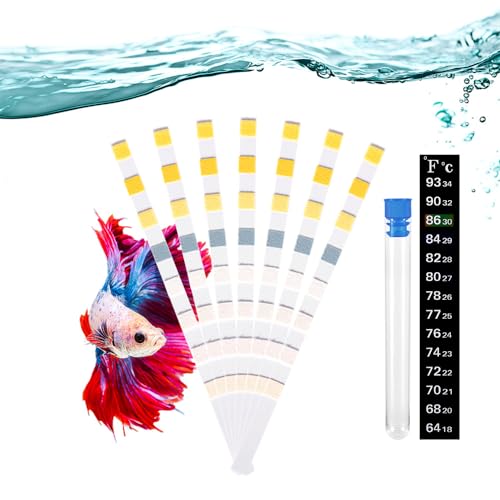
DaToo 8 in 1 Aquarium Test Kit (100 Strips)

Aqueon 7-in-1 Aquarium Test Strips (50 Count)

A QUILA 9-in-1 Aquarium Water Test Kit
The Details Behind The Selections
A hundred strips in one bottle changes how often you actually test. Most hobbyists skip weekly checks because reagent bottles run dry fast, but this count supports twice-weekly dips across a large community tank for months at a stretch.
The panel covers nitrate, nitrite, general hardness, pH, carbonate hardness, total alkalinity, and total chlorine, which handles the core chemistry of both freshwater and pond water. The fiber-paper pads are built to resist color bleeding, so reading results against the chart stays straightforward even under kitchen lighting.
Useful Strengths
- Seven key parameters in a single ten-second dip, no separate vials needed.
- 100-strip supply supports consistent twice-weekly monitoring without frequent repurchasing.
- No-bleed pads make chart comparisons cleaner and less ambiguous.
- Works across freshwater tanks and outdoor ponds alike.
Things To Consider
- Keep the bottle sealed tightly and stored dry; humidity is the usual culprit when strips fade early.
- Ammonia isn’t on the panel, which matters during a new tank’s cycling phase.
Key Specs
Who Will Love This
Value-minded keepers running an established freshwater community tank who want steady, affordable monitoring without extra equipment.
Swap It Out When
Choose the AAwipes 8-in-1 instead if you’re cycling a new tank and need ammonia readings alongside the standard panel.
Where the DIPSTIK bottle wins on raw count, the Umlecoa kit wins on completeness. You get 125 strips plus a test tube and thermometer bundled in, which turns a casual dip test into a fuller water picture, temperature included.
That matters more than it sounds. pH swings with temperature, and comparing a morning reading against an evening one without knowing the degrees can send you chasing phantom problems. For households juggling an aquarium, a backyard pond, and maybe a small pool, one kit covering all three keeps the shelf uncluttered.
Everyday Wins
- 125 strips give you the largest supply in this lineup.
- Bundled thermometer removes guesswork around temperature-related pH shifts.
- Included test tube allows sample-based dipping for murky pond water.
- Handles aquarium, pond, and pool chemistry with the same strip.
Small Caveats
- Like most multi-use strips, precision sits below dedicated liquid reagent kits; fine-tuning sensitive reef systems calls for something more granular.
- The extra accessories add bulk if you only maintain a single nano tank.
Made For
Multi-water-feature households and pond keepers who want one generous kit covering every body of water they manage.
Where A Sibling Pick Shines
The Aqueon 7-in-1 suits you better if you keep strictly aquariums and prefer a recognized aquatic brand over a generalist kit.
Ammonia is the parameter that kills fish fastest, and most budget strips skip it entirely. The AAwipes panel puts ammonia nitrogen front and center alongside free chlorine, nitrate, nitrite, hardness, salinity, total alkalinity, and pH, eight readings from one dip.
During the first six weeks of a new setup, when beneficial bacteria are still colonizing your filter media, ammonia spikes are the number-one risk. Checking daily here beats checking seven other parameters weekly. The trade-off is supply: 25 strips runs out quickly under that kind of schedule, so many owners pair this bottle with a higher-count backup.
Noteworthy Benefits
- Direct ammonia tracking, the reading that matters most while a tank cycles.
- Non-bleeding color pads keep eight simultaneous results legible.
- Salinity reading adds value for brackish or lightly salted setups.
Honest Caveats
- The 25-strip bottle depletes fast under daily testing routines.
- Strips carry a shelf life once opened; date the bottle and finish it within the season.
Feature Snapshot
Right Fit For
New aquarists cycling their first tank, or anyone recovering a tank after a crash who needs close ammonia watch.
Reach For A Different Pick When
Once your tank stabilizes, the DIPSTIK 100-count bottle covers routine weekly checks far more economically.
This entry breaks pattern deliberately: it’s built for hot tubs, not fish tanks. If your spa shares a utility shelf with your aquarium gear, it earns its place here as the right tool for warm-water chemistry, where sanitizer behavior differs sharply from a 78-degree display tank.
The five-way panel checks dichlor sanitizer level, pH, total alkalinity, and calcium hardness, the four levers that keep spa water comfortable and equipment scale-free. Owners of FreshWater-brand spas get a formulation matched to their system’s expectations, which takes interpretation out of the equation.
Good Reasons To Consider
- Reads dichlor sanitizer directly, matching common hot tub treatment routines.
- Covers pH, alkalinity, and hardness, the trio behind cloudy or itchy spa water.
- Matched to FreshWater spa systems for simpler result interpretation.
Points To Note
- Not designed for aquarium use; it won’t read nitrate, nitrite, or ammonia.
- Hot water accelerates pad degradation, so cap the bottle immediately after each use.
Whose Shelf It Belongs On
FreshWater spa owners who want brand-matched strips rather than generic pool chemistry guesses.
Another Choice May Suit
Fishkeepers should pass on this one entirely and head to the DaToo 8-in-1, whose panel is purpose-built for livestock water.
The DaToo panel reads nine things per dip: ammonia, pH, total alkalinity, carbonate hardness, free chlorine, nitrate, nitrite, temperature, and general hardness. That’s the widest single-dip spread among the high-count bottles here, and it does so across 100 strips.
Planted tank keepers will appreciate having carbonate hardness and temperature on the same card, since CO2 management lives and dies by those two numbers. Compared with the AAwipes, you sacrifice nothing on ammonia and gain triple the supply, though the smaller brand name means less long-term availability certainty than Aqueon offers.
What Pays Off
- Nine data points per dip, including temperature and ammonia together.
- 100-strip supply balances depth and longevity better than any rival here.
- KH and GH readings support CO2 dosing decisions in planted tanks.
- Suits freshwater and pond applications equally well.
Trade Offs
- Denser pads mean slightly longer development time before colors settle for reading.
- Store away from direct sunlight; UV exposure is commonly reported to skew pad colors over months.
Core Details
Who Should Grab It
Intermediate hobbyists running planted or heavily stocked freshwater tanks who want maximum data per dip without liquid kits.
Look Elsewhere When
Saltwater keepers chasing iron and copper readings will find the A QUILA 9-in-1 covers marine-specific parameters this panel skips.
Aqueon has stocked fish-store shelves for decades, and that track record shows in how this kit is put together. The 50-strip bottle reads pH, total alkalinity, hardness, nitrate, nitrite, free chlorine, and iron, with iron being the standout addition most 7-way rivals leave off.
Iron matters in two scenarios: planted tanks dosing fertilizers, and saltwater systems where trace elements drift. Neither the DIPSTIK nor the Umlecoa tracks it, so reef-curious beginners get a gentle on-ramp here. The 50-count sits mid-pack on supply, enough for roughly a year of weekly checks on a single display.
Benefits That Matter
- Iron reading supports planted-tank fertilizing and marine trace-element checks.
- Backed by a long-established aquarium brand with wide replacement availability.
- 50 strips cover about a year of weekly testing on one tank.
- Rated for both freshwater and saltwater use.
Less Ideal Details
- No ammonia pad, so cycling tanks need a companion kit like the AAwipes.
- Mid-size bottle costs more per strip than the 100-count alternatives.
At A Glance
Best Suited To
Beginners stepping into saltwater or planted freshwater who value a trusted brand name and iron tracking over raw strip count.
Not Your Match When
Keepers prioritizing cost per test should grab the DIPSTIK 100-count instead, doubling supply for similar money.
This is the deepest panel in the roundup. Nine parameters per dip: pH, total alkalinity, hardness, chlorine, nitrite, sulfate, copper, iron, and ammonia. Copper and sulfate appear nowhere else on this list, and both matter in specific situations.
Copper is the big one. Many medications and some tap supplies carry it, and invertebrates like shrimp and snails are famously sensitive to even low levels. Sulfate, meanwhile, feeds certain algae and affects marine stability. Betta bowls, shrimp tanks, and reef systems each find a reason to reach for this bottle, though the exact strip count isn’t published, so heavy testers may want to confirm supply before committing.
Standout Benefits
- Only pick here tracking copper, critical for shrimp and snail safety.
- Ammonia included, covering the cycling window most 7-way kits miss.
- Iron and sulfate readings serve planted and marine keepers alike.
- Compatible with betta tanks, ponds, and full marine displays.
Details To Watch
- Total strip quantity isn’t clearly specified, worth verifying against your testing frequency.
- Nine dense pads per strip demand good lighting and prompt timing for accurate reads.
Product Snapshot
Perfect Match For
Shrimp and invertebrate keepers, plus marine hobbyists who want copper visibility without investing in separate specialty kits.
Consider Something Else When
Straightforward freshwater community tanks are better served by the DaToo 8-in-1, which matches the ammonia coverage with a confirmed 100-strip supply.
What Matters Most Before Choosing Freshwater Aquarium Test Kits
Match Parameters To Your Tank’s Life Stage
A cycled, stable community tank mostly needs nitrate, pH, and hardness tracked weekly. A tank in its first two months needs ammonia above everything else. Buying a broad panel for a mature tank wastes money; buying a narrow one for a cycling tank risks fish. Start by naming your current situation, then buy for it.
Strip Count Versus Cost Per Test
The math is simple: divide the bottle price by its strip count. A 100-count bottle usually lands far cheaper per test than a 25-count one, even when the sticker looks similar. Heavy testers running multiple tanks burn through small bottles in weeks, so bulk counts pay for themselves quickly.
Storage Decides Shelf Life
Strips degrade with humidity, heat, and light faster than most owners expect. A bottle left open on a damp fish-room shelf can skew readings within a couple of months. Cap it immediately after each use, keep it in a dry drawer, and write the opening date on the lid so you know when to replace it.
Know When Strips Aren’t Enough
Test strips trade some precision for speed. They’re excellent for spotting trends and catching emergencies, but fine-tuning a reef’s calcium or dialing in CO2 calls for liquid reagent kits or digital meters. Many experienced keepers run both: strips for weekly rhythm, precise tools for problem-solving.
Key Considerations Across These Picks
Traps First Timers Fall Into
The classic mistake is buying a cheap 5-way strip, never seeing ammonia on it, and assuming the tank is safe during its cycling window. Another common slip is reading colors in dim light or after the recommended wait time, which distorts results. Read under daylight-spectrum lighting and time each dip properly.
What Separates Premium From Basic
Higher-tier kits add the parameters that catch edge cases: ammonia for cycling, copper for invertebrates, iron for plants. Paying up makes sense when your stock is sensitive or your setup is specialized. For a hardy community tank of tetras and corydoras, a solid 7-way bottle covers the real risks just fine.
Closing Thoughts
The right kit depends less on the brand and more on what your tank is doing right now. Cycling a new setup points you toward ammonia-capable panels like the AAwipes or A QUILA. Settled freshwater tanks run happily on the DIPSTIK or DaToo bottles, and spa owners have their own matched option. Whichever you choose, test consistently, store the bottle well, and let the numbers, not guesswork, guide your next water change.
