

Glass bottles solve a problem plastic never quite manages: no lingering odors, no cloudiness after months of washing, and nothing questionable leaching into warm milk. The trade-off is weight and breakage risk, which is exactly why the six options below matter. Each one approaches the glass category differently, from paced-flow nipples to venting systems built around gassy newborns. Whether you’re combining breast and bottle or going all-in on formula at 3 a.m., there’s a fit here for your routine.
The Lineup, Simplified

Philips Avent Natural Baby Bottles, Slow Flow, 4 oz, 2-Pack

YOHKOH Natural Glass Baby Bottle, Wide Neck, 8.8oz, Pack of 4
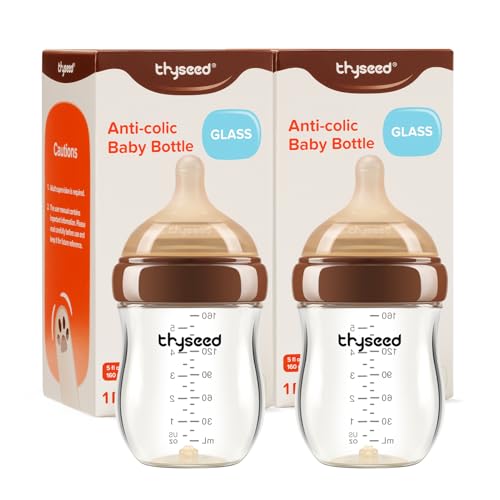
Thyseed Anti-Colic Glass Baby Bottle, Extra Slow Flow, 5 oz, 2 Pack

Thyseed Anti-Colic Glass Baby Bottle, Extra Slow Flow, 5 oz

Dr. Brown’s Anti-Colic Options+ Wide-Neck Glass Bottle, 9 oz

Tommee Tippee Natural Start Glass Baby Bottles, 0m+, 9oz
A Breakdown Of The Leading Choices
The nipple here is the whole story. Its opening and tip only release milk while your baby actively sucks, so pauses for swallowing and breathing stay dry. That baby-controlled rhythm mirrors breastfeeding closely, which matters most in the early weeks when you’re alternating between breast and bottle.
The 4 oz size suits those first-month feeds, and the two-pack means one can live in the drying rack while the other is in service. Compared with the YOHKOH set further down, this is a smaller, more focused starter option rather than a bulk supply.
Benefits That Matter
- Milk stops flowing when your baby pauses, supporting a natural drinking pace
- Rhythm closely resembles breastfeeding, easing transitions between the two
- Small 4 oz capacity matches typical newborn portions with less waste
- Two bottles cover the wash-and-rotate cycle of daily feeding
Things To Consider
- You’ll outgrow the 4 oz size within a few months and need larger bottles
- Slow-flow pacing may frustrate hungrier, older babies
Who Will Love This
Parents of brand-new babies who want a gentle first bottle that won’t overwhelm a learning feeder.
A Better Fit Elsewhere
For bigger appetites and longer use, the Dr. Brown’s Anti-Colic Options+ Wide-Neck Glass Bottle offers a 9 oz capacity that carries you well past the newborn stage.
Four bottles in one purchase changes your daily math. Instead of washing after every feed, you can run a full day on a single dishwasher load, and the borosilicate glass bodies handle repeated heating cycles without clouding. Borosilicate, for context, is a thermal-shock-resistant glass that tolerates quick temperature swings better than standard soda-lime glass.
The wide neck makes formula scooping and scrubbing genuinely easier, and the liquid silicone nipples are designed to vent air so less of it ends up in your baby’s tummy. Owners commonly report the multicolour rings help keep track of whose bottle is whose in shared care situations.
A Few Strong Suits
- Borosilicate glass resists thermal shock during warming and cooling
- Four-bottle set supports a once-a-day washing routine
- Wide neck simplifies filling and hand cleaning
- Silicone nipples vent air toward the back of the bottle, not into the milk
Worth Noting
- The Level 2 medium flow nipple runs faster than newborns typically need
- Glass adds heft compared with plastic, noticeable during long handheld feeds
At A Glance
Made For
Families past the newborn phase who want a dependable multi-bottle supply without fussing over specialty features.
Skip It When
Brand-new feeders should look instead at the Thyseed Anti-Colic Glass Baby Bottle, whose extra slow flow nipple matches a 0m+ baby’s pace far more closely.
Most anti-colic bottles vent air through the nipple. This one vents through the base, separating air from milk down low where bubbles form, and the design has been clinically studied with results published in JAMA. That’s a level of documentation you rarely see at this price point.
The nipple uses multiple micro-openings rather than one hole, spreading the flow into a steadier stream that discourages gulping. Paired with an extra slow flow rate aimed at 0m+ babies, it’s built specifically for breastfed infants who reject anything too fast or too foreign.
The Case For It
- Base vent separates air from milk, reducing swallowed air and gas
- Venting design backed by published clinical research
- Micro-opening nipple delivers an even, gulp-resistant flow
- Extra slow flow suits the youngest feeders
- Two-pack covers backup and rotation needs
Points To Note
- Base vents add a part to disassemble and clean after each use
- Extra slow flow will feel sluggish to babies a few months old
Quick Facts
Whose Shelf It Belongs On
Parents of gassy, breastfed newborns who need a slow, familiar feeding experience above all else.
Another Choice May Suit
Once your baby moves past the newborn stage, the Tommee Tippee Natural Start Glass Baby Bottles offer a 9 oz capacity and weaning accessories that carry much further.
This is the same bottle as the two-pack above, sold as a single unit. Everything applies: the base vent that keeps air out of the milk, the micro-opening nipple with its even, paced flow, and the extra slow rate tuned for 0m+ breastfed infants. The research behind the venting design was published in JAMA, which gives the anti-colic claim real substance.
The honest question is pack size. One bottle works as a trial run before you commit to a set, or as a spare for the diaper bag. In our view, that’s exactly how most families should approach any new bottle system anyway, since acceptance varies from baby to baby.
The Upside
- Low-commitment way to test whether your baby accepts the design
- Base venting reduces bubbles and swallowed air during feeds
- Steady micro-opening flow helps prevent gulping
Small Caveats
- A single bottle means washing after nearly every feed
- No backup if a nipple or collar goes missing mid-week
Right Fit For
Cautious parents who’d rather verify their newborn takes to this nipple before buying multiples.
Where A Sibling Pick Shines
Households already sold on the design should grab the Thyseed two-pack version instead, since rotation between two bottles makes daily life noticeably easier.
Dr. Brown’s built its reputation on the internal vent system, a straw-like tube inside the bottle that pulls air away from the milk entirely. The result is vacuum-free feeding, meaning your baby doesn’t fight negative pressure while drinking, and the manufacturer states the system helps preserve milk nutrients that excessive air exposure can degrade.
The 9 oz glass body and wide neck make this the workhorse of the list. Unlike the small newborn sizes from Philips Avent, this one carries you through the entire bottle-feeding period. One thing worth considering: the internal vent adds parts to wash, though owners generally report assembly becomes second nature within days.
The Value In It
- Internal vent removes air from milk, targeting colic, spit-up, burping, and gas
- Vacuum-free feeding lets babies set their own pace
- Consistent-flow silicone nipples avoid sudden surges
- 9 oz capacity serves from early months through toddlerhood
Honest Caveats
- The vent insert and reservoir mean extra components to clean thoroughly
- Single-bottle pack requires additional purchases for full coverage
Feature Snapshot
Who Should Grab It
Parents dealing with persistent colic symptoms who want the most established venting technology available in glass.
Swap It Out When
For simpler cleaning with fewer parts, the Philips Avent Natural Baby Bottles deliver paced feeding without any internal hardware.
Every other bottle on this list retires when your baby weans. Not this one. The set includes travel food jar lids and cup rings alongside the bottle nipples, converting the same 9 oz glass bodies from bottle feeding to weaning storage to open-cup practice. That’s three life stages out of one purchase.
The medical-grade glass resists staining, which matters once tomato-based purees enter the picture, and the silicone nipple is shaped to encourage a natural latch similar to breastfeeding. Compared with the single-purpose Thyseed bottles earlier in the lineup, this is the pick that keeps earning its shelf space longest.
What Makes Sense
- Converts from bottle to food jar to training cup with included lids and rings
- Durable medical-grade glass stays clear and stain-free
- Breast-like silicone nipple supports a natural latch
- 9 oz size covers growing appetites
Trade Offs To Consider
- Swapping lids and rings between modes adds small-part organization to your cabinet
- Anti-colic venting is less specialized than dedicated systems like Dr. Brown’s
Core Details
Best Suited To
Parents planning ahead for weaning who want one glass system to carry them from birth through open-cup drinking.
Look Elsewhere When
Severe colic calls for targeted engineering, and the Dr. Brown’s Anti-Colic Options+ Wide-Neck Glass Bottle remains the stronger tool for that specific job.
What Matters Most Before Choosing Glass Bottles For Babies
Nipple Flow And Pacing
Flow rate determines everything about how comfortably your baby feeds. Newborns need extra slow or slow flow nipples, and moving up too fast leads to gulping, gas, and refused feeds. Look for designs that let the baby control pacing, either through responsive openings or micro-perforations that spread the flow evenly.
Venting And Gas Management
Air swallowed during feeding is the main driver of post-feed discomfort. Venting comes in three flavors: base vents that separate air from milk at the bottom, internal tubes that pull air out entirely, and nipple-level channels. More venting usually means more parts to wash, so weigh gas relief against your cleaning tolerance.
Capacity And Longevity
A 4 oz bottle fits the newborn weeks but gets retired quickly. Nine-ounce bodies last through toddlerhood. Some sets, like the Tommee Tippee, extend usefulness further with weaning accessories, which softens the cost per month of actual use.
Handling And Durability
Glass weighs more than plastic, which your wrist notices during long feeds. Borosilicate and medical-grade formulations resist thermal shock and staining better than basic glass. Wide necks make filling and scrubbing easier, a detail you’ll appreciate at midnight.
Key Considerations Across These Picks
Traps First Timers Fall Into
The most common mistake is buying a dozen bottles of one type before your baby has accepted any of them. Acceptance is unpredictable, so start with one or two and scale up. Another frequent slip is ignoring flow rate labels; a Level 2 medium flow nipple is wrong for a week-old infant regardless of how good the bottle looks.
When Paying More Pays Off
Higher-priced bottles earn their cost through engineering, not materials. Clinically studied vent systems and paced-flow nipple designs cost more to develop, and they show up as calmer feeds and less spit-up. For easygoing babies, budget sets perform fine. For colicky ones, the upgrade often pays for itself in sleep.
Closing Thoughts
Glass rewards patience. Start narrow, match the flow rate to your baby’s age, and let acceptance guide your next purchase rather than a shopping spree. Any of these six will serve you well in the right situation, and the honest path forward is simple: pick the one that matches your baby’s current stage, watch how feeds go, and adjust from there.
