

Caring for a diabetic dog means regular blood sugar checks, and hauling your pet to the clinic every time gets expensive fast. A home monitor lets you track trends between vet visits, catch odd readings early, and keep insulin timing on schedule without the car ride stress. The seven options below cover complete starter kits, refill strips, and even a needle-free urine option, so you can match the tool to your dog’s temperament and your routine.
A Fast Comparison Of The Options

Pet Control HQ Glucose Monitoring Kit with 50 Test Strips

iPet PRO Blood Glucose Monitoring System Kit

KIT4CAT CheckUp Glucose Urine Test Strips, 50 Count

iPet PRO Blood Glucose Test Strips, 50 Count

PetTest Blood Glucose Test Strips, Individually Sealed, 50

Pet Control HQ Glucose Monitor Test Strips, 50 Count
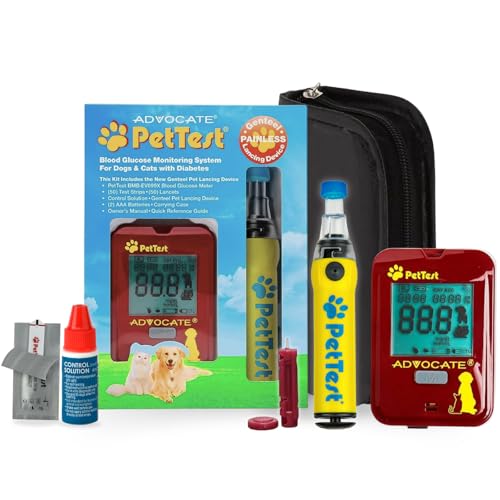
PetTest Genteel Glucose Monitor Kit
The Picks, Examined More Closely
Dogs and cats metabolize glucose differently, which is why a meter calibrated for humans can skew results on a pet. This kit ships with two code-chips, one set for dogs and one for cats, so the readings reflect the species you’re actually testing. That single detail matters more than almost anything else when your vet is dosing insulin off your numbers.
The bundle arrives ready to run: monitor, lancets, and a fifty-strip supply, enough for roughly two months of twice-daily checks before you reorder. For a household managing a new diagnosis, that’s a sensible starting point.
Everyday Advantages
- Separate dog and cat calibration keeps species-specific accuracy intact.
- Fifty strips in the box mean fewer reorders during the first weeks of a new routine.
- All-in-one packaging removes the guesswork of assembling compatible parts yourself.
- Designed specifically for pet blood sampling rather than adapted from human meters.
Things To Consider
- Strips are proprietary to this system, so plan storage away from humidity to protect their shelf life.
- You’ll need to switch code-chips correctly between pets in multi-species homes.
Key Specs
Who It Suits Best
Owners starting a fresh diabetes management plan who want a calibrated, complete kit from day one.
A Better Fit Elsewhere
Shoppers who already own this meter should reach for the Pet Control HQ 50-count refill strips instead of rebuying hardware.
Where the Pet Control HQ kit leans on calibration chips, the iPet PRO wins on completeness. Everything lives in one case: the meter, a lancing device, control solution for verifying accuracy, 28-gauge lancets, and test strips. Nothing extra to order before your first reading, which matters when a vet wants baseline numbers this week.
The five-second result time helps too. Restraint windows with a wiggly terrier are short, and a fast meter respects them. Owners commonly report the carrying case keeps the whole setup together in a drawer or travel bag, handy for people who board their dog or split care with family.
Real-World Strengths
- Genuine all-in-one kit, control solution included for sanity-checking the meter.
- Five-second readings shorten restraint time for restless pets.
- Fine 28-gauge lancets make ear or paw pricks gentler.
- Storage case keeps meter, strips, and lancets organized between tests.
Small Caveats
- It only works with iPet PRO strips, so long-term cost depends on that refill supply.
- Control solution has an expiration window once opened, worth tracking.
Made For
First-time home testers who want every accessory bundled and verified working before the first prick.
Consider Something Else When
Multi-pet homes juggling both a cat and a dog may prefer the Pet Control HQ kit’s dedicated species code-chips.
Not every pet tolerates a blood draw, and not every owner can manage one. This bottle sidesteps the whole problem by detecting glucose in urine instead. Dip a strip for about two seconds, blot the excess on paper towel, wait for the color change, and compare against the chart. No meter, no lancets, no restraint.
The honest trade-off is precision. Urine testing shows whether glucose is spilling into the urine, a useful screening signal, but it doesn’t give the moment-to-moment blood values vets use for insulin dosing. Think of it as a tripwire rather than a dashboard. Multilingual labeling in English, French, and German makes instructions clear for mixed-language households too.
Strengths Worth Knowing
- Completely needle-free, ideal for pets that panic at blood sampling.
- Fast dip-and-read process takes seconds with no meter to maintain.
- Fifty strips per bottle stretch across many screening sessions.
Points To Note
- Urine results are directional, not a substitute for blood glucose numbers your vet doses against.
- Collecting a clean sample from some dogs takes patience.
Right Fit For
Owners doing periodic wellness screening, or managing a needle-phobic pet between formal blood checks.
Swap It Out When
Anyone needing dose-guiding blood values should use the iPet PRO kit instead and keep these as a backup screen.
This is the refill half of the iPet PRO story reviewed above. Each box holds fifty strips built for the iPet PRO meter, and they accept both venous samples drawn at a clinic and capillary samples from an ear margin or paw pad at home. That flexibility lets you cross-check a home reading against a lab value on the same strip type, which quietly builds confidence in your numbers.
For daily testers, a fifty-count box covers about three to four weeks of twice-daily checking, so most owners keep two boxes rotating. Store them capped and dry; exposed strips are the usual culprit behind erratic readings.
Real Benefits
- Works with both venous and capillary blood samples.
- Purpose-built for canine and feline glucose ranges.
- Keeps an existing iPet PRO meter running without new hardware.
Worth Noting
- Useless without the matching iPet PRO meter, so confirm your device model first.
- Strip vials need careful resealing to avoid moisture damage over a month of use.
Feature Snapshot
Who Will Love This
Current iPet PRO owners on a steady testing schedule who want a predictable, compatible refill.
Reach For A Different Pick When
PetTest strip users should stick with the individually sealed PetTest refills rather than switching systems mid-routine.
Most strip vials degrade a little every time you pop the lid. PetTest solves that with individual foil wrapping, so strip number forty-nine is as fresh as strip one. Humid climates and slow testing schedules are where this packaging earns its keep, since moisture exposure is the classic cause of unreliable readings.
The strips also need only a tiny blood sample, which matters enormously at the ear margin where there isn’t much to spare. Less blood means an easier prick for the dog and less squeezing for you. The trade-off is speed: peeling foil adds a few seconds per test compared with grabbing a strip from a vial.
Good Reasons To Consider
- Foil sealing protects every strip from humidity until the moment of use.
- Minimal sample volume makes ear-margin testing easier on small dogs and cats.
- Consistent freshness supports repeatable readings over the life of the box.
Honest Caveats
- Individual wrappers add handling time to each test session.
- Compatible only with the PetTest meter line, not other brands.
Quick Facts
Built With In Mind
Households in humid regions or anyone testing intermittently who can’t burn through a vial quickly.
Not Your Match When
Daily testers who value grab-and-go speed may find the Pet Control HQ vial-format strips faster to handle.
