

A good hiking harness does two jobs at once: it keeps your dog secure when a squirrel bolts across the trail, and it spares your shoulders from leash strain on long climbs. The wrong one chafes by mile three or slips loose at the worst moment. This list covers seven options built for real trail use, from bare-bones lightweight vests to saddlebag packs that let your dog carry their own water and snacks.
A Fast Comparison Of The Options

MOOGROU Tactical Dog Harness and Leash Set
Kurgo Baxter Dog Backpack Harness (Coastal Blue)
Wilderdog Lightweight Dog Harness – Medium – Sienna
Mountainsmith K9 Dog Pack

Lifeunion Adjustable Service Dog Backpack Saddle Bag

AIWAI Tactical Dog Harness with Pouches (Khaki, L)
Tuff Pupper TrailBlaze Escape Proof Dog Harness
The Strengths Of Each Pick
Most harnesses make you buy the leash separately, so this MOOGROU bundle earns attention right away. It’s a vest-style rig aimed at large dogs, with a MOLLE webbing system (that’s the looped fabric grid military gear uses) so you can attach pouches or patches wherever they’re useful.
The included transparent ID window is the detail trail walkers will appreciate most. Slip in a name card and any stranger who finds your dog loose at a trailhead knows exactly who to call.
Benefits That Matter
- Harness, leash, and car-safe attachment arrive together, so there’s nothing extra to order before your first hike
- Five pairs of swappable patches let you signal temperament or training status to other trail users
- MOLLE webbing accepts extra pouches, which matters on longer routes where treats and waste bags pile up
- ID window keeps contact info visible without a dangling tag that snags on brush
Things To Consider
- Sized for large dogs, so smaller breeds should look elsewhere
- Patches are hook-and-loop backed, and owners commonly report they need re-pressing after heavy brush contact
Key Specs
Who It Suits Best
Owners of large breeds who want identification and communication features baked into their trail gear.
Where A Sibling Pick Shines
Dogs that just need a clean, minimal walking vest will be happier in the Wilderdog Lightweight Dog Harness below.
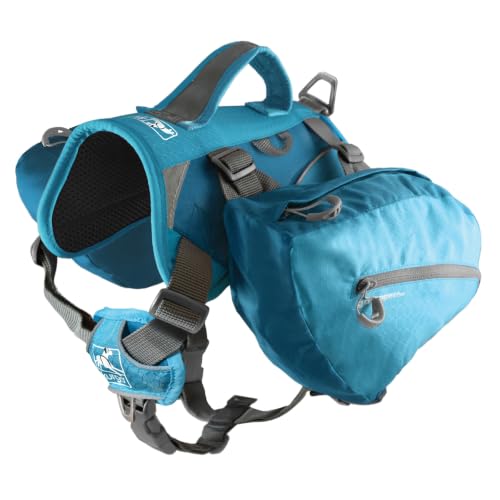
Where the MOOGROU set focuses on visibility and communication, the Kurgo Baxter shifts the load literally onto your dog. Two side-mounted saddlebags carry food, waste bags, first aid basics, and collapsible bowls, which frees up space in your own pack on anything longer than an afternoon outing.
Eight adjustment points are the number worth remembering here. Dogs vary wildly in chest depth even within one breed, and that many touchpoints means you can dial in a fit that doesn’t rub behind the front legs. The rear leash hook doubles as a walking attachment, so it works as a plain harness with the bags removed.
Practical Pluses
- Two-sided storage holds a day’s worth of supplies without bulking up your own backpack
- Eight adjustment points suit awkward body shapes that defeat single-strap designs
- Bags come off, leaving a serviceable everyday harness
- Lightweight construction keeps the added weight noticeable but tolerable for fit dogs
Worth Noting
- Saddlebags shift side to side on narrow-chested dogs until the straps are properly tensioned
- Loaded weight should stay modest; vets generally suggest dogs carry no more than roughly a quarter of their body weight
Right Fit For
Fit, healthy dogs whose owners regularly do half-day or overnight hikes and want to share the load.
Another Choice May Suit
For multiday trips needing bigger capacity, the Mountainsmith K9 Dog Pack later in this list offers larger panniers.
This is the minimalist of the group, and that’s its whole argument. The Wilderdog slips over the head, closes with two side-release buckles (the plastic clips you squeeze to open), and adjusts at the neck and shoulders. Nothing dangles, nothing rattles, nothing adds bulk against your dog’s coat.
Two D-rings change how it handles on the trail. Clip the chest ring for dogs that lunge, since front attachment redirects pulling, or use the back ring for relaxed walking. Reflective striping earns its keep on pre-dawn starts, and the top handle lets you steady your dog over boulders or lift them into the truck.
Standout Benefits
- Chest and back D-rings give you pull control and casual walking in one vest
- Top handle provides a quick grab point on scrambles and stream crossings
- Reflective stripes improve visibility in low light
- Light enough that heat-prone breeds won’t overheat on summer climbs
Small Caveats
- Over-the-head fitting takes practice with wiggly dogs compared to step-in styles
- No storage, so supplies stay in your pack
Quick Facts
Made For
Medium-dog owners who alternate between weekday walks and weekend trail miles and hate bulky gear.
Swap It Out When
Strong, persistent pullers get better control from the AIWAI tactical vest further down this list.
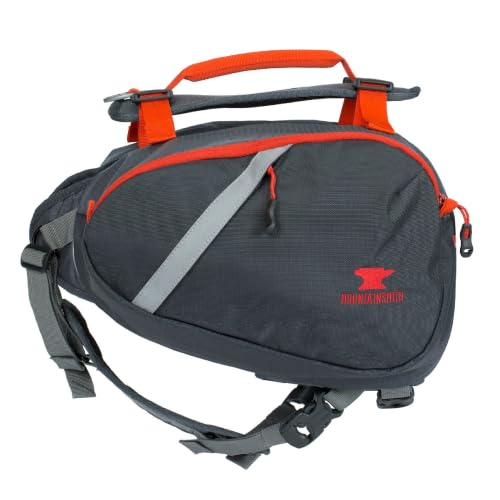
Mountainsmith has been building dog packs since the 1980s, and that history shows in the K9’s fit logic. Sizing runs by chest girth, from 20 inches on the small end up to 44 inches on the large, and the torso shape tapers ergonomically rather than wrapping your dog like a barrel.
The suspension is the standout. A four-point adjustable chest harness with padded sternum pad pairs with an independently adjustable back section, so weight sits where it should instead of grinding on the spine. Mesh panels and perforated EVA foam move air during summer climbs, while the water-resistant interior coating protects kibble from surprise rain. Large panniers hold 9 liters each, which translates to food and gear for a genuine overnight.
Noteworthy Benefits
- Girth-based sizing with three size ranges covers small through very large dogs accurately
- Padded sternum pad prevents strap dig under loaded weight
- Zippered pockets inside each pannier separate clean gear from used waste bags
- Reflective trim on all sides aids low-light visibility
- Padded grab handle assists over obstacles
Points To Note
- Heavier empty than simple vests, around a pound and a half per side in large, so small dogs may find it much
- Between-size dogs should size up per the maker’s guidance, which can look roomy at first
At A Glance
Built With In Mind
Backpacking households with medium-to-large dogs planning overnight or multi-night routes.
Consider Something Else When
Day hikers carrying light loads will find the Kurgo Baxter’s smaller saddlebags less cumbersome.
Not everyone hikes enough to justify premium pack money, and the Lifeunion exists for exactly that shopper. It’s a straightforward saddlebag made from 600D polyester, a mid-weight woven fabric that shrugs off drizzle and mud splatter without the cost of coated expedition material.
The underside is lined with soft mesh, which is the detail that separates it from cheaper rigid packs, since mesh lets skin breathe on warm days. Adjustable straps handle the fit, and there’s enough interior room for food, toys, first aid basics, and travel bowls on a day hike. One version also ships with a waste bag dispenser, a small convenience you’ll notice every single outing.
Where It Helps
- 600D double-layer polyester resists tears from brush and rocky ground
- Waterproof coating keeps contents usable after creek crossings
- Mesh lining reduces heat buildup against your dog’s flanks
- Straps adjust for a custom fit across different body types
A Few Limitations
- 600D fabric is lighter-duty than the 1000D nylon on tactical options, so expect a shorter working life under daily hard use
- Owners commonly report the bags ride higher on deep-chested breeds unless straps are carefully balanced
Best Suited To
Casual hikers and first-time dog-pack owners who want functional storage without a big spend.
Reach For A Different Pick When
Rough, rocky terrain and heavier loads justify stepping up to the Mountainsmith K9 Dog Pack.
The AIWAI is built like work gear, because it borrows from work gear. Its 1000D nylon shell (a dense military-grade weave) is waterproof and fast-drying, which matters more than it sounds: a soaked harness stays cold and heavy against a dog’s chest for hours otherwise.
Every strap adjusts independently, and once tensioned correctly the vest holds position through a full day of movement. Integrated pouches carry small essentials, and the top handle gives you immediate control in traffic or near wildlife. Compared to the lighter Wilderdog vest earlier in this list, this one trades breathability for durability and control, a trade strong pullers are worth making.
Bright Spots
- 1000D nylon withstands dragging, scraping, and years of hard trail use
- Fast-drying material avoids that cold, soggy feeling after swims or rain
- Independent strap adjustment locks in a fit that survives all-day wear
- Built-in handle offers instant restraint near roads or wildlife
Details To Watch
- Heavier and warmer than minimalist vests, a poor match for heat-sensitive breeds in summer
- Every strap must be adjusted individually at first fitting, which takes patience
Feature Rundown
Whose Shelf It Belongs On
Owners of powerful medium and large dogs who hike rough country and need maximum control.
Not Your Match When
Small or lightly built dogs will be far more comfortable in the Wilderdog Lightweight Dog Harness.
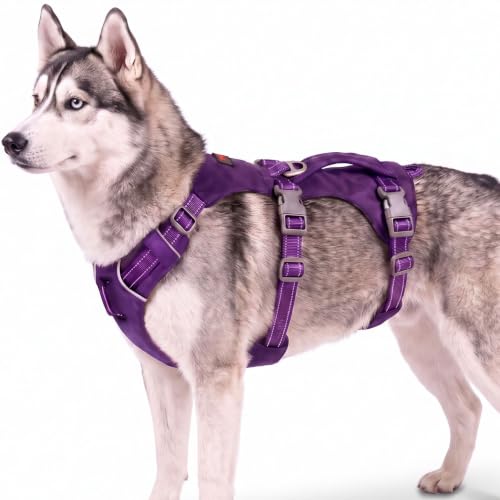
Some dogs treat a loose harness as an exit invitation. The Tuff Pupper TrailBlaze addresses that specific problem with adjustable chest and belly straps that close down the escape routes other vests leave open, particularly the backward-slither maneuver greyhounds and similar deep-chested dogs have perfected.
Despite the security focus, it stays light. That combination suits active dogs that need freedom of movement on runs and steep sections but can’t be trusted in a looser cut. Breathable construction helps on warm days, though you’ll still want to watch heavy-coated breeds in direct sun.
Strengths Worth Knowing
- Dual chest and belly adjustment closes the gaps escape artists exploit
- Lightweight build keeps athletic dogs moving naturally
- Breathable materials reduce overheating on sustained effort
- Snug fit distributes leash pressure without choking
Trade Offs
- No storage or MOLLE capability, so it’s purely a walking and running vest
- A very snug fit means checking strap tension regularly as your dog’s weight or coat changes seasonally
Who Will Love This
Owners of medium-sized escape-prone or high-energy dogs who hike, run, and can’t risk a slip-out.
Look Elsewhere When
Anyone wanting onboard storage will prefer the Kurgo Baxter’s removable saddlebags instead.
What Matters Most Before Choosing Harnesses For Hiking Dogs
Fit Beats Features Every Time
Measure your dog’s chest girth at its widest point before ordering anything. A harness sized by girth, like the Mountainsmith K9, will outperform a guess based on weight alone. Between sizes, sizing up usually wins, since a too-tight vest restricts shoulder movement and causes chafing on long descents.
Match Storage To Trip Length
Day hikers rarely need panniers, and adding them to a small dog creates more problems than it solves. Reserve saddlebag designs for trips past three or four hours, and keep loaded weight conservative relative to your dog’s size.
Material And Climate
1000D nylon lasts longest but traps heat. Lighter weaves breathe better in summer. Water resistance matters most in wet climates and around streams.
Control Points You’ll Actually Use
A top handle earns its place on rocky trails, and a front D-ring helps redirect persistent pullers. Skip features you know you won’t touch.
Key Considerations Across These Picks
Traps First Timers Fall Into
The classic error is buying for looks instead of girth measurements, then discovering rubbing at mile two. Another common miss: loading saddlebags fully on a dog’s first outing. Introduce weight gradually over several walks so muscles adapt. Also check buckle quality; cheap clips are the failure point owners report most often.
Where The Extra Money Goes
Higher-tier packs spend it on suspension design, padded contact points, and denser fabrics. Those details decide whether an eight-hour hike feels fine or leaves raw spots. Frequent hikers recoup the difference quickly; occasional walkers genuinely don’t need to.
Bottom Line
The right choice comes down to trip length and your dog’s build. Minimalist walkers should start with the Wilderdog, load-carriers will lean toward the Mountainsmith or Kurgo, and strong dogs need the AIWAI or Tuff Pupper. Measure first, introduce gear slowly, and every option here will serve you well on the trail.
