

Outdoor cats face brutal winters, and a flimsy plastic bin won’t cut it when temperatures drop below freezing. Community cats, barn mousers, and strays need shelter that holds warmth, sheds rain and snow, and gives them an escape route from predators. A quality heated cat house outdoors solves all three problems at once, which is why shelters and caretakers treat them as essential gear rather than a luxury.
This roundup covers seven shelters built for exactly that job, from rugged HDPE hard-shells to soft-sided fabric houses and even a two-story setup with its own feeding station. Each entry breaks down what the manufacturer specifies, where each design shines, and the honest trade-offs you’ll weigh before ordering. Whether you’re feeding one neighborhood stray or managing a small colony behind the barn, there’s a fit here for your yard and your budget mindset.
How The Shortlist Stacks Up

Lslpin Indestructible Heated Feral Cat House (Grey)

Dahivs Heated Outdoor Cat Shelter with Escape Door

Pawtners 26” XL Heated Outdoor Cat House

HXPLN Elevated Heated Cat House (Green)

K&H Outdoor Cat House Heated A-Frame Shelter 20W
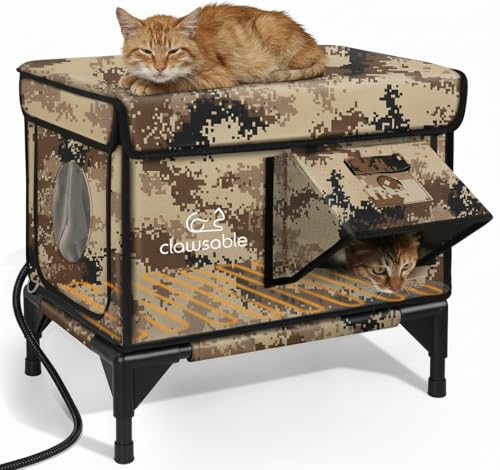
rolimate Insulated Heated Cat House (Desert Camouflage)

PetsCosset Weatherproof 2-Story Outdoor Cat House
A Deeper Look At The Lineup
Hard-shell shelters tend to outlive fabric ones in exposed yards, and this Lslpin model leans into that with an HDPE body, the same dense plastic family used in outdoor decking and playground equipment. It shrugs off rain, snow load, and the occasional raccoon scuffle far better than thin molded foam. The double-layer wall construction traps air between panels, which is where most of the insulation value comes from.
The house sits elevated off the ground, so melting snow and standing water stay beneath the floor instead of seeping into bedding. Two configurations are offered: a standard grey footprint at 17.7 by 14.9 by 17.5 inches, and a slanted-roof version at 21.6 by 16.9 by 17.5 inches if you want extra headroom. Compared to the softer HXPLN pick later in this list, this is the option for wide-open, wind-blasted locations.
Real-World Strengths
- HDPE shell resists cracking, chewing, and UV fade season after season.
- Double-layer walls hold interior warmth without bulky added insulation.
- Elevated base keeps floor bedding dry through thaw-and-refreeze cycles.
- Exit-only escape door lets cats bolt from threats while blocking cold drafts.
- Two sizes let you match the footprint to your porch or barn wall.
Things To Weigh Up
- The rigid shell wipes clean easily but offers no fold-flat storage between seasons.
Key Specs
Who It Suits Best
Caretakers managing barn or colony cats in open, snow-exposed yards who want a set-it-and-forget-it shelter that survives years of weather.
Where A Sibling Pick Shines
The PetsCosset two-story house suits multi-cat colonies better, since it separates eating from sleeping in one footprint.
Dahivs takes a similar rugged approach to the Lslpin house above but trims things back to one clean footprint at 17.7 by 15 by 17.5 inches. There’s also a slightly deeper variant at 17.7 by 17 by 17.5 inches, handy for chunkier barn cats who like to sprawl. The build targets the same core promise: a sturdy, weather-resistant shell that stands up to storms and accidental knocks.
In day-to-day colony work, the escape door is the detail that matters most. Cats are prey as well as predators, and a shelter with only one opening can feel like a trap during a coyote encounter. This one adds an exit-only rear door, so a startled cat can leave fast while cold air stays largely outside. For most single-cat feeding stations, that’s the whole decision made.
The Upside
- Reinforced structure handles extreme weather and bumps without caving.
- Rear escape door doubles as predator protection and draft control.
- Two depth options accommodate both petite and large-bodied cats.
A Few Limitations
- Owners commonly report needing to anchor lightweight shelters against strong gusts.
- No fold-flat design, so offseason storage eats garage shelf space.
Made For
Anyone feeding one or two feral visitors near a shed, garage, or covered porch who wants proven escape-door safety without paying for extras they won’t use.
Consider Something Else When
The Pawtners 26” XL house is the smarter choice for bonded pairs, thanks to its larger interior and included heating pad.
Most shelters in this category fit one cat snugly. The Pawtners stretches to a 26-inch footprint, which changes the math entirely: two smaller cats can share it, or one large tom can stretch out fully. Thick insulated panels line the interior, and unlike several rivals here, a heated pad ships in the box rather than as a separate purchase.
Weather protection is handled with a seamless PVC cover, a transparent door curtain, widened edges, and extended eaves that push runoff away from the entrance. Elevated feet lift the whole structure clear of puddles. The honest read is that this is the most complete package on the list; the trade-off is a larger yard presence and more surface area to wipe down each spring. Against the Dahivs shelter, you’re paying for space and the bundled heater.
Everyday Perks
- XL interior comfortably hosts two cats or one oversized breed.
- Heated pad included, no separate accessory shopping required.
- Seamless PVC cover with extended eaves channels rain away from the doorway.
- Transparent curtain lets cats see out while blocking wind and snow.
- Elevated feet keep the floor above meltwater and mud.
- Thick insulation reduces how hard the heater works on frigid nights.
Potential Sticking Points
- The 26-inch footprint needs dedicated ground space smaller porches lack.
- Fabric-covered surfaces benefit from a seasonal wipe-down to prevent mildew in damp climates.
Feature Rundown
Right Fit For
Caretakers with room in a backyard or barn aisle who shelter multiple outdoor cats and want every accessory included from day one.
Swap It Out When
The K&H A-frame below fits narrow walkways and single-cat situations better, folding flat when winter ends.
Where the first three picks use rigid shells, the HXPLN goes with a 600-denier polyester exterior over an insulated pp hollow board core. Denier measures fabric thickness, and 600D sits in the tough range for outdoor textiles, similar to heavy-duty patio furniture covers. The result is a shelter that’s noticeably lighter to reposition around the yard as seasons change.
Two design details do real moisture-fighting work here. A slanted roof stops rain from pooling on top, and the raised base keeps ground dampness from creeping into the sleeping area. A heating pad comes standard for sub-zero nights. In our view, this suits covered locations best; under a deck awning or beside a barn door, the fabric shell will age gracefully, whereas constant direct weather exposure favors the HDPE houses ranked higher.
Where It Helps
- 600-denier polyester resists tears while staying light enough to relocate solo.
- Insulated hollow-board core adds thermal buffering without weight.
- Slanted roof sheds rain before it can pool or leak.
Honest Caveats
- Fabric exteriors generally show wear sooner than hard plastic in full sun.
- The green color blends into landscaping, which some caretakers find too discreet.
- Spot-cleaning is the practical maintenance route; machine washing isn’t realistic at this size.
Who Will Love This
Suburban caretakers with a covered patio or carport spot who want a warm, dry refuge that’s easy to move and tuck away.
Look Elsewhere When
Wide-open, storm-exposed placements suit the Lslpin HDPE house better, since rigid shells handle wind and snow load more confidently.
K&H is the established name in pet heating, and this A-frame shows why. Inside sits a 20-watt plush heated bed that’s thermostatically controlled, meaning it warms toward the animal’s body temperature rather than running hot constantly. It carries a MET safety listing, an independent electrical certification worth having on any device plugged in outdoors year-round.
The peaked A-frame profile serves two purposes: snow slides off naturally, and the sloped walls cut wind exposure. It’s sized for a single cat wanting serious warmth, not a crowd. Storage is the quiet superpower here; the house folds up flat once winter passes, something none of the hard-shell picks in this lineup can manage. For apartment balconies and small side yards, that flexibility matters as much as the heater itself.
Benefits That Matter
- MET safety-listed 20-watt bed brings verified electrical peace of mind.
- Thermostatic control sips power and avoids overheating the resting area.
- Peaked roof sheds snow and deflects wind on blustery exposures.
- Fold-flat design makes offseason storage genuinely painless.
Small Caveats
- Sized for one cat; colonies will need multiple units or a bigger pick.
Quick Facts
Perfect Match For
Balcony feeders and small-yard caretakers looking after one outdoor regular who value certified heating and easy seasonal storage.
Another Choice May Suit
The Pawtners 26” XL house covers two-cat households far better, with more floor space and a bundled pad.
Tight on space? The rolimate runs just 13 by 17 by 18 inches, the smallest footprint in this roundup, yet still packs an insulated interior, a heater, and a rear escape door. The desert camouflage finish helps it disappear against fences, brush lines, and gravel, useful where you’d rather neighbors not notice your feeding station.
Protection comes from a fully upgraded waterproof awning over the entrance plus an elevated structure that keeps the floor clear of rain and snowmelt. The exit-only escape door mirrors the design logic of the Dahivs and Lslpin shelters earlier in the list: fast exit for the cat, blocked drafts for the interior. One thing worth considering is capacity; at this size, it’s honestly a one-cat house, and a Maine Coon will find it snug. Everyone else gets a tidy, low-profile winter refuge.
The Helpful Details
- 13 x 17 x 18-inch frame squeezes onto balconies and beside gates.
- Waterproof awning shields the doorway from driving rain.
- Elevated build keeps bedding dry through wet spells.
- Camo finish blends into rural and desert surroundings.
Points To Note
- Interior space limits use to one average-sized cat.
- The patterned shell may clash with manicured suburban landscaping.
Details At A Glance
Who Should Grab It
Apartment dwellers and small-lot caretakers sheltering one community cat in a compact, semi-hidden spot.
Not Your Match When
Multi-cat colonies should step up to the PetsCosset two-story house, which divides sleeping and dining across levels.
This is the odd one out on purpose. Instead of a single warmed box, PetsCosset builds a complete care station: an upper feeding level and a lower resting room stacked in one weatherproof frame. Food stays separated from bedding, which cuts spoilage, pests, and the mess that comes with bowl-next-to-bed setups.
The main door locks, giving you controlled access for cleaning or vet visits, and an escape door preserves the quick-exit safety every other pick here provides. Two finishes are offered, Lofty Multi and Insulated Balcony, both in grey. Note there’s no mention of integrated heating in the source details, so in deep-winter climates you’d likely pair it with a standalone heated pad inside. As a year-round colony hub, though, nothing else on this list does as much in one footprint.
A Few Highlights
- Two-story layout separates dining upstairs from sleeping below.
- Lockable main door simplifies cleaning and safe handling.
- Escape door maintains emergency exits for skittish colony cats.
- Feeding station removes the need for separate outdoor bowls and covers.
- Weatherproof housing works through all four seasons.
Where It May Fall Short
- No built-in heater specified, so frigid zones need an add-on pad.
- The tall two-level frame draws more visual attention than low-profile boxes.
- Assembly is reported to take longer than single-room shelters.
Core Details
Built With In Mind
Colony managers and TNR caretakers running a permanent outdoor feeding point who want food, shelter, and security combined.
Skip It When
A single shy visitor in a snowy climate fits the K&H A-frame better, with its certified 20-watt heated bed ready to plug in.
Choosing Wisely Before You Order
Size And Occupancy Count the cats first. A 13-inch rolimate handles one average feline, the Pawtners 26-inch XL hosts a pair, and the PetsCosset two-story supports a rotating colony. Oversizing wastes heat; undersizing means the dominant cat claims the shelter and everyone else freezes outside it.
Placement And Exposure Hard-shell HDPE houses like the Lslpin tolerate open, windy yards. Fabric models such as the HXPLN live longest under cover. Whatever you choose, position the entrance away from prevailing wind and check that the cord reaches an outlet safely.
Heating And Electrical Safety A thermostatically controlled pad, like the MET-listed unit in the K&H A-frame, adjusts output to the animal instead of running flat-out. Any heater destined for outdoor use should carry independent electrical certification, and the cord should be secured where chewers and trimmers can’t reach it.
Escape Routes And Access Exit-only rear doors protect cats from predators and cut drafts at once. Lockable main doors, found on the PetsCosset, make cleaning and trapping far easier. Both features earn their place over a single-opening box.
Key Considerations Across These Picks
Wrong Turns To Avoid
The classic error is buying for looks instead of location. A handsome fabric cottage placed in an open field will soak and sag within a season. Skip shelters without an escape door for areas with coyotes or loose dogs, and don’t forget the extension cord run: an unreachable outlet quietly disqualifies half the heated options.
When Paying More Pays Off
Higher-tier models bundle what cheaper ones make you buy separately: the Pawtners includes its heated pad, and the K&H pays for independent safety certification. Spending up also buys interior volume, which directly determines whether two cats share one warm space or fight over it. For single-cat setups on a budget, the dependable basics do the job fine.
Closing Thoughts
Every shelter here solves the same problem, just at different scales. Match the footprint to your cat count, place it somewhere sheltered, and prioritize the escape door above nearly everything else. Do those three things and whichever model you choose will earn its corner of your yard all winter long.
