

Cold nights are rough on dogs, especially seniors, new litters, and short-coated breeds that shiver through winter in drafty kennels or garages. The right heat source turns a chilly dog house into a spot your pet actually wants to curl up in. This roundup covers seven options, from washable heating pads to ceramic bulbs and full thermostatic heaters, so you can match warmth to your setup instead of guessing.
A Snapshot Of The Selections
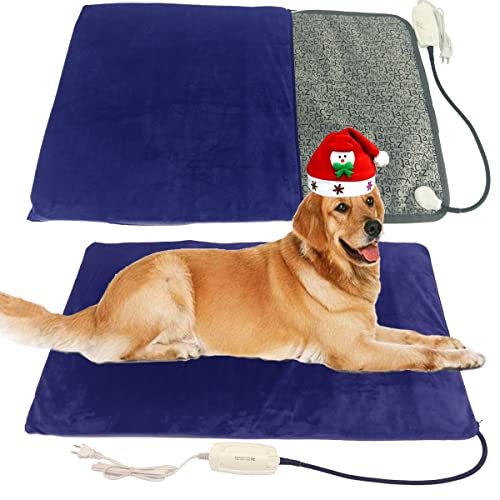
DEOMAN Pet Heating Pad for Large Dogs 34 x 21

Woods 0324 150-Watt Brooder Heat Lamp with Clamp

LUCKY HERP 75W Ceramic Heat Emitter (2-Pack)

REPTI HOME 150W Ceramic Heat Emitter (2 Pack)

REPTI HOME 100W Ceramic Heat Emitter (2 Pack)

Dreyoo 600/300W Dog House Heater with Thermostat
REPTI HOME 250W Red Infrared Heat Lamp Bulb
What Each Pick Brings To The Table
Most heating pads top out around crate size, which leaves big breeds half off the warm zone. DEOMAN’s 34 by 21 inch surface changes that: a 70-pound Staffordshire fits fully, and a medium dog plus a littermate can share it. Owners of arthritic or recovering pets commonly report this is the format they wish they’d bought first.
The pad warms within roughly ten minutes and offers two power levels topping out at 104 degrees Fahrenheit. High suits quick pre-warming; low is what you leave running overnight.
What Works In Its Favor
- Generous footprint covers large breeds end to end, so no cold paws at dawn.
- Dual heat settings let you run high for warm-up and low for all-night comfort.
- The cord wears a stainless steel dual-hose sleeve, a real advantage in homes where puppies chew everything.
- Power-off protection guards against overheating during unattended use.
- The soft cover zips off and goes straight into the washing machine, which keeps fur and dander manageable.
Things To Consider
- At 30 to 60 watts it’s an electric mat, not a room heater, so it works inside rather than in open outdoor runs.
- You’ll want to keep the washable cover clean; hair buildup between washes dulls the soft feel.
Key Specs
Who It Suits Best
Owners of senior, arthritic, or post-surgery large-breed dogs who need a safe indoor warming surface they can run overnight.
Where Another Pick Suits Better
For whole-kennel air warmth rather than a contact surface, the Dreyoo 600/300W Dog House Heater is the stronger match.
Where the DEOMAN pad heats one sleeping spot, this Woods fixture heats a zone. Clamp it to a coop beam, a workbench edge, or a whelping-box rail, aim it downward, and screw in any bulb rated up to 150 watts at 125 volts. The porcelain socket shrugs off sustained bulb heat better than plastic housings tend to.
The included wire grill sits about 5.5 inches across and keeps flammable bedding from touching the bulb directly. Non-marring clamp grips hold firmly without chewing up painted lumber, and the six-foot reach gives you some flexibility on placement.
Positive Points
- Pairs with any standard incandescent, infrared, or ceramic bulb under 150 watts.
- Wire guard adds a layer of protection over hot glass in dusty barn environments.
- Anodized steel construction holds up to damp garage and shed conditions.
- Clamp mounts anywhere, so repositioning as animals grow takes seconds.
Worth Noting
- No bulb ships in the box, so budget for one before first use.
- A clamp lamp has no thermostat; you manage temperature by distance and bulb wattage.
- Always secure the clamp with a backup tether in pens where a curious nose could bump it.
Made For
Backyard flock keepers and hobby farmers who want a durable, repositionable fixture for brooders and small-animal shelters.
Consider Something Else When
If your setup needs silent, light-free indoor warmth instead of directed radiant heat, the LUCKY HERP 75W Ceramic Heat Emitter pairs better with enclosed pet rooms.
A ceramic heat emitter looks like a dark bulb but produces only warmth, no glow. That single trait matters most at night: a nervous dog or a whelping mother sleeps undisturbed while the ambient temperature stays up. Getting two emitters in one pack means you can run a spare or cover two fixtures without ordering twice.
Compared with the Woods clamp lamp above, this is the quieter, gentler option, trading raw output for steady background heat. Warmth rises noticeably within about ten seconds of switch-on and reaches its rated level in roughly four minutes.
Everyday Advantages
- Zero visible light, so nighttime sleep cycles stay intact.
- Silent operation suits anxious pets and bedrooms.
- Fast ramp-up makes evening warm-ups painless.
- Two-pack pricing lowers the cost per emitter considerably.
Trade Offs
- 75 watts warms a small area; a drafty garage will swallow it.
- Like any emitter, the ceramic surface gets very hot, so it needs a proper ceramic-rated socket and clearance above bedding.
Quick Facts
Right Fit For
Indoor keepers of cats, small dogs, reptiles, or new litters who want dependable overnight warmth with no light and no fan noise.
Look Elsewhere When
Larger coops and colder outbuildings call for more muscle, which is where the REPTI HOME 150W Ceramic Heat Emitter earns its place.
Step up from the LUCKY HERP’s 75 watts and you double the throw distance, enough to take the chill off a chicken brooder or a roomy dog house corner. REPTI HOME builds these from solid ceramic elements, which conduct and radiate heat evenly and resist the cracking that thinner shells sometimes show after repeated thermal cycling.
The manufacturer rates service life at up to 10,000 hours. Run one twelve hours a night and a pair should carry you through several winters. Installation is ordinary household territory: a standard E26 base, 120 volts, screw in like any bulb.
What Makes Sense
- 150-watt output suits larger enclosures and colder outdoor structures.
- Solid ceramic construction spreads heat evenly across the face.
- Long rated lifespan reduces mid-winter replacement trips.
- Standard E26 fitting works with common clamp lamps and dome fixtures.
Minor Gripes
- Still emits zero light, which is a plus indoors but means you must verify function by touch at a safe distance.
- Higher wattage draws more continuous power than the 75W or 100W alternatives.
Feature Snapshot
Best Suited To
Anyone running a coop, brooder, or outdoor kennel through freezing months who wants set-and-forget radiant heat.
Another Choice May Suit
In smaller crates and indoor corners, the REPTI HOME 100W version delivers adequate warmth with a lighter draw on the circuit.
This is the middle child of the REPTI HOME ceramic line: same solid-ceramic shell and 10,000-hour rating as the 150W model reviewed earlier, dialed down to 100 watts. For a covered dog house, a rabbit hutch, or a terrarium wall, that output often lands closer to right-sized than the bigger unit. You also get the same no-light, infrared-only operation, which keeps pets relaxed around the clock.
Because it’s an infrared source, heat lands directionally on the animal below rather than filling empty air, which is part of why lower wattage still feels effective. Pairing it with a thermostat-style controller gives you finer control over enclosure temperatures.
A Strong Showing
- 100 watts splits the difference between gentle indoor warmth and coop-grade output.
- Directional infrared heat wastes less energy than space-heating an entire structure.
- Compatible with external temperature controllers for tighter regulation.
- Two-pack format covers a primary and a backup emitter affordably.
Room For Improvement
- Surface temperature runs hot, as with every emitter; mounting height and clearance deserve real attention.
- Buyers wanting plug-and-play thermostat control built in won’t find it here, the bulb alone does the heating.
Who Should Grab It
Small-space keepers, apartment dwellers with covered pet areas, and anyone splitting the difference between 75 and 150 watts.
Skip It When
Whole-dog-house air heating is the goal; the Dreyoo thermostatic heater handles that job natively.
Every other pick here warms a surface or a cone of radiant heat. The Dreyoo warms the whole dog house. Mounted on the wall of an insulated shelter, its 300 or 600 watt modes are sized to condition up to roughly 105 square feet, which covers most backyard kennels with headroom to spare. A built-in thermostat cycles the unit automatically, so you’re not adjusting anything once it’s set.
The compact body measures about 6.7 by 6.3 by 4.7 inches, small enough to sit high and out of the way. Overheat protection and a six-foot anti-chew cord address the two failure points owners worry most about with powered gear near animals.
Useful Touches
- Thermostat control maintains a steady temperature without daily intervention.
- Dual 300/600 watt modes balance economy against deep-cold performance.
- Low wattage design avoids tripping typical household circuits.
- Overheat protection adds a safety net for unattended overnight runs.
- Anti-chew cord jacket survives curious teeth better than bare cable.
Points To Note
- Wall-mount installation means drilling; there’s no freestanding option.
- Performance depends heavily on insulation, an uninsulated wooden hut will leak the heat faster than the unit replaces it.
- It’s a heater, not a heated bed, so older pets may still appreciate a pad layered underneath.
Core Details
The Right Fit
Owners of outdoor dogs in genuinely cold climates who want automatic, whole-shelter warmth rather than a single warm spot.
Reach For A Different Pick When
Apartment and indoor situations favor the simpler DEOMAN Pet Heating Pad, which needs no mounting at all.
This PAR38 flood-style bulb is the heavyweight of the list, pushing 250 watts of radiant heat into whatever sits beneath it. Unlike the ceramic emitters reviewed above, it does glow, casting a soft red light that’s easy on animal eyes and lets you check on chicks or a whelping litter without flipping on a bright white overhead. That combination makes it a staple in brooders and lambing pens.
It screws into any standard E26 base and heats fast, which matters on frigid mornings when animals need relief quickly rather than eventually.
The Case For It
- 250-watt output throws serious radiant heat over a broad floor area.
- Red glow permits nighttime checks without startling animals.
- Rapid warm-up delivers immediate relief in cold snaps.
- Standard E26 base fits common clamp lamps and dome reflectors like the Woods fixture earlier in this list.
Small Caveats
- Glass envelopes are more fragile than solid ceramic; handle installation gently.
- Incandescent-style bulbs draw noticeably more power than ceramic equivalents over a long winter.
- Mounting height matters a great deal; too close and bedding overheats, too far and the warmth dissipates.
The Numbers That Matter
Who Will Love This
Flock keepers and breeders running brooders, whelping boxes, or outdoor pens who want maximum radiant output with a calming red glow.
A Better Fit Elsewhere
For silent, invisible overnight heat in living spaces, swap this for the LUCKY HERP 75W Ceramic Heat Emitter instead.
What Matters Most Before Choosing Heated Lamps For Dogs
Match The Format To The Shelter
Contact pads suit indoor crates and sleeping corners; radiant bulbs and emitters suit pens and coops; thermostatic heaters condition entire dog houses. Start with where your pet actually sleeps, then pick the tool that fits that geometry. A powerful bulb in an open garage mostly heats air that escapes.
Safety Features Are Non-Negotiable
Look for overheat protection, chew-resistant cords, and stable mounting hardware. Ceramic surfaces and glass bulbs both run hot enough to burn, so clearance above bedding and a quality ceramic-rated socket matter as much as wattage. Never drape fabric directly over any emitter.
Think About Control
Adjustable settings, like the DEOMAN’s high/low modes, let you adapt through the season. Fixed-output bulbs rely on distance and timers for regulation. Anyone leaving heat running unattended overnight benefits most from thermostatic or auto-cycling designs such as the Dreyoo.
Factor In Running Cost And Lifespan
Wattage times hours equals your winter electricity bill, so oversizing costs money every single day. Rated lifespans matter too: a 10,000-hour emitter outlasts several seasons of nightly use, while cheaper incandescent options may need replacing mid-season.
Key Considerations Across These Picks
Traps First Timers Fall Into
The classic error is buying too much wattage for the space, then wondering why the dog avoids the blinding red glare. The other frequent slip is skipping insulation; no heater compensates for a drafty plywood box. Measure the shelter, seal the gaps, then size the heat source.
When Paying More Pays Off
Higher-tier units buy automation and durability: thermostats that cycle themselves, solid ceramic rated for thousands of hours, cords wrapped in steel. Spending up makes sense for outdoor, unattended, all-night use. For a supervised indoor nap spot, a basic pad does the same job.
Closing Thoughts
Warmth for a dog comes down to fit: the right size, the right output, and safety features you trust overnight. The DEOMAN pad covers large breeds indoors, the Dreyoo handles whole outdoor shelters, and the ceramic and infrared bulbs fill everything between. Match the format to where your pet sleeps, mind the clearances, and winter stops being something to endure.
