

Small tanks punish sloppy gear. A ten-gallon aquarium swings temperature fast, so the heater you bolt into it needs tight control, a compact body, and safety features that forgive a forgetful owner. This shortlist focuses on submersible units sized correctly for five to fifteen gallons, from basic dial thermostats to external controllers with digital readouts.
The Essentials At A Glance

HITOP 25W Adjustable Aquarium Heater for 5-10Gal

AQUANEAT 50W Fish Tank Heater with Thermometer
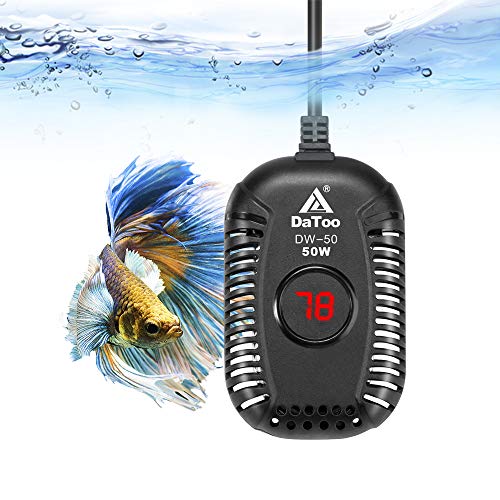
DaToo Small Aquarium Heater 50W Mini with LED Display
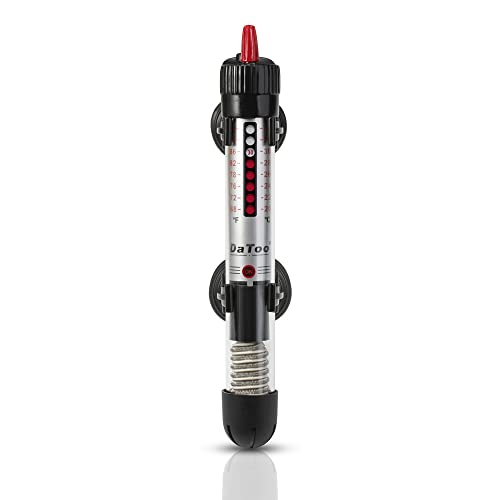
DaToo 50 Watt Aquarium Heater Submersible Adjustable

hygger Small Aquarium Betta Heater with LED Display

DaToo Aquarium Heater 50W with Electronic Chip Thermostat

NICREW 50W Aquarium Heater with Temp Controller
Taking A Closer Look At The Options
The HITOP leans on restraint rather than gadgetry. Its seven-inch body disappears behind plants or driftwood in a ten-gallon tank, and the included suction cups let you mount it vertically near your filter outflow so warm water circulates instead of pooling. A 25-watt rating matches the standard rule of roughly 2.5 to 5 watts per gallon, which means gentle, even heating without hot spots.
First-time keepers get a lot here: an adjustable thermostat dial, compatibility with both freshwater and saltwater, and a five-foot cord that reaches most outlets without an extension lead.
Reasons It Performs
- Thickened quartz glass resists cracking better than thinner budget tubes, a real concern in homes with kids or cats.
- The 7-inch length fits low-profile tanks where taller heaters would poke above the waterline.
- Suction-cup mounting keeps placement flexible as you rearrange aquascape.
- Five-foot power cord reduces outlet-planning headaches on small desks and nightstands.
Things To Consider
- A dial thermostat means you’ll want a separate thermometer to confirm actual water temperature; owners commonly report factory dials running a degree or two off.
- At 25 watts, recovery after a big water change is slower than a 50W unit.
Key Specs
Made For
New keepers setting up their first ten-gallon community or betta tank who want dependable basics at a modest step-up price.
Another Choice May Suit
The AQUANEAT 50W below fits shoppers who’d rather buy one heater that also covers a future upgrade to a 15-gallon tank.
Where the HITOP stops at ten gallons, this AQUANEAT stretches its coverage to fifteen, which makes it the pick for anyone whose tank collection might grow. The top-mounted adjustment dial spans roughly 65 to 89 degrees Fahrenheit, enough range for tropical community fish, bettas, and most freshwater inverts. A red indicator light switches off once the target is reached, giving you an at-a-glance cue that the element is cycling normally.
The bundled thermometer matters more than it sounds. Dial thermostats drift, and pairing the heater with its own independent gauge lets you verify the true water temperature during setup instead of guessing.
Where It Helps
- Included thermometer removes the need for a separate purchase on day one.
- 50-watt output handles 5 to 15 gallons, covering slightly larger volumes than the HITOP.
- Indicator light confirms heating cycles without lifting the hood.
- Top-access dial allows adjustments without dismantling the mount.
Points To Note
- The shorter power cord (under four feet) can force awkward outlet placement; measure before buying.
- Dial-based control is less precise than the digital units later in this list, and algae film on the glass tube needs occasional wiping during water changes.
Right Fit For
Cost-aware keepers running a 10 to 15 gallon freshwater community tank who still want a verification thermometer in the box.
Swap It Out When
The DaToo Mini with LED display suits anyone who wants a live digital readout instead of a separate stick-on gauge.
This DaToo model answers the question every nano-tank owner asks: what’s my actual water temperature? An LED display shows it live, so there’s no squinting at a floating thermometer through condensation. Compared with the AQUANEAT’s dial-plus-separate-gauge approach, everything happens on the unit itself.
The manufacturer describes a three-point temperature control system, meaning sensing and regulation happen at multiple points along the tube rather than one spot. In practice, that design aims to reduce the localized hot zones smaller tanks are prone to. You may find the mini footprint especially welcome in heavily scaped five-to-ten gallon aquascapes where every inch of glass is visible.
The Upside
- LED readout gives constant visibility of current temperature, useful during seasonal room swings.
- Multi-point control targets steadier heating across the whole water column.
- Mini body tucks discreetly into nano and desktop aquariums.
- Submersible design allows full placement flexibility, horizontal or vertical.
Small Caveats
- An always-on display adds a faint glow some keepers won’t want beside a bed; angle it away or mount it low.
- Ledger-style electronics mean keeping the unit fully submerged per instructions is non-negotiable for longevity, a common user-reported failure point when ignored.
Feature Snapshot
Who Will Love This
Desktop and bedroom nano-tank keepers who check temperatures daily and value a built-in display over add-on thermometers.
Look Elsewhere When
The plain DaToo 50W adjustable model below serves minimalists who don’t want any glow or screen at all.
Strip away the display and you land here: DaToo’s conventional 50-watt adjustable tube. It’s the sibling of the LED model above, sharing the same wattage class and submersible format while trading the screen for a straightforward set-it-and-check-it workflow. For a garage office tank or a classroom aquarium where nobody fusses daily, that simplicity reads as a feature, not a compromise.
Adjustment happens via the familiar rotary collar, and like the rest of this list it works in both freshwater and saltwater. Owners of this style of unit generally report reliable service life as long as the tube stays submerged and gets a gentle wipe-down during routine maintenance.
Real Benefits
- No electronics exposed to splash zones, which trims potential failure points.
- Same 50W capacity as pricier picks here at typically friendlier cost.
- Rotary adjustment is intuitive for kids helping with tank care.
Softer Spots
- You’re back to buying or using a separate thermometer since nothing on the unit reports current temperature.
- Dial precision is approximate; expect fine-tuning over the first week as you match the setting to your thermometer’s reading.
Who Should Grab It
Set-and-forget keepers with a stable room climate who only adjust temperature a couple of times a year.
Reach For A Different Pick When
The hygger betta heater ahead offers wider wattage choice and a digital display for anyone managing several tank sizes.
Most heaters on this list lock you into one wattage. Hygger sells the same platform in 10, 25, 50, and 100 watts, covering tanks from tiny 1-gallon bowls up to 26 gallons. That range makes it easy to match output precisely to your volume, which matters because oversized elements in small tanks cycle aggressively and stress livestock. The 59 to 93 degree span is the widest here, comfortably covering bettas, goldfish-cool setups, and reptile soaking tubs alike.
The build follows the same thickened-quartz approach as the HITOP, and the LED digital display mirrors what the DaToo Mini does. Depending on your stocking, either will serve well; hygger simply wins on configurability.
Features That Help
- Four wattage variants let you size output exactly to your tank instead of settling.
- Wide 59-93°F adjustment window covers tropical, temperate, and turtle applications.
- Thickened quartz glass construction for added durability against knocks.
- Digital LED display keeps current temperature visible at all times.
Details To Watch
- Multiple variants can confuse first-time ordering; double-check the wattage label against your tank size before checkout.
- The display sits on the unit itself, so placement determines whether you can actually see it through decor.
Core Details
Perfect Match For
Betta and small-reptile keepers who want one trusted brand family they can scale across future tanks.
Not Your Match When
The NICREW controller further down delivers tighter regulation and overheat protection for keepers prioritizing precision over wattage choice.
Here’s DaToo again, this time swapping the mechanical bimetallic strip found in budget tubes for an electronic chip thermostat. The distinction matters: chip-based regulation samples temperature electronically and cycles the element more precisely, which translates into fewer degree-level swings for sensitive stock like shrimp or fry. Think of it as the difference between a furnace that clunks on and off versus one that modulates quietly.
You give up the LED screen of the brand’s Mini model but gain a cleaner look and one less thing to fail in a humid hood environment. Marine keepers should note the saltwater-safe rating, which not every budget dial unit honestly claims.
Advantages To Know
- Electronic chip thermostat holds setpoint tighter than mechanical dials typically manage.
- Rated for both marine saltwater and freshwater, widening stocking options.
- Screen-free body avoids condensation fogging and display glare issues.
- 50W output suits 5-15 gallon tanks with headroom for winter rooms.
Trade Offs
- Without a display, verifying accuracy still requires a standalone thermometer, same caveat as the basic DaToo above.
- Electronic components inside a sealed tube are harder for owners to diagnose if cycling behavior ever seems off.
The Numbers That Matter
Best Suited To
Intermediate hobbyists keeping shrimp, fry, or marine nano tanks where half-degree stability outweighs having a screen.
Consider Something Else When
The NICREW with its external controller and dual sensors is the stronger fit for anyone wanting visible settings plus overheat cutoff.
NICREW takes the opposite route from every dial unit above: all controls live on an external controller outside the tank. Adjustments happen with dry hands, settings survive power outages thanks to a memory function, and two temperature sensors cross-check readings for accuracy. An automatic shutoff triggers around 98°F, a safeguard none of the cheaper tubes here explicitly advertise, and it’s the kind of feature that protects livestock during a stuck-relay failure.
The nickel-chromium heating element is a step up in material quality too, resisting corrosion in saltwater duty better than bare steel coils. The honest trade-off is bulk: the controller box needs shelf space near the tank.
Benefits That Matter
- External controller means no wet-arm adjustments and no reaching into the tank.
- Dual-sensor design improves reading accuracy over single-probe competitors.
- Automatic overheat shutoff near 98°F adds a livestock protection layer.
- Power-off memory restores settings after outages without reprogramming.
- Nickel-chromium element stands up to long-term saltwater exposure.
Factors To Consider
- The controller unit occupies extra space; cramped stands may struggle to fit it neatly.
- More electronics means a higher entry commitment than the simple DaToo dial option earlier in this list.
Technical Highlights
Whose Shelf It Belongs On
Detail-oriented hobbyists running sensitive species or saltwater nano reefs who want redundancy and dry-hand control above all else.
Where A Sibling Pick Shines
The HITOP 25W remains the easier recommendation for absolute beginners who’d be paying for precision they won’t use yet.
What Actually Matters Before You Choose
Match Watts To Your Water Volume
The old guideline of 2.5 to 5 watts per gallon still holds. A 25W unit suits a lightly stocked 10-gallon in a warm room; a 50W recovers faster after water changes and copes with cold winters. Oversizing causes rapid cycling that wears elements and stresses fish, so resist the urge to max out.
Decide Between Dials And Digital
Mechanical dials are cheap and durable but approximate, so pair one with an independent thermometer. Digital displays and chip-based thermostats cost more yet remove guesswork entirely, which shrimp and fry keepers tend to consider non-negotiable.
Look Past Heating To Safety
Overheat shutoff, thickened glass, and full-submersion requirements separate forgettable tubes from ones you trust overnight. Saltwater keepers should verify corrosion-resistant elements specifically, since brine eats lesser metals within months.
Key Considerations Across These Picks
Traps First Timers Fall Into
The classic error is buying by price alone, then discovering the cord doesn’t reach the outlet or the tube towers above the waterline in a shallow tank. Measure your tank height and outlet distance first. Skipping a separate thermometer is mistake number two; every dial unit here benefits from one.
Where The Extra Money Goes
Higher-tier models fund dual sensors, external controllers, and automatic overheat protection. Those features pay off most in saltwater setups, bedrooms with sleeping pets nearby, or anywhere a stuck heater could cook a tank overnight. Casual freshwater keepers rarely need them.
Bottom Line
A ten-gallon tank rewards the right-sized heater more than an expensive one. Start with accurate wattage matching, add a thermometer regardless of which unit you choose, and spend up only when your livestock genuinely demands tighter stability. Any pick on this list will hold a steady line in the right home.
