

A good dog pack turns your trail companion into a teammate. Instead of hauling every water bottle, treat pouch, and first-aid kit yourself, your dog carries a fair share while burning off energy on the climb. The catch is that fit matters more here than in almost any other pet gear category, because a poorly balanced saddlebag rubs, shifts, and ruins a hike fast.
This roundup covers eight options across very different needs: premium saddlebag packs, budget-friendly starter bags, detachable harness systems, and even front carriers for dogs who’d rather ride than walk. Each entry breaks down strengths, honest trade-offs, and the type of dog and owner each one actually suits.
The Shortlist At A Glance

Ruffwear Approach Pack Dog Backpack Blue Dusk

TRAILSTAILS 2-in-1 Detachable Backpack Harness Large
Kurgo Baxter Dog Backpack Harness Coastal Blue

Outward Hound PupPak Front Carrier Grey Medium
Mountainsmith K9 Dog Pack

Petsfit Pet Carrier Backpack Green

Lifeunion Adjustable Service Dog Backpack Saddle Bag

Ruffwear Front Range Day Pack River Rock Green
More Details On Our Top Picks
The Approach Pack is built around one idea: keep the load forward and stable so nothing bounces against your dog’s sides. Its radial-cut saddlebags follow the curve of the torso rather than hanging flat, which shows up most on switchbacks and brushy singletrack where cheaper packs swing wide.
This is the Large/X-Large size in Ruffwear’s Blue Dusk colorway, sized for bigger breeds like huskies, shepherds, and retrievers. Ruffwear publishes a sizing chart and fitting video, which matters here since a half-inch of girth error is the difference between comfort and chafing on a long day out.
Strong Points
- Radial-cut bags hug the body, cutting side-to-side sway on uneven ground
- Weight-forward loading keeps momentum natural instead of dragging the rear down
- Compact 15.7 x 12.5 x 2-inch profile stays slim between trees and rock
- Brand-backed sizing resources reduce the guesswork that sinks most first packs
Things To Consider
- Availability has been inconsistent at times, so check current stock before planning a trip
- Premium pricing puts it above starter packs like the Kurgo Baxter below
Key Specs
Who It Suits Best
Owners of large, athletic dogs who hike rocky or overgrown terrain regularly and want a load that stays put mile after mile.
Where A Sibling Pick Shines
Dogs that need a lighter, less expensive option do better with the Kurgo Baxter, whose simpler two-sided design suits casual weekend walks.
Most dog packs are single-purpose, but this TRAILSTAILS unit pulls double duty. Pop the saddlebags off and you’re left with a six-point no-pull harness for neighborhood walks; clip them back on and your large dog hauls its own water and food on camping trips. One purchase, two jobs.
The standout hardware is the aluminum alloy buckle. Plastic buckles are the usual failure point on loaded packs, snapping under sudden tension when a strong dog lunges, and owners of powerful breeds commonly report exactly that problem with budget gear. Metal here removes that worry. Breathable mesh lining and padding help on warm days, though you may find the vest runs snug on deep-chested breeds, so measure carefully before choosing the Large.
What We Like
- Removable bags convert it to an everyday walking harness in seconds
- Solid aluminum buckle resists the cracking that plagues plastic hardware
- Six adjustment points dial in fit across different body shapes
- Reflective detailing improves visibility on dawn and dusk walks
Worth Noting
- More moving parts mean more clips to inspect before each outing
- Fit runs specific to the listed sizes, so oversized chests may not close cleanly
Right Fit For
Handlers of strong, energetic large dogs who want one piece of gear covering both daily walks and loaded trail days.
Swap It Out When
Smaller or senior dogs that shouldn’t carry weight are better served by the Outward Hound PupPak, which lets you do the carrying instead.
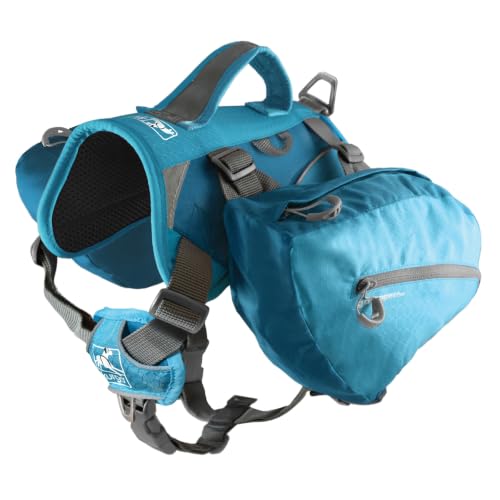
Compared to the Ruffwear Approach, the Baxter strips things back to essentials, and that’s its appeal. Two side compartments hold food, waste bags, a first-aid pouch, and collapsible bowls, while the whole package stays light enough that smaller or first-time pack dogs won’t resent wearing it.
Eight adjustment points give you real control over fit, which matters because a loose pack is the number-one cause of rubbing reported by owners. A rear-mounted leash hook doubles as a harness attachment point, handy for dogs still learning trail manners near roads or other hikers. The trade-off is capacity: there’s simply less room than the Mountainsmith K9 offers, so multi-day trips will feel cramped.
Highlights
- Eight adjustment points deliver a genuinely custom fit
- Rear leash hook adds harness function without extra gear
- Lightweight build suits dogs new to carrying weight
- Two-sided storage covers day-hike essentials comfortably
Minor Gripes
- Limited volume compared to larger pannier-style packs
- Straps need periodic re-tightening as they settle during long hikes
At A Glance
Made For
Weekend hikers who want dependable day-trip storage without paying premium-pack prices.
Consider Something Else When
Overnight trips demand the Mountainsmith K9’s nine-liter-per-side panniers instead of the Baxter’s modest compartments.
Not every dog should carry a pack. Seniors, puppies, small breeds, and dogs recovering energy mid-hike all reach a point where walking stops being fun, and that’s where this front carrier earns its spot. Your pup rides against your chest, paws up, watching the trail go by while your hands stay free for trekking poles or a leash.
Water-resistant fabric handles light drizzle, and mesh siding keeps air moving so a furry passenger doesn’t overheat. Padded shoulder straps spread the weight across your frame rather than digging into one shoulder, and adjustable buckles let you tune the carry height. The honest caveat: a medium-sized dog gets heavy fast, so this suits shorter outings better than summit days.
Plus Points
- Hands-free chest carry keeps both arms available on technical trails
- Mesh panels maintain airflow during warmer months
- Padded straps distribute weight instead of concentrating it
- Water-resistant shell shrugs off passing showers
Softer Spots
- Your body does all the work, so longer routes get tiring quickly
- Medium sizing caps which dogs fit comfortably inside
Who Will Love This
Owners of small, senior, or low-stamina dogs who refuse to leave their companion home on family adventures.
Another Choice May Suit
Healthy adult dogs ready to share the load belong in the Ruffwear Approach Pack, which turns them into gear carriers instead of passengers.
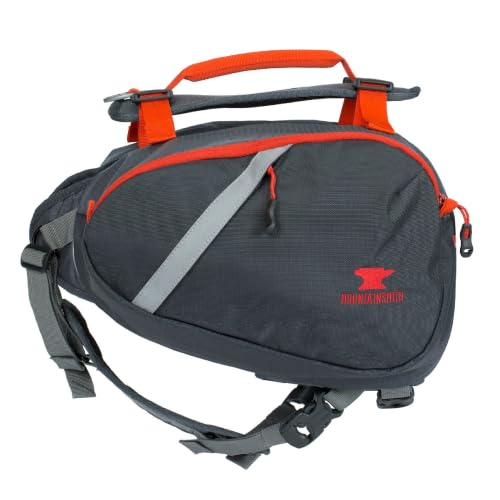
Mountainsmith has been building dog packs since the 1980s, and that history shows in the K9’s fit system. The four-point chest harness works alongside an independently adjustable back harness, letting you tune pressure separately across the shoulders and belly. A Colorado veterinarian helped shape the current design, which explains the ergonomically tapered torso profile that avoids the barrel-shaped bulk of generic packs.
Capacity is the headline: the Large version carries nine liters per pannier, enough for food, a collapsed bowl, and a layer on overnight trips. Mesh panels and perforated EVA foam breathe against the coat, reflective trim wraps front, rear, and sides, and a weather-resistant interior coating protects contents from stream crossings. Sizing runs by chest girth, and the brand advises sizing up between measurements.
Bright Spots
- Nine liters per side on Large handles genuine multi-day loads
- Dual harness systems allow independent shoulder and belly tuning
- EVA foam and mesh keep the coat cooler on summer climbs
- Reflective trim on three sides aids visibility in low light
- Padded grab handle assists over logs and into vehicles
Points To Note
- Heavier empty weight than minimalist packs like the Kurgo Baxter
- Girth-based sizing means measuring your dog before ordering, not guessing
Quick Facts
Whose Shelf It Belongs On
Backpackers and campers whose dogs join multi-day trips and need serious, well-fitted cargo capacity.
Reach For A Different Pick When
Short neighborhood rambles call for the Lifeunion saddle bag, which costs far less and carries plenty for an afternoon.
Where the Outward Hound PupPak carries a dog on your chest, this Petsfit carrier moves the passenger onto your back, which changes everything about long-distance comfort. An upgraded back panel and adjustable shoulder straps are designed to spread load across your shoulders and spine, reducing the strain that builds over hours of hiking with a small dog aboard.
Large ventilation openings keep air circulating through the cabin, a detail that matters enormously in summer since enclosed carriers heat up faster than open-air designs. It accommodates small dogs and cats alike, making it a flexible option for mixed-pet households. The trade-off versus the PupPak is intimacy: some anxious pets settle better facing your chest than riding behind your shoulders, so temperament should guide the choice.
Reasons To Buy
- Weight-reducing back panel eases shoulder strain on long routes
- Oversized vents prevent heat buildup in warm weather
- Works for both small dogs and cats
- Back-carry position frees your entire front for balance and poles
Small Caveats
- Anxious pets may prefer front-facing carriers where they see you
- Capacity limits it to small breeds only
Who Should Grab It
Hikers with small dogs or cats who want maximum ventilation and ergonomic load transfer on extended outings.
Not Your Match When
Dogs that need eye contact to stay calm fit the Outward Hound PupPak’s chest-mounted design better.
Every list needs an honest entry-level option, and this Lifeunion saddle bag fills that role without pretending to be anything else. The 600-denier double-layer polyester shell shrugs off scrapes against rocks and brush, and the coating sheds light rain well enough for typical day use. At its price point, that durability-to-cost ratio is hard to argue with.
Adjustable straps and a soft mesh underside aim for a comfortable custom fit, though you’ll want to check strap tension after the first few walks since new webbing tends to loosen slightly. Compartments swallow treats, toys, bowls, and a small first-aid kit. Owners commonly note the included waste-bag dispenser as a genuinely useful touch that pricier packs skip entirely.
Positives
- Double-layer 600D polyester stands up to rough trail contact
- Water-resistant finish handles drizzle and wet grass
- Mesh-lined underside reduces rubbing during break-in
- Built-in waste-bag dispenser keeps cleanup supplies always attached
Honest Caveats
- Straps may need re-adjusting as webbing settles with use
- Hardware and stitching sit a tier below premium brands like Ruffwear
- Fit precision depends heavily on careful initial adjustment
Details At A Glance
The Right Fit
Casual walkers and first-time pack owners testing whether their dog tolerates carrying weight at all.
Look Elsewhere When
Regular backcountry users should step up to the Mountainsmith K9, whose vet-informed harness system justifies its higher cost over time.
The Front Range Day Pack closes the loop with Ruffwear’s own philosophy: it fits like a harness but works like a pack. A foam-padded chassis sits against the dog’s body, and five points of adjustment hold everything steady through trail runs, full-day treks, or quick supply missions. Where the Approach Pack optimizes for heavy loads, this one optimizes for movement.
That distinction matters for high-energy dogs. Joggers and fast hikers report that bounce is what ruins lesser packs, and the padded platform here is designed specifically to eliminate shifting and rubbing at speed. This listing covers the Medium size in River Rock Green, and Ruffwear again provides a sizing chart plus fitting video, which remains the smartest first step before any purchase in this category.
Standout Traits
- Foam-padded chassis prevents the shifting that causes hot spots
- Five adjustment points secure a bounce-free fit at running pace
- Suits trail runners and fast-paced hikers equally
- Brand sizing resources take the guesswork out of ordering
Trade Offs
- Day-pack capacity trails the Mountainsmith K9 for overnight loads
- Medium sizing excludes larger breeds from this particular listing
Feature Rundown
Built With In Mind
Runners and speed-focused hikers with medium-sized dogs who need gear that stays silent and stable at pace.
Skip It When
Big-breed owners needing maximum cargo space should choose the Ruffwear Approach Pack in Large/X-Large instead.
What Matters Most Before Choosing Hiking Backpacks For Dogs
Fit Beats Features Every Time
Chest girth, not weight, determines how a pack sits. Measure the widest part of your dog’s ribcage with a soft tape, then match it to the manufacturer’s chart rather than eyeballing breed labels. A pack that rides even slightly loose will shift with every stride, and friction hot spots appear within a couple of miles.
Start Light, Build Gradually
Veterinary guidance generally suggests beginning with roughly ten percent of your dog’s body weight and increasing slowly over several weeks. Muscles and conditioning adapt over time, not instantly. A dog new to packing should carry an empty bag around the house before ever hitting dirt.
Match Capacity To Trip Length
Day hikes need room for water, treats, and waste bags, which even compact packs handle. Overnight trips demand panniers in the five-to-nine-liter range per side. Buying more capacity than your routine requires usually means buying weight your dog carries for nothing.
Consider Who’s Actually Carrying
Senior dogs, small breeds, and brachycephalic types often shouldn’t carry at all. Front and back carriers solve that problem by transferring the load to you, with padded straps doing the ergonomic work.
Key Considerations Across These Picks
Traps First Timers Fall Into
The most common mistake is ordering by breed name instead of measurement, then discovering the girth strap floats an inch above the ribs. Second is overloading immediately, which sours a dog on packs permanently. Skip both by measuring first and starting with an empty bag.
What Separates Premium From Basic
Higher-priced packs spend money where failure hurts: metal buckles instead of plastic, radial-cut panels that follow anatomy, and multi-point harnesses tuned independently. Casual walkers rarely need that engineering. Anyone logging twenty-plus miles a month will feel the difference within a season.
Frequently Asked Questions
How much weight can my dog safely carry?
General guidance caps healthy adult dogs at around ten to twenty percent of body weight once conditioned. Start near ten percent and increase gradually over several weeks.
How do I know which size to buy?
Measure your dog’s chest at its widest point and compare against the brand’s girth chart. Between sizes, most manufacturers recommend sizing up.
Can puppies wear hiking backpacks?
Most sources advise waiting until growth plates close, typically twelve to eighteen months depending on breed. Carrying load too early can stress developing joints.
How do I clean a dog backpack?
Shake out debris, spot-clean with mild soap and lukewarm water, then air-dry fully before storage. Machine washing risks deforming padding and coatings unless the label permits it.
Should the pack ride high or low on the back?
Saddlebags should sit level along the ribcage, neither sliding toward the shoulders nor sagging past the flank. Level placement keeps weight centered over the dog’s natural balance point.
Closing Thoughts
The right choice comes down to your dog’s build and your trail habits. Big, strong breeds on regular hikes justify the Ruffwear Approach or Mountainsmith K9, weekend walkers get real value from the Kurgo Baxter or Lifeunion, and dogs who’d rather ride belong in a carrier. Measure first, start light, and let your dog tell you how it’s going.
