

A good harness changes how a trail day feels for both of you. Pulling pressure moves off the throat, a grab handle gets your dog over a log jam, and saddlebag models let your pup carry their own water and snacks. The eight options below cover plain walking harnesses, tactical vests with patch panels, and full backpack rigs, so you can match gear to your dog’s size, temperament, and the terrain you actually hike.
The Shortlist At A Glance

MOOGROU Tactical Dog Harness and Leash Set with 10 Patches
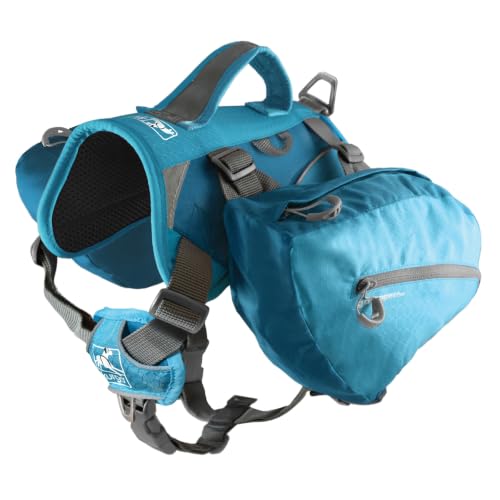
Kurgo Baxter Dog Backpack Harness, Coastal Blue

Wilderdog Lightweight Dog Harness with Reflective Straps, Olive

Forestpaw Tactical Dog Harness Pouches and Patches Set, Black

Ruffwear Front Range Day Pack, River Rock Green

ONETIGRIS Y-Shaped Dog Backpack with Handle (Medium, Green)

WINSEE Tactical Molle Vest Mesh Dog Harness with 10 Patches

PetAmi Dog Backpack Saddle Bag for Medium & Large Dogs
More Details On Our Top Picks
This set arrives as a complete kit rather than a single vest: one harness, one leash that doubles as a car restraint, a clear ID window with an anti-lost name card, and five pairs of hook-and-loop patches. The MOLLE webbing across the vest lets you swap messaging like “In Training” or “Do Not Pet” depending on the outing, which matters more than most people expect around crowded trailheads.
For large, strong dogs, the vest-style spread of pressure beats a collar every time. You may find the patch selection covers nearly every situation you’ll encounter, from service work to friendly greetings.
Strong Points
- Bundle includes harness, leash, ID window, and ten patches, so nothing extra to source
- MOLLE panel accepts any hook-and-loop patch to signal your dog’s status at a glance
- Leash converts into a car harness, cutting down on separate travel gear
- Vest design distributes pulling force across the chest instead of the neck
Things To Consider
- Tactical vests run warmer than mesh designs in summer heat, so plan breaks on hot days
- Patches attach with hook-and-loop fasteners that collect lint and need occasional cleaning
Who It Suits Best
Owners of large working or reactive breeds who want clear visual communication on busy trails.
A Better Fit Elsewhere
Lightweight-minded hikers will prefer the Wilderdog Lightweight Harness, which strips away the bulk for dogs that don’t need patch messaging.
The Baxter is built for dogs that carry their own supplies on longer outings. Two saddlebag compartments hold food, waste bags, first aid items, and collapsible bowls, and the whole pack stays light enough that most medium and large dogs adapt within a walk or two. Eight adjustment points are the headline here: they let you dial in a fit across deep-chested breeds and stockier builds alike, which is where many dog packs fail.
A rear leash hook means the pack works as a harness on lead sections too. Owners commonly report the rugged shell holds up well against brush and rocky ground over seasons of use.
What We Like
- Eight adjustment points deliver a genuinely custom fit across body types
- Two-sided saddlebags carry a full day’s food, bowls, and supplies
- Rear-mounted leash hook turns the pack into a functional harness
- Tough exterior shrugs off rugged trail conditions
Worth Noting
- Saddlebags sit wider than slim packs, so watch clearance in dense brush
- Fit takes patience the first time; measure your dog before ordering
Made For
Backpackers and long-distance hikers whose healthy, adult dogs can comfortably carry their own gear.
Where A Sibling Pick Shines
Dogs new to wearing packs often settle in faster with the ONETIGRIS Y-Shaped Backpack, whose lighter frame eases the transition.
Not every trail dog needs pockets and patch panels. The Wilderdog keeps things simple: it slips over the head, closes with two side-release buckles, and adjusts at both the neck and shoulders. That minimal layout is why it doubles so easily between neighborhood walks and weekend scrambles, unlike the heavier MOOGROU tactical set reviewed above.
Two D-rings give you a choice of attachment, chest or back, which helps with pullers versus calm walkers. Reflective stripes earn their keep on pre-dawn starts, and the top handle lets you steady your dog over boulders or lift them into the truck.
Highlights
- Chest and back D-rings suit both pullers and loose-leash walkers
- Top handle provides a secure grip for boulder boosts and vehicle lifts
- Reflective striping improves visibility in low light
- Lightweight build stays comfortable through all-day wear
- Simple step-in-free design goes on in seconds
Small Caveats
- No storage capacity, so treats and bags stay in your own pack
- Head-over fit can spook dogs unaccustomed to it at first
Quick Facts
Right Fit For
Owners who want one dependable harness covering daily walks and moderate trail days without extra weight.
Skip It When
Your dog needs to carry supplies; the Kurgo Baxter handles cargo far better.
Where the MOOGROU set leads with patches, this Forestpaw bundle leans on hardware. Two heavy-duty metal buckles anchor the vest, and dual handles give you lifting leverage at the car door or over obstacles, a setup that suits strong dogs handled by one person. The package also includes two MOLLE-compatible pouches and three hook-and-loop patches, turning the vest into genuine cargo space for treats, toys, and waste bags.
In our view, the escape-resistant fit is the real draw for training contexts. The trade-off shows up in warmth and weight compared with lighter options like the Wilderdog.
Upsides
- Metal buckles feel substantially more secure than plastic equivalents
- Dual handles make vehicle loading and obstacle assistance manageable solo
- Two included pouches add real storage without buying separately
- Escape-resistant construction suits flight-risk dogs in training
Points To Note
- Heavier overall than basic harnesses; small or slight dogs may find it much
- Black fabric absorbs heat on sunny summer hikes
- Pouches add width, so check doorway and brush clearance
Best Suited To
Handlers running obedience or service training with powerful dogs that test lesser gear.
Another Choice May Suit
Hot-climate owners should look at the WINSEE mesh vest instead, since airflow matters more than armor there.
Ruffwear’s reputation in the dog-outdoor space rests on fit engineering, and the Front Range Day Pack shows why. A foam-padded chassis sits against the torso while five adjustment points lock the load down, aiming for zero bounce on full-day treks and trail runs. Compared with the Kurgo Baxter’s eight points, Ruffwear trades some adjustability range for a more refined, less bulky silhouette.
The brand publishes a sizing chart and fitting video, which is worth using before ordering; a proper fit is what makes the no-shift promise hold up. For dogs logging serious mileage, the padding difference becomes obvious by hour three.
Bright Spots
- Foam-padded chassis cushions the torso under sustained loads
- Five adjustment points create a stable, bounce-free carry
- Sizing chart and video guidance reduce fit mistakes
- Low-profile shape clears brush better than wide saddlebags
Honest Caveats
- Premium positioning puts it above budget alternatives
- Getting sizing right matters; an incorrect size undermines the whole design
Feature Snapshot
Who Will Love This
Distance hikers and trail runners wanting refined comfort for athletic, regularly active dogs.
Swap It Out When
Budget-conscious shoppers carrying light loads will be happy with the PetAmi saddle bag instead.
The Y-shaped frame is the distinguishing feature here. Instead of a boxy vest, straps wrap the torso in a Y configuration that resists slipping forward or backward and spreads loaded weight evenly across the body. Dogs in motion benefit most: the design hugs without restricting shoulder extension, which matters on steep scrambles where the Kurgo Baxter’s wider bags can feel cumbersome.
Nylon construction handles dirt, moisture, and abrasion, with a no-slide mesh lining underneath for comfort. Front and rear D-rings support no-pull control, and the top handle earns repeated use getting dogs in and out of vehicles.
Reasons To Buy
- Y-frame prevents slippage and balances loaded weight naturally
- Nylon shell resists dirt, water, and abrasion season after season
- Breathable mesh lining keeps the underside comfortable
- Front and back D-rings give flexible leash control
- Grab handle simplifies car loading and obstacle crossings
Softer Spots
- Pockets hold less volume than dedicated saddlebag designs
- Y-fit favors certain body proportions; measure carefully in medium sizes
Core Details
Whose Shelf It Belongs On
Hunters, campers, and owners of agile sporting breeds moving fast over varied ground.
Consider Something Else When
Maximum storage is the goal; the PetAmi’s expandable side pockets out-carry it clearly.
Most tactical vests share one flaw: heat. WINSEE attacks that with an airy mesh body that moves air across the coat and dries quickly after stream crossings or rain. You still get the MOLLE panel and ten lettered patches covering common statuses, so the communication benefits of the MOOGROU kit carry over here in a cooler-running format.
The mesh also gives a close, stable fit that doesn’t bunch under a leash. One thing worth considering: mesh fabric is inherently less abrasion-tough than solid nylon, so thorny terrain asks more of it over time.
Plus Points
- Breathable mesh dramatically improves airflow in warm weather
- Quick-drying material recovers fast after water exposure
- Ten included patches cover training, service, and temperament signaling
- Close mesh fit adds stability without restricting stride
Minor Gripes
- Mesh wears faster against sharp brush than woven nylon shells
- Hook-and-loop patch edges can catch on low branches
Who Should Grab It
Owners in hot climates or with thick-coated dogs who still want tactical functionality.
Reach For A Different Pick When
Rocky, thorny routes dominate your routine; the Forestpaw set’s tougher build suits that abuse better.
Storage is where this PetAmi earns its spot. Two expandable side pockets open into roomy compartments with inner dividers, plus a built-in waste bag dispenser, meaning food, toys, first aid, and cleanup supplies all ride on the dog instead of weighing down your pack. Multiple adjustable straps and a mesh padding layer aim for a snug, breathable fit on medium and large frames.
Reflective stripes along the sides help in dusk conditions, and a reinforced top handle plus D-ring round out the harness basics. Against the pricier Ruffwear Day Pack, you give up some chassis refinement but gain serious capacity per dollar spent.
Standout Traits
- Expandable side pockets swallow a full day of dog essentials
- Built-in waste bag dispenser saves pocket space
- Mesh padding layer keeps the load comfortable against the coat
- Reflective stripes boost visibility at dawn and dusk
- Reinforced grab handle assists with vehicle entry
Areas To Watch
- Loaded saddlebags shift if straps aren’t tightened evenly; recheck mid-hike
- Full pockets widen the profile in tight single-track sections
Details At A Glance
The Right Fit
Weekend hikers with healthy medium or large dogs who want maximum carrying value without premium pricing.
Not Your Match When
You want a featherlight everyday harness; the Wilderdog remains the simpler, lighter call.
What Matters Most Before Choosing Hiking Harness Dogs
Fit Comes Before Features
A harness with every bell and whistle is useless if it rubs. Measure your dog’s girth at the widest point of the ribcage and check each brand’s chart, because sizing varies wildly between makers. Five or eight adjustment points matter most for deep-chested breeds like pointers, while barrel-chested dogs often need fewer but wider straps.
Decide Whether Your Dog Carries Weight
Saddlebag packs only suit healthy, fully grown dogs, and most trainers suggest keeping loads modest relative to body weight. Younger dogs and those with joint concerns do better with a plain harness like the Wilderdog. Start with empty pockets on short walks so your dog learns the feel before you add gear.
Match Materials To Climate
Mesh designs such as the WINSEE breathe well in heat but scuff faster on abrasive rock. Solid nylon shells like ONETIGRIS handle brush and moisture better at the cost of airflow. Desert and summer hikers should prioritize ventilation; alpine and thorny terrain rewards durability.
Control Points And Handles
Front-clip D-rings discourage pulling, while back clips suit trained walkers. A top handle sounds minor until you’re lifting a tired dog over a fallen tree or into a high truck bed, then it becomes the feature you use most.
Key Considerations Across These Picks
Traps First Timers Fall Into
The most common error is ordering by breed instead of measurement, then discovering the vest slides at the shoulders. Another frequent miss: loading a brand-new pack heavily on the first hike, which causes chafing and refusal behavior. Break gear in gradually.
The Case For Spending Up
Higher-tier packs buy padding density, finer adjustment hardware, and shapes engineered to stop bounce. On hikes past a few hours, that refinement is the difference between a dog that forgets it’s wearing gear and one that fights it constantly.
Frequently Asked Questions
Can my puppy wear a hiking harness?
Vets generally advise waiting until growth plates mature before adding weighted packs. A lightweight, unweighted harness is fine for conditioning walks in the meantime.
How tight should a dog hiking harness fit?
You should fit two fingers flat between any strap and your dog’s body. Tighter risks rubbing, looser allows twisting and escape.
How much weight can my dog carry in a backpack?
Most trainers recommend keeping loads light relative to the dog’s size and building up slowly over several outings. Confirm any specific limit with your veterinarian based on your dog’s health.
Do front-clip attachments really stop pulling?
They redirect a pulling dog’s momentum sideways rather than letting them lean forward, which many owners find effective. Results vary by dog and consistency of training.
How do I clean a muddy harness?
Rinse off dried mud, then hand wash with mild soap and air dry away from direct heat. Machine washing can stress buckles and reflective coatings.
Bottom Line
Match the harness to the hike, not the other way around. Plain-trail walkers get everything they need from the Wilderdog, cargo haulers should weigh the PetAmi against the Kurgo Baxter, and hot-weather dogs belong in the WINSEE mesh vest. Measure first, start with empty pockets, and give your dog a few short sessions to adjust. The right fit disappears onto the dog, and that’s exactly what you want.
