

Watching a dog struggle to rise from the couch never gets easier. Hip dysplasia affects countless breeds, from Labradors to German Shepherds, and the right support brace can take real pressure off a painful joint during walks, stairs, and everyday standing. This roundup covers eight options spanning true orthotic braces, compression wraps, knee stabilizers, and lift harnesses, because not every dog needs the same kind of help. Measure your dog before ordering anything here; sizing is where most of these products succeed or fail.
The Shortlist At A Glance

Ortocanis Neoprene Dog Hip Brace for Dysplasia (Medium)

LISPOO Adjustable Dog Hip Support Brace (XL)
Lqyom Dog Sling Hind Leg Support Harness (X-Large)

Dovanor Dog Hip Orthotic Brace (L)

Yinchogee Adjustable Dog Hip Brace with Compression (XL)
ALYBIT Dog Knee Brace with Steel Strips
Pawfun Dog Knee Brace for Torn ACL (XXL)
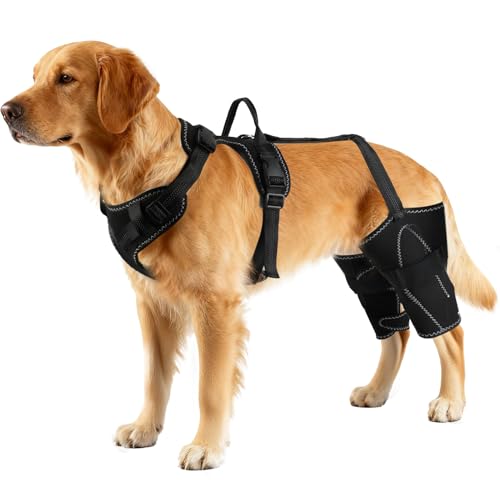
Vivifying Dog Hip & Leg Support Harness (L)
More Details On Our Top Picks
Ortocanis builds this one specifically around dysplastic hips rather than adapting a generic leg sleeve, and that focus shows in how the neoprene panel sits over the joint. The medium size targets chest measurements of 55 to 68 cm, so a tape measure matters more than breed name here.
Dogs with mild to moderate stiffness tend to do well with a wrap like this on daily neighborhood walks. The high-dynamic-resistance neoprene flexes with each stride instead of fighting it, which matters when your dog still wants to trot after squirrels.
Strong Points
- Neoprene construction holds body warmth around the hip, which many owners report eases morning stiffness
- Adjustable strapping lets you fine-tune pressure without cutting circulation
- Light enough for all-day wear once your dog acclimates over a week or two
- Machine-washable care routine keeps odor down between uses
Things To Consider
- Sizing runs precise; a chest measurement off by a few centimeters can make the fit slip or bind
- Some dogs need a gradual break-in period before tolerating longer wear sessions
Key Specs
Who It Suits Best
Owners of medium-sized dogs with early-stage dysplasia who want a dedicated orthotic rather than a multipurpose harness.
A Better Fit Elsewhere
Dogs needing rear-limb lift assistance rather than joint stabilization will get more from the Vivifying Dog Hip & Leg Support Harness (L).
The XL cut makes this LISPOO wrap a natural next step up from the Ortocanis medium for owners of bigger breeds. Where that pick stabilizes one side of the joint, this design circles the entire hip, trapping warmth and applying even contact pressure around the whole socket area.
In practice, that full-wrap approach suits arthritic seniors who seem worse in cold weather or after long naps. The trade-off shows up in warm climates, since more coverage means more heat retention, and some dogs will pant through summer walks wearing it.
Highlights
- Full-circumference wrap warms the joint, which commonly loosens stiff muscles before activity
- Adjustable fasteners accommodate weight fluctuation common in less mobile dogs
- XL sizing fits large breeds that smaller braces simply cannot cover
Small Caveats
- Heavier coverage can run warm in hot weather, so plan shorter sessions in summer
- Straps may need re-tightening after a few active outings as fabric settles
- Check strap edges regularly; friction against fur is a widely reported annoyance on long-coated dogs
Made For
Large-breed owners managing arthritis alongside dysplasia who want maximum joint coverage in one garment.
Where A Sibling Pick Shines
Smaller or heat-sensitive dogs usually fare better in the lighter Ortocanis Neoprene Dog Hip Brace for Dysplasia (Medium).
This one changes the job description entirely. Instead of bracing the joint itself, the Lqyom sling carries part of your dog’s weight through a padded under-belly harness while you hold the thickened foam handle, which is a lifeline for dogs whose back legs have largely given up.
The enlarged potty opening is the detail that separates it from older sling designs, letting bathroom breaks happen without undressing your dog mid-walk. Breathable mesh backing helps too, since slings worn for long stretches can otherwise trap heat against the belly.
Upsides
- Oversized hygiene opening allows urination and defecation without removing the harness
- Ergonomic foam handle spares your hand on longer assisted walks
- Reinforced stitching and adjustable straps hold up across stairs, car rides, and uneven pavement
- Fits dogs from roughly 18 to 88 lbs depending on size choice
Points To Note
- You supply the lifting effort, so owners with back issues should gauge their own strength honestly
- Waist and leg girth must be measured carefully; a loose sling chafes and slides
Quick Facts
Right Fit For
Caregivers of senior or post-operative large dogs who need hands-on weight support rather than passive joint bracing.
Swap It Out When
A dog that still walks independently but needs joint stabilization belongs in the Dovanor Dog Hip Orthotic Brace (L) instead.
Dovanor leans into biomechanics. The brace works by limiting excessive range of motion at the hip, nudging an abnormal gait back toward something closer to normal, and that constraint is exactly what post-surgical dogs often need to avoid reinjuring the joint.
Compared with the comfort-first LISPOO wrap earlier in this list, this is the more clinical option: firmer structure, clearer corrective intent, less loungewear feel. Dogs recovering from surgery are its clearest case, though vets should sign off before any brace goes on a healing incision site.
Reasons To Buy
- Range-of-motion control reduces joint stress during walking and standing
- Postoperative protection guards against secondary injury while the hip rehabilitates
- Corrective framing suits dogs whose gait has visibly deteriorated
- Large sizing accommodates bigger frames needing structured support
Honest Caveats
- The firmer build takes longer for sensitive dogs to accept than soft neoprene wraps
- Fit adjustments demand patience; a poorly positioned orthotic does little good
At A Glance
Who Should Grab It
Owners guiding a dog through surgical recovery or noticeable gait decline who want genuine mechanical correction, not just warmth.
Consider Something Else When
For everyday stiffness without surgery in the picture, the Yinchogee Adjustable Dog Hip Brace with Compression (XL) offers a gentler daily-wear experience.
Compression is the whole idea here. The Yinchogee wrap applies targeted pressure around the hip to stabilize the joint and quiet the ache that flares up during activity, and it doubles as a sensible option for dogs easing back into movement after surgery.
Against the pricier LISPOO full-wrap design, you give up some coverage breadth but keep the core benefit: adjustable pressure you control strap by strap. For owners testing whether their dog will tolerate a hip brace at all, starting here costs less heartache than committing to a premium orthotic first.
What We Like
- Targeted compression steadies the joint during walks and play sessions
- Adjustable design lets you dial pressure up or down as tolerance changes
- Works across dysplasia, arthritis flare-ups, and post-surgery recovery scenarios
Softer Spots
- Compression garments collect fur and skin oils, so regular washing keeps them effective
- Fit verification matters; too much pressure causes rubbing that some owners report on short-coated dogs
Built With In Mind
Budget-aware owners of larger dogs who want a straightforward compression wrap before investing in costlier orthotics.
Not Your Match When
Dogs needing rigid motion restriction after surgery are better served by the Dovanor Dog Hip Orthotic Brace (L).
Four steel strips change what this ALYBIT brace can do. Rigid stays along the hind leg deliver real structural support for ACL tears and luxating patella, a kneecap that slips out of its groove, while the vest-style upper section spreads load across the torso instead of concentrating it at the straps.
The dual-leg angle is worth pausing on. When one knee fails, the healthy leg absorbs compensatory stress, and supporting both sides addresses that cascade, something single-leg stents ignore. Hip dysplasia gets secondary benefit here since stabilized knees reduce overall rear-end wobble.
Bright Spots
- Steel strip reinforcement provides firm stabilization soft sleeves cannot match
- Breathable vest with heavy-duty Velcro resists slipping during walks and play
- Dual-leg support cuts compensatory pressure on the uninjured limb
- Anti-chafing neoprene lining improves comfort over multi-hour wear
- Long flexible straps adapt down to smaller breeds
Trade Offs
- Rigid stays add bulk, and some dogs resist the structure initially
- Vest-and-strap system takes practice to put on quickly
Feature Rundown
Whose Shelf It Belongs On
Owners of dogs juggling knee injuries alongside hip instability who want one sturdy garment covering both problems.
Reach For A Different Pick When
Extra-large breeds wanting a quicker on-off buckle system will prefer the Pawfun Dog Knee Brace for Torn ACL (XXL).
Pawfun takes a similar stabilizer concept to the ALYBIT and refines the wearing experience. Four metal supports anchor the knee, while the upgraded SBR fabric vest adds a quick-release neck buckle, meaning you can get the brace off in seconds rather than unwinding a web of Velcro at the end of a walk.
The triangle-pull connection deserves mention too; it keeps tension distributed so the brace rides with your dog instead of sliding down the leg. XXL sizing opens the door to giant breeds that most knee braces simply don’t cover.
Plus Points
- Quick-release neck buckle speeds removal after walks
- Four metal stabilizers support torn CCL ligaments and luxating patella
- Breathable SBR vest material stays comfortable through all-day wear
- Triangle-pull connection minimizes slippage while moving
Minor Gripes
- XXL fit demands accurate measuring; oversized braces rotate on narrow-framed dogs
- Metal components warrant occasional inspection for wear at connection points
Who Will Love This
Owners of giant breeds recovering from CCL injuries who value fast on-off handling as much as support.
Another Choice May Suit
Dogs needing both legs braced simultaneously get broader coverage from the ALYBIT Dog Knee Brace with Steel Strips.
Vivifying splits the difference between the Lqyom sling and a true brace. A built-in lift handle gives you instant leverage on stairs and car entries, while the harness itself stabilizes both hind legs and hips continuously, reducing load on painful joints even when nobody is holding the handle.
That dual function makes it a strong daily driver for aging dogs who still walk but wobble. Three sizes, M through XL, cover a wide range of breeds, and matching chest plus hind-leg girth to the chart is the step that determines whether it works as intended.
Standout Traits
- Lift handle assists stairs, vehicles, and outdoor breaks without a separate sling
- Stabilizes hips and both rear legs at once for balanced support
- Three-size range fits varied breeds and body shapes
- Reduces joint pressure during standing and walking alike
Areas To Watch
- Handle stitching endures steady strain, so periodic inspection is wise with heavy dogs
- Two measurements, chest and hind-leg girth, must both fall inside the chart range for a safe fit
Core Details
The Right Fit
Families with senior dogs navigating stairs and car rides daily who want passive support plus on-demand lifting in one harness.
Look Elsewhere When
Dogs requiring firm joint immobilization rather than mobility assistance belong in the Ortocanis Neoprene Dog Hip Brace for Dysplasia (Medium).
What Matters Most Before Choosing Hip Braces For Dogs With Hip Dysplasia
Match The Tool To The Mobility Stage
A dog that still walks independently needs a stabilizing brace like the Ortocanis or Dovanor designs. Once back legs start buckling, a lift harness such as the Lqyom sling or Vivifying model becomes the honest answer. Buying a brace for a dog who cannot bear weight frustrates everyone involved.
Measure Twice, Order Once
Chest circumference, waist, and hind-leg girth decide everything here. Manufacturers size these products tightly, and a two-centimeter error turns a good brace into a chafing hazard. Keep the tape measure flat against the coat and measure while your dog stands square.
Material And Climate Fit Together
Neoprene retains warmth, which soothes stiff joints in winter but overheats thick-coated dogs in July. Mesh-backed harnesses breathe better for long wear. Consider your local weather and your dog’s coat density together, not separately.
Loop In Your Veterinarian
Braces support recovery and daily comfort, but they never replace diagnosis or treatment planning. A vet visit clarifies whether your dog needs correction, compression, or lifting assistance, and rules out conditions a brace would worsen.
Key Considerations Across These Picks
Traps First Timers Fall Into
The most common mistake is ordering by breed name instead of measurements, then blaming the product for a bad fit. Another frequent misstep is expecting overnight results; most dogs need one to two weeks of gradual wear before accepting any brace. Skipping the break-in period leads to rejected gear and wasted money.
What Separates Premium From Basic
Higher-priced orthotics add structure: steel stays, corrective geometry, reinforced stitching at stress points. That engineering pays off for post-surgical dogs and heavy breeds where soft wraps collapse. Lighter-duty dogs with mild stiffness rarely need the upgrade, and a basic compression wrap serves them well for years.
Frequently Asked Questions
Can a hip brace cure my dog’s dysplasia?
No brace reverses the underlying joint malformation. Braces reduce stress on the joint and improve comfort during movement, working best alongside veterinary guidance.
How long can my dog wear a hip brace each day?
Most manufacturers suggest starting with short sessions of 30 to 60 minutes and building up gradually. Continuous overnight wear is generally discouraged unless a vet advises otherwise.
Do hip braces work for large breeds like German Shepherds?
Yes, provided you select the correct size, which is why XL and XXL options appear throughout this list. Large breeds often benefit most because their weight magnifies joint stress.
How do I know if the brace fits correctly?
A proper fit stays in place during a short walk without sliding, rotating, or leaving red marks on the skin. You should fit two fingers comfortably under any strap.
Should I use a brace after hip surgery?
Only with your veterinarian’s explicit approval, since incision sites and healing timelines vary. Post-operative braces like the Dovanor exist specifically for supervised recovery periods.
Closing Remarks
The right choice comes down to your dog’s current mobility, not the fanciest feature list. Independent walkers do well with the Ortocanis or Yinchogee wraps, recovering dogs suit the Dovanor, and dogs needing physical help getting around belong in the Lqyom sling or Vivifying harness. Measure carefully, introduce any brace slowly, and let your veterinarian steer the medical decisions. Your dog’s tail will tell you when you’ve gotten it right.
