

Watching a dog struggle to stand after years of easy movement never gets easier. A well-fitted support harness changes that daily picture, letting you share the load on stairs, car entries, and short walks without straining your own back or your dog’s hips. The eight options below cover everything from simple rear-lift slings to full-body systems and a dedicated hip brace, so you can match the tool to your dog’s condition and size.
The Shortlist At A Glance
PetSafe Solvit Pet Lifting Aid (Large)
lafoty Dog Lift Harness for Large Male Dogs
NOYAL Full-Body Support Sling for Senior Dogs
Cover Geny Adjustable Rear Leg Sling (M)
BINGPET Full Body Lifting Dog Vest
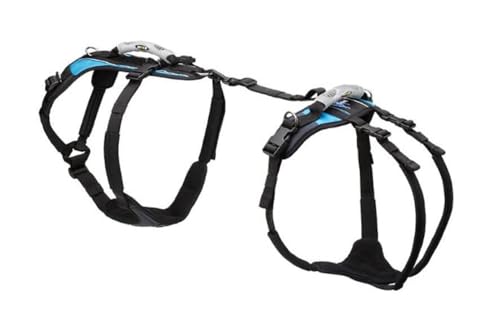
Help ‘Em Up Dog Lift Harness (Conventional, Large)
OneTigris Breathable Dog Lift Harness

LISPOO Adjustable Hip Support Brace (L)
More Details On Our Top Picks
Sometimes the simplest answer wins. This rear-only sling from PetSafe wraps around the hindquarters and gives you a handle right where weak hips need it most, which suits dogs whose front legs still work fine.
In a home with hardwood floors or a few porch steps, that focused rear lift covers most daily trouble spots. Compared with full-body rigs like the Help ‘Em Up further down, there’s less to put on, less to clean, and less for a stiff dog to tolerate.
Strong Points
- Targets the rear half only, so potty breaks stay uncomplicated
- Lightweight enough to keep by the door for quick trips outside
- Comes from an established pet-safety brand with wide availability
- Handle placement lets you steady a dog on stairs without bending fully over
Things To Consider
- No front-leg support, so dogs weak in both ends will need more than this sling offers
- Fabric contact points can collect hair and dirt, so plan on regular hand washing
Who It Suits Best
Owners of large senior dogs with hind-end weakness who want one straightforward lifting aid rather than a full harness system.
A Better Fit Elsewhere
Dogs needing chest and shoulder assistance are better served by the NOYAL Full-Body Support Sling, which adds a front section and shoulder strap.
Most lift slings ignore a basic fact of male-dog anatomy, and that oversight turns every walk into a cleanup job. The lafoty positions its handles and rear straps so urination and defecation happen naturally while the harness stays on, which matters enormously during weeks-long recovery periods.
The 2-in-1 build adds flexibility too: detach the rear leg piece and you’re left with a regular vest harness, while the lift strap handles stairs or a temporary carry. Owners of intact or senior males commonly report this anatomy-aware layout as the deciding factor over generic slings like the Cover Geny below.
What We Like
- Strap geometry avoids interference during bathroom breaks, keeping the sling wearable all day
- Rear leg support detaches into a standalone walking harness
- Lift strap doubles as short-distance carrying help on stairs
- Sized for large breeds where cheap slings often run small
Worth Noting
- The male-specific cut makes it a poor match for female dogs
- More adjustment points mean a longer first-time fitting session
Made For
Homes caring for a large male dog through post-surgery rehab or progressive hind-leg decline.
Where A Sibling Pick Shines
Female large-breed owners should look instead at the BINGPET Full Body Lifting Dog Vest, which skips the male-oriented strap routing entirely.
Hip dysplasia rarely travels alone; arthritis in the shoulders or a sore front wrist often shows up alongside it. That’s the gap this NOYAL sling fills, pairing a front section and rear section with a shoulder strap so you can assist either end or both at once.
Breathable mesh keeps things tolerable during longer wear, something worth having in warm climates or thick-coated breeds. Where the PetSafe Solvit above handles only the back half, this setup scales up to full-body assistance for car exits and stair climbs, though the extra sections do add fitting time each morning.
Highlights
- Split front/rear design adapts as your dog’s condition changes
- Shoulder strap shifts lifting effort off your lower back
- Airflow-friendly mesh reduces overheating during extended use
- Covers stairs, vehicle entry, and short assisted walks in one kit
Small Caveats
- Two-section assembly takes longer to fit than a single rear sling
- Mesh panels may snag on rough terrain or sharp claws over time
Right Fit For
Medium-to-large breed owners managing mobility loss in both the front and rear limbs, especially during multi-week recovery stretches.
Swap It Out When
For a lighter daily routine centered purely on the hindquarters, the PetSafe Solvit Pet Lifting Aid stays easier to live with.
Recovery from ACL surgery means weeks of careful weight bearing, and skin comfort becomes a real concern when a sling sits against a healing leg for hours. Cover Geny lines its pad with soft fleece over a PU leather shell, a combination aimed at shock absorption and reduced rubbing.
The sizing range is unusually generous too, running five pad widths from XS (dogs 7–20 lbs) up to XL (101–150 lbs), so multi-dog households can standardize on one brand. Against the pricier Help ‘Em Up system later in this list, this sling trades modularity for a lower entry point, which suits shorter rehab timelines well.
Upsides
- Fleece padding cushions a surgical leg better than bare webbing
- Five width options make finding a snug, non-slipping fit realistic
- PU leather exterior wipes down quickly after muddy yard trips
- Adjustable fit accommodates weight fluctuation during recovery
Points To Note
- Leather-backed construction holds warmth, which some thick-coated dogs dislike in summer
- Rear-only support won’t help dogs with front-limb weakness
Who Will Love This
Owners guiding a medium dog through ACL or orthopedic surgery recovery on a sensible budget.
Consider Something Else When
Long-term degenerative conditions with changing needs are handled more flexibly by the OneTigris Breathable Dog Lift Harness and its removable modules.
A vest spreads load differently than a narrow under-belly strap, and that difference shows up fast with heavy dogs. The BINGPET wraps the torso in a full-body cut, distributing weight across the chest and abdomen instead of concentrating pressure along the spine or bladder area.
The listed Large sizing runs a 23–29 inch neck girth, 22–40 inch chest, and 20 inch back length, generous numbers that fit blocky breeds like Labs and Rottweilers. Two lift handles give you grip options depending on whether you’re steadying a stair climb or leveling a wobbly walk. You may find the vest warmer than mesh designs during summer months, so plan shorter midday outings accordingly.
Bright Spots
- Full-torso cut avoids pressure hotspots on joints and the bladder
- Dual handles let a second person assist on stairs safely
- Wide chest range fits deep-chested large breeds comfortably
- Vest shape doubles as a secure walking harness between lifts
Softer Spots
- Full coverage traps heat; expect panting in humid weather
- Putting a vest on a painful dog takes patience until they learn the routine
Whose Shelf It Belongs On
Households with big, heavy breeds needing reliable everyday lift support for walks and bathroom trips.
Reach For A Different Pick When
Warm-climate owners prioritizing airflow will prefer the NOYAL sling’s breathable mesh construction.
This is the system rehabilitation vets tend to name first, and the reason sits in its patented hip-lift design: cushioned supports positioned directly over the hip joints rather than the soft belly. Weight gets distributed away from ligaments, joints, abdomen, and bladder, which matters when a dog wears the harness most of the day.
Five sizes across two styles cover nearly every build, with the conventional version here suiting females and most males, while a U-band variant exists for males with different anatomy. Breathable padding keeps long wear sessions comfortable. The honest trade-off is cost and commitment; compared with the budget Cover Geny sling, you’re paying for engineering meant to last through a chronic condition, not a six-week recovery.
Reasons To Buy
- Hip-positioned lift points protect joints during repeated daily use
- Designed for near-continuous wear, not just supervised walks
- Two style options address male and female anatomy properly
- Cushioned, breathable padding holds up across seasons
Honest Caveats
- Higher investment than basic slings, hard to justify for short-term injuries
- Multiple straps require a careful initial fitting and periodic readjustment
Best Suited To
Families managing chronic hind-leg weakness in a large dog who’ll wear support daily for months or years.
Not Your Match When
Short post-op recoveries are covered adequately by the far simpler PetSafe Solvit Pet Lifting Aid.
Tactical-gear DNA shows everywhere on this OneTigris build: 1000D nylon shell, stainless steel D-rings, rust-resistant UTX buckles, and reinforced stitching at every stress point. The Y-shaped harness connects to a rear leg support via buckled straps you can lengthen, shorten, or remove outright, and a detachable lifting strap handles temporary carries.
Where it genuinely separates from the pack is visibility. Light-reflective trim alerts passing cars at night, and two rows of webbing accept LED lights or patches, a real advantage for evening walkers in low-light neighborhoods. Mesh lining keeps air moving under all that hardware. The trade-off is complexity; with four sizes and multiple modules, first-time fitting demands more attention than any other pick here.
Standout Traits
- Reflective trim plus light-mount webbing improves nighttime safety
- 1000D nylon with extra stitchwork handles heavy, repeated lifting
- Modular rear piece removes for dogs needing front-focused help
- Mesh lining prevents heat buildup during active use
Areas To Watch
- Many buckles and straps create a learning curve before daily use feels smooth
- Tactical styling won’t suit every owner’s taste
The Right Fit
Active owners of medium-to-large dogs who walk early mornings or after dark and want durable, configurable support.
Another Choice May Suit
Anyone wanting a grab-and-go sling without module decisions will find the PetSafe Solvit refreshingly simple.
Everything before this item lifts your dog; the LISPOO works differently, wrapping around the hip joint itself to provide warmth and compression. It’s built specifically for hip dysplasia, hip arthritis, and related joint conditions, aiming to ease muscle tension and support the joint through daily movement.
Think of it as a complement rather than a replacement for a lifting harness. Many owners pair a brace like this for around-the-house wear with a sling such as the Help ‘Em Up for stairs and car rides. The adjustable closure accommodates swelling changes through the day, though you’ll want to check skin underneath regularly, since compression garments worn for hours can cause irritation in some dogs.
Plus Points
- Wraps the hip joint directly rather than supporting the whole body
- Warming compression helps stiff muscles loosen during activity
- Adjustable fit tracks day-to-day changes in swelling
- Wearable indoors, unlike bulky lifting rigs
Minor Gripes
- Provides no lifting function, so stairs still demand a separate aid
- Skin checks are necessary with extended compression wear
Perfect Match For
Dogs with a confirmed dysplasia diagnosis whose owners want passive joint support layered alongside a lifting harness.
Look Elsewhere When
For actual physical assistance getting upstairs, the BINGPET Full Body Lifting Dog Vest does the heavy lifting this brace cannot.
What Matters Most Before Choosing Hip Dysplasia Harnesses For Dogs
Match The Tool To The Condition
A rear-support sling solves hind-leg weakness; a full-body system handles weakness everywhere; a brace manages the joint itself. Get a clear diagnosis from your vet first, because buying a rear sling for a dog with front-limb problems wastes money and delays relief.
Fit Beats Features Every Time
Measure neck girth, chest girth, and back length before ordering anything. A harness that rides up or pinches the armpit will get fought at every wearing, no matter how well-built it is. When two sizes overlap, most owners report the larger size with fuller adjustment works better for thick-coated breeds.
Think About Bathroom Logistics
This detail separates good harnesses from frustrating ones. Straps crossing the groin interfere with urination and defecation, forcing constant removal. Anatomy-aware designs like the lafoty or Help ‘Em Up let the harness stay on through potty breaks, which matters enormously during long recoveries.
Plan For Your Own Body Too
Lifting a 90-pound dog several times daily strains human backs. Shoulder straps, dual handles, and height-appropriate handle placement reduce that toll. Two-person households handling giant breeds should prioritize dual-handle designs from the start.
Key Considerations Across These Picks
Traps First Timers Fall Into
The most common mistake is guessing your dog’s size instead of measuring, followed closely by buying a rear-only sling for a dog whose weakness is actually generalized. Another frequent misstep: choosing a bargain sling with no padding, then discovering pressure sores after a week of daily use. Measure first, confirm the diagnosis second, and check return terms before committing.
What Separates Premium From Basic
Higher-priced systems earn their cost through anatomically placed support points, breathable long-wear materials, and modular designs that adapt as a condition progresses. A basic sling covers a six-week surgery recovery fine. Chronic conditions like advanced dysplasia justify the premium tier, since the harness becomes daily equipment for years rather than weeks.
Frequently Asked Questions
Can a harness actually help a dog with hip dysplasia?
It assists movement rather than treating the joint itself. By sharing your dog’s weight on stairs and walks, a harness reduces strain and keeps activity safer while you follow your vet’s broader treatment plan.
How do I know which size to order?
Measure neck girth, widest chest girth, and back length with a soft tape, then compare against the manufacturer’s chart. When measurements sit between sizes, the larger option usually allows finer adjustment.
How long can my dog wear a lift harness?
Basic slings suit supervised sessions of an hour or two. Systems designed for continuous wear, like padded full-body harnesses, can stay on much longer with periodic skin checks underneath.
Should I get a rear sling or a full-body harness?
Rear slings fit dogs whose front legs remain strong. Choose full-body support when weakness affects both ends, or when your vet identifies balance issues beyond the hips.
Do I still need a hip brace if I have a lifting harness?
They serve different purposes. A brace provides passive joint warmth and compression during normal movement, while a harness supplies active lifting help, and many owners use both together.
Closing Remarks
The right choice comes down to your dog’s specific diagnosis, body shape, and how long support will be needed. Start with accurate measurements and honest conversations with your vet, then pick the design matching those answers rather than the flashiest feature list. Any of these eight can restore easier days for a stiff old friend, and that’s worth the small homework.
