

Watching a once-spry dog struggle on the stairs changes how you think about daily walks. A rear-support harness puts some of that weight back in your hands, so your senior or recovering pup can keep moving without pain. The eight options below cover everything from simple slings to full-body systems, matched to different sizes, budgets, and levels of mobility loss.
The Shortlist At A Glance
PetSafe Solvit Pet Lifting Aid for Rear Portion (Large)
OneTigris Dog Lift Harness Full Body Lifter (Black, Large)
S-ETOVUS Adjustable Dog Lifting Harness Hind Leg Support
CNEO Dog Lift Harness for Medium Large Dogs

Sunsleek Dog Lift Harness for Large Dogs

ROZKITCH Dog Lift Harness Rear Support Aid (Grey)
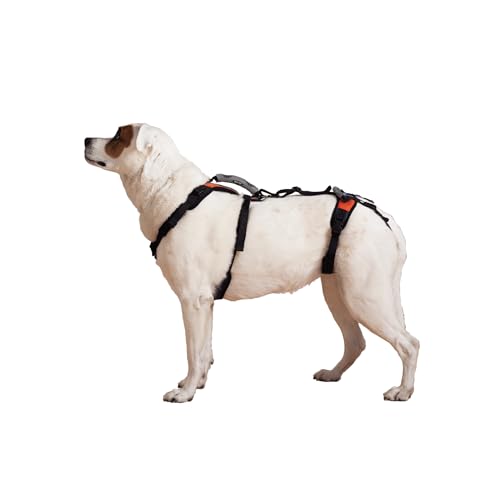
Help ‘Em Up Dog Lift Harness (Conventional, Medium)

RIXBEO Full Body Dog Lift Harness (Oxford Cloth, L)
More Details On Our Top Picks
This one keeps things deliberately simple: a padded sling that wraps the hindquarters, giving you a solid grip point when your dog’s back legs stall out mid-walk. PetSafe has been in the pet-mobility space long enough that sizing runs predictable, which matters when you’re ordering online for a stiff-hipped Lab.
In practice, it shines for short assists rather than full weight-bearing lifts. Think helping an aging retriever over the last porch step or steadying him through a grassy stretch where traction gets tricky. Owners commonly report it works best as a training aid during recovery, not a wheelchair substitute.
Strong Points
- Padded contact area spreads pressure across the hips instead of digging into one spot
- Lightweight enough to leave in the car or hang by the door for spontaneous walks
- Comes from a brand with established customer support channels if sizing goes wrong
- Simple slip-on design means less wrestling with a dog who already hurts
Things To Consider
- Rear-only coverage won’t help dogs whose front legs also weaken
- The fabric lining can hold odor after heavy use, so plan on regular washing
Who It Suits Best
Families caring for a large senior dog who needs occasional steadying on walks and stairs, not constant lifting.
A Better Fit Elsewhere
Dogs needing chest-to-tail support do better with the RIXBEO Full Body Dog Lift Harness later in this list.
Where the PetSafe sling stays minimal, OneTigris goes the other direction with a structured vest built like tactical gear. That construction shows up in the stitching density and webbing, which is exactly what you want when your dog weighs sixty pounds or more and every lift counts.
The Invictus vest wraps both the torso and hindquarters, so you get two grab points instead of one. For a muscular breed recovering from cruciate surgery, that second handle lets you counterbalance the front half while supporting the rear. The trade-off is bulk: this isn’t something you’ll forget your dog is wearing, and warm-climate owners may find the coverage runs hot in summer.
Highlights
- Full-body wrap gives you front and rear handles for balanced lifting
- Reinforced webbing holds up to repeated use with heavy breeds
- Vest shape stays put better than loose slings during stair climbs
- Sizing chart spans multiple girth ranges, reducing guesswork for broad-chested dogs
- Adjustable straps let you dial in fit as muscle tone changes during recovery
Worth Noting
- Heavier fabric than mesh alternatives, which some dogs resist at first
- More straps mean a longer learning curve the first few times you suit up
Feature Snapshot
Made For
Owners of powerful large breeds, especially post-surgery dogs who need genuine weight-bearing help twice a day.
Swap It Out When
A smaller or heat-sensitive dog will be happier in the breathable CNEO Dog Lift Harness for Medium Large Dogs.
Budget slings often fail at the attachment points, and that’s precisely where this S-ETOVUS model spends its engineering. A reinforced steel ring anchors the strap system, and hook-and-loop fastening (the Velcro-style closure that grips fabric to itself) keeps the band from sliding around on short-coated dogs.
The adjustable straps are the real story here. You can lengthen or shorten them to shift load off your own back, which matters more than most first-time buyers expect. Anyone hoisting a seventy-pound shepherd up stairs twice daily learns quickly that ergonomics go both ways. Compared with the OneTigris vest above, this is lighter gear for lighter duty, and the honest read is that it fits that role well.
Upsides
- Steel-reinforced ring adds a safety margin at the highest-stress point
- Hook-and-loop closure prevents the spin and bunching common with plain slings
- Strap length adjustment reduces strain on your shoulders and lower back
- Price sits well below premium systems, easy to justify for temporary recovery periods
Small Caveats
- Hook-and-loop fasteners collect lint and hair, so they need periodic cleaning to stay grippy
- No padding spec is published, so very bony dogs may want a towel layer underneath
Quick Facts
Right Fit For
Cost-conscious owners managing a temporary recovery, such as a torn ligament healing over eight to twelve weeks.
Reach For A Different Pick When
Long-term daily use justifies stepping up to the Help ‘Em Up Dog Lift Harness with its patented hip-lift design.
Nobody talks about the bathroom problem until they live it. Most rear slings have to come off before a male dog can relieve himself, which turns every walk into a strip-down routine. CNEO solved that with a groove cut into the underside of the carrier, letting your dog do his business without removing anything.
That single design choice makes this the pick for all-day wear. Add an independent sponge-padded handle (the foam insert that cushions your palm during lifts) and a breathable body panel, and you’ve got a harness built for hours rather than minutes. Against the S-ETOVUS sling, you’re trading a bit of adjustability for significantly better wearability.
Reasons To Buy
- Under-carrier groove allows urination and defecation without removal
- Sponge-filled handle protects your hand on longer assist sessions
- Breathable panels reduce overheating during extended wear
- Adjustable fit accommodates medium and large frames alike
Points To Note
- The cutout design means slightly less surface contact, so maximum lift capacity may feel lower than full-wrap slings
- Sponge padding compresses over time with daily use, a common report among long-term owners
Who Will Love This
Households whose male senior dogs wear a harness through entire walks and yard sessions without breaks.
Consider Something Else When
Maximum lifting force for a very heavy dog points toward the OneTigris Full Body Lifter instead.
Some mobility aids live permanently by the front door. This one is designed to travel. Sunsleek includes a portable storage bag, so the whole kit tucks into a glovebox or suitcase, ready for hotel stays, vet visits, or a weekend at the cabin where floors turn slick.
Setup follows the standard sling formula: wrap the band around the hindquarters, cinch the straps to a snug fit, and grip the handles when your dog needs a boost. It’s the kind of product that rewards simplicity, though that also means fewer refinements than the CNEO’s potty cutout or the Help ‘Em Up’s patented geometry. For occasional use, that’s a fair trade.
Bright Spots
- Included carry bag makes it genuinely portable between home, car, and travel
- Sturdy handles give confident grip during sudden stumbles
- Strap adjustment covers a range of large-dog body shapes
- Fast on-and-off suits dogs who tolerate gear for short windows only
Softer Spots
- Basic feature set lacks extras like potty access or leash attachments
- Storage bag adds a small item to keep track of between uses
At A Glance
Built With In Mind
Active families who travel with an aging dog and want backup support that packs down small.
Not Your Match When
Round-the-clock home care calls for the structured ROZKITCH rear support aid reviewed next.
Rehab situations have their own rhythm: short assisted walks, several times a day, often with a weak or wobbly dog who can’t tell you when something pinches. ROZKITCH built this grey sling around that scenario, pairing a soft underbelly lining with a heavily cushioned handle that spares your palm during repeated lifts.
The manufacturer positions it for degenerative myelopathy, hip dysplasia, ACL tears, and IVDD recovery, which is a wide clinical range for one product. In real terms, it handles steady walking assistance best. Owners commonly note the breathable lining matters most in warmer months, when a sweaty belly can make a reluctant dog even more resistant to gear.
Plus Points
- Thick handle padding protects your hand across many daily lifts
- Soft, breathable belly lining keeps skin comfortable during rehab schedules
- Rated for conditions from arthritis to post-surgical ACL rehabilitation
- Grey colorway hides dirt better than lighter fabrics between washes
- Helps dogs tackle stairs and thresholds they’d otherwise avoid entirely
Honest Caveats
- Rear-only design assumes the front legs still carry their share reliably
- Machine washing frequency depends on your dog’s coat; heavy shedders will clog the lining faster
Core Details
Whose Shelf It Belongs On
Owners following a vet-directed rehab plan who need dependable, repeatable lifting support several times daily.
Another Choice May Suit
Dogs over eighty pounds with full-body weakness belong in the Help ‘Em Up Conventional harness instead.
This is the category’s benchmark, and the price reflects it. The Conventional version uses patented hip-lift technology: a shaped rear panel engineered to cradle the pelvis so lifted weight distributes evenly instead of concentrating on joints, ligaments, the abdomen, or the bladder. That last detail matters enormously for dogs wearing a harness most of the day.
Cushioned, breathable padding keeps long wear sessions tolerable, and the size chart runs from ten pounds all the way to 225, covering nearly every dog alive. Stairs, walks, and potty breaks all work without removal. Compared with every sling above, you’re paying for engineering rather than fabric, and for chronic conditions that math usually works out.
Standout Traits
- Patented hip-lift panel spreads load away from vulnerable joints and organs
- Five-size range spans 10 to 225 pounds, rare coverage in this category
- Designed for extended wear, not just lift-assist moments
- Potty-friendly layout avoids the removal dance on every walk
- Breathable cushioning suits dogs sensitive to heat buildup
Room For Improvement
- Higher cost than basic slings, hard to justify for short recoveries
- Proper fitting takes patience; an incorrect adjustment undermines the weight distribution benefit
Details At A Glance
Best Suited To
Owners managing chronic hind-leg weakness, degenerative conditions, or permanent mobility loss in a medium dog.
Look Elsewhere When
A twelve-week surgical recovery is better served by the budget-priced S-ETOVUS Adjustable sling.
Oxford cloth (a tightly woven fabric known for abrasion resistance) gives this RIXBEO harness a tougher shell than typical mesh slings, which translates to better durability against claws, doorframes, and gravel. The full-body layout supports the chest, belly, and hind legs together, giving you steering control as much as lifting power.
That control angle is what separates it from the rear-only picks earlier in this list. Guiding a disoriented senior dog into a car or through a crowded vet lobby takes directional input, not just upward force. Depending on your climate, the denser fabric may run warmer than mesh, so shorter sessions suit it best.
What We Like
- Oxford cloth shell resists snags and everyday abrasion
- Full-body coverage supports chest, belly, and rear legs simultaneously
- Gives handlers directional control for cars, stairs, and tight spaces
- Large size accommodates bigger senior breeds comfortably
Minor Gripes
- Woven fabric traps more heat than ventilated mesh designs
- Spot cleaning works best; aggressive machine cycles can shorten fabric life
The Right Fit
Owners of large seniors who need guidance and stability through daily routines more than raw lifting strength.
Where A Sibling Pick Shines
Hot climates and long walks favor the breathable CNEO harness with its ventilated panels.
What Matters Most Before Choosing Hip Harnesses For Dogs
Match The Design To The Diagnosis
A rear sling helps a dog whose front legs still work. Full-body vests suit dogs losing strength everywhere. Hip dysplasia, IVDD, and cruciate tears each stress different contact points, so ask your vet which regions need support before ordering. Buying the wrong coverage type is the most common regret in this category.
Fit Beats Features Every Time
Measure neck girth, chest girth, and back length while your dog stands naturally, then compare against the manufacturer’s chart rather than guessing from weight alone. A harness that rides up or twists will rub sore spots within days. Adjustable straps buy forgiveness, but only within a size range.
Think About Your Own Body Too
Lifting forty pounds of dog repeatedly taxes your back and shoulders. Padded handles, length-adjustable straps, and dual grab points all reduce handler fatigue. Caregivers with limited strength should prioritize ergonomic handles over extra features.
Plan For Wear And Cleaning
These harnesses live close to fur, dirt, and accidents. Removable pads and machine-safe fabrics save real time over months of use. Darker colors hide grime between washes, which sounds trivial until you’re laundering gear three times a week.
Key Considerations Across These Picks
Traps First Timers Fall Into
The biggest mistake is buying for current weight instead of standing measurements, then discovering the sling slides off a narrow-hipped dog. Second is choosing rear-only support for a dog whose front end also wobbles. Both errors are avoidable with five minutes of measuring and an honest look at how your dog moves.
Where The Extra Money Goes
Premium models like the Help ‘Em Up spend their price on patented weight distribution, multi-hour padding, and wider size ranges. Basic slings cover short recoveries perfectly well. The upgrade pays off when a condition becomes permanent and the harness shifts from occasional tool to daily equipment.
Frequently Asked Questions
Can a hip harness replace a wheelchair?
No, these harnesses assist a dog who can still bear partial weight. Dogs with complete hind-leg paralysis typically need cart-based mobility support prescribed alongside veterinary care.
How long can my dog wear one each day?
Short assist sessions of fifteen to thirty minutes suit most slings, while padded full-body designs tolerate longer wear. Watch for rubbing, heat buildup, or restlessness as signals to remove it.
Do these work for puppies after surgery?
Yes, provided the size chart matches a growing frame and your surgeon approves weight-bearing limits. Recheck fit frequently since young dogs change shape quickly.
How do I measure my dog correctly?
Measure neck girth, widest chest girth, and back length from shoulder blades to tail base while your dog stands square. Compare those numbers directly against the specific product’s chart.
Are lift harnesses safe for climbing stairs?
They’re designed for exactly that, with the handler bearing part of the load while the dog does the climbing. Move slowly, keep the leash short, and never lift a dog fully off the steps.
Closing Thoughts
The right harness comes down to honest assessment: how much weight your dog has lost, how long the condition will last, and how much lifting your own body can absorb. Start with accurate measurements, match the coverage to the diagnosis, and don’t pay premium prices for a six-week recovery. Your dog’s next good walk might be closer than it looks.
