

Big dogs test boundaries in ways small dogs never will. A determined Labrador or a stubborn Rottweiler can blow through a weak signal or ignore a mild correction, which is why containment systems built for larger breeds matter so much. This roundup covers eight options spanning buried-wire kits and GPS-based collars, so you can match the system to your yard size, your dog’s temperament, and how much digging you’re willing to do.
The Shortlist At A Glance
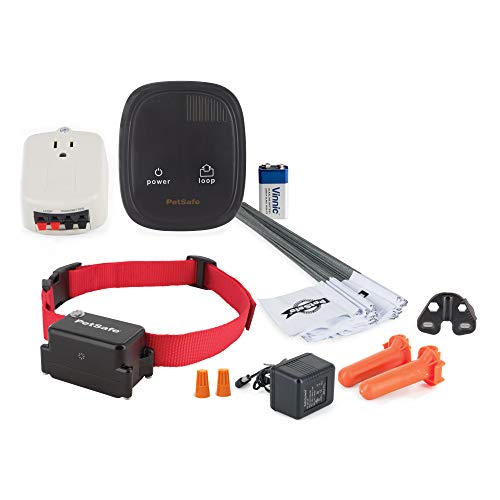
PetSafe Stubborn Dog In-Ground Fence

Halo Collar 5 GPS Wireless Dog Fence (Graphite)

PetSafe YardMax In-Ground Fence (1/3 Acre)
DJNFGQ GPS Wireless Dog Fence Collar

Dogtra GPS Fence IPX9K Waterproof Collar

PcEoTllar Underground Dog Fence System, 2 Collars

PetSafe Rechargeable In-Ground Fence (1/3 Acre)

PetSafe Guardian GPS Dog Fence
More Details On Our Top Picks
Some big dogs simply don’t respect a gentle warning tone. This PetSafe kit is aimed squarely at that dog: the one who barrels through standard correction levels without slowing down. You supply your own boundary wire, which means you choose the gauge and length to fit your property instead of settling for what’s boxed.
The trade-off is real work. Burying wire around a half-acre lot takes an afternoon with a trencher, less if you rent one. In exchange you get a fixed, weatherproof boundary that never drifts the way GPS signals occasionally do, plus access to support plans covering drops, spills, and breakdowns at no added repair cost.
Strong Points
- Higher correction range suits dogs that shrug off milder systems
- Bring-your-own wire lets you scale coverage to any lot shape
- Optional protection plans cover parts, labor, and shipping on repairs
- Claims can be filed online or by phone, often approved within minutes
Things To Consider
- Wire is sold separately, so budget for the spool before installation day
- Buried systems need occasional wire-break checks after landscaping work
Who It Suits Best
Owners of persistent, high-drive large breeds who want a permanent wired perimeter and don’t mind installing it themselves.
Where Another Pick Suits Better
Renters or anyone avoiding excavation should look at the PetSafe Guardian GPS Dog Fence, which sets boundaries without touching a shovel.
The Halo Collar 5 leans on hardware most competitors don’t carry. It reads both L1 and L5 satellite frequencies, then layers in corrections from a network of ground stations, which is how it claims positioning accurate to roughly two feet of your dog’s actual spot. For a 90-pound dog charging a property line, those two feet are the difference between a warning and an escape.
Compared with the buried-wire PetSafe options earlier on this list, setup takes minutes rather than weekends. The catch is cost: this sits near the top of the price range here, and you’ll want to confirm which subscription tier fits your usage before committing. Owners in dense tree cover generally report steadier tracking than with single-frequency collars, though no GPS system is flawless under heavy canopy.
What We Like
- Dual-frequency GPS with ground-station corrections tightens location accuracy
- No wire to bury, so boundaries move when you move house
- Drift prevention helps the boundary stay where you drew it
Worth Noting
- Premium pricing puts it well above basic radio systems
- GPS accuracy depends partly on sky view, so wooded lots may see some wobble
Made For
Tech-comfortable owners of large properties who want app-driven boundaries and precise tracking without digging anything.
A Better Fit Elsewhere
Shoppers watching their budget will find the DJNFGQ GPS Wireless Dog Fence Collar covers the same no-wire concept at a fraction of the spend.
Most in-ground fences correct your dog before he reaches the wire, which eats usable yard space. YardMax flips that logic: the correction happens after the line is crossed, so nearly every foot inside the boundary stays playable. On a third-of-an-acre lot, that recovered strip adds up fast, especially for a big dog who needs room to stretch out at full speed.
The kit ships with 500 feet of 20-gauge wire, enough for the base coverage, and PetSafe sells add-a-dog collars separately as your pack grows. Installation still means trenching, same as the Stubborn Dog model above, but the payoff is a boundary that feels invisible to your dog until it matters. For most suburban yards, that balance of space and security lands right where owners want it.
Highlights
- Correction triggers beyond the wire, preserving maximum play area
- 500 feet of included wire covers the stated 1/3-acre footprint
- Add-a-dog collar compatibility grows with your household
- Fixed radio boundary doesn’t depend on satellite signal quality
Minor Gripes
- Thin 20-gauge wire is more prone to breaks than heavier gauges during yard projects
- Digging is unavoidable, which rules out renters and rocky soil
Quick Facts
Right Fit For
Suburban homeowners with a third of an acre or less who want every square foot usable for a large, energetic dog.
Swap It Out When
Lots larger than an acre call for the PcEoTllar Underground Dog Fence System, whose wire supply stretches to roughly 4/5 acres.
Not everyone wants to spend Halo money on containment. This single-collar GPS unit from DJNFGQ handles the core job, drawing a circular boundary from satellite signals and triggering corrective feedback as your dog approaches the edge you’ve set. There’s no transmitter box, no wire, and no recurring fee to keep the fence alive.
You give up refinement for that price point. Expect simpler boundary shapes than the Dogtra’s custom layouts, and accuracy that depends more heavily on open sky. For a fenced-feeling yard on open, unobstructed land, though, it does the job. First-time owners testing whether a GPS fence suits their dog before upgrading later often start here, and that’s a sensible path.
Plus Points
- No subscription keeps long-term ownership costs flat
- Two operating modes let you tailor feedback intensity
- Single-collar pack suits one-dog homes without paying for extras
Small Caveats
- Circular-only boundaries won’t match irregular property lines
- Entry-level build quality suggests gentler handling than premium collars
Who Should Grab It
Budget-minded owners of one large dog on open, treeless property trying GPS containment for the first time.
Consider Something Else When
Irregular lot shapes and layered safety zones point toward the Dogtra GPS Fence, which supports custom-shaped boundaries.
Dogtra built its reputation on e-collars for hunting dogs, and that field-test pedigree shows here. The GPS Fence stacks four layers of protection: a warning zone, the primary boundary, and two backup fences behind it. A determined Great Dane has to defeat three lines before he’s actually loose, which is the kind of redundancy worth paying for with escape artists.
Setup runs through the free companion app, where you draw circular or fully custom boundaries matching your property’s odd angles. Once saved, the collar works standalone, and the app isn’t needed day to day. The IPX9K rating means high-pressure water exposure won’t kill it, useful for dogs who treat every puddle as a swimming pool. One honest limitation: Dogtra specifies outdoor use on properties of 3/4 acre or larger, and the collar should come off indoors.
Bright Spots
- Four-layer boundary design backs up the main fence with two reserves
- Custom-shaped fences follow irregular property lines, not just circles
- IPX9K waterproofing survives heavy rain, mud, and lake days
- Up to 30 stored fences suit multi-property owners
- No monthly fees once the system is configured
Points To Note
- Minimum 3/4-acre requirement excludes small urban yards
- Collar must be removed indoors, adding a daily routine step
Feature Snapshot
Who Will Love This
Owners of large rural or semi-rural properties with strong-swimming, fence-testing dogs who need layered containment.
Reach For A Different Pick When
Smaller suburban lots fit the PetSafe YardMax better, since its wired boundary works reliably at 1/3 acre.
Two big dogs usually means buying a second collar within a month. PcEoTllar skips that step by including two receiver collars in the box, alongside enough underground wire to enclose roughly 4/5 of an acre. Compared with the single-dog DJNFGQ unit above, the math favors this one immediately for multi-dog homes.
Installation follows the familiar pattern: lay the wire, connect both ends to the transmitter, power everything on. The kit includes testing tools, and a tag card helps you mark where the wire runs so future gardening doesn’t slice through it. Build quality sits in budget territory, so treat the collars carefully and check contact points regularly. Still, for covering two large dogs across a big lot, few options touch its value.
Reasons To Buy
- Two collars included, ready for a two-dog household from day one
- Nearly an acre of coverage from the supplied wire
- Buried wire stays out of sight and out of trip paths
- Tag card system makes locating the boundary line simple later
Softer Spots
- Budget-grade components warrant careful handling and periodic checks
- Wire burial is labor-intensive on larger perimeters
At A Glance
Whose Shelf It Belongs On
Households with two large dogs and a sizable yard who want wired reliability without per-collar add-on costs.
Another Choice May Suit
Single-dog owners with modest yards save money and effort with the PetSafe Rechargeable In-Ground Fence instead.
Disposable batteries are the quiet annoyance of wired fence ownership. This PetSafe kit solves it with a rechargeable receiver collar that tops up in two to three hours and typically runs up to two months per charge depending on use. Plug it in overnight once every couple of months and forget about it, which is how containment should feel.
The base kit covers a third of an acre with its included 20-gauge wire, and PetSafe states the system expands to 25 acres with additional wire and flags sold separately. That headroom matters: start small now, grow into a bigger perimeter later without replacing the transmitter. Unlike the YardMax’s post-wire correction, this one warns before the line, trading a little play space for a simpler, proven design.
Standout Traits
- Rechargeable collar eliminates ongoing battery purchases
- A full charge lasts up to two months in typical use
- Expandable architecture scales from 1/3 acre toward 25 acres
- Adjustable collar strap fits neck sizes from 6 to 26 inches
Honest Caveats
- Pre-wire warning zone trims usable yard versus the YardMax layout
- Expansion wire and flags add cost as coverage grows
Details At A Glance
Best Suited To
Busy owners who want dependable wired containment with the least possible maintenance routine.
Look Elsewhere When
Maximum play space inside the boundary points back to the PetSafe YardMax, which corrects only after the wire is crossed.
PetSafe’s answer to the Halo Collar 5 trades some raw precision for brand-wide compatibility and a subscription-free promise. The Guardian uses the company’s AccuGuard GPS technology, designed to hold boundary accuracy steady where cheaper satellite collars tend to wander. Setup requires no digging and no wire, which makes it the natural pick for renters, new builds, and anyone who dreads trenching.
Coverage starts at 3/4 acre and scales upward, putting it in the same property-size class as the Dogtra. Where it differs is ecosystem: existing PetSafe households can consolidate on one brand’s collars and support. The honest caveat is that GPS accuracy still depends on sky visibility, so heavily wooded lots deserve realistic expectations regardless of which GPS collar you choose.
Upsides
- AccuGuard positioning aims to reduce boundary drift
- No wire burial, so setup finishes in minutes not weekends
- Suits properties of 3/4 acre and larger
- Fits naturally alongside other PetSafe gear you may already own
Room For Improvement
- Tree-heavy terrain can challenge any GPS-based boundary
- Large-lot minimum leaves small yards overserved
Core Details
The Right Fit
Renters and homeowners of open lots over 3/4 acre who want PetSafe reliability without permanent installation.
Where A Sibling Pick Shines
Maximum tracking precision on challenging terrain gives the edge to the Halo Collar 5 and its dual-frequency GPS array.
What Matters Most Before Choosing Invisible Fences For Big Dogs
Match The System To Your Dog’s Drive
A calm senior Mastiff and a young Malinois need very different correction ceilings. Wired systems like the PetSafe Stubborn Dog kit exist precisely because some large breeds ignore standard stimulation levels. Know your dog’s temperament honestly before picking a tier.
Yard Size Decides The Technology
Under half an acre, a buried-wire kit delivers the most reliable boundary per dollar spent. Past three-quarters of an acre, GPS collars such as the Dogtra and Guardian become practical, since running hundreds of extra feet of wire gets expensive and break-prone. Measure first, shop second.
Count The Ongoing Costs
The sticker figure is only the opening bid. Batteries, replacement collars for additional dogs, expansion wire, and subscriptions all accumulate. The rechargeable PetSafe and the fee-free GPS units keep recurring costs near zero, which matters over a five-year ownership span.
Installation Reality Check
Buried wire means a rented trencher, a weekend, and careful route marking for future landscaping. GPS means an app account and a charged collar. Neither is difficult, but only one fits a rental agreement without negotiation.
Key Considerations Across These Picks
Traps First Timers Fall Into
The most common mistake is buying for today’s puppy instead of next year’s full-grown dog. Check collar strap ranges and correction strength against adult size. Second mistake: skipping the training phase. Every manufacturer assumes two weeks of leash-guided boundary introduction, and skipping it is why some systems get returned.
The Case For Spending Up
Higher-tier units buy accuracy and redundancy. Dual-frequency GPS, backup fence layers, and waterproof ratings aren’t marketing fluff; they determine whether the boundary holds when a 100-pound dog tests it at full sprint. For easygoing dogs, budget gear suffices. For escape artists, the upgrade pays for itself in one avoided incident.
Frequently Asked Questions
Are invisible fences effective for large breeds?
Yes, provided the system offers correction levels strong enough for your dog’s temperament. Stubborn-dog rated kits and layered GPS systems handle high-drive breeds far better than entry-level units.
Do GPS fences work in wooded yards?
They work, but accuracy suffers under heavy canopy since satellites need clear sky view. Dual-frequency models like the Halo Collar 5 resist drift best in marginal conditions.
How long does buried-wire installation take?
Plan on a weekend for a typical quarter-to-half-acre loop using a rented trencher. Rocky soil or elaborate boundary shapes add time.
Can I use one system for multiple dogs?
Most transmitters support several collars. The PcEoTllar includes two collars outright, while PetSafe kits accept add-a-dog receivers purchased separately.
Do these systems replace a physical fence entirely?
They contain your dog but don’t block people, wildlife, or other animals from entering your yard. Homes near busy roads often pair a virtual boundary with physical barriers at the street side.
Wrap Up
Big dogs deserve boundaries built for their strength and stubbornness. Wire-based kits like the PetSafe YardMax and Rechargeable Fence deliver rock-steady containment for smaller lots, while the Dogtra and Guardian GPS units free you from shovels on larger properties. Match the system to your dog’s drive, your yard’s size, and your tolerance for installation work, and any of these eight will hold the line for years.
