

A dog that drags you down the sidewalk turns a ten-minute walk into an arm workout. The right leash changes that dynamic, absorbing lunges or redirecting momentum before your shoulder pays the price. This roundup covers eight options built for strong pullers, from shock-absorbing bungees to training attachments that work with gear you already own.
The Shortlist At A Glance

Leashrr 2.0 Heavy Duty Bungee Dog Leash 6FT (Purple)
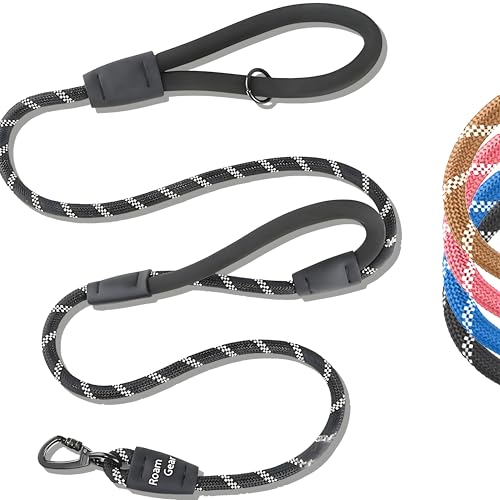
Roam Gear 6 Foot Rope Dog Leash (Black)

Peflex 20.1 ft Retractable Dog Leash

OneTigris No-Pull Dog Leash (Pink, 6FT)

PetBonus Heavy Duty Tactical Bungee Leash 5 FT

TwoEar Heavy Duty Tactical Bungee Leash 4-7FT
MiracleLeash No Pull Chest Loop Attachment
Telooco Two Point Control Dog Leash 4ft (Black)
More Details On Our Top Picks
This one bundles the features most puller owners end up buying separately: a bungee section that cushions sudden lunges, a carabiner-style clip for fast attachment, and a poop bag holder plus treat pouch so pockets stay empty. The six-foot length keeps a large dog close enough to manage on crowded sidewalks.
For anyone walking a strong medium or large breed twice a day, the shock-absorbing stretch is the part you’ll notice first. Your arm stops taking the full force of every lunge, which matters most on uneven pavement or slick winter ground.
Strong Points
- Bungee section softens hard pulls, sparing your shoulder during repeated lunges
- Carabiner clip attaches to collars or harnesses in seconds
- Built-in bag holder and treat pouch cut down what you carry by hand
- Reflective elements improve visibility on early morning or evening routes
- Padded handle stays comfortable through long walks
Things To Consider
- The bungee stretch adds slack, so precision heel work takes longer to dial in
- The pouch adds bulk some owners prefer to leave at home
Key Specs
Who It Suits Best
Daily walkers of strong medium-to-large breeds who want cushioning and convenience in one purchase.
A Better Fit Elsewhere
Runners logging miles should look at the Roam Gear 6 Foot Rope Dog Leash instead, since its weatherproof rope construction handles wet conditions better.
Where the Leashrr leans on elastic give, this Roam Gear lead takes a firmer approach: a weatherproof climbing-style rope with two extra padded handles spaced along its length. That second handle near the clip is what experienced owners grab when a dog spots a squirrel, because shortening your grip beats reeling in six feet of rope.
The locking carabiner is the other standout detail. Unlike standard snap hooks that can flex open under odd angles, a lockable gate stays shut through tugs and daily wear, which owners of escape-prone dogs tend to value highly.
Highlights
- Dual padded handles let you shorten grip instantly near traffic
- Lockable metal carabiner resists accidental gate openings
- Silicone-reinforced clamps add pull resistance where stress concentrates
- Weatherproof rope shrugs off rain, mud, and trail use
Worth Noting
- Rope has no stretch, so sharp lunges transfer more force to your hand than a bungee would
- Wet rope can feel heavier until it dries fully
Right Fit For
Joggers, hikers, and all-weather walkers who want firm, direct control over a pulling dog.
Swap It Out When
Owners whose arms ache from hard lunges will get more relief from the PetBonus bungee below, which cushions impact instead of resisting it.
A retractable lead gives a well-mannered dog room to explore while keeping a brake under your thumb, and this Peflex model extends to just over twenty feet. The reinforced nylon tape feeds smoothly, and a single click locks the reel, which is genuinely useful around other dogs or road crossings.
One honest note on retractables generally: they reward loose-leash behavior rather than fixing pulling. For dogs already past the worst of their dragging phase, though, the extra range makes neighborhood walks far more pleasant.
Upsides
- One-click brake and lock stops the reel instantly in busy areas
- Over 20 feet of tape gives dogs real sniffing freedom
- 360-degree swivel prevents the line from twisting as your dog circles
- Ergonomic non-slip grip stays secure in damp hands
- Reinforced nylon tape handles daily tension from dogs up to 100 lbs
Small Caveats
- Tape can burn bare legs if it runs across skin during a fast pass, a commonly reported retractable issue
- The housing mechanism needs occasional debris cleaning to keep retraction smooth
Feature Snapshot
Made For
Suburban walkers with dogs up to 100 pounds who want freedom and instant braking in one tool.
Not Your Match When
Anyone still fighting constant hard pulling should start with the MiracleLeash attachment instead, since a retractable amplifies rather than corrects that habit.
OneTigris builds this lead from 1000D nylon, a dense woven fabric known in tactical gear for resisting abrasion while staying light. That combination matters during training sessions, where you’re handling the leash constantly and heavy hardware gets old fast.
The dual padded handles sit at both ends, letting you switch between a relaxed walk length and a tight training grip without swapping equipment. Owners running structured obedience drills tend to appreciate how quickly that transition happens mid-session.
Bright Spots
- 1000D nylon construction balances toughness with low weight
- Two padded handles support both casual walking and close-control drills
- Six-foot length suits medium and large breeds per the sizing guidance
- Lightweight build reduces hand fatigue during long training blocks
Points To Note
- No bungee give, so sudden lunges land firmly in your palm
- Nylon webbing can fray at clip edges after years of hard use, so periodic stitching checks are wise
Who Will Love This
Training-focused owners of medium and large dogs who want durable, lightweight control hardware.
Another Choice May Suit
Walkers prioritizing lunge cushioning over training rigidity will prefer the TwoEar tactical bungee reviewed next.
The clever bit here is the frog clip, a spring-loaded clasp you operate one-handed. Anyone juggling a coffee, keys, and a lunging dog knows why that matters: clipping and releasing takes a single squeeze instead of a two-handed fight with a tiny latch.
Its five-foot bungee cord stretches under tension rather than snapping taut, which teaches a subtle lesson. Resistance builds gradually, so many dogs self-regulate their pace instead of hitting a wall, and your back absorbs far less of each surge.
Reasons To Buy
- One-hand frog clip locks and releases without fumbling
- 360-degree rotation keeps the line twist-free as your dog circles
- Gradual bungee resistance encourages dogs to ease their own pace
- Five-foot length sits between tight control and roaming room
Softer Spots
- Elastic sections collect mud and need a wipe-down after wet walks
- Shorter than six-foot leads, which some tall owners find restrictive
At A Glance
Who Should Grab It
Joggers and brisk walkers with energetic dogs who want cushioning plus fast clip operation.
Look Elsewhere When
Owners of very powerful breeds needing maximum strength ratings should step up to the TwoEar, rated for heavier tension loads.
Built for German Shepherds, Pitbulls, Labs, and similar powerhouses, this TwoEar lead carries a 250-pound tension rating backed by wear-resistant nylon and reinforced stitching. That figure describes the load the construction tolerates, not a promise about your dog, but it signals where this product sits in the lineup.
The bungee stretches from roughly 4.6 to 7 feet, converting sharp tugs into smoother deceleration. On trails or during jogging, that variable length also lets your dog drift ahead slightly without yanking you off stride, something fixed-length leads can’t do.
Standout Traits
- 250-lb tension tolerance suits genuinely strong breeds
- Stretch range from 4.6 to 7 feet adapts to walking versus hiking
- Reinforced stitching targets the stress points where cheaper leads fail
- Shock absorption eases strain on arms and shoulders during sprints
Honest Caveats
- Extra stretch means less precise positioning during formal heel training
- Tactical styling runs bulkier than slim everyday leads
Spec Overview
Whose Shelf It Belongs On
Owners of muscular breeds above 60 pounds who hike, jog, or simply lose tug-of-war battles.
Consider Something Else When
Smaller or gentler pullers don’t need this much capacity, and the lighter OneTigris lead handles them comfortably.
This isn’t a leash at all, and that’s the point. The MiracleLeash is a chest loop that clips onto any flat collar, martingale, or harness, then redirects forward momentum sideways so your dog naturally swings back toward you. No pressure on the throat, no face straps, no bulky specialty harness to buy.
It fits dogs from 15 to 120 pounds and works with standard leads, rope lines, even retractables. For owners happy with their current leash but frustrated by the pulling itself, this solves the actual problem instead of replacing working gear.
Plus Points
- Sideways redirection turns pullers gently without choking or gagging
- Attaches to existing collars and harnesses in seconds
- Compatible with nearly every leash type you may already own
- Suits a wide 15 to 120 lb weight range across breeds
Trade Offs
- Fit adjustment takes a few sessions to position correctly on deep-chested breeds
- Loop contact points deserve a quick check for wear each month, as with any contact gear
The Right Fit
Owners of persistent pullers who want a correction tool without replacing their current leash setup.
Where A Sibling Pick Shines
Dogs already walking politely who just want more freedom will enjoy the Peflex retractable’s long reach instead.
Steering a car with one wheel is hard; steering a pulling dog from a single collar point has the same flaw. This Telooco lead clips at two points, spreading force evenly and giving you genuine directional influence rather than a straight-line tug contest.
Designed around no-pull harness setups, the double-clip layout also lowers choking risk since load distributes across two anchor points. A soft handle and tangle-resistant routing keep four feet of lead manageable, and it converts to a single training leash when your dog earns the downgrade.
What We Like
- Two attachment points distribute pulling force and reduce choking risk
- Double-clip steering gives real directional control over strong pullers
- Converts to a single leash as training progresses
- Reflective material aids visibility in low light
- Soft handle stays comfortable during corrective work
Minor Gripes
- Four feet feels short for tall handlers or large-striding dogs
- Requires a harness or two attachment points, limiting collar-only setups
Core Details
Built With In Mind
Owners using front-clip or no-pull harnesses who want maximum steering authority during retraining.
Reach For A Different Pick When
Collar-only walkers should choose the Leashrr 2.0 bungee, which needs just one standard attachment point.
Choosing Wisely: What Matters Before You Buy
Match The Tool To The Behavior
Pulling has stages. A dog in full drag mode needs redirection, like the MiracleLeash chest loop, while a dog with decent manners benefits more from a retractable’s freedom. Buying a shock absorber for a dog that needs training wastes money, and vice versa.
Weight Ratings And Build Quality
Check the stated tension tolerance against your dog’s size and enthusiasm. Reinforced stitching at the clip junctions separates leads that last years from ones that fray within months. Nylon webbing and climbing-style rope dominate the durable end of this category.
Handle Design Changes Everything
Dual handles, padding, and quick-release clasps sound like luxuries until a squirrel appears. A second traffic handle near the clip lets you shorten grip instantly, and one-handed frog clips help when your other hand holds groceries or a phone.
Length For Your Environment
City sidewalks favor four to six feet; open trails justify retractables stretching past twenty feet. Match length to where you actually walk, not where you wish you walked.
Key Considerations Across These Picks
Traps First Timers Fall Into
The most common mistake is buying for the dog you hope to have rather than the one on the other end of the leash today. A 15-pound terrier doesn’t need a 250-lb-rated tactical lead, and a 90-pound Shepherd will overwhelm thin webbing. Measure your dog’s actual pull behavior, then buy one tier above it.
The Case For Spending Up
Higher-tier leads earn their cost through hardware: locking carabiners, reinforced stitching, and quality bungee cords that keep elasticity after hundreds of walks. Budget snap hooks are the usual failure point, so upgrading there pays off fastest for owners of strong breeds.
Frequently Asked Questions
Do bungee leashes actually stop pulling?
They reduce the physical strain of pulling by absorbing sudden force, which protects your arm and shoulder. They don’t train the behavior away on their own, so pair one with consistent loose-leash practice.
Are retractable leashes bad for pullers?
They can reinforce pulling by rewarding forward pressure with more length. They work best once a dog already understands leash manners.
Can a no-pull attachment replace a harness?
Options like the MiracleLeash chest loop redirect momentum using your existing collar or harness, so a specialty harness isn’t required. Fit and adjustment matter more than the category label.
How long should a leash be for a large dog?
Six feet remains the standard for controlled urban walking, balancing freedom with reaction time. Training sessions often benefit from shorter four-foot leads.
How do I know if a leash is strong enough?
Compare the manufacturer’s stated tension rating against your dog’s weight and pulling intensity. Reinforced stitching and metal carabiner hardware indicate higher load tolerance than basic snap hooks.
Wrap Up
Every dog on this list pulls for a different reason, so the right answer depends on yours. Start with the behavior: redirection tools like the MiracleLeash for chronic pullers, bungee cushioning like the TwoEar for powerful breeds, and the Telooco two-point lead for harness-based retraining. Whichever route fits, a calmer walk is usually one good piece of hardware away.
