

A strong dog can turn a pleasant walk into a tug of war in seconds. The right leash changes that dynamic entirely, giving you leverage, comfort, and a secure connection when your dog surges ahead. This roundup covers eight options built for pullers, from padded dual-handle leads to shock-absorbing bungees and slip leads for training sessions.
The Shortlist At A Glance
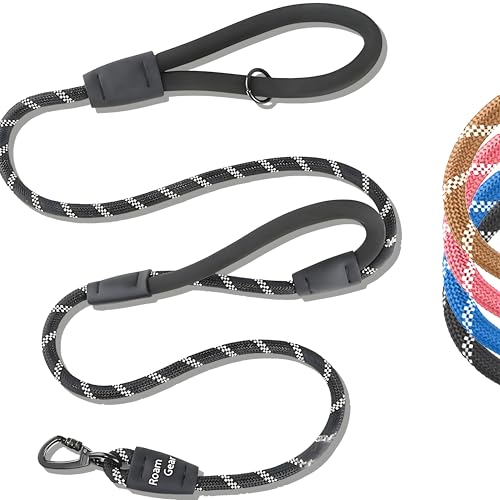
Roam Gear 6 Foot Rope Leash with Padded Handles (Black)

Tpotato Fuchsia Reflective Nylon Leash with Traffic Handles

Peflex 20.1 ft Retractable Dog Leash for Dogs 10–100 lbs
BEAUTYZOO Medium No Pull Step-In Harness and Leash Set

AIRUIDOG Heavy Duty Tactical Bungee Dog Leash

viunimo Slip Lead for Dogs 6FT Nylon Training Leash (Green)

PetBonus Heavy Duty Tactical Bungee Leash, 5 FT
Tochibabe Green 6FT Heavy Duty Slip Lead
More Details On Our Top Picks
A six-foot rope lead sounds ordinary until you notice the two extra-padded handles and the locking carabiner at the clip end. That carabiner matters more than most shoppers realize: a locking gate resists accidental release far better than a basic snap hook, which is exactly what you want from a dog that lunges.
The rope construction is weatherproof, so rain-soaked morning walks and muddy trail hikes won’t ruin it. Owners commonly report the silicone-reinforced clamps hold up to repeated tugging without fraying, and the reflective elements earn their keep on dark winter evenings.
Strong Points
- Locking metal carabiner keeps the connection secure through hard pulls
- Two padded handles let you shorten your grip near traffic without swapping gear
- Weatherproof rope shrugs off rain, snow, and daily mud
- Silicone clamps reinforce the points where pulling stress concentrates
- Reflective threading improves visibility on night walks
Things To Consider
- Rope leads collect dirt in the weave, so an occasional hand wash keeps them fresh
- The second handle adds a little weight compared to single-grip leads
Key Specs
Who It Suits Best
Active owners who walk, run, or hike daily with a medium-to-large puller and want one dependable lead for every scenario.
Where A Sibling Pick Shines
Shoppers who prefer a lighter nylon webbing feel over rope should look at the Tpotato fuchsia leash, which trades the carabiner for a lighter everyday carry.
Where the Roam Gear rope goes rugged, this Tpotato lead goes light. The nylon webbing weighs almost nothing in hand, yet it still carries two padded grips: a standard handle at six feet and a short traffic handle roughly a foot and a half down the line. That second grip is the whole point for puller owners, since hauling a lunging dog close by the main handle strains your wrist fast.
The bright fuchsia color is more than styling; paired with reflective stitching, it makes both of you visible on dim streets. It suits small, medium, and large breeds alike, and the included car seat belt attachment is a quiet bonus for road trips.
Bright Spots
- Traffic handle gives instant close control in crosswalks and crowded sidewalks
- Featherweight nylon reduces hand fatigue on long walks
- Reflective material improves low-light safety
- Car seat belt loop adds travel convenience without extra purchases
Worth Noting
- Nylon webbing can feel abrasive in bare hands during sustained hard pulling, though the padding helps
- The vivid color won’t suit everyone’s taste
Made For
Urban walkers who navigate traffic, crowds, and apartment elevators with a dog that bolts toward distractions.
Swap It Out When
Trail hikers dealing with mud and heavy wear will get longer service from the weatherproof Roam Gear rope leash instead.
Retractable leads get mixed press among trainers, but for sniff-heavy walks in open parks they solve a real problem: your dog gets freedom while you keep a brake in hand. This Peflex model extends to just over twenty feet and covers dogs from ten to a hundred pounds, which spans nearly every household pet.
The one-click brake and lock respond quickly, and the tape-style nylon line is reinforced for daily pulling rather than the flimsy cord some budget retractables use. A 360-degree swivel at the line exit prevents twisting as your dog circles trees and posts. The ergonomic grip stays comfortable even when your dog hits the end of the line at speed.
Reasons To Buy
- Twenty-foot range lets energetic dogs explore without going off-leash
- One-click brake stops forward motion immediately
- Reinforced nylon tape handles repeated pulling better than thin cords
- Swivel mechanism stops the line from knotting around the housing
Small Caveats
- Retractables reward constant attention; a locked line plus a sprinting dog transfers real force to your arm
- The housing is bulkier in a jacket pocket than a flat lead
Feature Snapshot
Right Fit For
Suburban and park-based owners of curious, scent-driven dogs who want controlled freedom rather than heel-position walking.
Another Choice May Suit
Anyone doing formal loose-leash training will progress faster with the viunimo slip lead, which keeps the dog close and feedback immediate.
Sometimes the leash isn’t the problem; the attachment point is. A collar concentrates all that pulling force on the throat, while a vest harness spreads it across the chest. This BEAUTYZOO set pairs a step-in vest with a matching lead, so you get a coordinated system instead of mismatched pieces.
The step-in design is genuinely easier than overhead harnesses for wiggly dogs: paws go in, the vest clips up the back, done. Sizing runs by measurement rather than breed, with the medium fitting a 14-inch front chest and an adjustable belly girth of roughly 21 to 26.7 inches. Measure carefully, and size up when your dog sits between two sizes.
Plus Points
- Step-in vest removes pressure from the throat during pulls
- Matching harness and leash arrive as one coordinated set
- Adjustable belly strap accommodates different body shapes within the size
- Soft padding suits daily wear for sensitive-coated dogs
Honest Caveats
- Sizing depends entirely on accurate measurements, and returns for fit are a common hassle in this category
- Front chest dimension is fixed, so deep-chested breeds may need the larger size
Whose Shelf It Belongs On
Owners of medium-sized dogs with collapsing-trachea concerns or strong neck pressure who want a gentle, ready-to-go setup.
Not Your Match When
You already own a well-fitted harness and only need a lead; the AIRUIDOG tactical bungee delivers more pulling-specific hardware for that scenario.
This is the lead you buy when “puller” means a seventy-pound dog with opinions. The frog clip is machined from aviation aluminum and rated to hold up to 200 pounds, with an auto-locking gate that closes itself after each attachment. That auto-lock detail matters: ordinary snap hooks can bounce open under vibration, and a determined dog exploits any weakness.
The zero-shock bungee section stretches to absorb lunges, converting a violent jerk into a decelerating pull. Your shoulder notices the difference on walk one. A 360-degree rotating swivel keeps the line untangled, and the tactical webbing aesthetic holds up to rough handling, mud, and repeated soaking.
Standout Traits
- Aluminum frog clip rated to 200 lbs survives serious force
- Auto-lock gate re-engages automatically after clipping in
- Bungee core cushions sudden lunges for both of you
- Full rotation at the clip prevents twisting and knots
- Quick-release operation works with one hand
Points To Note
- The stretch section adds length, so tight sidewalk navigation takes a few walks to calibrate
- Bungee cords gradually lose elasticity over years of hard use, a widely reported trait of the design
At A Glance
Who Will Love This
Handlers of strong large breeds, including reactive or prey-driven dogs, who need hardware rated well beyond their dog’s weight.
Look Elsewhere When
Small-dog households don’t need 200-lb hardware; the Tochibabe slip lead covers petite pullers with less bulk and cost.
A slip lead combines collar and leash into one looped rope, and trainers have relied on the format for decades because feedback travels instantly. There’s no harness to wrestle on and no clip to fail; slide the adjustable ring over the head, snug the fixed stopper, and you’re walking. For a dog still learning not to pull, that immediacy is the entire training advantage.
This viunimo version comes as a two-pack of quarter-inch by six-foot nylon ropes, which is handy for keeping one in the car and one by the door. The slim diameter suits small and medium necks best, and six colorways make multi-dog households easy to organize.
What We Like
- Two leads per pack cover home, car, or backup duty
- No collar or harness needed, so getting out the door takes seconds
- Adjustable slider fits virtually any small-to-medium neck
- Immediate gentle feedback helps teach loose-leash habits
Trade Offs
- Slip leads require correct placement high on the neck; worn loosely they lose their training effect
- The quarter-inch rope is too slender for large, powerful breeds
Best Suited To
Training-focused owners of puppies and small-to-medium dogs practicing loose-leash walking at home or in class.
Consider Something Else When
Walkers who want hands-free comfort and traffic control will prefer the dual-handle Tpotato leash for everyday city use.
The PetBonus takes the same bungee concept as the AIRUIDOG and tunes it differently. Its elastic core doesn’t just absorb shocks; it ramps resistance gradually, so a lunging dog meets increasing pushback instead of an abrupt stop. Many owners find that gentler curve helps dogs self-regulate their pace, which quietly supports leash training rather than fighting it.
The five-foot length sits shorter than a standard six-footer, trading a little roaming room for tighter control. The one-hand frog clip locks and releases smoothly, and its 360-degree rotation keeps the line from corkscrewing when your dog spins after squirrels.
Highlights
- Progressive bungee resistance teaches pace instead of punishing lunges
- One-hand frog clip makes clipping in quick and secure
- Full swivel prevents tangling during spins and direction changes
- Five-foot length offers closer control in busy areas
Softer Spots
- Shorter length may feel restrictive for dogs used to six-foot leads
- Elastic sections need periodic inspection for wear, as with any stretch cord
The Right Fit
Owners working on leash manners with a lunge-prone dog who want equipment that reinforces calm walking.
Where Another Pick Suits Better
Maximum-strength situations call for the AIRUIDOG’s 200-lb aluminum clip; choose PetBonus for training intent over raw holding power.
This green rope slip lead covers the same territory as the viunimo two-pack but as a single, slightly beefier rope aimed at small and medium breeds like French Bulldogs, Poodles, Beagles, and Dachshunds. The P-shaped design loops over the head, adjusts to any neck size, and eliminates the collar-and-clip routine entirely.
At six feet with a quarter-inch diameter, it balances control with enough slack for a comfortable walking rhythm. The rope feels substantial in hand without being heavy, and the simple construction means there’s essentially nothing to break, jam, or maintain beyond an occasional rinse.
Positives
- Collar-and-leash in one piece simplifies every outing
- Adjustable loop accommodates any small or medium neck
- Six-foot length gives room to move while staying connected
- Minimal hardware means fewer failure points over time
Minor Gripes
- Single-pack format costs more per lead than the viunimo pair
- Slender rope demands proper high-neck placement to work as intended
Quick Facts
Who Should Grab It
Owners of compact breeds, from Dachshunds to Beagles, who want a no-fuss training lead that lives by the door.
Reach For A Different Pick When
Multi-dog homes get better economics from the viunimo two-pack, while big pullers need the AIRUIDOG’s heavier hardware.
What Matters Most Before Choosing Leashes For Pulling Dogs
Match The Hardware To The Pull
A leash rated for a beagle’s enthusiasm fails fast against a husky’s shoulders. Check the clip material and stated load capacity first: aviation aluminum with a locking gate outlasts basic zinc snaps under repeated strain. Rope and reinforced nylon tape also resist abrasion better than thin webbing once your dog drags the line along pavement.
Handle Placement Changes Everything
Dual-handle designs put a traffic grip about eighteen inches from the clip, letting you gather the lead instantly near roads, cyclists, or other dogs. Single-handle leads force you to wrap excess line around your fist, which burns skin during a lunge. Commuters and city dwellers benefit most from the second grip.
Think About Shock, Not Just Strength
A bungee section converts sudden jerks into gradual deceleration, sparing your shoulder and your dog’s neck alike. That cushioning also has a training side: progressive resistance teaches pacing better than a hard stop. Strong, reactive, or adolescent dogs are the clearest beneficiaries here.
Consider The Attachment Point
For persistent pullers, a no-pull vest harness distributes force across the chest instead of concentrating it on the throat. Sets like the BEAUTYZOO bundle harness and lead together, which removes guesswork. Measure chest and girth before ordering, since harness sizing follows body dimensions rather than weight charts.
Key Considerations Across These Picks
Traps First Timers Fall Into
The most common mistake is buying for looks instead of load rating. A slim fashion lead on a powerful breed wears through at the clip within months, a pattern owners report constantly. The second trap is skipping the tape measure on harnesses; guessing by breed usually ends in a return shipment. Finally, retractables demand active braking habits, so they’re a poor match for distracted walkers.
When Paying More Pays Off
Higher-tier leads spend their budget where failure hurts: locking aluminum clips, reinforced stress points, and genuine shock absorption. For dogs under forty pounds with mild pulling, budget slip leads do the job well. Past that threshold, upgraded hardware pays for itself in durability and in the wear it saves on your joints.
Frequently Asked Questions
Are bungee leashes good for dogs that pull?
Yes, because the elastic section absorbs lunge force before it reaches your arm. They also apply gradual resistance, which many dogs learn to read as a cue to slow down.
Is a slip lead safe for puppies?
It can be, provided the loop sits high on the neck and stays snug behind the ears. Loose placement lets the ring slide down the throat, which defeats the design.
How long should a leash for a pulling dog be?
Six feet is the practical sweet spot for training and city walking. Longer lines give freedom but reduce the control you need while teaching loose-leash habits.
Do no-pull harnesses stop pulling completely?
They reduce strain and improve steering, but they’re a management tool rather than a cure. Pairing one with consistent training produces the lasting change.
Can I use a retractable leash for leash training?
Most trainers advise against it, since constant tension teaches a dog that pulling extends the line. Save retractables for open-area walks after loose-leash skills are established.
Closing Thoughts
Pulling is fixable, and the gear above meets the problem halfway. Match the lead to your dog’s size and your walking environment, measure properly for anything harness-based, and give the training side a fair chance. One of these eight will fit your routine, and your shoulders will thank you within the first week.
