

Training a dog comes down to communication, and the leash is how you send it. A six-foot lead that drags in mud, a slip lead that fights you at the door, or a long line that tangles around your legs can undo weeks of progress. This roundup sorts eight well-regarded options by job: close-control traffic leads, classic nylon leads, long lines for recall work, and a convertible slip lead for handlers who want one tool doing two jobs. Match the tool to the behavior you’re building and the walks get easier fast.
The Shortlist At A Glance

YMTHamaz3 Short Heavy Duty Traffic Leash, Padded Handle (Black)

Joytale Short Dog Leash for Close Control & Training, 18″ (Black)
SALO Nylon Long Training Dog Leash, 3/4 Inch Wide

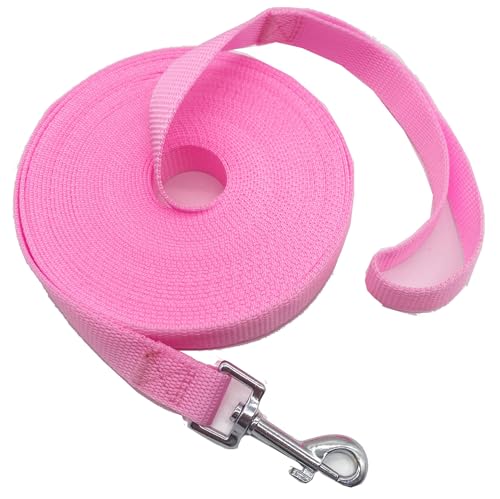
Siumouhoi 6 FT Puppy Leash (Pink, 5/8 in x 6 ft)

viunimo Slip Lead Dog Leash 6FT Nylon (Green)

leadfar Leather Dog Leash 6 ft x 1/2 inch (Brown)

Tairro Long Reflective Rope Training Leash (Purple, 30FT)

Fida 2-in-1 Slip Lead with 2 Handles, 6FT (Green)
More Details On Our Top Picks
A short lead changes the conversation with a big dog. Instead of shouting corrections from ten feet away, your hand sits close to the collar, so a slight tension shift reads instantly. Owners of strong breeds commonly report this setup keeps dogs walking at their side instead of swinging wide into traffic or other pedestrians.
The padded handle matters more than it sounds. On a short lead, every lurch travels straight to your wrist, and cushioning spreads that force out so a sudden pull doesn’t sting. Compared with the Joytale below, this one runs longer, which gives large dogs a touch more room to settle into a heel position.
Strong Points
- Short length keeps a powerful dog anchored beside you rather than ranging ahead.
- Padded grip protects your wrist during sharp lunges toward squirrels or strangers.
- Works double duty as a backup lead tucked in a hiking pack.
- Suits behavior-correction work where distance weakens your signal.
Things To Consider
- Nylon webbing holds onto mud and rain odor, so plan on occasional hand washing and full air drying.
- Too restrictive for dogs still learning loose-leash basics who need room to explore.
Key Specs
Made For
Handlers of large or medium breeds working on reactivity, heeling, or crowded-sidewalk manners.
Where A Sibling Pick Shines
For tight urban corridors where even this length feels generous, the Joytale 18-inch lead offers an even shorter radius of control.
Eighteen inches barely qualifies as a leash, and that’s the point. This is a traffic handle in lead form, built to glue a large dog to your leg through farmers markets, vet lobbies, and narrow sidewalks where a standard lead invites trouble. The wide 1.2-inch strap adds strength for bigger frames.
In our view, its best role is as a second tool rather than your only one. Clip it on for the chaotic stretch of a walk, then swap back to a longer line once you’re past the crowd. The extra width also means it clips securely to harnesses as well as collars.
What We Like
- Instant physical connection stops pulling before it starts in dense foot traffic.
- Wide 1.2-inch webbing distributes load comfortably across larger dogs’ gear.
- Attaches cleanly to either a harness or a collar depending on your training setup.
Minor Gripes
- At 18 inches, tall handlers may find themselves hunched unless the dog heels tightly.
- Not suited to fetch breaks or sniff time; carry a longer lead alongside it.
Who Should Grab It
City dwellers navigating crowds, elevators, and busy crossings with a strong medium or large dog.
Swap It Out When
Anyone wanting a slightly less claustrophobic short lead should look at the YMTHamaz3 traffic leash, which adds breathing room while keeping control.
Recall training lives or dies on distance, and a long line is how you fake freedom without losing the safety net. SALO sells this nylon lead in a range of lengths, so you can start at 15 feet and graduate upward as your dog’s reliability grows. The narrower profile stays light enough for puppies yet holds up for adult dogs in open fields.
Compared with the Tairro rope line later in this list, this one trades reflective threading for a lower cost and simpler nylon handling. For backyard drills and park sessions, most trainers find that trade easy to make.
Highlights
- Multiple length options let you scale distance as recall improves week over week.
- Nylon construction shakes off grass, dirt, and light rain without much fuss.
- Fits small, medium, and large dogs thanks to the forgiving width-to-weight ratio.
- Doubles as a camping tie-out line in a pinch.
Small Caveats
- Long nylon lines collect burrs and knots; expect to untangle after every off-trail session.
- No reflective elements, so dusk training near roads calls for extra caution.
Quick Facts
Right Fit For
New trainers running structured recall and obedience drills in fenced yards or open parks.
Another Choice May Suit
Evening walkers who train near roads will get more use from the Tairro reflective rope lead instead.
Six feet is the classic training length for good reason: enough slack for a puppy to sniff and wander, short enough that a gentle lift redirects attention. The slim 5/8-inch width suits small necks and tiny collars without weighing a young dog down, and the pink colorway makes it easy to spot in a pile of gear.
The hardware is where this budget pick quietly earns its keep. A chrome-plated swivel clip rotates fully to stop the twisting that cheap leads develop after a month of walks, and reinforced zigzag stitching along the nylon adds tear resistance at the stress points.
Upsides
- Classic 6-foot length balances exploration with handler control during early leash lessons.
- 360-degree rotating clasp prevents the kinks that plague stiff, low-cost leads.
- Zigzag-reinforced stitching holds up to daily puppy tugging.
- Available as a single or a two-pack for multi-dog households.
Points To Note
- The 5/8-inch width is too slender for full-grown large breeds that lunge hard.
- Light nylon shows stains quickly; owners commonly report frequent washing needs.
Who Will Love This
First-time puppy owners teaching loose-leash foundations with a small or medium breed.
Look Elsewhere When
Households with big adolescent dogs should step up to the leadfar leather lead for heavier-duty hardware.
A slip lead is collar and leash in one piece: the loop slides over the dog’s head, a stopper bead locks the fit, and you’re walking within seconds. Groomers, shelters, and trainers keep them on hooks by the door because there’s no fumbling with a separate clip. The viunimo version uses a sliding adjustment ring so the neck loop loosens or tightens smoothly.
One honest note: a slip lead only works humanely when fitted high on the neck and released promptly. Used carelessly, any slip design can press on the throat, so this suits dogs already past the raw pulling stage better than brand-new pullers.
Plus Points
- No collar or harness needed, which speeds up every departure dramatically.
- Adjustable ring accommodates different neck sizes across small and medium dogs.
- Comes as a two-pack, handy for keeping one in the car and one at home.
Softer Spots
- Requires correct high-neck placement and slack handling to stay comfortable for the dog.
- Thin 1/4-inch rope can feel sharp in bare hands during sustained pulling.
Built With In Mind
Vet visits, groomer runs, and quick potty trips with small or medium dogs who walk politely.
Reach For A Different Pick When
Handlers managing serious pullers get far better leverage from the Fida 2-in-1 slip lead with its dual handles and head-collar mode.
Leather has a feel nylon never quite matches: dense, warm in the hand, and quiet against your leg. The leadfar uses hand-selected high-density hide with double rivets and reinforced stitching at the joints, and the soft-finished handle spares your palm when a dog surges unexpectedly. At 1/2 inch wide, it’s proportioned for small and medium dogs rather than mastiff-class pullers.
The copper hook is the detail worth noticing. It rotates a full circle to shed twists, carries a stated 500-pound tensile rating, and the electroplated finish resists the corrosion that cheaper zinc clips show after wet winters.
Bright Spots
- Genuine leather softens with use and molds to your grip over months of walks.
- 360-degree copper hook rated for 500 pounds of pull force resists twisting and rust.
- Double rivets plus reinforced stitching hold the stress points together long term.
- Soft handle lining prevents rope-burn style friction on sudden lunges.
Trade Offs
- Leather needs occasional conditioning to stay supple; neglect dries and cracks it.
- Half-inch width limits this to lighter dogs despite the strong hardware.
Details At A Glance
Whose Shelf It Belongs On
Daily walkers who want one attractive, long-lived lead for a small or mid-size companion.
Not Your Match When
Owners of wash-and-wear priorities or very large dogs will prefer the Tairro rope lead’s synthetic toughness.
Thirty feet of rope sounds like chaos until you’ve watched a dog learn recall across a real field. This length lets a dog gallop, sniff, and make choices while you retain the final say, and the reflective weave keeps both of you visible once training runs past sunset. Five length options and four colors mean you can match the line to your dog’s current stage.
The zinc-alloy swivel hook rotates fully to fight tangling, and it’s built stout enough that owners of high-energy breeds report using it for intense play sessions, not just calm drills. You can also loop it around a tree or post as an improvised tether at camp.
Reasons To Buy
- Reflective rope improves visibility for dawn and dusk fieldwork near roads.
- Industrial-strength swivel hook stands up to hard pulling and energetic play.
- Five lengths support everything from backyard proofing to wide-open recall.
- Hook doubles as an anchor point around posts or trees while camping.
Areas To Watch
- Rope lines drag and pick up debris faster than flat nylon; shake-out after each session becomes routine.
- Thirty feet demands open space; suburban sidewalks won’t accommodate it safely.
Spec Overview
Who It Suits Best
Rural and suburban owners running serious recall programs with medium to large, high-drive dogs.
Consider Something Else When
Tight-budget trainers sticking to backyard drills will find the SALO nylon long line covers the same ground for less.
Most slip leads give you one configuration; this one gives you two. Worn conventionally, it’s a standard slip lead with an anti-choking stopper ring. Reconfigured, the loop section converts into a figure-eight head collar that guides a dog’s muzzle, which changes the physics of pulling entirely. Setup takes seconds, which matters when a reactive moment arrives mid-walk.
The second handle is the quieter upgrade. A traffic grip sits near the rope for instant short-range control, while the main padded handle handles normal walking. Against the basic viunimo slip lead earlier in this list, you’re paying more but gaining genuine versatility for strong or stubborn dogs.
Standout Traits
- Converts between slip lead and figure-eight head collar for escalating control levels.
- Dual handles let you switch from relaxed walking to traffic grip instantly.
- Anti-choking ring and adjustable stopper protect the airway during corrections.
- Soft padding on both grips reduces hand fatigue on long sessions.
- Slip-on design eliminates collar-and-clip fumbling entirely.
Honest Caveats
- Head-collar mode takes a few sessions for some dogs to accept calmly.
- More moving parts than a plain lead means more to inspect for wear over time.
Feature Card
The Right Fit
Experienced handlers of strong pullers and reactive dogs who want graduated control without carrying multiple tools.
Skip It When
Beginners still learning gentle slip-lead technique are better served by the forgiving Siumouhoi 6-foot puppy lead.
What Matters Most Before Choosing Leashes For Training Dogs
Length Matches The Lesson
Control work happens up close, recall work happens far away, and no single length does both well. Traffic leads under two feet suit crowded sidewalks and reactivity drills, while 15 to 50-foot long lines belong in open fields where a dog can practice coming back from real distance. Many trainers eventually own one of each.
Material Drives Maintenance
Nylon shrugs off rain and mud but absorbs odor and frays at the clip over years. Rope feels good in hand and often adds reflectivity, though it snags on brush. Leather lasts longest and looks best, but it wants occasional conditioning and shouldn’t sit soaked in a damp garage.
Hardware Is The Quiet Dealbreaker
A swivel clip that rotates a full circle prevents the kinks that ruin cheap leads within weeks. Check the stated pull rating against your dog’s weight and enthusiasm; a 60-pound adolescent launching after a deer generates far more force than its bodyweight suggests.
Fit And Width For Your Dog
Slim 1/4 to 5/8-inch widths suit puppies and small breeds, while 1-inch-plus webbing spreads load across large dogs. A lead that’s too thin digs into your palms during lunges; one that’s too thick overwhelms a 10-pound companion.
Key Considerations Across These Picks
Traps First Timers Fall Into
The most common mistake is buying one lead for every job. A 30-foot line on a city sidewalk is a hazard, and an 18-inch traffic lead at the park frustrates a dog that needs room. Match the tool to today’s lesson, not to a fantasy of one perfect product. Also check clip quality before trusting a bargain; a sticky swivel is the first part to fail.
When Paying More Pays Off
Higher-tier leads earn their price through materials and hardware: genuine leather hides, copper or zinc-alloy swivels with real pull ratings, and padded dual handles. Those upgrades matter most for strong dogs, daily walkers, and anyone training in low light. Casual puppy walks rarely justify the spend.
Frequently Asked Questions
What length leash works best for training a puppy?
Six feet is the standard starting point because it balances freedom with guidance. Add a 15 to 30-foot long line once your puppy masters basics indoors and in the yard.
Are slip leads safe for everyday use?
Yes, when fitted high on the neck, kept loose, and released promptly. They’re a poor choice for dogs that pull constantly against pressure.
Do short leashes actually stop pulling?
They don’t teach anything by themselves, but they remove the momentum a dog needs to build pulling habits. Pair one with consistent reinforcement for lasting results.
How long should a recall training line be?
Start around 15 feet and extend to 30 or 50 feet as reliability improves. The goal is always the longest distance your dog can still succeed at.
How do I clean a nylon training leash?
Hand wash with mild soap, rinse thoroughly, and air dry completely before storage. Machine washing is possible for many nylon leads but shortens stitching life.
Closing Remarks
The right leash is the one matched to the behavior you’re building this month, not the one with the longest feature list. Start with a solid six-footer for fundamentals, add a traffic lead or long line as your goals sharpen, and upgrade materials once you know what your daily routine actually demands. Any of these eight will serve you honestly; the rest is repetition, treats, and patience.
