

Training a dog starts at the other end of the leash. The right lead keeps a strong puller close in traffic, gives a puppy room to learn recall, and spares your hands on long walks. This roundup covers eight options built for real training work, from 18-inch traffic leads to a 15-foot check cord and a hands-free waist system. Each one suits a different stage of training, so match the tool to the behavior you’re working on.
The Shortlist At A Glance

ZALER Short Dog Leash 18″ Rope Traffic Lead

Short Dog Training Leash with Padded Handle

Coastal Pet Walk ‘n Train Head Halter Medium

Joytale Short Dog Leash for Close Control 18″
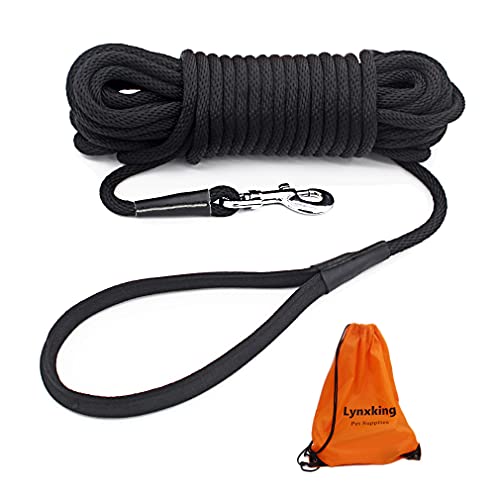
lynxking Check Cord Long Training Line 15ft
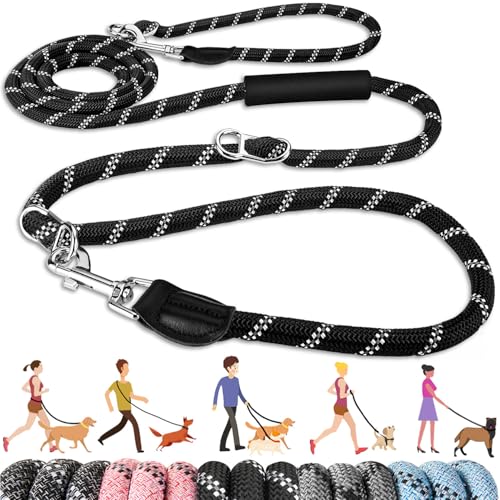
Lukovee Hands Free Dog Leash 10FT Adjustable

viunimo Slip Lead No Pull Dog Leash 6FT Green

ZHOMA Chew Proof Steel Cable Dog Leash
More Details On Our Top Picks
An 18-inch lead sounds restrictive until you’ve crossed a parking lot with a 70-pound dog lunging at every squirrel. At that length, your dog physically can’t build momentum, so corrections become small wrist movements instead of full-arm battles. The rope construction uses an interior core wrapped in a woven sheath, roughly half an inch thick, which is beefier than most standard leashes.
The standout detail is the upgraded screw-lock carabiner. A manual locking gate means the clasp stays shut even when the leash swings against a collar ring, a failure point ordinary snap hooks occasionally show under heavy load.
Strong Points
- Screw-lock carabiner resists accidental gate openings during hard pulls.
- Near half-inch rope diameter handles medium and large breeds without fraying quickly.
- Reflective elements improve visibility on early morning or evening walks.
- Short length keeps a dog pinned to your side in crowded areas.
Things To Consider
- Rope sheaths collect mud and grit; owners commonly report needing occasional hand washing to keep them supple.
- The O-ring adds a hang point but offers little use unless you attach accessories.
Key Specs
Made For
Owners of strong medium-to-large dogs who need tight control crossing streets, vet lobbies, and busy trails.
A Better Fit Elsewhere
Small-dog households will find this overbuilt; the viunimo slip lead below suits lighter breeds better.
Where the ZALER leans on hardware, this one leans on comfort. Its padded handle spreads pressure across your palm, which matters more than most people expect once a dog surges forward and the leash snaps taut. Anyone who has finished a walk with red finger marks knows exactly why that padding earns its place.
The short format keeps large breeds walking beside you instead of ranging ahead, cutting down on the tangling around legs that longer leads invite. It also doubles as a sensible backup lead tossed in a hiking pack, since it takes up almost no space.
What We Like
- Padded handle protects wrists and knuckles during sudden lunges.
- Compact length prevents leg-tangling on multi-dog walks.
- Heavy-duty build supports behavior-correction sessions with big dogs.
Minor Gripes
- No reflective stitching is mentioned in the listing, so low-light walkers may want a clip-on light.
- Padding adds slight bulk if you prefer a minimalist strap feel.
Right Fit For
Handlers doing daily heel work with large breeds who value hand comfort over extra features.
Swap It Out When
You want locking hardware for escape-prone dogs; the ZALER’s screw-lock carabiner covers that need better.
This isn’t a leash at all, and that’s the point. A head halter fits like a collar but guides from the snout, so gentle pressure turns the dog’s head toward you rather than dragging its neck. Steering the head redirects the body, which is why trainers reach for this design with determined pullers that ignore flat-collar cues.
Coastal builds it from quick-drying polyester with side straps positioned to leave breathing unobstructed. A quick-release snap lets you detach fast, and a safety loop attaches to the regular collar as a backup connection, a thoughtful fail-safe many competing halters skip.
Bright Spots
- Gentle snout pressure corrects pulling without harsh force.
- Quick-release snap allows fast removal after a session.
- Safety loop ties into the existing collar for redundancy.
- Quick-drying polyester handles rain and drool without staying soggy.
Honest Caveats
- Dogs often paw at head halters initially; short positive introduction sessions are widely recommended before real walks.
- Sizing runs specific, so measure the snout carefully before ordering.
At A Glance
Who Should Grab It
Owners retraining chronic pullers who want a humane guidance tool alongside their regular leash.
Where A Sibling Pick Shines
Dogs that tolerate halters poorly do better with the Joytale short lead, which controls through proximity instead.
Joytale’s take on the traffic lead keeps things simple: one length, one job. The 18-inch span holds a large dog flush against your leg, which is exactly where you want it passing joggers, strollers, or café tables. There’s no learning curve here, just instant proximity.
The 1.2-inch webbing width is the differentiator compared with the ZALER rope above. Flat webbing grips differently in the hand and lies flatter against a harness or collar, and some handlers simply prefer that feel. It connects equally well to either attachment point, giving you flexibility across gear setups.
Upsides
- Wide 1.2-inch webbing distributes pull force comfortably.
- Works with harnesses or collars without adapters.
- Keeps pulling behavior in check during daily walks.
Softer Spots
- Webbing can hold odor after wet walks; air drying fully before storage is a commonly reported must.
- Single fixed length limits versatility versus adjustable designs.
Who Will Love This
City dwellers running daily sidewalk routines with big dogs who need dependable close-quarters handling.
Consider Something Else When
Off-leash recall practice is the goal; the lynxking check cord later in this list handles distance work far better.
Recall training needs slack, and fifteen feet provides plenty of it while keeping a legal safety tether in open fields. A check cord, for those new to the term, is a long lightweight line used to reinforce come commands at distance without trusting the dog fully off-leash yet.
Lynxking threads the needle between strength and portability with a 3/8-inch round climbing-style rope. That thickness carries enough tensile backbone for medium and large dogs while staying light enough to drag through grass without exhausting a puppy. The rotating clasp spins freely, which is what stops the cord twisting into knots during use or when coiled back up.
Reasons To Buy
- 15-foot reach bridges the gap between leash work and off-leash freedom.
- 360-degree rotating clasp prevents frustrating tangles mid-session.
- Round climbing rope sheds water and dries faster than flat webbing.
- Light enough for puppy tracking games yet sturdy for adult dogs.
Points To Note
- Long lines pick up burrs and thorns in brushy terrain; a quick post-hike inspection keeps the sheath intact.
- Dragging length demands awareness around bike paths and other trail users.
Quick Facts
Whose Shelf It Belongs On
Field-trial hopefuls, hunting-dog starters, and suburban owners teaching reliable recall in parks.
Not Your Match When
Tight urban sidewalks call for something shorter; the Joytale 18-inch lead is the better city companion.
Runners and hikers train dogs too, and juggling a handheld lead while maintaining pace gets old fast. Lukovee solves that with a 10-foot high-strength nylon line that converts between a waist belt and a shoulder strap, letting your core absorb pulls instead of your arm.
The metal hooks and clips are rated for heavy duty use, and the adjustable loop can even serve as a temporary collar in a pinch. Ten feet sounds generous until you factor in the stretch of path behind you; it leaves room to trot alongside without constant tension.
Plus Points
- Converts between waist-worn and shoulder-carry configurations.
- Half-inch nylon width balances durability with manageable weight.
- Metal hardware holds up under sustained pulling from larger dogs.
- Adjustable loop doubles as an emergency collar attachment.
Trade Offs
- Hands-free setups transfer sudden lunges to your hips, so untrained pullers may knock you off balance at first.
- Longer nylon collects more dirt than short leads; machine-safe care varies by listing, so check before washing.
Details At A Glance
The Right Fit
Joggers, trail hikers, and parents pushing strollers who want consistent training contact hands-free.
Reach For A Different Pick When
Structured obedience drills demand precise hand signals; the padded-handle YMTHamaz3 lead restores direct control.
A slip lead is the simplest tool in dog training: leash and collar in one piece. You slide the loop over the head, snug the sliding ring, and you’re walking. No buckle, no clipping, no fumbling at the door with a squirming puppy. Groomers and shelter staff rely on this format for exactly that reason.
This version comes as a two-pack of six-foot leads in quarter-inch nylon, sized to fit any neck and best matched to small and medium dogs. The fixed buckle works alongside the adjustment ring so the loop stays where you set it. Six feet gives enough slack for loose-leash practice while remaining controllable.
Standout Traits
- Two leads per pack, handy for multi-dog homes or a car spare.
- Quarter-inch profile stays featherlight on small necks.
- On-and-off takes seconds, ideal for potty-training routines.
Small Caveats
- Slip loops tighten under pull, so they suit trained loose-leash walkers better than dedicated lungers.
- Thin nylon can burn palms on sharp surprises; gloves help for strong small breeds.
Built With In Mind
Puppy raisers, foster volunteers, and small-breed owners who want grab-and-go simplicity.
Another Choice May Suit
Large powerful breeds need thicker gear; the ZALER rope traffic lead is engineered for that weight class.
Some dogs treat every leash as a chew toy, and fabric options rarely survive that hobby. ZHOMA answers with an alloy steel cable available in four-, five-, and six-foot lengths, tough enough to shrug off teething puppies and determined adult chewers alike. For households burning through nylon leads every few months, the math eventually favors steel.
The handle gets a soft pad plus extra width, widening the contact area so a sudden sprint doesn’t slice into your fingers. A 360-degree rotating clasp keeps the cable from kinking, and the double-buckle setup adds security at the attachment end.
Highlights
- Alloy steel cable withstands chewing that destroys standard webbing.
- Wider padded handle improves grip during surprise sprints.
- Rotating clasp prevents cable twist and kinking over time.
- Three length options cover training, walking, and backup roles.
Areas To Watch
- Steel cable carries more weight than nylon, noticeable on long hikes with smaller dogs.
- Cable can transmit cold in winter; gloved walks are a common owner workaround.
Core Details
Who It Suits Best
Owners of persistent chewers and powerful medium-to-large breeds tired of replacing shredded leads.
Skip It When
Ultralight travel matters most; the viunimo slip lead packs down far smaller for trips.
What Matters Most Before Choosing Leashes To Train A Dog
Match Length To The Lesson
Short leads between 18 inches and 2 feet excel at heel work and traffic safety because they remove the leverage a dog needs to pull. Longer cords from 10 to 15 feet serve recall and distance drills. Most serious trainers own both ends of that range rather than one compromise length.
Material Drives Durability
Nylon webbing balances cost and strength for everyday use. Climbing-style rope sheds water and resists fraying. Steel cable exists purely for chewers. Consider your dog’s habits first; a gentle walker doesn’t need alloy hardware, while a serial destroyer does.
Hardware Deserves Attention
The clasp is the single most common failure point. Screw-lock carabiners reduce accidental gate openings, and rotating swivels prevent the twisting that weakens connections over months of use. Cheap stamped hooks are where budget leads typically let go.
Comfort Works Both Ways
Padded or widened handles protect your hands during lunges, and lightweight materials matter for small breeds wearing the gear all day. A leash that hurts either party gets left in the drawer, and unused equipment trains nobody.
Key Considerations Across These Picks
Traps First Timers Fall Into
New owners often buy one long retractable lead and use it everywhere, which teaches pulling instead of preventing it. Another frequent miss is sizing hardware for the dog’s current weight rather than its adult size. Measure your dog’s expected strength, not today’s.
When Paying More Pays Off
Upgraded pricing usually buys locking clasps, denser weave, and reinforced stitching. Those details matter most for dogs over 50 pounds or breeds known for lunging. Small, calm dogs perform fine on basic gear, so spend where the force actually is.
Frequently Asked Questions
Are short leashes good for training?
Yes, for heel work and traffic control. Their fixed short length removes pulling leverage and keeps a dog positioned beside you.
Can one leash handle all training stages?
Rarely. Recall work needs a long line, while close-control drills need a short lead, so most trainers keep both.
What is a slip lead used for?
It combines collar and leash in one loop, making it fast for potty breaks, grooming, and shelter handling.
Do head halters hurt dogs?
No, they apply gentle steering pressure at the snout. Proper gradual introduction keeps the experience positive.
How long should a training leash be?
Eighteen inches for close control, six feet for general walking, and ten to fifteen feet for recall practice.
Closing Thoughts
Every dog trains differently, so start by naming the behavior you want to fix. Pulling on walks points to a short lead or halter, shaky recall calls for a long line, and a chewer changes the material conversation entirely. Match the tool to the lesson, introduce new gear gradually, and stay consistent. The right leash won’t train your dog alone, but it makes every session easier for both ends of it.
