

Saltwater tanks punish weak lighting. Corals fade, algae creeps in, and fish colors go flat under a fixture that was never built for marine water. The right LED changes that within weeks, and it also decides how much of your evening goes to fiddling with timers and dimmers instead of enjoying the tank.
This shortlist covers eight fixtures across different tank sizes, budgets, and control styles, from app-driven reef bars to compact nano pucks. Match the light to your tank length and livestock first, then let the details below sort out the rest.
The Shortlist At A Glance

CURRENT USA Orbit Marine LED Saltwater Reef Light 24-36″

Current USA Orbit Marine LED Reef Light Bluetooth 24-36″
Current USA Orbit Marine LED Saltwater Reef Light 36-48″

Wills 100W Full Spectrum LED Reef Light

SMATFARM 95W Dimmable Coral Reef Light with Timer

SEAOURA 24/7 Planted LED Aquarium Light 30-36 in
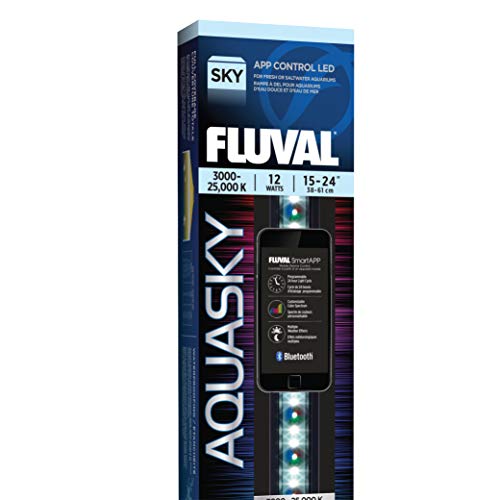
Fluval Aquasky 2.0 LED Aquarium Light 15-24″
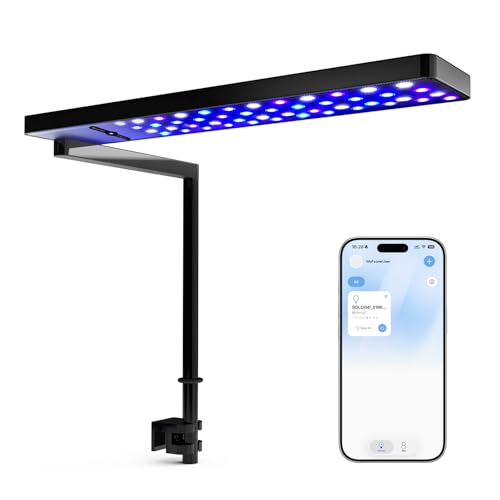
FZONE Solo Series Nano LED Marine Reef Light
More Details On Our Top Picks
This is the fixture plenty of reef keepers start with, and it earns that reputation through range rather than flash. The adjustable color spectrum lets you tune blues and whites to suit corals or a fish-only display, and the 24-hour lighting cycle handles dawn-to-dusk transitions without you touching a dial.
The eFlux wave pump control is the quiet advantage here. One system manages both light and flow, which keeps your cabinet free of extra controllers. For a standard 24 to 36 inch tank, coverage should be even enough for soft corals and most LPS.
Strong Points
- Adjustable spectrum means you can shift the look as your coral collection grows
- Built-in 24-hour cycle mimics natural daylight, so livestock get a proper rhythm
- eFlux integration runs lights and wave pumps from one hub, cutting cable clutter
- Mounting hardware suits rimmed tanks common in starter setups
Things To Consider
- Control runs through an IR remote, so you need line of sight; owners commonly report pointing it directly at the unit
- Light-demanding SPS colonies may want more intensity than this bar delivers at depth
Who It Suits Best
Newer saltwater keepers running soft corals or mixed communities on a mid-sized tank who want dependable automation without app complexity.
A Better Fit Elsewhere
Hobbyists who prefer phone-based control will find the Current USA Orbit Marine with Bluetooth (pick 2) more convenient, since it adds wireless scheduling over the same platform.
Take the pick above and swap its infrared remote for a Bluetooth app, and you have this model. The LOOP app handles scheduling, spectrum adjustments, and eFlux wave pump control from your phone, which matters once the tank lives somewhere you can’t easily reach behind the stand.
In practice, that means tweaking intensity from the couch or while traveling, assuming your phone stays within Bluetooth range of the tank. The wider color spectrum also gives corals a punchier look than the base version, something you’ll notice most with fluorescent pigments under actinic-heavy settings.
Highlights
- Bluetooth control removes the line-of-sight problem entirely
- App scheduling makes vacation-proof light cycles simple to set
- Same eFlux pump coordination as the IR model, so flow and light stay synced
- Ultra-bright diode array flatters coral coloration in mixed reefs
Minor Gripes
- App-dependent control means a phone is effectively required; some owners find that less convenient than a physical remote
- Bluetooth range limits remote management to the same room
At A Glance
Made For
Intermediate hobbyists upgrading from manual remotes who want app-level control over a 24 to 36 inch reef without paying flagship prices.
Consider Something Else When
Longer tanks need the Current USA Orbit Marine 36-48 inch version (pick 3), which carries the same feature set across a wider span.
Everything true of the 24-36 inch Orbit applies here, stretched across a four-foot frame. That’s the whole point: four-foot tanks are the most popular large format, and stretching two smaller fixtures over one usually creates visible seams in the light spread.
You still get the adjustable spectrum, the 24-hour cycle, and eFlux pump control, so behavior matches its shorter sibling exactly. The honest trade-off is intensity per square inch; on deeper tanks, demanding corals placed low in the rockwork may sit below comfortable PAR levels, so aquascape accordingly.
Upsides
- Single-bar coverage avoids the dark gaps of pairing smaller units
- Familiar Orbit controls mean no new learning curve if you’ve used the brand before
- Adjustable spectrum adapts as stocking shifts from fish-only toward corals
Softer Spots
- IR remote requires direct aim at the fixture, a frequent small annoyance reported by owners
- Penetration drops on tanks deeper than about 18 inches, per typical bar-light behavior
Right Fit For
Keepers of 36 to 48 inch community or soft-coral tanks who want one clean fixture instead of a multi-light rig.
Where A Sibling Pick Shines
Dedicated reef builders chasing higher output on a similar footprint should compare the Wills 100W full spectrum unit (pick 4), which trades smart features for raw wattage.
Where the Orbit bars prioritize convenience, the Wills fixture puts its budget into photons. One hundred watts driving a targeted diode mix gives it the muscle for light-hungry corals, and the manufacturer specifies coverage around a 24 by 24 inch footprint with no hot spots or dead zones.
The spectrum breakdown reads like a reef chemistry lesson: 450nm blue for fluorescence, 530nm for actinic pop, 660nm red to fuel photosynthesis, balanced against warm 3000K and cool 6500K whites. Translation for real ownership: corals glow, colors read true, and growth gets the wavelengths it actually uses.
Bright Spots
- High wattage supports demanding SPS and clams at moderate depth
- Multi-wavelength design serves both coral health and visual appeal
- Even 24×24 inch spread suits cube and shallow lagoon layouts
- Rugged metal housing dissipates heat better than plastic bars tend to
Points To Note
- No app or timer automation mentioned, so expect manual or external-timer control
- The 16 x 8 inch body needs solid mounting space above open-top tanks
Quick Facts
Who Will Love This
Reef-focused keepers prioritizing coral growth and color over smart features, especially on cube-shaped tanks near 24 inches square.
Another Choice May Suit
Anyone wanting programmed sunrise and sunset cycles alongside serious output should look at the SMATFARM 95W (pick 5) instead.
This one splits the difference between the Wills brute force and the Orbit’s automation. Ninety-five watts feed twenty-four 5-watt SMD LEDs behind high-transmission optical lenses, giving you genuine reef-grade output with programmable behavior layered on top.
The headline feature is the full day simulation: sunrise, sunset, and moonlight phases with 0 to 100 percent dimming, all handled by the onboard timer and dimmer. Group control adds joint operation across multiple fixtures, useful once a second tank appears. Sensitive corals benefit most, since abrupt light changes stress them far more than gradual ones.
Reasons To Buy
- Programmable sunrise, sunset, and moonlight cycles reduce livestock stress
- Full-range dimming lets you dial intensity to match coral placement
- Group control links several units for larger or multi-tank layouts
- Optical lenses concentrate output where you aim it
Small Caveats
- Programming happens through remote and touch controls rather than a phone app, which some owners find slower to configure
- Bracket mounting needs clearance above the tank, worth measuring before ordering
Technical Sheet
Whose Shelf It Belongs On
Serious mixed-reef keepers who want automated day cycles and strong output together, without stepping up to premium app ecosystems.
Swap It Out When
Nano tank owners will find the FZONE Solo Series (pick 8) a smarter match, since its app control and compact form target small reef volumes directly.
Not every saltwater tank grows coral. Fish-only marine displays, and many beginner setups, need attractive, consistent illumination more than reef-grade intensity, and that’s exactly where this SEAOURA bar fits. Six rows of LED chips deliver even, vibrant light across 30 to 36 inch tanks.
The touch controller with LCD screen and built-in clock drives a 24/7 schedule, so the light ramps through day and night phases on its own. Set it once and forget it exists, which is precisely what most newcomers want from their first fixture.
Plus Points
- Automatic 24/7 cycle needs zero daily input after setup
- LCD screen shows the current program at a glance
- Six-row chip layout spreads light evenly along the bar
- Low cost leaves budget for livestock and live rock
Worth Noting
- Output targets planted and fish-only tanks, not photosynthetic corals
- Planted-tank orientation means the spectrum favors greens over deep marine blues
Details At A Glance
Who Should Grab It
First-time saltwater keepers running fish-only or live-rock displays on a three-foot tank who value simplicity over coral-driving power.
Reach For A Different Pick When
Smaller tanks between 15 and 24 inches pair better with the Fluval Aquasky 2.0 (pick 7), which brings weather effects into a slimmer package.
Fluval’s name carries weight in this hobby, and the Aquasky 2.0 shows why. At just 12 watts, it’s the gentlest fixture here, designed for freshwater and fish-only marine tanks from 15 to 24 inches rather than coral propagation.
What it offers instead is polish: RGB LEDs paired with 6500K whites give you customizable color mixing, and weather simulation effects add cloud cover and other atmospheric touches. On a small office or bedroom tank, those extras turn a basic setup into something people comment on.
What We Like
- RGB plus white channels allow genuinely custom color scenes
- Weather effects create subtle, natural-looking variation through the day
- Slim 12-watt body suits rimless and low-clearance lids alike
- Established brand support network simplifies replacement parts
Honest Caveats
- 12 watts won’t sustain photosynthetic corals; treat this as a fish-and-invertebrate light
- Shorter 15-24 inch span excludes most standard 30-inch-plus tanks
The Right Fit
Keepers of small fish-only marine or mixed nano displays who want refined aesthetics and brand reliability over raw output.
Look Elsewhere When
Coral keepers with tiny tanks should jump to the FZONE Solo Series Nano (pick 8), whose spectrum and app control are purpose-built for reef work.
Nano reefs are unforgiving. Small water volumes swing fast, and the light sitting twelve inches above your rockwork has to do real biological work, not just look pretty. The FZONE Solo takes that job seriously with 56 LEDs across four independent channels and seven colors, including UV.
The specified balance leans blue-dominant at roughly 70 percent, with green and red filling out the curve, a ratio aimed squarely at coral fluorescence and coloration. App control handles dimming and scheduling wirelessly, so tuning a frag rack or shading a shy anemone takes seconds from your phone.
Standout Traits
- Four independent channels allow precise spectral tuning per coral type
- UV channel pushes fluorescence hard for showpiece corals
- Blue-forward ratio matches what reef corals respond to visually and biologically
- Smart app control simplifies daily adjustments and long-term schedules
- Compact footprint suits rimless nano and desktop tanks
Areas To Watch
- Nano-scale coverage means larger tanks would need multiple units, adding cost quickly
- App-first control depends on your phone staying connected during setup
Core Details
Perfect Match For
Nano reef enthusiasts growing corals in tanks under roughly two feet who want flagship-style control in a compact, affordable fixture.
Where Another Pick Suits Better
Keepers running bigger mixed reefs with programmable day cycles will get more from the SMATFARM 95W (pick 5) and its group-control capability.
What Matters Most Before Choosing Led Lights For Saltwater Aquarium
Match Output To Your Livestock
Corals are the dividing line. Soft corals and fish-only displays tolerate modest fixtures, while SPS corals and clams demand high-intensity, blue-heavy output delivered close to the water surface. Check the manufacturer’s stated coverage area against your tank’s footprint, then subtract a margin for depth, since penetration falls fast below 18 inches of water.
Control Style Shapes Daily Life
Remotes, touch panels, timers, and phone apps each change how often you think about your light. App control rewards tinkerers and travelers; a set-and-forget timer suits anyone who’d rather watch the tank than program it. Choose the interface you’ll actually use six months from now.
Heat, Mounting, And Maintenance
Higher-wattage fixtures need airflow and solid mounting points, so measure clearance above your tank before ordering. Salt creep accumulates on any fixture near an open top, and a quick wipe-down during routine water changes keeps lenses transmitting properly for years.
Key Considerations Across These Picks
Traps First Timers Fall Into
The classic error is buying for looks instead of livestock needs. A gorgeous RGB bar won’t keep Acropora alive, and a 100-watt powerhouse is wasted money over a fish-only tank. Measure tank length twice, confirm the fixture’s stated span, and resist assuming a bigger number always means a better result for your specific setup.
What Separates Premium From Basic
The upgrade tier buys channel independence, app ecosystems, and optical engineering rather than just brightness. Independent color channels let you tune output as corals mature, and quality lenses concentrate light where it counts. Paying more pays off once you’re keeping photosynthetic species; until then, simpler fixtures serve perfectly well.
Frequently Asked Questions
How many watts does a saltwater aquarium light need?
It depends on tank size and livestock more than a fixed rule. Fish-only tanks run well on modest output, while coral-heavy reefs typically need high-wattage fixtures rated for their footprint and depth.
Can I use a planted tank light on a saltwater aquarium?
Yes, for fish-only marine setups where appearance matters most. Photosynthetic corals need marine-specific spectra heavy in blue wavelengths, which planted fixtures generally don’t emphasize.
Do LED aquarium lights use a lot of electricity?
No, LEDs are among the most efficient options available. Even 95 to 100-watt reef fixtures cost little to run daily compared with older metal halide systems.
How long should aquarium lights stay on each day?
Eight to ten hours is the widely accepted window for most marine tanks. Programmable sunrise and sunset ramps reduce stress on fish and corals compared with abrupt on-off switching.
Do saltwater fish need blue light?
Fish don’t require it biologically, but blue-heavy spectra make marine colors appear vivid and support coral health in reef tanks. Actinic channels also drive the fluorescence many keepers prize.
Closing Thoughts
The right choice comes down to honesty about your tank. Fish-only keepers can save money with the SEAOURA or Fluval, while coral growers should lean toward the Wills, SMATFARM, or FZONE depending on size. Start with your livestock list, measure your tank, and pick the fixture that matches both. Your corals will tell you within a month whether you got it right.
