

A litter box sitting in the corner of your living room is one of those compromises most cat owners quietly resent. The right storage enclosure flips that: your cat gets a private spot to do their business, and you get furniture that actually looks like furniture instead of a plastic bin on display. This roundup covers eight enclosures built for real homes, from compact end tables to tall cabinets with drawers, so you can match one to your space, your décor, and your cat’s habits.
The Shortlist At A Glance

Hzuaneri Cat Litter Box Enclosure with Storage

Hzuaneri Hidden Litter Box Furniture with Storage

Hzuaneri Cat Litter Box Cabinet Furniture

Homhedy 28.3″ Cat Litter Box Enclosure, Green and Gold

Dwanton Cat Litter Box Enclosure, 2 Shelves & 2 Drawers
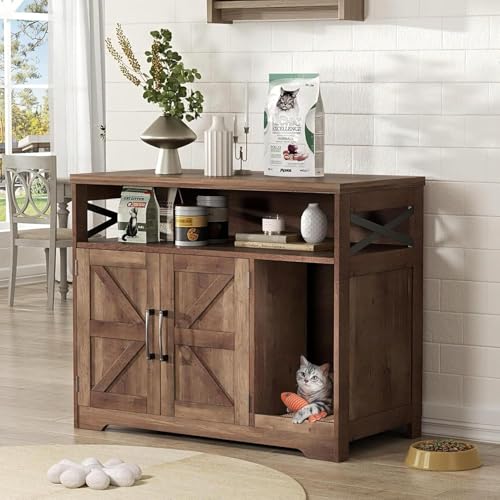
Halitaa Cat Litter Box Enclosure with Scratch Pad

Halitaa Farmhouse Cat Washroom End Table, Rustic Brown

Zerbuger Cat Litter Box Enclosure for Odor Control
More Details On Our Top Picks
This wooden cabinet does double duty in a way few enclosures manage: the enclosed lower section houses the litter box, while the upper surface and interior shelving absorb clutter that would otherwise pile up nearby. In a hallway or living room, it reads as a simple modern sideboard rather than pet equipment.
The included sisal mat earns its place too. Cats can scratch on it, and it catches granules tracked out of the box, which means less sweeping around the base every morning.
Strong Points
- Enclosed design gives cats a quiet, private spot away from foot traffic
- Sisal mat doubles as a scratching surface and litter catcher, cutting down daily sweeping
- Storage compartments keep scoops, liners, and litter bags within arm’s reach
- Minimalist wood finish blends into most living rooms without announcing itself
Things To Consider
- Assembly takes some patience; owners commonly report the panel alignment needs a careful eye
- The enclosed cavity suits standard boxes, so oversized models may be a tight squeeze
Key Specs
Made For
Apartment dwellers and first-time cat owners who want one piece of furniture handling both the litter box and everyday storage.
A Better Fit Elsewhere
Households with a curious dog should look at the Hzuaneri Cat Litter Box Cabinet Furniture below, whose curved entry corridor is specifically designed to keep canine noses out.
Where the first Hzuaneri pick leans on its mat and storage extras, this sibling keeps things simpler: a closed wooden cabinet that hides the box completely and dampens odor at the source. For a shy cat that startles easily, the fully enclosed cavity offers a calmer experience than an open tray ever will.
You may find the footprint works best against a wall or beside a sofa, where it passes as ordinary cabinetry. Guests walking through rarely guess what’s inside, which is exactly the point.
What We Like
- Fully enclosed structure contains odor instead of letting it drift through the room
- Wooden build feels more like home furniture than a plastic hooded tray
- Storage space handles litter supplies so nothing sits out in the open
Worth Noting
- Cleaning means opening the cabinet each time, so scoop frequency matters more than with open trays
- Timid cats occasionally need a week or two of adjustment before using an enclosed unit regularly
Who It Suits Best
Owners of one calm indoor cat who want a low-profile, odor-conscious setup in a shared living space.
Consider Something Else When
If scratching is your bigger headache, the Halitaa Cat Litter Box Enclosure with Scratch Pad folds a claw-friendly pad right into the design.
The clever bit here is the separate corridor: instead of a straight doorway, the entry path bends, so dogs can’t see straight in or shove their heads inside. That single design choice solves the most common complaint in mixed-pet homes, where a dog raiding the litter box turns hygiene into a daily battle.
It comes in two sizes, a compact 31.5-inch-wide version and a larger 39.4-inch model, so you can match the cabinet to your room rather than the other way around. The rustic styling leans farmhouse, which pairs well with wood floors and neutral palettes.
Highlights
- Curved entry route blocks dogs from intruding while keeping access easy for cats
- Two size options let you scale the footprint to a hallway or a wider wall
- Sealed interior traps odor and stray litter inside the cabinet body
- Rustic finish reads as intentional décor, not a pet workaround
Small Caveats
- The bent corridor adds a step for senior or less agile cats, worth watching during the transition period
- Two-size lineup means measuring your space carefully before ordering
Quick Facts
Right Fit For
Multi-pet households tired of dog-proofing workarounds, especially homes with medium or large dogs.
Swap It Out When
Style-driven shoppers wanting a bolder color statement will prefer the Homhedy 28.3″ enclosure in green and gold further down this list.
Most enclosures play it safe with browns and whites. This one doesn’t: a deep green body with gold metal framing makes it look closer to an accent cabinet than a cat washroom, and at 28.3 inches long it slots into spaces where bulkier units won’t fit.
The metal frame isn’t just decorative either. It stiffens the whole structure, which matters when the top surface doubles as a plant stand or a landing zone for keys and mail.
Upsides
- Green-and-gold palette turns a necessity into a deliberate décor moment
- Metal frame adds rigidity that all-wood panels sometimes lack over time
- Compact 28.3-inch length suits apartments and narrow walls
- Enclosed body hides the box and cuts visible litter clutter entirely
Minor Gripes
- The bold color limits placement flexibility compared with neutral finishes
- Compact width may feel snug for very large litter boxes, so check dimensions first
Who Will Love This
Decorators furnishing a styled living room or bedroom who refuse to compromise on looks.
Not Your Match When
Anyone needing serious storage volume should step up to the Dwanton tower with shelves and drawers instead.
This is the vertical thinker of the group. Rather than spreading wide, the Dwanton builds upward: the litter box lives in the lower cabinet, two open shelves sit mid-unit, and two fabric drawers handle the rest. A 50-inch-tall version and a taller 61.8-inch variant give you a choice depending on ceiling height and how much storage you want stacked above the box.
The steel frame paired with a finished cabinet body keeps the tall profile from feeling wobbly, something worth verifying once assembled since height amplifies any looseness.
Reasons To Buy
- Shelves plus drawers replace an entire storage cart in small apartments
- Two height options adapt to different rooms and storage appetites
- Steel frame supports the tall structure and resists racking over time
- Drawers conceal litter bags and cleaning supplies behind fabric fronts
- Narrow 23.6-inch depth tucks against walls without eating walkway space
Points To Note
- Fabric drawers need gentler handling than solid wood fronts
- The tall silhouette can dominate a small room visually, so measure ceiling clearance
At A Glance
Built With In Mind
Studio-apartment residents and anyone whose litter corner currently doubles as a supply overflow zone.
Reach For A Different Pick When
Low-ceiling rooms call for something horizontal, and the Zerbuger bench-style enclosure at the end of this list keeps everything under seat height.
A scratch pad built into the enclosure is a small addition with outsized value. Cats often scratch right after using the box, and giving them a designated surface right there protects your sofa from becoming the alternative. The black metal crossbar detailing over a rustic body keeps the overall look modern-farmhouse rather than purely utilitarian.
The double-door entry is another thoughtful touch: two openings mean a startled cat always has an exit route, which reduces the ambush anxiety that single-entry boxes can create in busy hallways.
Bright Spots
- Integrated scratch pad redirects clawing away from furniture
- Double-door design lets cats enter and exit from two sides
- Black crossbar frame adds visual contrast against the rustic body
- Enclosed cavity helps contain odor between scoops
Softer Spots
- Scratch pads wear with heavy use and eventually need replacing
- Two-door layouts require clearance on both accessible sides, so placement planning matters
Whose Shelf It Belongs On
Owners of enthusiastic scratchers who want the litter solution and the claw solution in one footprint.
Another Choice May Suit
Shoppers drawn to this brand’s warmer tones will find the rustic brown farmhouse variant next on the list more inviting.
This is the same Halitaa platform as the previous pick, dressed in a warm rustic brown that suits shiplap walls, leather sofas, and earthy palettes far better than black hardware does. Functionally it carries over what made its sibling appealing: the double-door privacy layout and the built-in scratch pad that gives claws somewhere better to go.
As an end table, the proportions genuinely work beside a couch or armchair, and the top surface holds a lamp or a stack of books without looking crowded.
Plus Points
- Rustic brown finish integrates naturally into farmhouse and cottage interiors
- Double doors preserve privacy and offer two-way access for your cat
- Scratch pad comes integrated, saving a separate purchase
- End-table height makes the top surface genuinely useful day to day
Honest Caveats
- Warm brown tones show dust and litter dust more readily than darker finishes
- Sharing DNA with pick six means choosing between them is mostly a color decision
Details At A Glance
Best Suited To
Homeowners furnishing a farmhouse-style living room who want the litter box to disappear into the aesthetic completely.
Look Elsewhere When
Modern or minimalist interiors will clash with the rustic tone; the Homhedy green-and-gold enclosure fits contemporary rooms better.
Bench-style enclosures earn their keep in entryways and mudrooms, and this one brings a spec that most rivals skip: a divider-supported top rated to hold up to 200 pounds. That rating means adults can sit on it to lace shoes, and the surface still functions as a proper bench rather than a fragile lid.
Assembly is unusually painless too. The cabinet unfolds and the lid pops on, so you’re not wrestling with forty screws on a Saturday afternoon. Inside, there’s room for a litter box on one side and a cat bed or toys on the other, turning it into a nap spot between bathroom visits.
Standout Traits
- 200-pound weight capacity with divider support makes the top a true seating surface
- Unfold-and-go assembly takes minutes rather than an hour
- Interior fits a litter box plus bedding, doubling as a cat retreat
- Enclosed bench form controls odor in high-traffic entry areas
Room For Improvement
- Bench height means bending lower to scoop than with waist-height cabinets
- Storage flexibility trails drawer-equipped picks like the Dwanton tower
Core Details
Who Should Grab It
Busy households wanting a durable entryway bench that quietly handles litter duty without a complicated build.
Where A Sibling Pick Shines
Privacy-focused owners with a nosy dog will get more mileage from the Hzuaneri Cat Litter Box Cabinet Furniture and its curved, dog-blocking corridor.
What Matters Most Before Choosing Litter Box Storages
Size And Interior Clearance
Measure your current litter box first, then add breathing room. An enclosure that fits the box with an inch to spare forces awkward entries and discourages use, while a cavity with several extra inches lets your cat turn around comfortably. Tall cats and large breeds need noticeably more headroom than the average unit provides.
Entry Style And Pet Dynamics
Single-door, double-door, and curved-corridor designs each suit different homes. Curved corridors are the strongest defense against dogs, double doors reduce territorial stress in multi-cat homes, and simple front entries work fine for one confident cat. Match the entry to your actual household, not just the prettiest listing photo.
Odor Control And Cleaning Access
An enclosed cabinet only helps if you’ll actually maintain it. Hinged tops and wide door openings make scooping faster, and removable mats catch tracked granules before they spread. Units requiring you to reach deep through a small opening tend to get cleaned less often, which defeats the purpose.
Footprint Versus Storage Value
Decide whether the piece replaces existing furniture. A bench earns its floor space in an entryway, a tower with drawers replaces a storage cart, and a compact end table fills an unused corner. Choosing based on the job the furniture already does in your room prevents regret later.
Key Considerations Across These Picks
Traps First Timers Fall Into
The most common mistake is buying for looks alone and ignoring interior dimensions, then discovering the box doesn’t fit. The second is skipping the transition period: cats accustomed to open trays often need the new cabinet staged gradually, door propped open at first. Rushing that adjustment leads to accidents elsewhere in the house.
What Separates Premium From Basic
Higher-priced units typically add structural reinforcement, smarter entry geometry, and integrated accessories like scratch pads or rated seating surfaces. Those upgrades matter most in multi-pet homes and high-traffic areas. A basic cabinet serves a single calm cat perfectly well, so pay up only when your household dynamics demand it.
Frequently Asked Questions
Do enclosed litter boxes stress cats out?
Some cats adjust within days while cautious ones need a week or two of gradual introduction. Leaving the door propped open initially usually smooths the transition.
Will an enclosure really contain odor?
A sealed wooden cabinet traps odor far better than an open tray, though regular scooping remains essential. No enclosure replaces good maintenance habits.
Can I use any litter box inside these cabinets?
Most standard rectangular trays fit, but oversized or top-entry models often don’t. Check the interior dimensions against your box before ordering.
How do I stop litter from scattering outside?
A catching mat at the entry, like the sisal mat included with several picks here, grabs granules from paws. Placing the enclosure on hard flooring also makes cleanup easier.
Are these enclosures hard to assemble?
Most take thirty minutes to an hour with basic tools, and unfold-style designs go together in minutes. Panel-alignment patience is the main requirement.
Closing Thoughts
The right litter box storage disappears into your home instead of fighting it. Start with your room’s footprint and your pets’ personalities, then let style follow function. Any of these eight will hide the box; the best one for you is simply the one your cat will actually use.
