

Scooping litter twice a day gets old fast, especially in a multi-cat home where the box never stays clean for long. A self cleaning litter box handles the raking, sifting, or rolling for you, so the worst chore of cat ownership mostly disappears. The catch is that these units vary wildly in safety design, noise, capacity, and how much setup they demand. This shortlist covers eight options for 2026, from a no-electricity roller to app-connected robots with health tracking, so you can match the machine to your cats, your floor plan, and your patience level.
The Shortlist At A Glance

DuckSky Automatic Self Cleaning Litter Box 65L+9L

Lohhuby Automatic Cat Litter Box Self Cleaning (White)

Omega Paw Roll ‘N Clean Litter Box Regular Size

Mimfam AS11 Automatic Self Cleaning Litter Box Grey
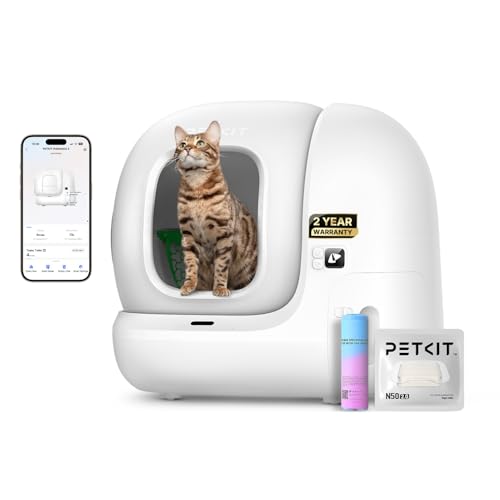
PETKIT PuraMax 2 Automatic Self-Cleaning Litter Box

PetPivot Open Top Self Cleaning Litter Box Dark Grey

PETKIT Purobot Max 3 Self-Cleaning Litter Box
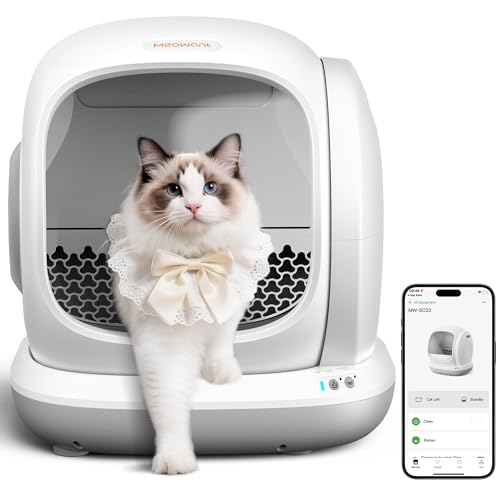
Meowant 75L Extra Large Automatic Litter Box
More Details On Our Top Picks
The DuckSky unit splits its interior into a 65-liter toilet zone plus a separate 9-liter waste chamber, an all-in-one layout that replaces the usual pull-out drawer. That matters in a three-cat house where a small drawer fills by Tuesday. App control lets you trigger cycles remotely, and the bundle ships with three liner rolls and an odor eliminator so you’re not buying consumables immediately.
Owners commonly report that the integrated waste system keeps smells contained better than open drawers, though you’ll want to place it somewhere with clearance since the footprint is generous.
Strong Points
- 65L toilet space means less frequent full litter changes for busy homes
- All-in-one waste disposal avoids the drawer-clog complaints common to cheaper robots
- Liners and odor eliminator included, so setup costs stay predictable
- App control suits anyone who travels or works long shifts
Things To Consider
- The large footprint demands real floor space, tight apartments may feel crowded
- Liner rolls are a recurring purchase you’ll need to keep stocked
Key Specs
Who It Suits Best
Households with two or more cats who want maximum capacity and minimal daily attention.
A Better Fit Elsewhere
Single-cat owners in smaller spaces will find the Omega Paw Roll ‘N Clean easier to place and cheaper to run.
Where the DuckSky goes big, the Lohhuby scales down deliberately. Its open-design body targets medium cats and kittens, which matters because enclosed globes can intimidate younger animals still learning bathroom habits. Anti-pinch protection stops the mechanism when a curious paw wanders in, and operation runs quietly enough for bedroom placement in most homes.
The companion app handles scheduling and monitoring over 2.4GHz Wi-Fi only, worth knowing before you buy since many routers broadcast both bands under one network name. One availability note: this listing has shown as currently unavailable at times, so check stock before committing.
What We Like
- Open design gives kittens easy, low-stress access
- Anti-pinch safety halts cleaning the moment movement is detected
- Quiet cycle won’t startle skittish cats at night
- App scheduling keeps the box fresh while you’re at work
Worth Noting
- Connectivity is limited to 2.4GHz networks, mesh setups occasionally need manual band separation
- Sized for medium cats, large breeds will feel cramped
Made For
Kitten adopters and owners of average-sized cats who want smart features in a modest footprint.
Consider Something Else When
Owners of big breeds should look at the Meowant 75L, whose roomy interior accommodates cats up to 22 pounds comfortably.
No motor, no app, no outlet needed. The Omega Paw works on physics: roll the whole box onto its top and back, and an internal sifting grate separates clumps from clean litter, dropping waste into a pull-out tray. The updated version uses stronger materials than earlier runs, addressing the cracking issues some long-term owners reported on older units.
In a rental or a home where you’d rather not add another powered appliance, this is the honest middle ground. You still spend ten seconds rolling it, but never touch a scoop. Clumping litter is required for the grate to work properly, so skip pellet or crystal litters here.
Bright Spots
- Zero electricity means zero noise and no failure points
- Sifting grate does the separating work in one roll motion
- Reinforced build on the new version improves durability
- Regular size fits kittens and cats up to 10 pounds well
Small Caveats
- Manual rolling is still a daily task, just faster than scooping
- Cats over 10 pounds need the larger variant instead
Quick Facts
Right Fit For
Budget-minded owners of one small cat who want self cleaning behavior without electronics.
Swap It Out When
Anyone wanting fully automatic cycles should step up to the Mimfam AS11, which cleans on its own schedule.
The headline number here is 32 decibels, roughly the sound level of a soft whisper, which makes the AS11 one of the quietest automated options on this list. Nighttime cycles won’t wake light sleepers or nervous cats. Safety hardware is layered too: four pairs of infrared sensors plus three hall sensors pause cleaning whenever a cat is detected inside, resuming only after exit.
The top entrance measures 16.33 by 15.35 inches, roomy enough for larger frames to turn around comfortably. A 10-liter waste bin stretches to around ten days between empties for a single cat, and the package includes liner bags plus a litter mat, so the accessory checklist is handled.
Highlights
- 32dB operation keeps bedrooms and studios peaceful
- Seven-sensor array pauses instantly for occupant safety
- Oversized top entry suits bigger or less agile cats
- Ten-day waste capacity cuts maintenance trips dramatically
- Liners and mat included, saving a separate purchase
Points To Note
- Top-entry design can challenge arthritic cats despite the wide opening
- Disposable liners add a small recurring cost over time
At A Glance
Best Suited To
Apartment residents and shift workers who need silent overnight operation in a multi-cat home.
Where A Sibling Pick Shines
Seniors or mobility-limited cats do better with the PetPivot Open Top, whose built-in access step removes the climbing requirement entirely.
PETKIT builds its reputation on odor engineering, and the PuraMax 2 shows it. A sealed waste bin pairs with the N50 2.0 odor remover cartridge, a two-part system that keeps studio apartments smelling like apartments rather than litter rooms. The basic bundle arrives with trash bags, a sifter, and a magnetic litter remover, covering the first months of ownership.
Placement rules matter more here than with rivals: the manufacturer explicitly warns against carpet or mats under the unit because they interfere with the weight sensors, and the entrance must stay unobstructed. The low entrance helps smaller cats get in, and clumping litters across most brands are compatible. One version note: this configuration doesn’t support the K3 Smart Spray accessory.
Upsides
- Sealed bin plus N50 2.0 cartridge delivers serious odor containment
- Low entrance welcomes kittens and short-legged cats
- Works with nearly any clumping litter you already buy
- Bundle accessories reduce first-month running costs
Room For Improvement
- Hard flooring is effectively mandatory, carpet placement causes sensor faults
- Odor cartridges are a continuing expense to budget for
Who Will Love This
Apartment dwellers with hard floors who rank odor control above every other feature.
Not Your Match When
Carpeted-bedroom placements suit the DuckSky better, whose design tolerates softer surfaces more forgivingly.
Not everyone wants another app account, and the PetPivot respects that. It runs entirely standalone: no downloads, no subscriptions, no Wi-Fi troubleshooting at midnight. Seven pairs of infrared sensors provide coverage, backed by a touch-sensitive pedal and a mechanical limiter as redundant stop layers, a triple-system approach aimed squarely at feline safety.
Two details stand out for specific households. An included access step gives senior cats a stable assisted entry path, and the modular quick-release shell disassembles tool-free in seconds, solving the dust-in-the-seams problem that plagues deep cleaning on sealed globes. In our view, that serviceability alone justifies the choice for anyone planning years of ownership.
Reasons To Buy
- Zero app dependency means zero connectivity frustration
- Triple-layer safety: seven sensor pairs, contact pedal, mechanical limiter
- Access step supports senior and mobility-limited cats
- Tool-free teardown makes deep cleaning genuinely quick
Softer Spots
- No remote monitoring, you won’t see usage data away from home
- Open-top design releases more scent than sealed competitors
Details At A Glance
Who Should Grab It
Owners of senior cats, and anyone who prefers simple hardware over connected gadgets.
Reach For A Different Pick When
Remote health tracking matters more than simplicity, in which case the Meowant 75L logs every visit through its app.
This is PETKIT’s flagship tier, and the upgrades over the PuraMax 2 are concrete rather than cosmetic. The opening grows to 10.5 inches with a low threshold, welcoming overweight, senior, and short-legged cats from 3.3 to 22 pounds into a 76-liter interior. Odor control stacks three layers: a semi-enclosed shell, immediate sweeping into a sealed compartment, and the N50 2.0 eliminator working continuously.
The mess-fighting details are where the premium price earns itself. A third-generation anti-stick mat keeps litter from welding to the bottom, while the patented seamless ShieldBase creates a 360-degree waterproof seal that catches edge accidents before they reach your floor. Owners of enthusiastic diggers tend to appreciate that combination most.
Standout Traits
- 76L interior plus 10.5-inch opening fits nearly every cat size
- Three-stage odor control outclasses single-filter designs
- Anti-stick mat surface resists the clump-welding problem
- Waterproof ShieldBase seals against edge urination leaks
Honest Caveats
- Premium pricing puts it beyond casual first-time budgets
- Large footprint needs dedicated floor space in smaller homes
The Right Fit
Multi-cat homes with large, senior, or mobility-challenged cats where leaks and odor are chronic problems.
Another Choice May Suit
Value-focused shoppers with one average-sized cat get most core benefits from the PETKIT PuraMax 2 at a friendlier entry point.
The Meowant splits the difference between raw capacity and smart monitoring. Its 75-liter drum accepts cats from 3.3 to 22 pounds, with a wide-open entrance and a low 6.8-inch step that short-legged, senior, and plus-sized cats clear easily. Kittens under six months should wait, per the manufacturer, until they’re big enough for the weight sensors to read them reliably.
Nine ultra-sensitive sensors plus anti-pinch tech halt the rake the instant anything moves inside. Through the AIRPET app on 2.4GHz Wi-Fi, you get real-time weight readings, visit frequency and duration logs, and alerts when patterns drift, useful context for spotting urinary issues early. One practical tip from the maker: keep soft mats away from beneath the unit, they confuse the weight detection.
Plus Points
- 75L drum serves multi-cat homes without crowding
- Low 6.8-inch step welcomes senior and heavyset cats
- AIRPET app tracks weight and toilet habits continuously
- Nine-sensor array stops cycles immediately on movement
Minor Gripes
- Kittens under six months can’t use it yet due to weight thresholds
- Hard flooring required, rugs underneath disrupt detection
Feature Snapshot
Whose Shelf It Belongs On
Data-minded owners of two or more adult cats who want capacity and health logging together.
Look Elsewhere When
Shoppers avoiding apps entirely will prefer the PetPivot Open Top, which runs fully offline with comparable safety layering.
What Matters Most Before Choosing a Self Cleaning Litter Box
Size And Entry Height
Measure your largest cat first. Drums between 65 and 76 liters handle cats up to roughly 22 pounds, while compact models like the Lohhuby cap out at medium frames. Entry height matters just as much: a 6.8-inch step suits arthritic joints, whereas globe-style entries demand confident jumping. Match the geometry to your least agile cat, not your most athletic one.
Safety Architecture
Sensor counts vary from four pairs to nine individual units, and redundancy is the point. Look for layered systems combining infrared detection, weight sensing, or mechanical limiters, since any single sensor type can miss a sleeping kitten. Widely reported guidance also applies to placement: hard flooring keeps weight-based sensors accurate, so plan the location before ordering.
Power Versus Manual
Automatic raking units need an outlet and periodic liner or cartridge purchases. Manual rollers like the Omega Paw cost nothing to operate but ask ten seconds of effort daily. Honest math favors automation for multi-cat homes and favors rollers for singles on tight budgets.
Connectivity Trade Offs
App control adds remote cycling, usage logs, and health trend data, but ties the unit to 2.4GHz Wi-Fi and sometimes subscriptions. Offline models trade those insights for zero setup friction. Decide which you’ll actually use rather than paying for features that stay untouched.
Key Considerations Across These Picks
Traps First Timers Fall Into
The most common mistake is buying for current cats instead of future ones, then replacing a cramped unit within a year. Second is ignoring flooring requirements: several models here misread weights over carpet. Third is skipping the litter compatibility check, since sifting designs demand clumping formulas while most robots tolerate broader ranges.
Where The Extra Money Goes
Higher-tier units spend their budget on sealed waste systems, multi-layer odor control, and denser sensor arrays. Those features pay off fastest in shared living spaces and multi-cat homes, where smell and safety failures compound daily. Single-cat owners in detached houses rarely notice the difference.
Frequently Asked Questions
How often does a self cleaning litter box need emptying?
Most automatic units hold several days of waste for one cat, with large-capacity bins stretching toward ten days. Multi-cat homes shorten that interval considerably, so expect weekly attention at minimum.
Do self cleaning boxes work with any cat litter?
Clumping litter is essential for sifting and raking mechanisms to separate waste correctly. Some robots accept broader varieties, but pellets and crystals generally fail in rotating drums.
Are automatic litter boxes safe for kittens?
Most manufacturers set a minimum age or weight, commonly around six months, because sensors rely on body mass to detect occupancy. Always confirm the stated threshold before introducing a young kitten.
Will my cat actually use an automatic box?
Transition success depends on gradual introduction, keeping the old box nearby initially and letting cycles run while the cat watches. Most cats adapt within a week or two, though timid personalities take longer.
Do these units require much maintenance?
Beyond emptying the waste drawer, expect occasional deep cleaning of the drum, liner replacements, and sensor wipe-downs. Modular designs with tool-free teardown make that deep clean far less painful.
Closing Thoughts
The right choice comes down to your cats’ sizes, your floors, and how much technology you want in the bathroom routine. Big multi-cat households lean toward the DuckSky or Meowant, seniors thrive with the PetPivot, and skeptics can start cheap with the Omega Paw roller. Whichever direction fits, measure the spot first and check the litter compatibility before checkout. Your back will thank you by the second week.
