

Cat odor is the one part of cat ownership nobody warns you about until guests wrinkle their noses at the door. The right setup, whether that is a sealed stainless steel box or a deodorizing add-on, changes how your home smells within days. This roundup covers eight options built around odor control: covered boxes, open high-sided pans, a self-cleaning unit, and two standalone air treatments. Each pick suits a different household size, budget range, and cleaning routine, so you can match the solution to your actual daily life rather than guesswork.
The Shortlist At A Glance

Litter Box Magic Deodorizer Gel 16 Oz

URPOWER XL Stainless Steel Litter Box with Flip-Top Lid
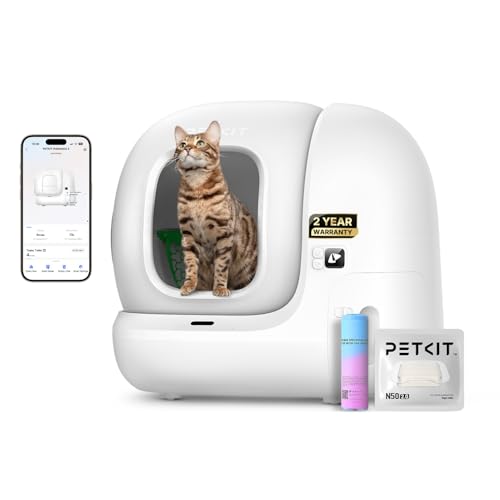
PETKIT PuraMax 2 Self-Cleaning Litter Box

Eosarcu Stainless Steel Litter Box with Lid, XL Black

Wooaidagg Enclosed Stainless Steel Litter Box (Light Grey)

LCZLBRRD Covered Cat Litter Box for Kitten to Medium

Idymere Stainless Steel High Sided Cat Litter Box

Ladnut Ozone & Negative Ion Odor Eliminator
More Details On Our Top Picks
Sometimes the cheapest fix is a jar sitting next to the box instead of new hardware. This fresh-scented gel absorbs smells from the litter and surrounding air passively, no power cord or filter swap required. In a multi-cat home where two boxes run side by side, a jar near each one keeps the corner from turning into the smelliest spot of the apartment.
The formula is non-toxic, which matters in homes where a curious cat paws at everything nearby. You set it down and largely forget about it, though you will want to reposition it close to the source rather than across the room.
Strong Points
- Passive gel works continuously without electricity or maintenance routines
- Non-toxic formulation suits households with curious or anxious cats
- Fresh scent masks lingering ammonia between scoop sessions
- One jar covers a standard box placement area, keeping cost per month low
Things To Consider
- Gel capacity means eventual replacement, so budget it as a recurring purchase
- It treats the air, not the litter itself, so scooping discipline still matters
Who It Suits Best
Renters and multi-cat owners who want a low-cost layer of odor defense alongside an existing box.
A Better Fit Elsewhere
Shoppers wanting hardware-level odor blocking should look at the Wooaidagg Enclosed Stainless Steel Litter Box, whose carbon filter handles smells at the source.
Plastic boxes hold onto urine odor no matter how often you scrub, and that is where this URPOWER earns its keep. The tub uses 304 stainless steel, a food-grade alloy that resists rust and scratches, and its smooth surface does not trap smell the way porous plastic does. Owners who scoop daily tend to notice the difference after a few weeks of ownership.
The 110-degree flip-top lid is the smartest detail here. It swings fully open so you can scoop without removing the whole cover, then closes to contain odor. A dedicated compartment holds bamboo charcoal bags, which absorb ambient smells passively.
What We Like
- 304 stainless steel body resists rust, scratches, and long-term odor retention
- Flip-top lid opens wide enough to scoop without detaching anything
- Bamboo charcoal compartment adds passive odor absorption around the clock
- XL footprint gives larger cats room to turn and dig comfortably
- Removable design makes deep cleans faster than glued-together plastic hoods
Minor Gripes
- Charcoal bags need periodic replacement to keep absorption effective
- Steel construction weighs more than plastic, so relocating it takes two hands
Quick Facts
Made For
Daily scoopers with one or two cats who want a hygienic upgrade that outlasts any plastic tub.
Swap It Out When
Households wanting hands-free cleaning will prefer the PETKIT PuraMax 2, which automates the entire routine.
This is the pick for anyone who travels or simply hates scooping. The PuraMax 2 rakes waste into a sealed bin automatically, and the N50 2.0 odor remover inside that bin attacks smells before they escape into the room. App control over 2.4G WiFi lets you trigger cycles remotely and monitor usage, which is genuinely useful when you are away overnight.
Placement matters more than people expect. The manufacturer specifies a flat, hard floor away from carpets because rugs interfere with the safety sensors, and the entrance needs clear space. The basic bundle ships with trash bags, a sifter, and a litter remover, so setup is complete out of the box.
Highlights
- Sealed waste bin plus N50 2.0 remover forms a layered odor-control system
- App control via 2.4G WiFi supports remote cycles and monitoring
- Safety sensors stop the rake while a cat is inside
- Low entrance suits kittens, seniors, and shorter-legged breeds
- Works with most clumping litters, so you keep your preferred brand
Small Caveats
- Carpet placement interferes with sensors, limiting where it can live
- This version does not pair with the K3 Smart Spray accessory
- Requires a nearby outlet, unlike passive boxes
At A Glance
Right Fit For
Tech-comfortable owners of busy schedules who want scooping removed from their day entirely.
Where A Sibling Pick Shines
Anyone uncomfortable with powered equipment near pets should choose the URPOWER XL Stainless Steel Litter Box instead, since it delivers strong odor control with zero electronics.
Eosarcu approaches the covered-box problem differently than the URPOWER reviewed earlier: instead of a partial flip, the lid rotates a full 180 degrees on a switch mechanism. That means the entire top opens flat, giving you unobstructed reach into every corner during deep cleans. Fully enclosed hoods usually force awkward arm angles, and this design sidesteps that complaint entirely.
The black finish looks tidier than bare steel in living spaces, and the extra-large interior accommodates big breeds that struggle in standard covered boxes. Because the body is stainless steel rather than plastic, urine will not soak in and create that permanent ammonia ghost smell.
Upsides
- 180-degree rotating switch lid opens completely for corner-to-corner cleaning
- Stainless steel basin resists stains and odor retention better than plastic
- XL interior fits large breeds comfortably
- Black exterior blends into modern interiors
Softer Spots
- Rotating hinge hardware adds a moving part that needs occasional checking
- Covered designs trap humidity, so airing the box out weekly helps
Who Will Love This
Owners of Maine Coons, Ragdolls, or other large cats who still want a covered, odor-contained option.
Not Your Match When
Smaller apartments suit the LCZLBRRD Covered Litter Box better, since its compact footprint targets kittens and medium cats up to 12 lbs.
High-peeing cats ruin ordinary boxes fast, and this Wooaidagg was designed with them in mind. The fully enclosed shell contains spray and scatter, while the pull-out stainless steel tray slides free for quick waste removal. Rust resistance and a stain-proof finish mean the tray survives years of wet litter contact, something plastic drawers rarely manage.
On top sits a replaceable activated carbon filter, the same absorption principle used in kitchen range hoods. Air passes through the carbon media and comes out noticeably less ammonia-heavy. The modular build also breaks down for washing, which keeps deep-cleaning sessions under ten minutes.
Bright Spots
- Enclosed shell prevents urine leakage onto floors and walls
- Pull-out steel tray makes scooping and litter swaps nearly effortless
- Activated carbon filter scrubs odor from exiting air
- Non-stick interior wipes clean without harsh scrubbing
- Extra-large size fits all cat sizes including big males
Points To Note
- Carbon filters are consumable, so factor replacement into upkeep
- Light grey surfaces show tracked litter dust more visibly than black
Feature Snapshot
Best Suited To
Homes with sprayers or leak-prone cats where floor protection matters as much as smell.
Reach For A Different Pick When
Budget-focused shoppers needing only air treatment will find the Litter Box Magic Deodorizer Gel covers the basics for far less.
Not every household needs steel and filters. This LCZLBRRD covered box targets the kitten-to-medium crowd, sized for cats up to 12 lbs, and it costs a fraction of the stainless picks above. The fully enclosed lid keeps litter inside even when a young cat digs enthusiastically, so hallway sweeping becomes rare.
Cleaning runs through a front drawer rather than lifting the hood, and a deodorization bag inside handles ambient smell. The neutral grey-white palette fits bedrooms and bathrooms, and the maker notes placement flexibility from indoor rooms to covered yard spaces.
Plus Points
- Fully enclosed design stops litter scatter at the source
- Front drawer plus included scoop speeds up daily waste removal
- Deodorization bag freshens the air inside the chamber
- Compact footprint slots into bathrooms and small apartments
Worth Noting
- 12 lb weight cap rules out large breeds entirely
- Plastic construction absorbs odor over time unless cleaned regularly
The Right Fit
First-time kitten owners and small-space dwellers who want containment on a modest budget.
Consider Something Else When
Owners of bigger cats should step up to the Eosarcu Stainless Steel Litter Box, whose XL interior handles heavy breeds with ease.
Some cats refuse covered boxes outright, and forcing one creates worse problems than odor. The Idymere stays open, relying on airflow rather than seals: circulating air carries ammonia away naturally instead of letting it concentrate under a hood. The taller sides contain kicked litter, which is where most open pans fail.
Two size variants exist, the smaller at 15.7 by 11.8 inches and the larger at 16.93 by 12.99 inches with a 5.12-inch depth. The bigger option suits single or multiple small-cat homes, seniors, and kittens alike. Steel construction means no urine soaking into seams, matching the hygiene story of the URPOWER earlier in this list.
Reasons To Buy
- Open design promotes air circulation that naturally reduces odor buildup
- High sides catch kicked litter before it reaches your floor
- Two size options match kittens through medium adult cats
- Stainless steel resists staining and holds up to repeated disinfecting washes
Room For Improvement
- No lid means visible contents, which some placements cannot hide
- Low profile offers less privacy for shy cats
Details At A Glance
Who Should Grab It
Multi-cat small homes and owners of cover-averse cats who prioritize airflow over enclosure.
Another Choice May Suit
Privacy-sensitive setups work better with the Wooaidagg Enclosed Stainless Steel Litter Box, which seals smells behind a hood and carbon filter.
Pairing this device with any box on this list is the closest thing to a reset button for a smelly room. Ozone, a reactive form of oxygen, breaks down ammonia and hydrogen sulfide compounds at the molecular level, while negative ions clump airborne dust so particles settle instead of drifting. The onboard sensor monitors air quality and adjusts output accordingly.
It works beyond the litter corner too, handling pet areas generally. One honest note: ozone output deserves sensible placement, so follow the manual’s spacing guidance and give the unit breathing room rather than tucking it directly against bedding.
Standout Traits
- Ozone action decomposes tough ammonia and organic compounds at the source
- Negative ions clump fine dust and neutralize floating particles
- Sensor monitoring adapts output to current air conditions automatically
- Multi-purpose coverage extends past the litter area to general pet zones
Honest Caveats
- Needs a power outlet, unlike passive gel alternatives
- Placement guidance should be followed carefully around resting pets
Core Details
Whose Shelf It Belongs On
Owners of stubborn multi-cat setups who have already optimized the box but still fight background odor.
Look Elsewhere When
Minimalist setups without outlets nearby fit the Litter Box Magic Deodorizer Gel, which needs nothing but shelf space.
What Actually Controls Litter Box Smell
Material Beats Accessories
Plastic absorbs urine molecules over months, which is why an old plastic box smells even when freshly scooped. Stainless steel and coated surfaces resist that absorption, so the URPOWER and Wooaidagg picks stay fresher longer with identical cleaning habits. Spend here first before buying additives.
Sealed Versus Open Design
Enclosed boxes trap odor inside but also trap humidity, which can accelerate bacterial smells if cleaning slips. Open pans like the Idymere rely on airflow and suit well-ventilated rooms. Match the design to your room: stuffy bathroom, go enclosed; airy utility space, open works fine.
Active Versus Passive Odor Treatment
Activated carbon, charcoal bags, and scented gel absorb smells slowly and cheaply. Electronic units such as the Ladnut eliminator actively break odor compounds down and respond to sensor readings. Heavy multi-cat loads justify active treatment; a single cat often needs nothing more than a carbon filter.
Key Considerations Across These Picks
Traps First Timers Fall Into
The common mistake is buying a giant covered box for a kitten, or a compact one for a Maine Coon. Size mismatch causes accidents outside the box, and no deodorizer fixes that. Also skip carpet placement for sensor-based automatic units, since soft flooring interferes with detection.
What Separates Premium From Basic
Higher-tier models spend money on steel bodies, replaceable carbon systems, and sealed waste compartments rather than cosmetic features. That translates into years of odor resistance and faster cleaning. Paying up pays off most for multi-cat homes; single-cat owners on a budget lose little choosing a simpler pick.
Frequently Asked Questions
How often should I replace activated carbon filters?
Most manufacturers suggest replacement every one to three months depending on cat count and humidity. Heavily used boxes exhaust carbon faster.
Do covered litter boxes actually reduce odor?
They contain smell effectively when scooped regularly, but neglect turns them into odor chambers. Cleaning frequency matters more than the lid itself.
Is stainless steel worth it over plastic?
For long-term ownership, yes, because steel does not absorb urine odor the way plastic eventually does. The upfront cost offsets replacement cycles.
Where should a deodorizing device be placed?
Near the litter area with open airflow around it, following the product’s spacing guidance. Avoid enclosing it in cabinets or pressing it against fabrics.
Can I combine several odor-control products?
Absolutely, and layering works well: a steel box, a carbon filter, and periodic gel jars address different stages of odor formation together.
Closing Thoughts
Odor control starts with the box itself, gets reinforced by filtration, and finishes with air treatment where needed. Single-cat homes do well with the URPOWER or the budget-friendly LCZLBRRD, while multi-cat households benefit most from the Wooaidagg or the Ladnut eliminator. Match the pick to your cat’s size and your cleaning rhythm, and the nose-wrinkle moments disappear.
