

Litter scattered across your floors is one of those small daily annoyances that adds up fast. The right box, whether it’s a high-walled pan, a hooded design, or a piece of furniture that hides everything from view, cuts that mess down dramatically. This roundup covers eight options built to contain scatter, trap odors, and fit real homes, from apartments to multi-cat households. Each pick suits a different setup, so match the design to your space and your cat’s habits rather than chasing a single universal answer.
The Shortlist At A Glance

Hzuaneri Cat Litter Box Enclosure Cabinet

Richell PAW TRAX High Wall Litter Box

Nature’s Miracle Hooded Flip Top Litter Box

Sfozstra Enclosed Cat Litter Box with Pedal

URPOWER XL Stainless Steel Litter Box Flip-Top Lid
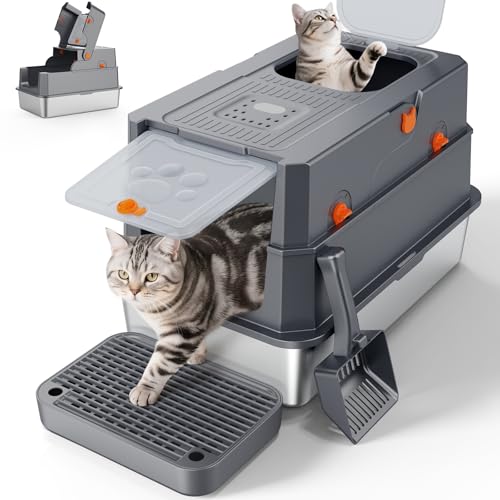
FURTIME Stainless Steel Enclosed Litter Box with Lid

Suzzipaws XL Stainless Steel Sifting Litter Box for Pine Pellets

KISENG 2-Pack Stainless Steel Litter Box Large
More Details On Our Top Picks
Nobody wants a plastic pan sitting in the middle of the living room, and this cabinet solves that by looking like furniture while doing the dirty work. Two sizes are listed, roughly 31.5 inches long and a larger 39.4-inch version, so you can scale it to your cat and your floor plan.
The curved interior corridor matters more than it sounds. It forces cats to turn before exiting, which shakes loose granules inside the unit instead of across your hardwood, and it also discourages dogs from treating the box as a snack bar. Assembly takes some patience, which is the honest trade-off here.
Strong Points
- Doubles as usable furniture, so the box disappears into your decor entirely
- The winding entry path knocks litter off paws before they hit open floor
- Two footprint sizes let you fit tight hallways or roomy corners
- Enclosed structure keeps odors contained better than an open pan
Things To Consider
- You’ll assemble panels yourself, and owners commonly report the instructions take a careful read
- Larger cats may find the smaller footprint cramped for turning around
Who It Suits Best
Apartment dwellers and anyone hosting guests who’d rather not advertise where the cat does its business.
A Better Fit Elsewhere
Cat parents who want zero assembly should look at the Richell PAW TRAX High Wall instead, since it works straight out of the box.
This is the straightforward answer to tracking: tall surrounding walls plus a grated step at the exit. As your cat walks out, the anti-tracking grate catches granules clinging to paws, and they fall back into the pan instead of onto your tile. A scooper comes included, so you’re operational on day one.
The top opening keeps access easy for kittens and older cats who struggle with hoods or high entry points. At roughly 19.7 by 16.1 by 12.4 inches, it fits bathrooms and laundry corners without dominating them. Compared with the Hzuaneri cabinet above, this one trades furniture looks for simplicity and a lower profile.
What We Like
- Grated exit step actively strips litter from paws, cutting floor sweep-ups noticeably
- High walls contain both scatter and the occasional overzealous spray
- Open-top design suits kittens, seniors, and arthritic cats alike
Worth Noting
- No hood means less odor containment than enclosed rivals like the Nature’s Miracle below
- Availability has been inconsistent, so check current stock before planning around it
At A Glance
Made For
Households with very young or very old cats who need low-effort access but still make a mess.
Where A Sibling Pick Shines
Owners fighting strong smells will get more mileage from the Nature’s Miracle hooded model with its charcoal filtration.
Nature’s Miracle built its reputation on odor products, and this hooded box applies that know-how directly. A charcoal filter sits in the hood, absorbing ammonia smells between scoopings, which makes a real difference in small apartments where the box lives near your sofa.
The flip-top lid is the detail worth appreciating daily. You lift one side to scoop rather than removing the whole hood, so cleaning stays a thirty-second chore instead of a two-handed juggle. The enclosed shell also blocks spray and keeps kicked-up litter inside, though shy cats sometimes need a week to warm up to hoods.
Bright Spots
- Charcoal filter neutralizes odor continuously, not just when you scoop
- Flip-top access makes routine cleaning genuinely faster
- Hooded enclosure contains spray and scatter in one move
- Brand pedigree in odor control shows in the design choices
Small Caveats
- Hooded designs can trap humidity, so occasional full disassembly for a deep wash is wise
- Timid cats may hesitate at the covered entrance at first
Right Fit For
Studio and one-bedroom residents whose litter area shares air with living space.
Swap It Out When
Cats that refuse covers will do better with the open-topped Richell PAW TRAX and its grate step.
The pedal is this box’s party trick: your cat steps on it entering, and the door swings open hands-free, then settles shut behind them. That closed loop keeps odors and stray granules inside far more consistently than a permanently open flap. Gray and black finishes are offered, both in a small size suited to tighter spots.
Ventilation holes paired with deodorizing particles handle smell from the inside, and the buckle-lock lid lifts off completely when you want to scrub the basin. One caution from owner reports: some cats need coaxing to trust a moving door, so expect a short training period.
Plus Points
- Pedal-operated door closes automatically after each visit
- Built-in ventilation and deodorizing particles tackle odor at the source
- Buckle-release top removes fully for thorough washing
Points To Note
- Mechanical doors occasionally spook cautious cats during the adjustment window
- Only a small size variant appears listed, limiting options for large breeds
Quick Facts
Who Will Love This
Tidiness-focused owners in smaller homes who want the box to manage itself between scoops.
Not Your Match When
Big breeds need more room, and the URPOWER XL stainless steel option gives them the extra interior space.
Plastic holds scratches, scratches hold odor, and eventually every plastic box reaches retirement. This one sidesteps that cycle with 304-grade stainless steel, the same corrosion-resistant alloy used in kitchen sinks. Its smooth surface resists both rust and the claw marks that trap smells in cheaper pans.
The 110-degree flip-top lid opens wide enough to scoop without detaching anything, then the whole lid comes off for deep cleans. A dedicated compartment accepts bamboo charcoal bags for passive odor absorption. For enthusiastic diggers, metal walls simply survive what plastic can’t, though you’ll pay a premium over basic pans.
Reasons To Buy
- 304 stainless steel shrugs off rust, scratches, and lingering smells
- Flip-top opens past vertical for scooping with the lid still attached
- Charcoal compartment adds continuous passive odor control
- XL sizing accommodates large cats comfortably
Honest Caveats
- Steel costs more upfront than comparable plastic enclosures
- Charcoal bags are a recurring purchase you’ll want to budget for
Core Details
Whose Shelf It Belongs On
Owners of powerful diggers or big breeds tired of replacing shredded plastic boxes yearly.
Reach For A Different Pick When
Budget-conscious shoppers running pellet litter will find the Suzzipaws sifting model more economical long term.
Where the URPOWER leans on premium steel alone, FURTIME layers on configuration flexibility. Its three-layer detachable shell assembles as a fully enclosed box or runs semi-open, letting you adapt to a cat that hates covers without buying a second product. The flip door on top again means scooping without removing the entire lid.
The layered construction doubles as a leak-proofing measure, catching urine that would seep through single-wall designs. Assembly is required out of the box, and the multiple pieces mean slightly more surfaces to wipe down during deep cleans. Still, for sprayers and high-kicking excavators, the combination of metal durability plus full enclosure is hard to argue with.
Highlights
- Converts between enclosed and semi-enclosed setups to match your cat’s mood
- Three-layer build blocks leaks that ruin flooring
- Flip door enables quick scoops without full disassembly
- Steel body avoids the scratch-and-smell cycle of plastic
Softer Spots
- More parts mean a longer initial assembly session
- Layered seams need attention during monthly deep washes
Who Should Grab It
Homes with cats that spray or kick aggressively and owners wanting one box that adapts either way.
Consider Something Else When
Minimalists who prefer fewer parts will find the simpler KISENG two-pack easier to live with.
Pellet litter users know the drill: sawdust settles to the bottom while clean pellets stay up top, and separating them by hand is miserable. This box automates that with a sifting pan featuring elliptical holes sized so pellets pass nothing but fine dust drops through. Lift, shake, done.
Underneath, a bottom pan holds an absorbent pad that captures urine, stretching how long each pad lasts and cutting odor at the same time. The steel body doesn’t cling to smells the way scratched plastic does. The catch is commitment: this workflow only pays off if you actually run pine or other non-clumping pellets.
Upsides
- Sifting pan separates waste from pellets in seconds, no scooping clumps
- Absorbent pee pad in the base extends time between full changes
- Steel construction stays odor-neutral over years of use
Trade Offs
- Replacement pads are an ongoing supply cost to factor in
- Clumping clay litter users gain little from this design
Details At A Glance
Built With In Mind
Eco-leaning households already using pine pellets who want a cleaner, faster maintenance routine.
Another Choice May Suit
Traditional clumping litter homes should stick with the URPOWER flip-top, which is built around scooping.
Multi-cat rules say one box per cat plus one spare, and this set delivers exactly that in one purchase. Each pan measures about 22.8 by 15 by 8 inches, generous enough for Maine Coon-sized cats to turn and dig without hanging over the edge. Place one per floor and nobody queues.
The 8-inch walls are the tracking defense here, tall enough to contain serious kicking while staying low enough for easy entry. Two scoopers ship along with the boxes. There’s no hood or grate, so it won’t beat the Richell on exit-scatter, but the steel build and sheer capacity make it the workhorse of this list.
Standout Traits
- Two full-size boxes in one set satisfy multi-cat household math instantly
- 8-inch walls block scatter while keeping entry effortless
- Roomy interior suits large breeds that cramp standard pans
- Steel surfaces clean up without holding odor
Areas To Watch
- Open design offers no odor containment, so placement matters
- Shallow 8-inch profile means less protection against determined sprayers
Feature Snapshot
The Right Fit
Three-cat households and owners of oversized breeds who value capacity and durability over concealment.
Look Elsewhere When
Guests visiting often? The Hzuaneri enclosure cabinet hides everything behind furniture-grade panels instead.
What Actually Stops Litter Tracking
Containment Starts At The Exit
Most tracking happens in the last three steps your cat takes leaving the box. Grates, curved corridors, and pedals all attack that moment differently, and the best mechanism depends on your cat’s gait and enthusiasm. Watch how your cat exits a current box before choosing.
Material Decides Longevity
Plastic scratches within months, and those grooves harbor ammonia smells no amount of scrubbing fully removes. Stainless steel costs more initially but typically outlasts several plastic replacements. Households with aggressive diggers see the difference fastest.
Size Beats Features Every Time
A cramped cat avoids the box or hangs over the edge, creating mess no wall height can fix. Give your cat room to turn fully, especially for breeds over twelve pounds. Measure before you order.
Placement Multiplies Results
Even the best box tracks some litter onto nearby surfaces. Hard flooring wipes clean in seconds while carpet traps granules permanently. Position the box where cleanup is cheap, not just where it’s convenient.
Key Considerations Across These Picks
Traps First Timers Fall Into
The classic error is buying for aesthetics first and cat behavior second. A gorgeous cabinet means nothing if your cat refuses the entrance, so introduce new boxes alongside the old one rather than swapping cold turkey. Another common slip is ignoring replacement supplies, since charcoal filters and pee pads are recurring costs that add up over a year.
When Paying More Pays Off
Higher-tier models earn their price through materials and mechanics: 304 stainless steel resists the scratch-and-odor spiral, sifting systems cut daily labor, and pedal doors automate containment. Light users with one calm cat rarely need that tier. Heavy diggers, sprayers, and multi-cat homes recover the difference quickly in saved litter and replaced boxes.
Frequently Asked Questions
Do high-sided boxes really reduce tracking?
Yes, taller walls stop the kicking motion that flings litter several feet from the pan. Pairing height with a grate or textured exit step handles the residue stuck to paws.
Will my cat accept a hooded or enclosed box?
Most cats adjust within a week or two, though timid individuals may take longer. Introduce it gradually and keep the old box available during the transition period.
Is stainless steel worth the higher cost?
For heavy diggers and long-term owners, usually yes, because steel resists the scratches that trap odor in plastic. Casual single-cat households may never notice the difference.
How often should I replace litter box accessories?
Charcoal filters and absorbent pads typically need refreshing every few weeks depending on usage. Plastic boxes themselves deserve replacement once deep scratches appear.
Can one box serve multiple cats?
Behavior guidance suggests one box per cat plus one extra, since sharing causes territorial stress and accidents. The two-pack sets in this list exist precisely for that reason.
Closing Thoughts
Tracking is solvable, and the fix usually costs less than a month of frustration was worth. Match the mechanism to your cat’s exit style, prioritize interior size over clever features, and place the box where cleanup is painless. Any of these eight will shrink the mess; the right one will nearly erase it. Your floors will thank you by the end of the first week.
