

Setting up a saltwater tank means one decision you can’t undo easily: the substrate. It sits at the bottom of everything, hosting bacteria, buffering water chemistry, and setting the visual tone for years. Pick wrong and you’ll fight cloudy water, unstable pH, or a tank that never quite cycles. This shortlist covers genuine live sands, aragonite options, bio-seeded substrates, plus one tool kit that makes laying any of them far easier. Whether you’re starting a nano reef or rescaping a 75-gallon display, there’s a fit here for your setup and your patience level.
The Shortlist At A Glance

Aqua Natural Galaxy Sand 10lb

CaribSea Super Natural Moonlight Sand 5 lb (Pack of 2)

Aqua Natural Oolitic Aragonite Sand 10lb


CaribSea Ocean Direct Live Sand 5 lb

AWXZOM Red Lava Rock Sand 11lb
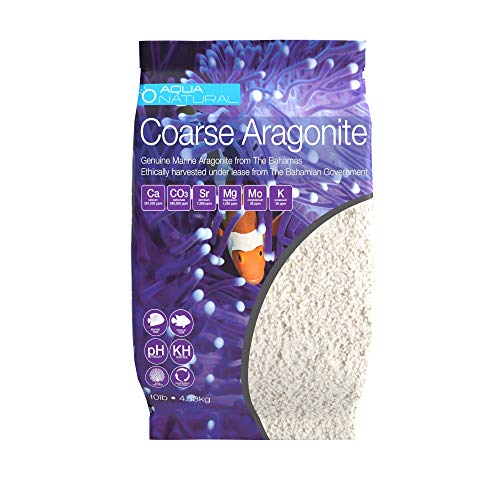
Aqua Natural Coarse Aragonite Sand 10lb

Aqua Natural Delta Bio-Substrate 5lb
More Details On Our Top Picks
Most aquarium substrates disappear into the background. Galaxy Sand does the opposite: its fine black grains catch tank lighting and throw back a subtle shimmer that makes corals and green plants pop against the dark floor. In a rimless planted tank under a good LED, the contrast is genuinely striking.
The 10-pound bag covers smaller tanks well, and because it’s marketed for terrariums and reptile setups too, it pulls double duty if you keep both hobbies. One thing worth considering: dark sand shows light debris more readily than pale substrates, so expect visible detritus between cleanings.
Bright Spots
- Fine grain gives plants and corals a dramatic dark backdrop that makes their colors read stronger.
- The light-catching finish adds depth to aquascapes without extra decor spending.
- Doubles as terrarium bedding, so one bag serves multiple enclosures.
- Ten pounds is enough for shallow beds in nano and mid-size tanks.
Small Caveats
- Waste and uneaten food stand out against black, so routine siphoning matters more here.
- No marine-specific claims are listed, so verify suitability for your exact livestock before committing.
Feature Snapshot
Made For
Aquascapers chasing high-contrast planted or nano reef layouts who want the substrate itself to do visual work.
Where A Sibling Pick Shines
Keepers prioritizing water chemistry over looks will get more from the Aqua Natural Oolitic Aragonite Sand 10lb, which buffers pH naturally.
Here’s the honest framing up front: this CaribSea option is built for freshwater, not saltwater. It earns its place on this list because plenty of hobbyists run mixed systems, sump refugiums, or brackish experiments where a soft, pale, natural-looking sand works beautifully. The two-bag pack gives you ten pounds total, which suits a modest footprint.
The moonlight-white tone mimics sunlit riverbeds, and discus, tetras, and angelfish keepers commonly report it photographs well under standard lighting. As a rough planning figure, the brand suggests at least a pound of substrate per gallon for adequate filtration support, so budget accordingly before ordering.
Reasons To Buy
- Two 5 lb bags arrive together, simplifying coverage math for smaller tanks.
- Pale natural color flatters schooling fish like tetras and angelfish.
- Soft texture suits bottom-dwellers that sift or rest on sand.
Points To Note
- This is a freshwater product, so dedicated reef keepers should look at the aragonite picks instead.
- You’ll need roughly one pound per gallon, so larger tanks mean buying several packs.
Who Should Grab It
Freshwater community and planted-tank keepers who want a natural pale bed, or mixed-hobby households covering several tanks at once.
Swap It Out When
Marine and African cichlid keepers should reach for the Aqua Natural Coarse Aragonite Sand 10lb, which is formulated for those higher-pH systems.
Oolitic aragonite is tiny, egg-shaped calcium carbonate grains formed in warm ocean shallows, and that composition is the whole point here. It dissolves slowly into the water column, which helps hold pH near natural seawater levels without constant chemical dosing. For a saltwater or reef tank, that buffering work happens quietly in the background, every day.
This version comes from Bahamian waters and ships washed and dried, so prep is minimal compared with raw play sand. Compared with the Galaxy Sand reviewed above, you’re trading visual drama for chemistry support, and for most marine systems that’s the right trade. African cichlid keepers benefit too, since those fish also prefer hard, alkaline water.
Strong Points
- Natural calcium carbonate composition buffers water toward a stable marine-friendly pH.
- Pure Bahamian sourcing means no tar, organics, or unwanted impurities in the mix.
- Reduces reliance on repeated chemical additives once the bed matures.
- Serves marine, reef, and African cichlid setups equally well.
Honest Caveats
- Buffering strength depends on your tank’s demands; heavily stocked systems may still need supplementation.
- Like any dry sand, a thorough rinse before placement keeps initial cloudiness down.
At A Glance
Right Fit For
Reef and marine keepers who want passive, chemistry-stabilizing substrate rather than a purely decorative bed.
Another Choice May Suit
Anyone wanting living bacteria from day one should compare the CaribSea Ocean Direct Live Sand 5 lb, which arrives pre-seeded with microorganisms.
Not every entry on a substrate list has to be sand. Once your new bed goes in, you’ll immediately face the awkward reality of arranging plants and smoothing slopes with bare hands in cold water. This four-piece set solves that: a 10-inch scissors pair, a 10.6-inch straight tweezer, a 10.6-inch curved feeding tong, and a 12.56-inch substrate spatula.
The lengths matter more than they first appear. In anything deeper than a 20-gallon long, shorter tools force you to submerge your arm, disturbing the very sand you just leveled. Owners commonly report the spatula is the quiet hero for carving clean sand slopes against glass. Stainless construction rinses clean and dries fast between sessions.
Plus Points
- Long handles keep your arms dry during planting and feeding in deeper tanks.
- The curved tong doubles as feeding tongs for shy or aggressive eaters.
- Substrate spatula shapes sand slopes and cleans glass edges precisely.
- Works in both aquariums and terrariums, stretching its usefulness.
Softer Spots
- Thin tool tips can bend under heavy force, so treat them as precision instruments rather than pry bars.
- Rinse and fully dry after saltwater use to prevent corrosion over time.
Whose Shelf It Belongs On
First-time aquascapers setting up any new tank who’d rather not improvise with kitchen utensils.
Reach For A Different Pick When
Your shopping list is strictly substrate; the AWXZOM Red Lava Rock Sand 11lb fills a large tank floor on a tighter budget.
This is the pick most new saltwater keepers actually need. Ocean Direct uses what CaribSea calls Sea Breathe technology, a packaging method that keeps real moisture and oxygen around the grains so the original beneficial microorganisms survive transit. The company states the sand carries up to a thousand times more healthy microorganisms than conventional preservation approaches, which translates into a biological head start while your tank cycles.
It also skips the rinse step entirely; the wet sand goes straight from bag to tank. That saves an hour of muddy sink work on setup day. Against the dry Aqua Natural aragonite options earlier in this list, you’re paying for biology and convenience rather than just minerals, and for a first reef build that trade usually pays off.
What We Like
- Arrives wet and ready, cutting setup time and eliminating rinse mess.
- Living microorganisms give the nitrogen cycle an early foothold.
- Genuinely aimed at saltwater systems, fish and invertebrates alike.
- Five-pound bags make it easy to scale quantity to your tank’s footprint.
Trade Offs
- Live sand carries a shelf clock; use it promptly after arrival for best organism survival.
- Per pound, it costs more than dry alternatives, so large tanks add up quickly.
Quick Facts
Who Will Love This
First-time saltwater keepers cycling a new marine or reef tank who want every biological advantage available.
Not Your Match When
Budget-focused rescaping projects suit the AWXZOM Red Lava Rock Sand 11lb better, since it costs less per pound in bulk.
Eleven pounds in one bag is the headline here, and crushed lava rock is the material story behind it. This reddish volcanic sand brings a warm, earthy tone that reads naturally in South American biotope-style layouts, and it works equally well as a top dressing for succulent planters. Porous lava also offers extra surface area for bacteria, a small but real bonus for filtration.
The catch is prep: the manufacturer explicitly recommends cleaning before use, and owners commonly report dusty rinse water on the first wash. Plan a couple of rinse rounds outdoors. Compared with the polished CaribSea Moonlight Sand, this is a rougher, more rustic look, which some layouts want and others don’t.
Highlights
- Large 11 lb quantity covers bigger floors or multiple small projects per purchase.
- Natural red lava color anchors earthy biotope and paludarium designs.
- Porous rock texture adds bacterial surface area beyond smooth sands.
- Pulls double duty as succulent and planter top dressing.
Areas To Watch
- Thorough cleaning before use is recommended by the maker, and first rinses run dusty.
- The red tone won’t suit everyone; cool-toned aquascapes may clash visually.
Core Details
Built With In Mind
Hobbyists building warm-toned biotope aquascapes or filling large tank floors without overspending on premium brands.
Consider Something Else When
Chemistry-sensitive reef systems belong with the Aqua Natural Oolitic Aragonite Sand 10lb, whose carbonate buffering this lava sand doesn’t provide.
Grain size is the entire difference between this pick and the oolitic version reviewed earlier, and it matters more than most newcomers expect. Coarse aragonite grains resist being blown around by strong powerheads and wave makers, so your carefully sculpted aquascape stays sculpted. Fine sands migrate; coarse beds hold their shape.
You keep the same Bahamian calcium carbonate benefits, including natural buffering toward marine-appropriate pH, and the same suitability for reef and African cichlid systems. The trade-off is comfort for sand-sifting species, since finer-grain sifters sometimes struggle with chunkier material. In our view, high-flow tanks and cichlid racks are where this coarse grade clearly earns its spot.
Upsides
- Coarse grains stay put under strong flow from wave makers and return pumps.
- Same natural aragonite buffering as finer grades, supporting stable alkaline water.
- Larger gaps between grains allow better water movement through the bed.
- Suits both marine systems and hard-water cichlid tanks.
Minor Gripes
- Sand-sifting fish and some invertebrates may find the chunkier texture harder to work.
- Debris settles between coarse grains, so targeted siphoning takes slightly longer.
Best Suited To
Reef keepers running strong circulation, and African cichlid keepers who need a bed that survives territorial digging.
Look Elsewhere When
Delicate sand-sifting setups are happier on the Aqua Natural Oolitic Aragonite Sand 10lb, whose finer grains suit sifters better.
The “wet” label on this bag tells you everything. Delta Sand ships pre-seeded with live nitrifying bacteria, the microorganisms that convert toxic ammonia into safer compounds during a tank’s nitrogen cycle. Seeding your bed from day one can shorten that anxious waiting period, which is why bio-substrates have become popular with impatient beginners and experienced keepers restarting systems alike.
Aqua Natural sources its substrates sustainably, triple-washes them, and kiln-dries the base material before seeding. Five wet pounds suits nano tanks or topping up an existing bed. Next to the CaribSea Ocean Direct pick, this is the value-leaning route to similar biology, though the organism load isn’t specified as heavily.
Standout Traits
- Ships seeded with live nitrifying bacteria targeting ammonia from day one.
- Triple-washed and kiln-dried base means cleaner handling out of the bag.
- Sustainably sourced material appeals to eco-conscious keepers.
- Wet delivery preserves the bacterial colony through shipping.
Worth Noting
- Five pounds covers limited area, so larger tanks require multiple bags.
- Use soon after arrival; live bacteria fade with prolonged storage.
Details At A Glance
The Right Fit
Nano reef and planted-tank starters who want a biological head start without committing to bulk quantities.
Skip It When
Maximum organism density is the priority; the CaribSea Ocean Direct Live Sand 5 lb advertises a far higher microorganism count.
What Matters Most Before Choosing Live Sands For Saltwater Aquarium
Grain Size Changes Everything
Fine sand looks sleek and suits burrowing species, but it compacts and can develop dead pockets where hydrogen sulfide builds up. Coarse grains stay aerated under strong flow yet frustrate sand-sifting fish. Match the grade to your livestock list first, your aquascape vision second.
Biology Versus Chemistry
Dry aragonite sands buffer pH passively but contribute no organisms. Wet live sands arrive seeded with nitrifying bacteria that help cycle a new system faster. Decide whether your priority is long-term stability or a quicker, safer startup, then buy accordingly.
Coverage Math Before Checkout
Most keepers plan one to two pounds of sand per gallon depending on desired bed depth, typically one to three inches. A shallow display bed needs far less than a deep refugium layer. Calculate before ordering so a single shipment covers the whole floor.
Prep And Patience
Even no-rinse products benefit from careful placement over a plate or saucer to limit cloudiness. Expect some haze in the first days regardless; it settles. Rushing livestock into an uncycled bed causes more problems than any substrate choice ever will.
Key Considerations Across These Picks
Traps First Timers Fall Into
The classic error is buying decorative sand without checking its effect on water chemistry, then wondering why pH drifts. Another common slip is underestimating quantity; running short mid-setup means mismatched batches. Read the intended-use notes on every bag, and order slightly more than your calculation suggests.
Where The Extra Money Goes
Premium live sands charge for biology and preservation technology, not just minerals. Sea Breathe packaging and seeded bacteria shorten cycling time, which protects early livestock investments. Dry aragonite remains the smarter spend for established systems that already hold stable bacteria colonies.
Frequently Asked Questions
How much live sand does a saltwater tank need?
Plan on one to two pounds per gallon for a typical one-to-three-inch bed. Deeper plenum-style beds or refugiums call for the upper end of that range.
Do I need to rinse live sand before adding it?
Genuine live sand is designed to go straight into the tank, and rinsing can wash away beneficial organisms. Dry sands, by contrast, should always be rinsed until the water runs clear.
Can live sand cycle a tank by itself?
It provides a meaningful head start, but a full nitrogen cycle still needs an ammonia source and testing time. Treat it as an accelerator, not a complete solution.
What is aragonite and why does it matter?
Aragonite is a natural form of calcium carbonate that slowly dissolves and buffers water toward alkaline marine conditions. That buffering helps stabilize pH without constant chemical additions.
How often should aquarium sand be cleaned?
Light siphoning during regular water changes, roughly every one to two weeks, keeps waste from accumulating. Avoid deep stirring all at once, which releases trapped gases and clouds the tank.
Closing Thoughts
The right substrate choice comes down to matching grain size, chemistry, and biology to your specific tank rather than chasing any single name. New saltwater keepers get the most from seeded live sands, while established systems often do fine with quality dry aragonite. Measure your tank, calculate your pounds-per-gallon, and pick the option that fits your livestock first. Your future water tests will thank you for the homework done today.
