

Cats are obligate carnivores, which is a formal way of saying their bodies run on animal protein, not grains or starches. Yet plenty of canned foods pad their recipes with rice, corn, or potato fillers that add carbohydrates your cat never asked for. If you’ve noticed weight creep, sluggish energy, or a picky appetite at mealtime, the carb count on the label may be part of the story. This shortlist covers eight grain-free, protein-forward wet foods and toppers suited to different cats, budgets, and health goals, from everyday pates to targeted weight-management formulas.
The Shortlist At A Glance

TIKI PETS After Dark Grain-Free Wet Cat Food 2.8oz 12pk

Nulo Freestyle Grain-Free Minced Wet Food Variety Pack

Purina ONE Grain Free Pate Wet Food Variety Pack

Royal Canin Weight Care Thin Slices in Gravy 3oz
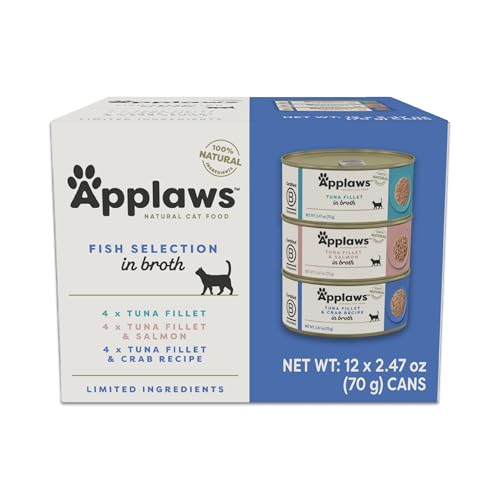
Applaws Fish Variety in Broth Wet Cat Food 12-Pack

Hill’s Science Diet Sensitive Stomach & Skin Variety Pack

Merrick Purrfect Bistro Chicken Pate 3oz 24-Pack

INABA Churu Broth Side Dish Pouches 1.4oz
More Details On Our Top Picks
The After Dark line leans hard into what a cat’s digestive system actually wants: real chicken listed first, nutrient-dense organ meat alongside it, and shredded pieces served in broth rather than a starchy gravy. There’s no grain filler anywhere in the recipe, which keeps the carbohydrate load about as low as canned food gets.
In practice, this suits households feeding kittens through seniors, since the formula is balanced for all life stages. The high moisture content also quietly handles hydration, something indoor cats on dry diets often lack.
Strong Points
- Real chicken leads the ingredient list, so every can delivers the animal protein obligate carnivores need rather than plant filler.
- Organ meat adds micronutrients that muscle meat alone doesn’t cover, mimicking a more natural prey-style meal.
- Broth-based format boosts daily water intake, a real benefit for cats prone to urinary issues.
- Shredded texture tends to tempt cats who turn their nose up at uniform pate.
Things To Consider
- At 2.8 ounces per can, larger cats may need two cans daily, so storage space in the pantry fills up faster than with bigger formats.
- Broth-heavy cans are messier to scoop than firm pates; owners commonly report wiping the bowl area after meals.
Key Specs
Who It Suits Best
Homes wanting one genuinely low-carb staple that works from kittenhood onward, especially cats who prefer meaty shreds over smooth pate.
A Better Fit Elsewhere
Cats needing strict calorie control do better on the Royal Canin Weight Care Thin Slices, which is formulated specifically for gradual weight loss.
Where the Tiki Cat can doubles down on one flavor profile, Nulo’s variety pack rotates three pairings: beef and mackerel, salmon and turkey, and turkey and duck. That rotation matters more than it sounds. Cats who boycott the same pate by week three often stay engaged when the bowl changes.
The minced texture sits between chunky shreds and smooth pate, which makes it easy to mix into a transition diet or serve straight. Each 3-ounce can suits one meal for an average adult cat, and the grain-free formulation keeps carbohydrate content in check.
What We Like
- Three distinct protein combinations fight mealtime boredom without buying separate cases of each flavor.
- Minced consistency works well for dental-sensitive seniors who struggle with large chunks.
- Grain-free recipes align with a carnivore-appropriate macronutrient balance.
Minor Gripes
- A few cats fixate on one pairing and leave the others, so you may end up trading flavors within the household.
- Small 3-ounce cans mean frequent opening for multi-cat homes; leftovers need covering in the fridge.
Made For
Picky eaters and rotation feeders who want variety built into a single purchase instead of juggling multiple product lines.
Swap It Out When
Budget-focused shoppers feeding several cats will stretch further with the Purina ONE Grain Free Pate 24-pack, which offers more cans per case at a friendlier cost.
This is the workhorse of the list. A 24-can case split across beef, chicken, and ocean whitefish recipes delivers roughly a month of twice-daily meals for one cat, and the per-can economics beat most boutique brands handily. Real meat leads each recipe, and there are no artificial colors, flavors, or preservatives in the mix.
Nutritionally it’s complete and balanced for all life stages, with added vitamins, minerals, and antioxidants. The tender pate texture goes down easily, and the moisture content supports hydration much like the pricier picks above.
Highlights
- Three proteins in one case keep weekly menus varied at a lower cost per can than most competitors here.
- Zero-grain formulas with no artificial additives suit owners reading labels closely.
- Antioxidant nutrients support immune function alongside complete daily nutrition.
- Widely stocked, so reordering rarely means hunting.
Softer Spots
- The pate is softer and wetter than some premium textures; a few cats paw at it before eating, which owners report makes bowls messier.
- Flavor distribution inside a case isn’t always even, depending on the batch.
Feature Snapshot
Right Fit For
Multi-cat households and budget-minded owners who still want grain-free, meat-first nutrition on autopilot.
Where A Sibling Pick Shines
Cats with confirmed food sensitivities may tolerate the limited, clearly separated recipes in the Hill’s Science Diet Sensitive Stomach pack better.
Every other can on this list is general nutrition. This one has a job. Royal Canin’s Weight Care formula targets slightly overweight adult cats, pairing L-carnitine, a nutrient involved in fat metabolism, with an adapted protein level designed to preserve muscle while body condition improves. In the brand’s internal study, more than 90 percent of slightly overweight cats fed this formula lost weight within two months.
The thin-slices-in-gravy format also slows eating compared to pate, which helps cats who inhale meals. Portion control stays simple at 3 ounces per can.
Upsides
- L-carnitine supports fat metabolism, giving the formula a functional edge over simply feeding less of a standard food.
- Adapted protein levels aim to protect lean muscle during weight loss, not just cut calories.
- Documented results from the manufacturer’s own study give the claim real backing.
Points To Note
- This is a targeted therapeutic-style diet, so it’s worth confirming the plan with your veterinarian before switching a healthy-weight cat onto it.
- Per-can cost runs above the Purina ONE and Merrick options, which adds up over a multi-month weight program.
Who Should Grab It
Owners of indoor adult cats trending overweight who want a structured, vet-aligned path back to ideal body condition.
Not Your Match When
Growing kittens and athletic cats maintaining weight are better served by the Tiki Cat After Dark, which is balanced for all life stages without calorie restriction.
Flip an Applaws can and the ingredient list reads like a sushi order: fish, water, rice (in minimal amounts), nothing elaborate. These 2.47-ounce cans come in a three-flavor fish assortment served in natural broth, and the simplicity is the whole appeal. Fewer ingredients generally means fewer carbohydrates and fewer things for a sensitive stomach to object to.
The broth format hydrates like the Tiki Cat line but leans fully marine, which fish-obsessed cats tend to greet loudly at the cupboard.
Bright Spots
- Short, recognizable ingredient lists make label reading effortless and keep carb content naturally low.
- Broth base adds meaningful moisture to daily intake, useful for cats on mixed wet-dry diets.
- Small 2.47-ounce cans reduce waste for single cats or light eaters.
Small Caveats
- These cans work best as a complementary meal or topper rather than a sole diet for some cats, depending on your vet’s guidance on completeness.
- Strong fish aroma is a plus for cats and less of one for small apartments; owners commonly mention the smell lingers near the bin.
Quick Facts
Whose Shelf It Belongs On
Seafood-driven cats and owners who prioritize minimal ingredient lists over fortified multi-nutrient formulas.
Reach For A Different Pick When
Cats preferring poultry over fish usually take to the Merrick Purrfect Bistro chicken pate far more reliably.
Some cats don’t just need low carbs; they need food their gut agrees with. Hill’s addresses both with easy-to-digest ingredients in a grain-free minced formula, available in chicken, tuna, duck, and salmon pairings. Natural fiber supports predictable digestion, while omega-6 fatty acids and vitamin E nourish skin and coat from the inside.
Compared with the straightforward Applaws approach, this is a more engineered formula, and that’s precisely its value for cats with recurring tummy trouble or dull coats.
Plus Points
- Easy-to-digest recipe design targets cats with touchy stomachs rather than forcing trial and error.
- Omega-6s and vitamin E support skin barrier health, often visible as a shinier coat within weeks.
- Natural fibers promote firmer stools and easier litter box cleanup, a benefit owners notice daily.
- Four flavor options let you match a finicky cat’s preferences.
Trade Offs
- Formulated for adult cats specifically, so kittens need a different life-stage product.
- Minced texture with vegetable bits doesn’t suit every cat; some pick around the pieces, based on widely reported feeding behavior.
Details At A Glance
Who Will Love This
Adult cats with intermittent digestive upset or lackluster coats, and owners tired of rotating random foods hoping something sticks.
Consider Something Else When
Healthy cats with no sensitivities get equal nutrition for less money from the Purina ONE Grain Free Pate pack.
Texture decides more cat-food purchases than flavor does, and smooth pate wins a lot of those contests. Merrick grinds real deboned chicken, the first ingredient, into a uniformly silky pate with added vitamins and minerals and no soy, artificial colors, flavors, or preservatives. For cats who reject shreds, chunks, or vegetable bits, this consistency removes the objection entirely.
The 24-can case positions it between the Purina ONE value play and the pricier specialty formulas, with a single-protein focus that simplifies elimination diets too.
Reasons To Buy
- Deboned chicken leads the recipe, delivering high animal protein for muscle maintenance.
- Ultra-smooth pate suits tooth-sensitive seniors and fussy texture critics alike.
- Single primary protein makes it easier to pinpoint intolerances during dietary trials.
- Complements the matching Purrfect Bistro dry line for mixed feeding setups.
Room For Improvement
- One flavor only, so cats craving rotation may bore of it; pairing with the Nulo variety pack solves that at added cost.
- Pate dries out quickly once opened, so half-cans need prompt refrigeration and warming before the next serving.
The Right Fit
Owners of texture-picky or senior cats who want a dependable, clean-label chicken pate they can reorder without thinking.
Another Choice May Suit
Houses needing built-in flavor variety should reach for the Nulo Freestyle variety pack instead of committing to a single recipe.
Not every entry here replaces dinner. Churu Broth is a side dish: silky chicken broth made from farm-raised chicken, flecked with flakes of chicken plus tuna, salmon, or scallop depending on the pouch. At 1.4 ounces each, the twelve-pouch box covers two weeks of daily toppers, and there’s a senior-specific chicken and tuna recipe for cats aged ten and up.
Think of it as a hydration and enthusiasm tool. Pouring broth over kibble or a plain pate coaxes reluctant eaters to the bowl, and the grain-free, preservative-free recipe keeps the carb contribution negligible.
Standout Traits
- Broth format adds liquid to any meal, quietly improving daily hydration for dry-food-leaning cats.
- Tear-open pouches need no spoon or storage; one squeeze and done.
- Dedicated senior 10+ recipe acknowledges older cats’ changing needs.
- Works double duty as a high-value treat for training or pill hiding.
Honest Caveats
- As a topper, it can’t replace complete meals; counting it as dinner would shortchange nutrition.
- Single-use pouches generate more packaging waste than cans, which matters to some households.
Core Details
Perfect Match For
Owners of senior cats, fussy eaters, or kibble-fed cats who need a low-carb way to sneak more moisture into the day.
Look Elsewhere When
A full standalone meal is the goal, and the Tiki Cat After Dark cans deliver complete nutrition where these pouches deliberately don’t.
Choosing Low Carb Wet Food Without Guesswork
Read The Ingredient Order First
Ingredients appear by weight, so a named meat in the first position signals a protein-led recipe. Anything listing grains, corn, wheat, or potato starch early is quietly adding carbohydrates your cat doesn’t need. Moisture content deserves attention too, since wet foods running 75 percent or higher water support kidney and urinary health in ways dry kibble can’t.
Match The Formula To The Cat
A growing kitten, an overweight indoor adult, and a ten-year-old senior have different nutritional demands even at identical carb levels. Life-stage labeling exists for a reason, and formulas like Royal Canin’s Weight Care show how targeted nutrition outperforms generic portion cutting. Confirm any therapeutic switch with your veterinarian first.
Texture And Format Count More Than Expected
Cats form strong texture preferences early, and a nutritionally superior food goes uneaten if the mouthfeel is wrong. Shreds, minced, pate, and broth each suit different animals, so buy small cases before committing to bulk. Rotation across two or three proteins also reduces the odds of a sudden refusal.
Balance Cost Against Case Size
Per-can pricing drops sharply at 24-count cases, but only buy volume your cat will finish before freshness suffers. Single-cat homes often do better with 12-packs despite the higher unit cost, because open cans and stale stock erase the savings quickly.
Key Considerations Across These Picks
Traps First Timers Fall Into
The biggest mistake is judging a food by front-of-can marketing instead of the guaranteed analysis and ingredient sequence. Another common slip is switching foods overnight, which invites digestive upset; blend new food into old over a week or so. Skipping the life-stage check causes problems too, since adult formulas shortchange kittens.
Where The Extra Money Goes
Premium cans typically fund named whole-meat ingredients, organ meats, functional additives like L-carnitine or omega fatty acids, and tighter quality control. Budget lines meet baseline nutrition fine, but the upgrade pays off for cats with weight issues, sensitive stomachs, or visible coat problems where targeted nutrients earn their price.
Frequently Asked Questions
Why does carbohydrate content matter for cats?
Cats metabolize protein and fat efficiently but have limited need for dietary starch. Lower-carb wet foods align more closely with their natural prey-based diet and help with weight management.
Is grain free the same as low carb?
Not exactly, since some grain-free recipes substitute potatoes or peas that still contribute carbohydrates. Checking the ingredient order tells you more than the grain-free badge alone.
How much wet food should an adult cat eat daily?
Most 3-ounce cans suggest roughly two per day for an average adult cat, adjusted for weight and activity. Your veterinarian can tailor portions to your cat’s body condition.
Can I mix wet and dry food?
Yes, and many owners do, using wet food for moisture and protein while keeping dry food for convenience. A broth topper like Churu bridges the two nicely.
How long does an opened can last?
Covered and refrigerated, an opened can holds for about two to three days. Warming it briefly before serving restores the aroma cats respond to.
Wrap Up
Low-carb feeding comes down to matching the right format to your cat’s age, texture preference, and health picture. The Tiki Cat After Dark earns its lead spot for all-stage versatility, while Royal Canin handles weight goals and Hill’s covers sensitive systems. Start with a smaller case, watch how your cat responds over two weeks, and adjust from there. Your cat’s bowl, your call.
